Some shotguns are tools. A few become legends.
Bo Whoop belongs in that second category, a gun so admired that its story still echoes through duck blinds, gun rooms, and American sporting history.
Why A.H. Fox mattered in the first place

To understand Bo Whoop, you have to start with A.H. Fox itself, one of the great names in American side-by-side shotguns. Ansley H. Fox founded the company in Philadelphia in the first decade of the 20th century, and the guns quickly earned a reputation for smart engineering, strong lockup, and elegant simplicity. Collectors and shooters still talk about them as some of the finest American doubles ever built.
The Fox design stood apart because it was both refined and practical. It was not overloaded with gimmicks, and that mattered to serious bird hunters who wanted durability as much as beauty. According to American Rifleman and long-running collector records, Fox guns became known for trim handling, robust actions, and excellent barrel work, all qualities that gave the brand staying power.
The company changed hands over time, and Savage acquired A.H. Fox in 1929 before moving production to Utica in 1930. Even so, the Philadelphia-made guns retained a special aura, especially among collectors who prize the pre-Savage era. Factory record summaries preserved through the Cody Firearms Records Office and Savage historical material help anchor that timeline.
That combination of field utility and premium craftsmanship is exactly why Fox could produce a gun like Bo Whoop. It was not a novelty piece. It was the natural high-water mark of a maker already respected by demanding shooters.
The duck hunting world that created Bo Whoop

Bo Whoop did not appear by accident. It came out of a moment when American waterfowl hunting was changing, and hunters were searching for more range, tighter patterns, and heavier loads. In the early 1920s, the 3-inch 12-gauge magnum shell was new and exciting, and gunmakers were trying to build shotguns that could truly take advantage of it.
Ducks Unlimited and Outdoor Life have both noted that the Super Fox emerged in that environment as a purpose-built waterfowl gun. Introduced in the early 1920s, it was heavier than a typical upland double, often tipping the scales above nine pounds. It used a reinforced frame, long overbored barrels, and very tight chokes to deliver dense patterns at long range.
This was not everybody’s idea of a pleasant field gun. A nine-plus-pound side-by-side with long barrels is a serious piece of hardware, especially when compared with lively quail guns and all-around bird guns. But for pass-shooting ducks and geese, heft was not a drawback. It was part of the formula.
In modern terms, the Super Fox was a specialist’s shotgun. It was built for hunters who wanted to reach birds others might leave alone. That niche is exactly where Nash Buckingham found his perfect match.
Nash Buckingham and the making of a legend
Nash Buckingham was more than a hunter. He was one of America’s most colorful outdoor writers, a towering figure in waterfowl literature, and a man whose opinions on shotguns carried real weight. He loved big ducks, long shots, and memorable gear, so it makes perfect sense that he became linked with the most famous Fox ever built.
Buckingham had used other notable guns before Bo Whoop entered the picture. Outdoor Life has written that he spent years shooting a heavy Parker before eventually taking up the Fox that would define his legend. He was the kind of sportsman who cared deeply about pattern performance, balance, and what a gun actually did on wild birds rather than in advertising copy.
His famous Fox was a custom HE Grade Super Fox, built for hard duck shooting and tuned around the powerful 3-inch shell. American Hunter, Field & Stream, and Ducks Unlimited all describe it as a 12-gauge with 32-inch barrels, a weight of around 9 1/2 pounds, and full-full choke constriction for very dense long-range patterns. That is a lot of gun, but Buckingham had a lot of personality.
The nickname came from the sound of its report echoing across the marsh. Bo Whoop was not a factory catalog name. It was Buckingham’s name, and that detail matters because it transformed a fine shotgun into a character in an ongoing story.
What made Bo Whoop different from other Fox doubles
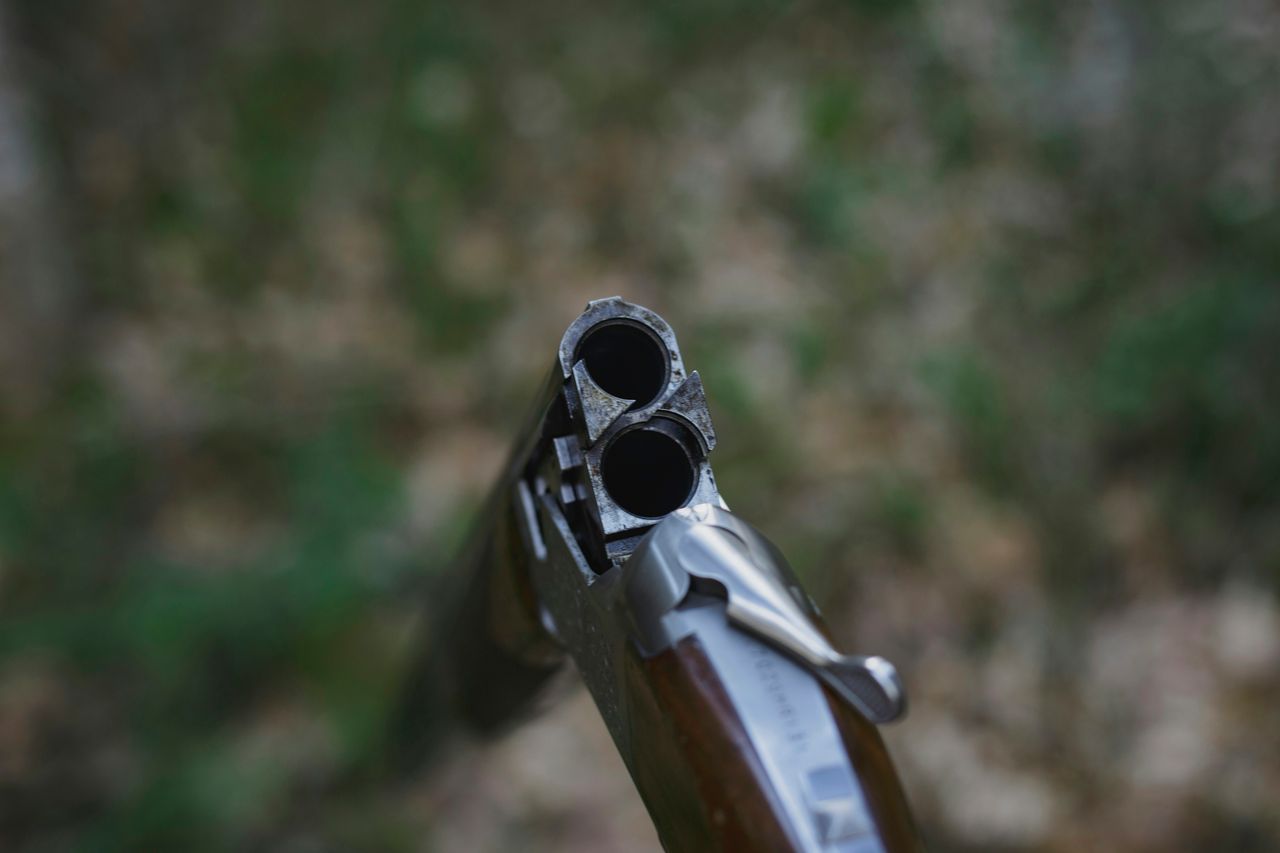
Bo Whoop was not just another handsome side-by-side with good engraving and famous ownership. Its technical setup was a major part of its myth. This gun was reportedly built by renowned Philadelphia gunsmith Burt Becker, whose name comes up repeatedly in accounts from Ducks Unlimited, Field & Stream, and American Hunter whenever Bo Whoop is discussed.
Becker’s role matters because Bo Whoop was designed around a very specific mission. It had 32-inch barrels, was choked full and full, and was tuned for Western Cartridge Company’s then-new Super-X 3-inch load carrying No. 4 lead shot. In plain language, that meant Buckingham had a duck gun meant to throw hard, tight patterns at distances most hunters associated with near-impossible shooting.
The HE, or Super Fox, was already a heavy-duty platform. Fox and its collaborators had developed it with features such as lengthened forcing cones, extra-full choke options, and beefed-up dimensions to handle stout ammunition. Bo Whoop represented the ideal expression of that concept, less a general sporting gun than a long-range waterfowl instrument.
That specialization is why people still talk about it with a mix of admiration and skepticism. To some, it was the ultimate duck gun. To others, it symbolized an era when experts chased extreme performance with lead loads and fixed chokes that demanded real discipline.
How Bo Whoop became bigger than a firearm

The reason Bo Whoop still gets mentioned nearly a century later is not just performance. Plenty of old guns shoot well. What made this one immortal was the story that grew around it through Buckingham’s writing, campfire retellings, and decades of reverence from duck hunters who saw in it a symbol of a vanished age.
Buckingham wrote with flair, humor, and authority, and his gun became part of his literary identity. That matters because sporting culture often crowns a few iconic objects that stand in for an entire tradition. Bo Whoop came to represent flooded timber mornings, long mallard shots, hand-loaded confidence, and the unapologetically individual style of classic Southern duck hunting.
Then the legend deepened when the original gun was lost in 1948. American Hunter recounts that Buckingham accidentally drove away without it, setting off one of the great missing-gun stories in sporting lore. A lost famous shotgun is catnip for collectors and storytellers, and Bo Whoop’s disappearance only enlarged its reputation.
When the gun eventually resurfaced years later, the story gained the kind of ending that myths rarely get. It was no longer merely Buckingham’s duck gun. It had become an artifact, one carrying emotional value far beyond steel, walnut, and choke measurements.
The lost gun, the rediscovery, and the collector mystique
Lost-and-found stories always attract attention, but Bo Whoop’s return carried unusual weight because of what the gun meant to American hunting culture. American Hunter called it Buckingham’s long-lost shotgun and reported that the story began on December 1, 1948, when he inadvertently left it behind. That date gives the tale a hard historical anchor.
Its rediscovery turned rumor into reality. Field & Stream later revisited the gun’s return to the field, while Ducks Unlimited emphasized that Bo Whoop is displayed at DU headquarters in Memphis alongside Buckingham-related pieces, including another gun associated with him. That public display helped shift Bo Whoop from private obsession to shared heritage.
Collectors, naturally, see another dimension. A Philadelphia-made Fox is already desirable. A genuine HE Super Fox is scarcer and more specialized. Add Burt Becker, Nash Buckingham, a famous nickname, a disappearance, and a recovery, and you get the sort of provenance that collectors dream about but rarely encounter.
That is why Bo Whoop sits at the intersection of field history and high collecting. It is admired not simply because it is rare, but because every layer of its story reinforces the next. The hardware is authentic, the owner was legendary, and the narrative never needed embellishment to stay compelling.
Why Bo Whoop still resonates with hunters today
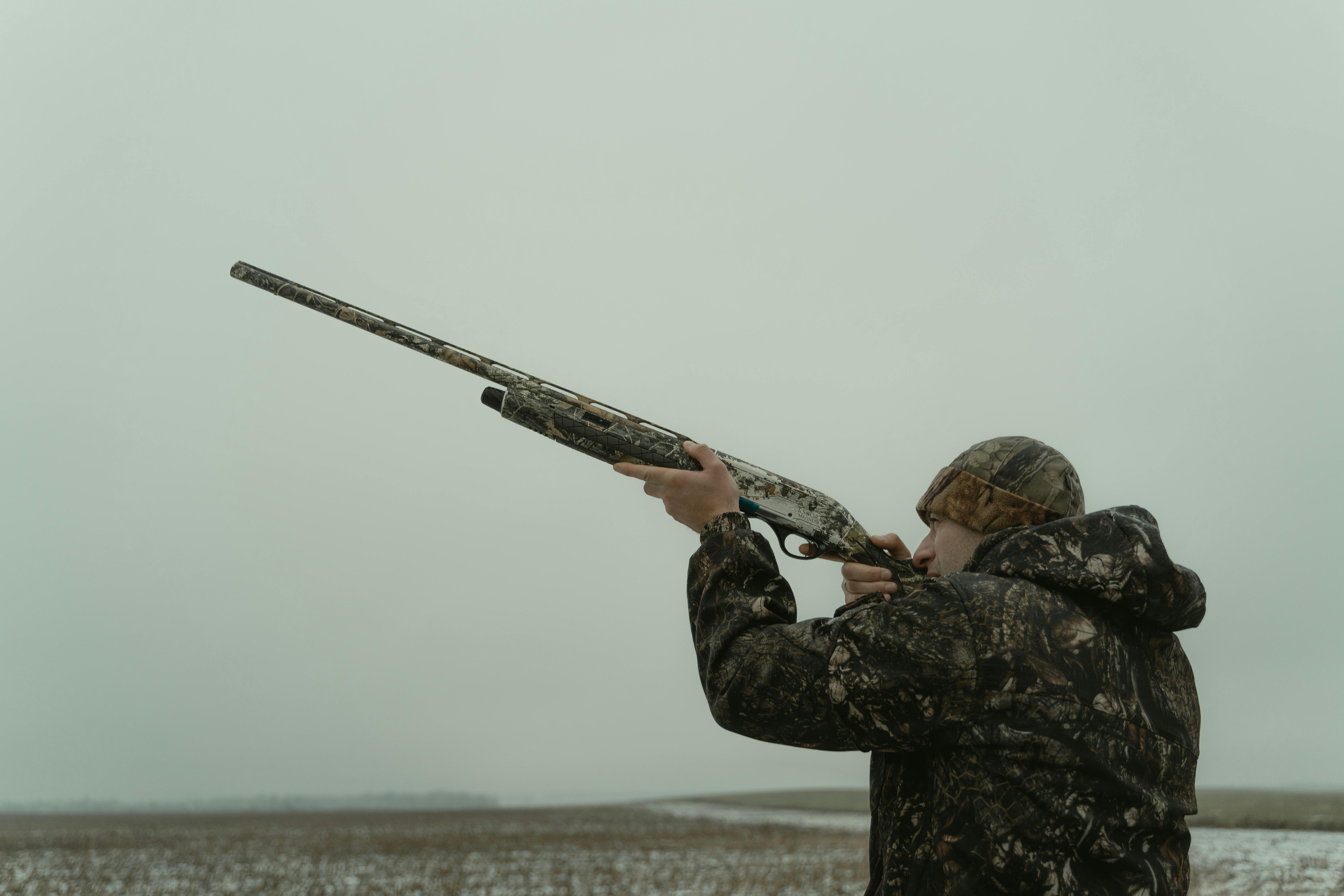
Bo Whoop endures because it speaks to something hunters still understand: the deep bond between person and gun. Most hunters have known a shotgun that just feels right, one they trust when birds swing wide or the weather turns ugly. Bo Whoop is that feeling writ large, amplified by history and by a writer gifted enough to make the rest of the world care.
It also reminds us that shotgun design has always been driven by real needs in the field. The Super Fox was not chasing fashion. It was built to solve a problem for waterfowl who wanted reach, pattern density, and confidence with the powerful loads of the day. Even if modern non-toxic shot and interchangeable chokes have changed the equation, the logic behind the gun still feels familiar.
There is also a cautionary charm to the story. Bo Whoop came from an era of long-range duck shooting that many modern hunters view differently, especially through the lens of conservation and evolving ethics. Yet the gun itself remains a snapshot of honest innovation rather than excess for its own sake.
In the end, Bo Whoop survives because it combines everything that makes sporting history stick: a top-tier maker, a distinctive design, a larger-than-life owner, and a name that sounds like the marsh itself. That is how a shotgun becomes unforgettable.