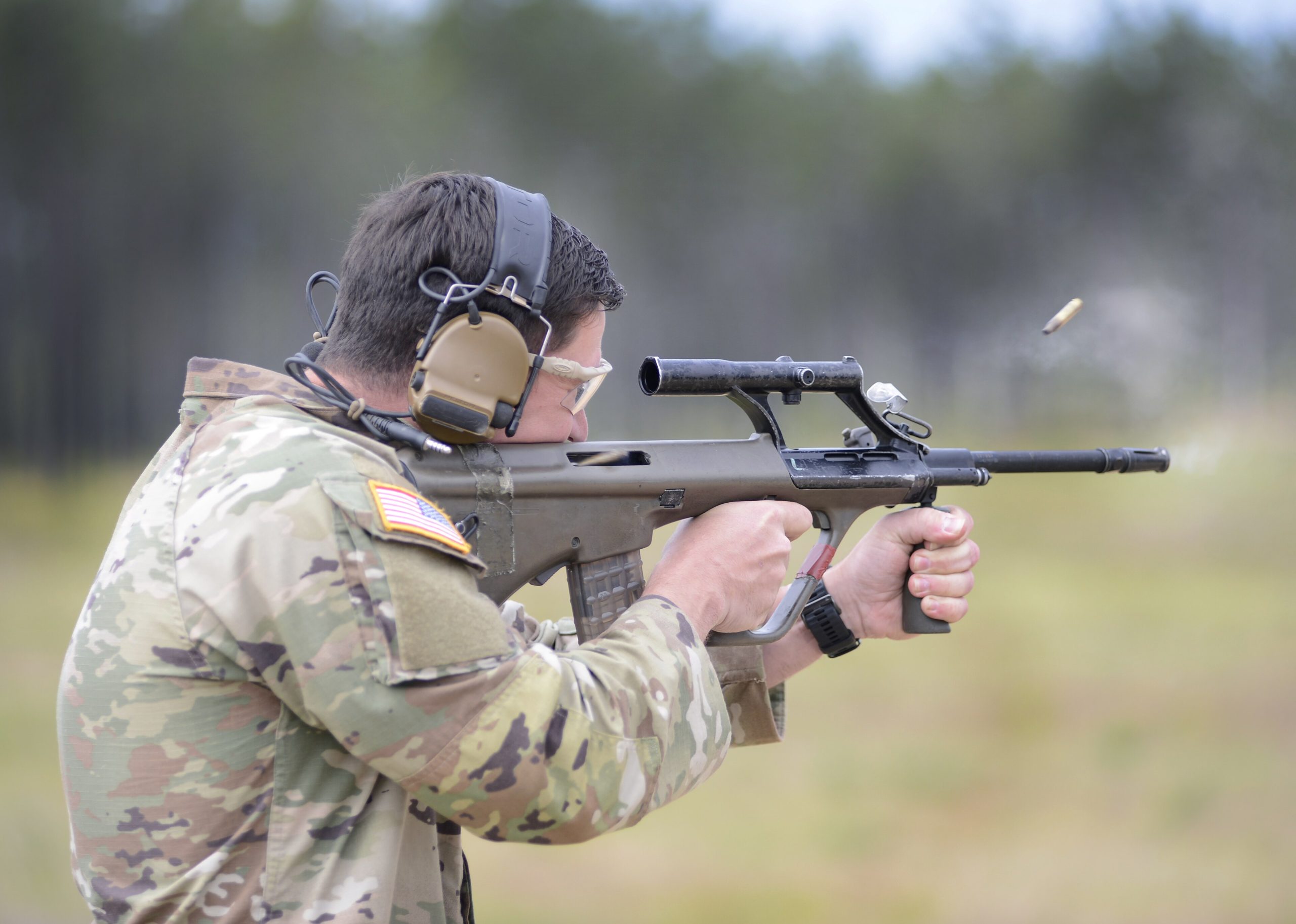
The Steyr AUG arrived when armies were questioning the bulky battle rifles that had dominated the previous generation. Austria wanted something shorter, lighter, and better suited to modern infantry operations without sacrificing a useful rifle barrel. Steyr’s answer combined a bullpup layout, polymer construction, an integrated optic, and unusual modularity. Adopted as the StG 77 in 1977, the AUG became one of the most influential bullpup rifles ever fielded. Its success was not based on one gimmick, but on several ideas working together in a remarkably compact package.
1. Austria Chose It in 1977
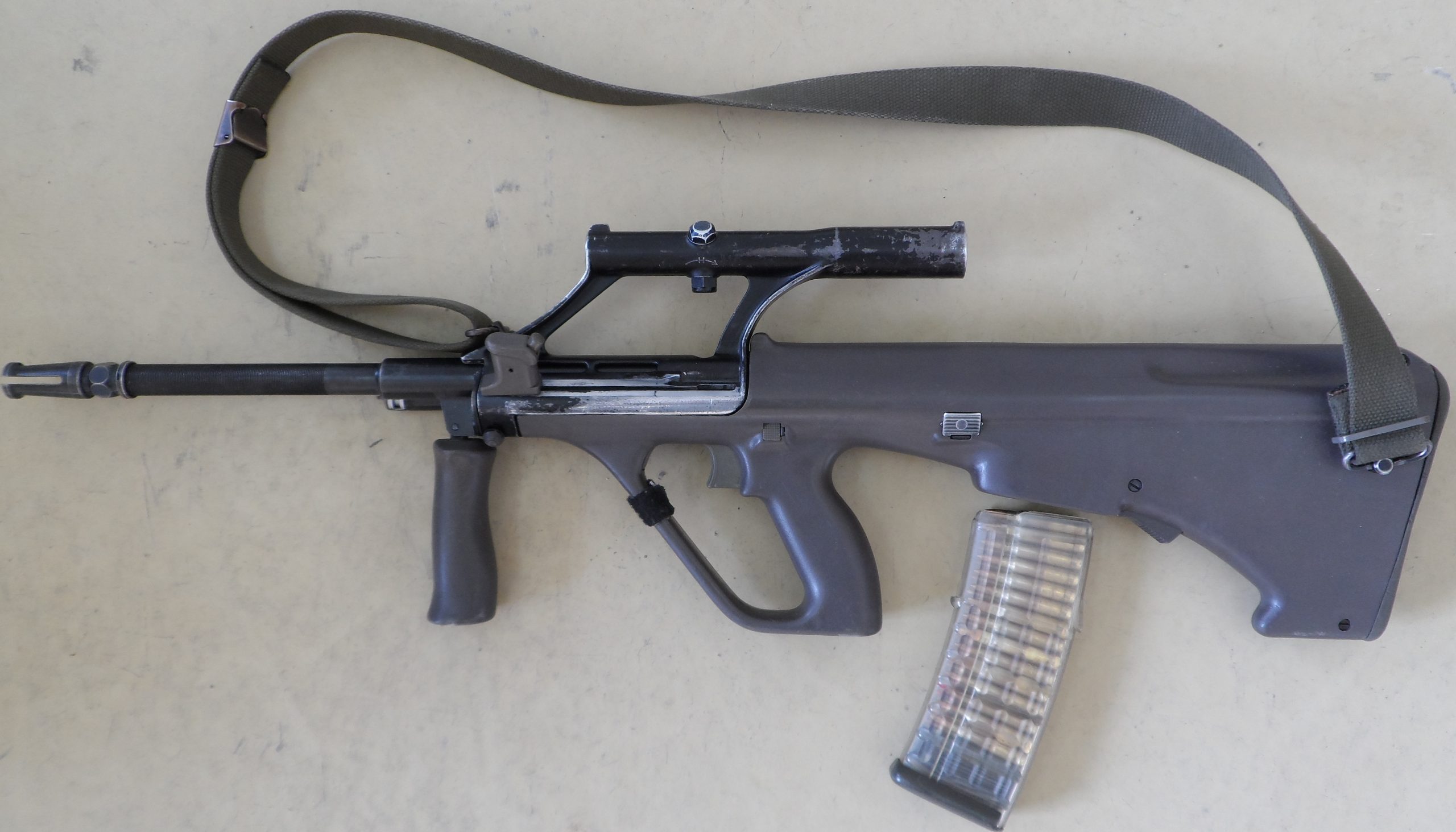
The AUG emerged from Austria’s late-1960s effort to replace the StG 58, a domestic version of the FN FAL. Rather than simply modernizing another full-length rifle, Steyr pursued a radically different layout centered on the 5.56×45mm NATO cartridge. In 1977, the Austrian Federal Army selected the new design as its standard rifle, giving it the designation StG 77. Production and broader service followed in 1978. That timeline matters because the AUG became one of the earliest bullpup designs to move beyond experiments and into large-scale military service. Its adoption demonstrated that the unusual configuration could work as a genuine infantry system.
2. The Bullpup Layout Made It Remarkably Compact
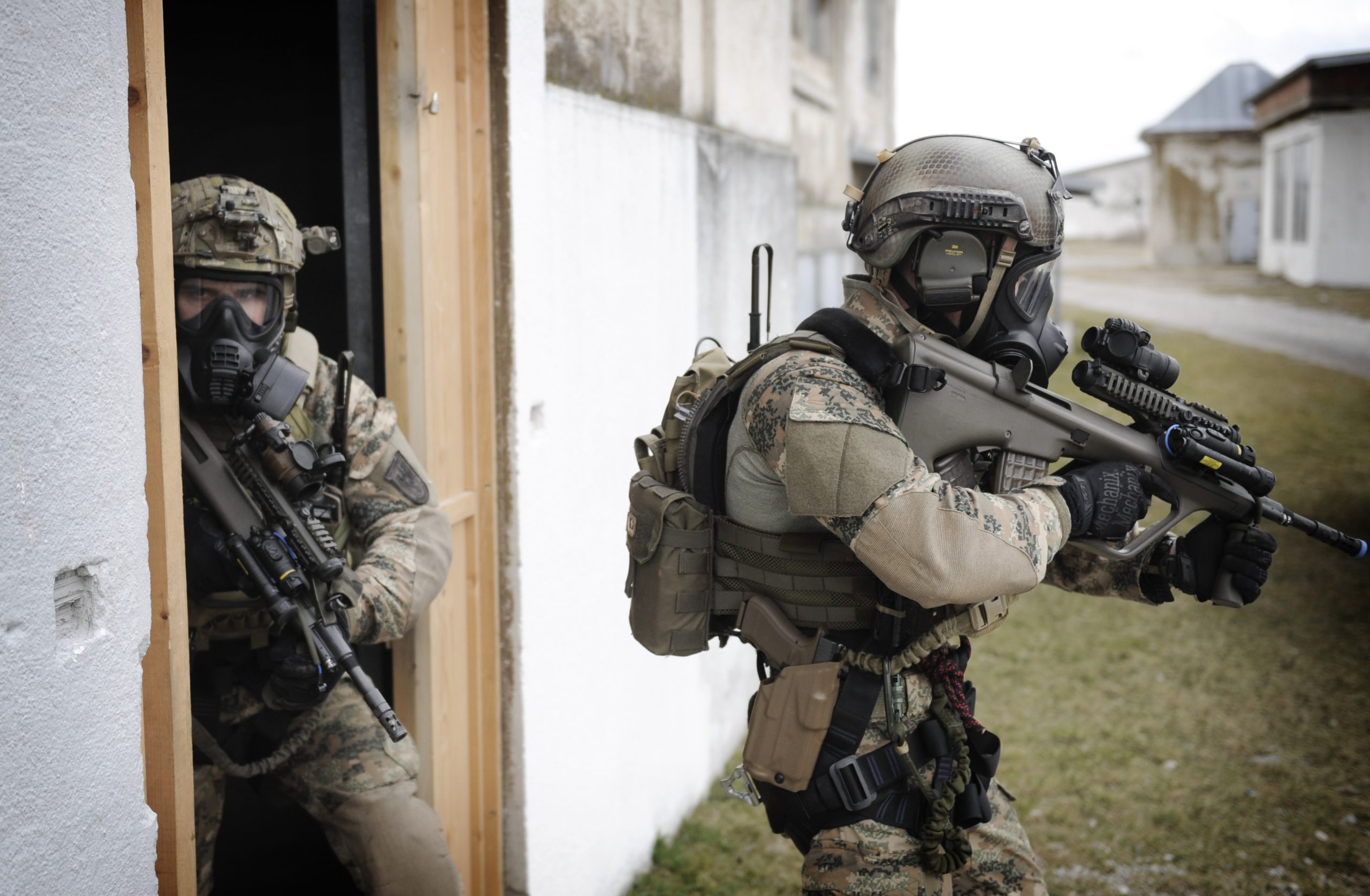
The AUG placed the action and magazine behind the trigger, allowing a comparatively long barrel inside a much shorter overall package. With a 508mm, or 20-inch, barrel, the standard AUG measures about 790mm overall and weighs approximately 3.6kg unloaded. A 417mm barrel reduces overall length to roughly 725mm and weight to about 3.3kg. That compactness was particularly attractive to mechanized and airborne troops working around vehicles or confined spaces. The key idea was simple: retain useful barrel length while moving the rifle’s operating components rearward. The result was a weapon that handled more like a shorter carbine without requiring an extremely short barrel.
3. Polymer Was Part of the Design, Not Decoration
The AUG looked futuristic partly because Steyr made extensive use of polymer at a time when military rifles were still dominated by metal and wood. Its distinctive green synthetic stock helped separate it visually from conventional rifles, while polymer components also contributed to reduced weight and corrosion resistance. The design combined an aluminum receiver with a polymer housing and fire-control components during development. This was not simply an attempt to make the rifle look modern. Steyr was trying to simplify production, reduce unnecessary mass, and create a durable service weapon. The finished rifle therefore became an early example of how advanced materials could be integrated into a military rifle without abandoning ruggedness.
4. Its Optic Was Standard Equipment From the Beginning
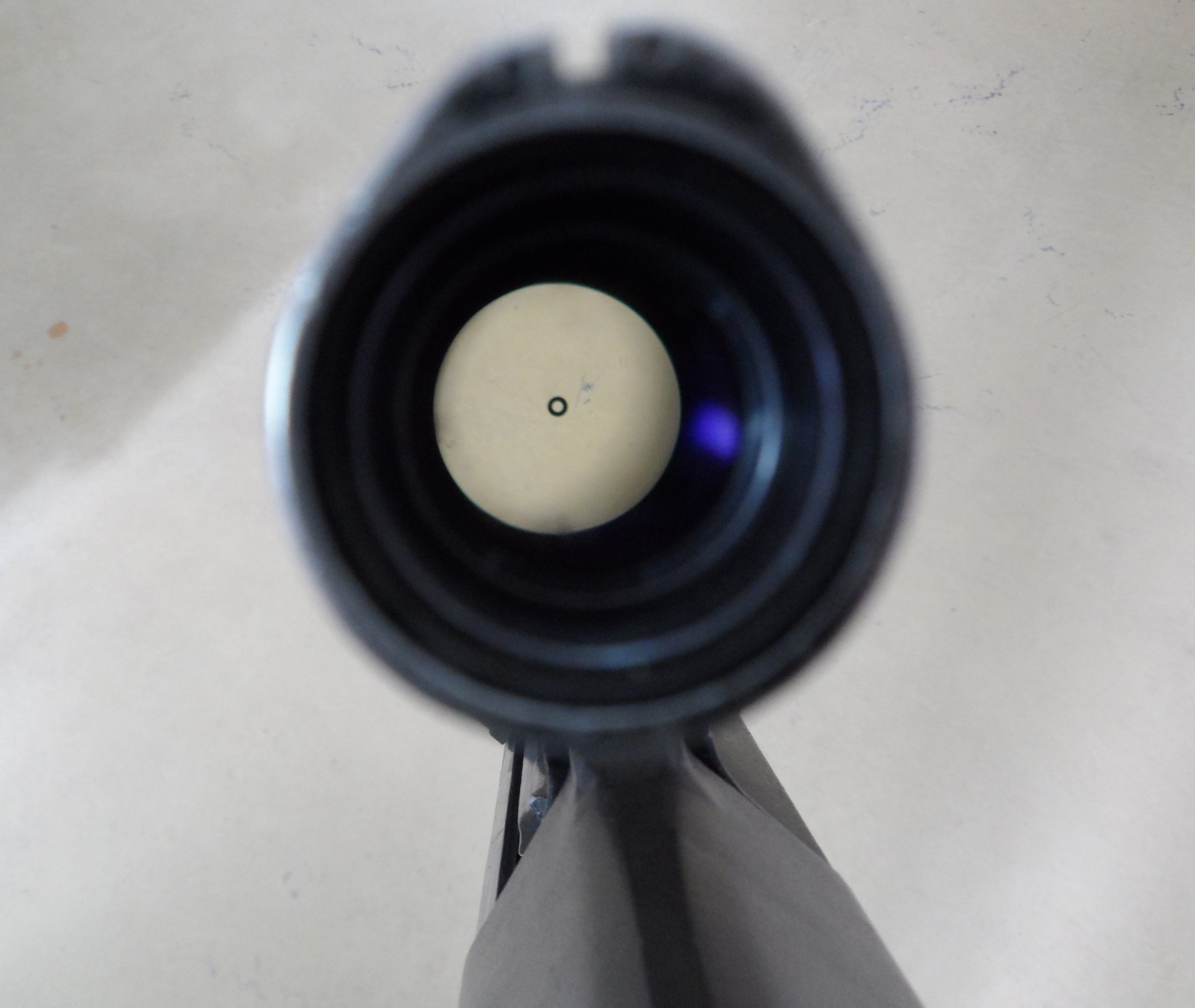
Another striking AUG feature was its integrated optical sight. Instead of treating an optic as an accessory that soldiers might receive later, the original design incorporated a 1.5× sight directly into the carrying handle. That decision was unusual for the late 1970s and reflected Steyr’s emphasis on making the rifle easy for ordinary troops to use effectively. The fixed sighting arrangement also contributed to the AUG’s instantly recognizable profile. Later versions introduced different mounting arrangements, including Picatinny rails, but the basic idea survived: the rifle should arrive with an effective sighting solution rather than forcing every soldier to configure one independently. This helped make the AUG feel far ahead of its period.
5. The Barrel Could Be Changed Quickly

Modularity was another feature that separated the AUG from many contemporary service rifles. Its barrel assembly could be exchanged rapidly without specialized workshop equipment, allowing different configurations to be created from the same basic rifle architecture. Steyr lists 382mm, 417mm and 508mm barrel options for AUG A1B configurations, producing overall lengths of approximately 690mm, 725mm and 790mm respectively. The barrels are cold-hammer forged and chrome-lined in the cited military specifications. This flexibility meant one basic platform could serve compact, standard and longer-barrel roles. For an army, that offered an attractive way to tailor the rifle without maintaining entirely unrelated weapon families.
6. Its Trigger Used a Very Unusual System
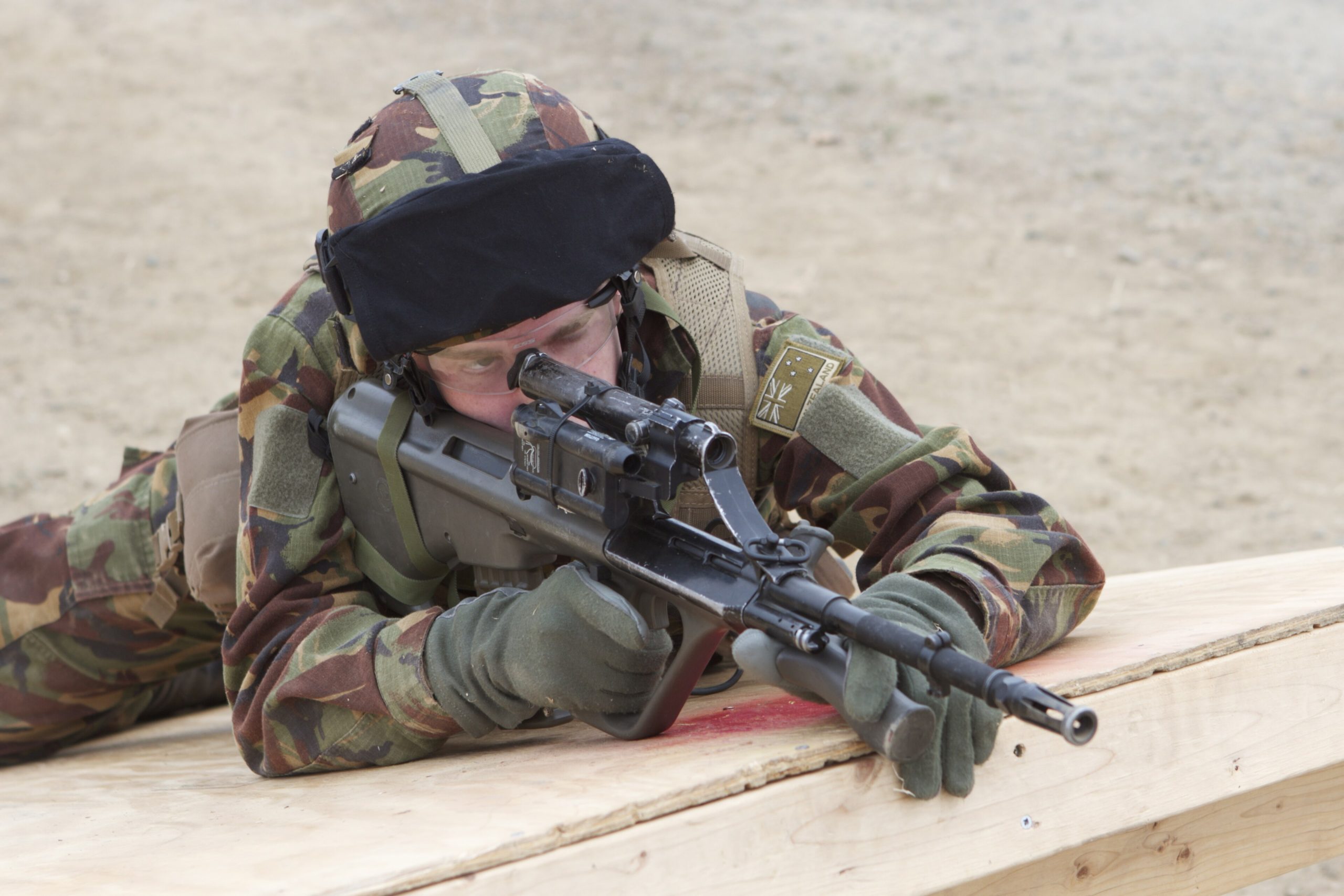
The AUG’s trigger mechanism was unconventional even among unusual bullpup designs. Rather than using a conventional separate selector lever for semi-automatic and automatic fire, military versions used a progressive trigger. A partial pull produces semi-automatic fire, while pulling farther through the trigger produces automatic fire. That arrangement reduced the number of controls the operator had to manipulate during firing. The rifle also uses a lateral push-through safety that locks the trigger. Steyr describes the system as a “pull through” trigger, while historical testing noted how distinctive it was. The design reflected the broader AUG philosophy: simplify operation by combining functions wherever practical.
7. Its Magazine Became an Iconic Feature
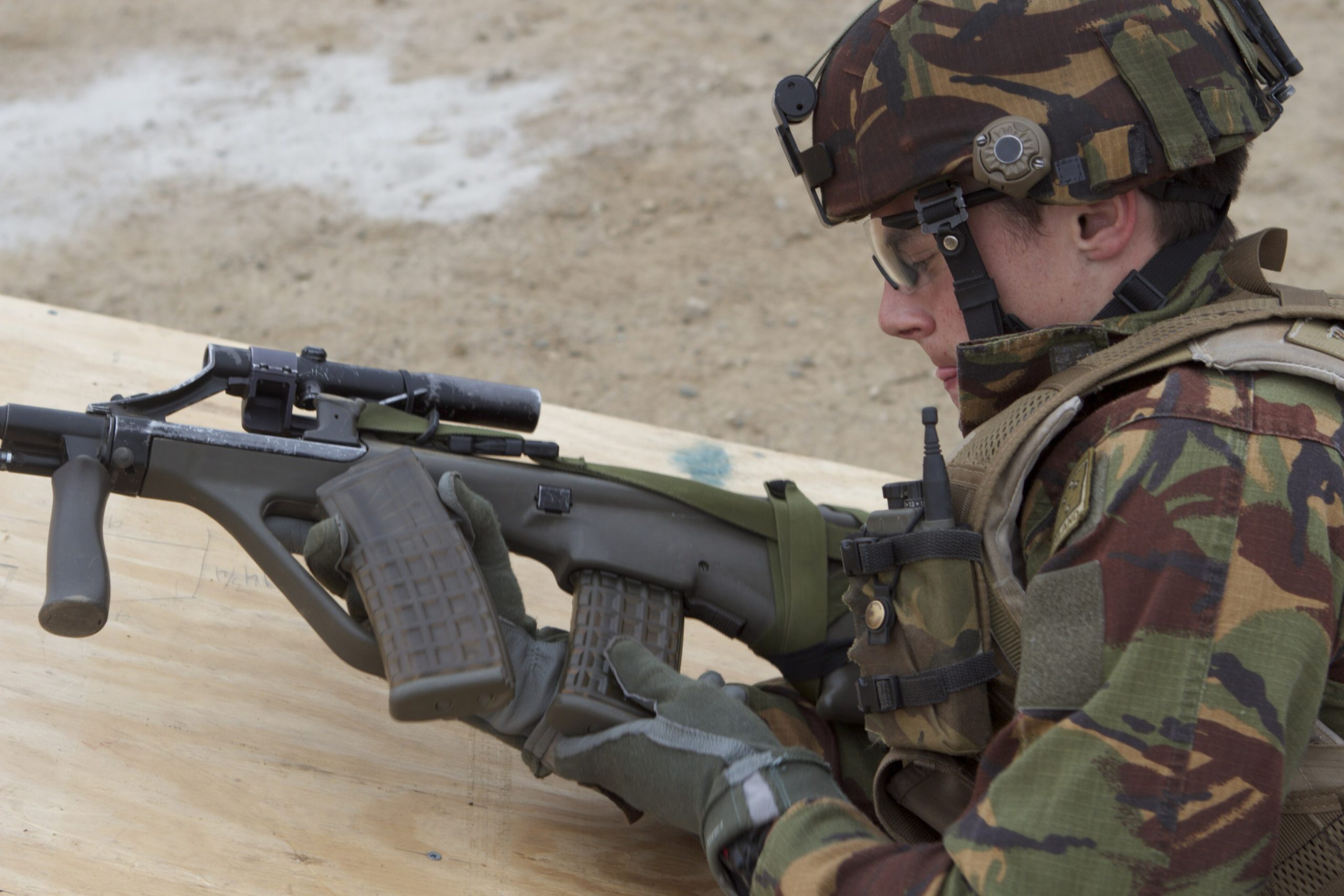
The translucent polymer magazine became one of the AUG’s most recognizable details. Standard military configurations use a detachable 30-round magazine, while Steyr also lists a 42-round option. The translucent body allows ammunition remaining in the magazine to be visually checked, giving the soldier an immediate indication of supply without removing it. Unlike rifles designed around widely standardized magazines, traditional AUG versions used their own synthetic magazine pattern, although later configurations offered NATO-compatible options. That choice reflected the rifle’s highly integrated philosophy: ammunition feeding, furniture, controls and operating components were designed as parts of one complete system rather than a collection of unrelated additions.
8. It Was Designed to Be Modular in More Than One Way
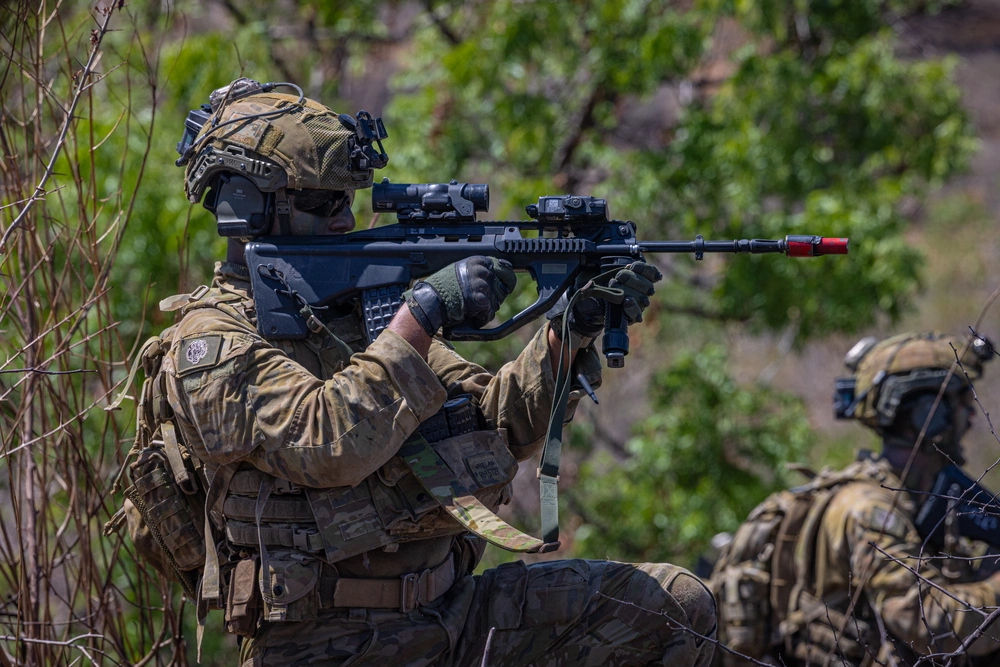
The AUG was never intended to be just one fixed rifle. Its architecture allowed different barrel groups and configurations, while the basic action could support several roles. Steyr describes the platform as modular and capable of being field-stripped into its main groups within seconds without tools. Variants eventually included compact configurations, heavy-barrel models, and 9mm versions. The standard 5.56mm rifle could use barrels from roughly 15 to 20 inches depending on configuration. That breadth gave the AUG a useful service life because armies did not necessarily need an entirely new rifle whenever requirements changed. The platform could evolve while retaining its familiar core.
9. Its Real Achievement Was Winning Military Trust

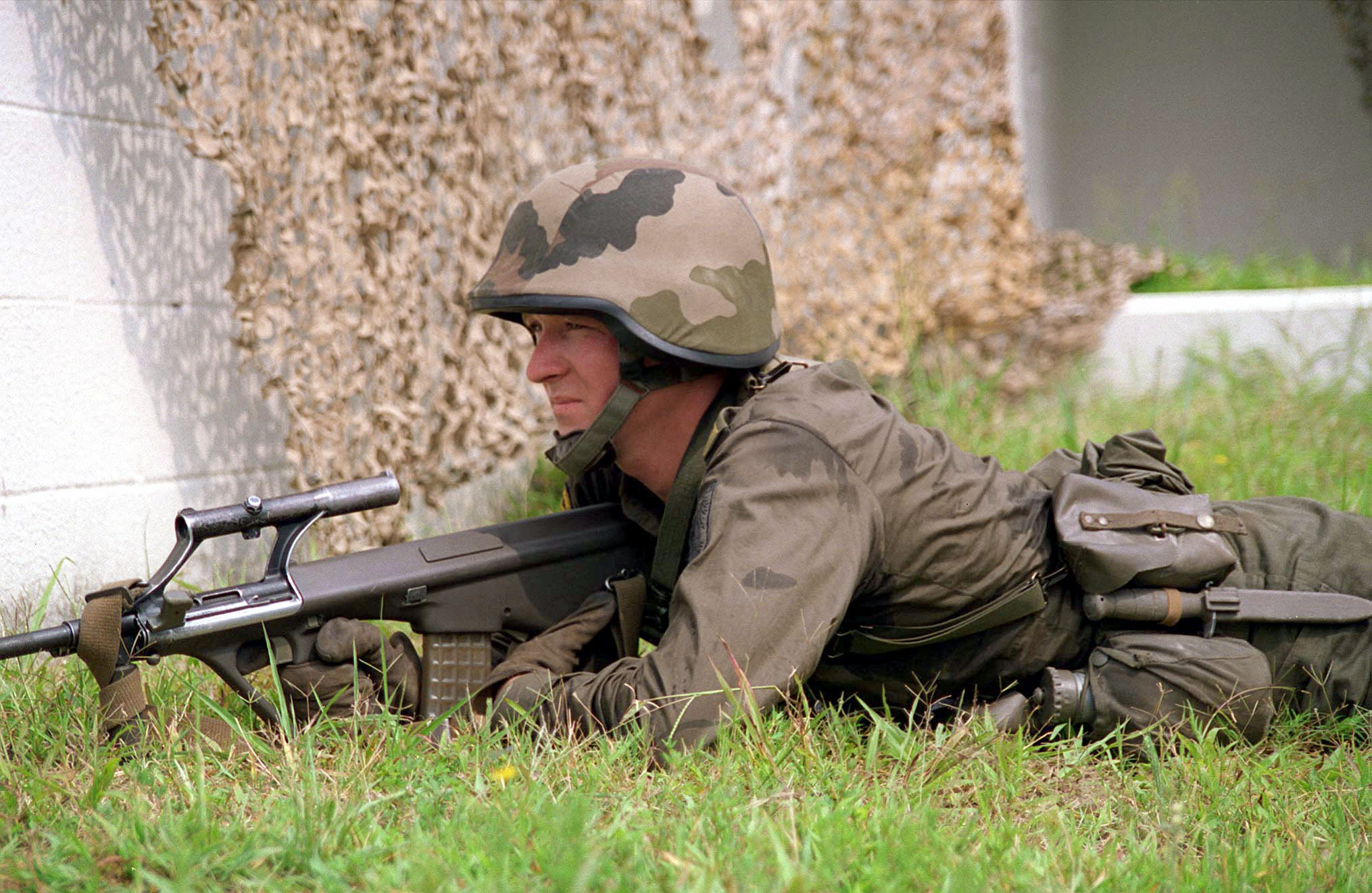
The AUG’s greatest achievement was not simply being unusual; it proved that an unusual rifle could become a mainstream military weapon. Austria adopted it in 1977, and versions subsequently entered service with armed forces and special units in more than 20 countries. Australia developed the F88 family from the AUG, while Ireland and other nations also adopted AUG variants. Steyr continues to describe the platform as a standard weapon used by armed forces and special units around the world since 1977. Its combination of compact dimensions, 5.56mm chambering, modular construction and distinctive handling gave the bullpup concept credibility on a scale few earlier designs had achieved.