The history of handgun design is full of unusual ideas, but some of the most interesting examples were created to solve problems that ordinary pistols could not address. Certain designs targeted underwater operations, covert missions, emergency survival, specialized military roles, or situations where conventional firearms were considered unsuitable. Their unusual features were not always attempts to improve everyday performance. Instead, each reflected a particular requirement that manufacturers believed deserved a dedicated solution. Some became important historical experiments, while others remained limited to small production runs. Here are nine handguns developed for remarkably specific purposes.
1. Welrod: A Handgun Built Around Silence
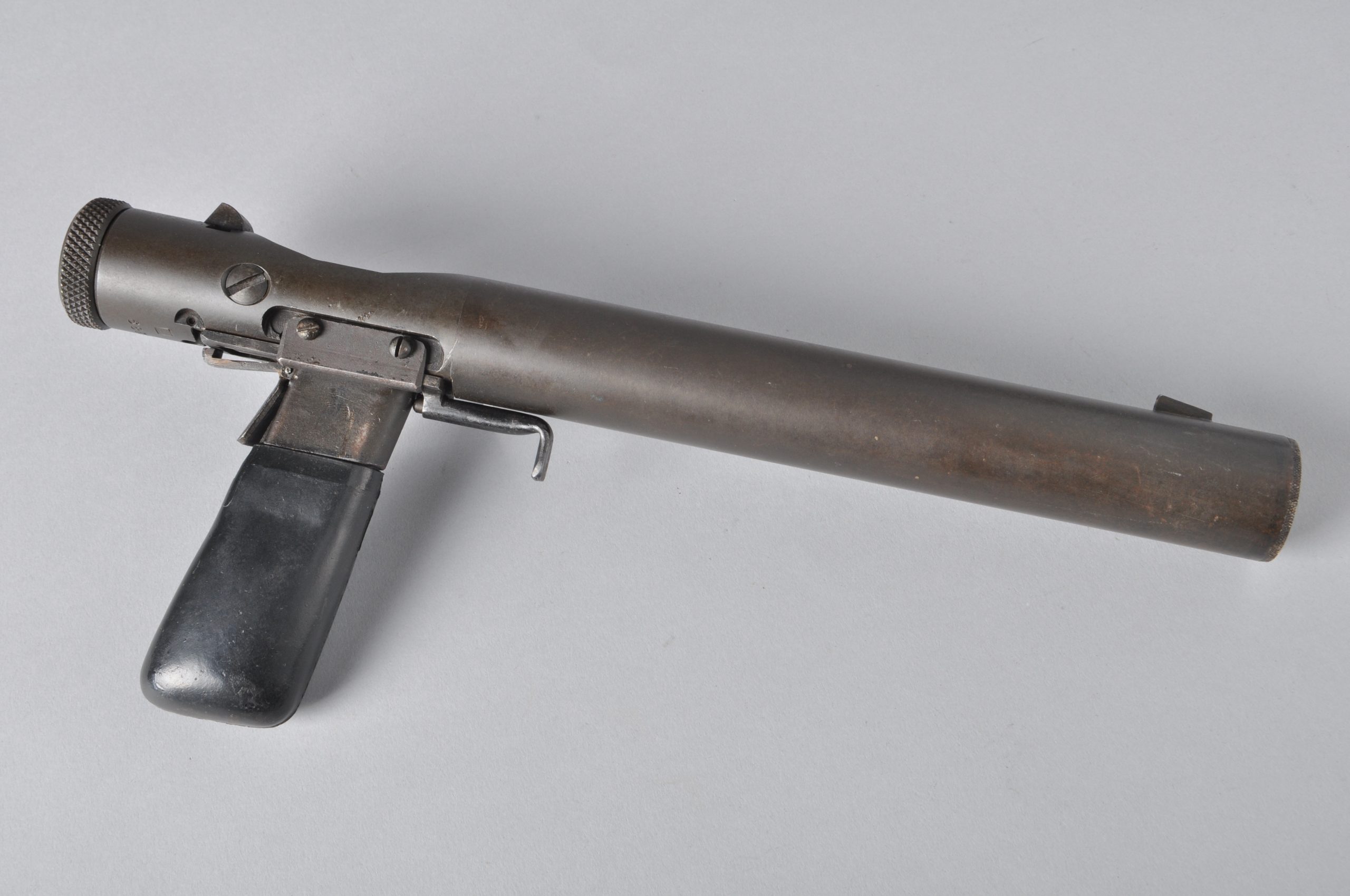
The British Welrod was developed during World War II for agents and resistance groups on covert missions. Rather than adding an accessory to a normal pistol, designers built it around an integral suppressor and a manually operated bolt. It appeared in .32 ACP and 9mm versions; the .32 model held five rounds, according to the National Museum of the U.S. Air Force. Removing its magazine made the unusual shape less recognizable. Production estimates differ, but the museum places the total near 2,800. The Welrod answered a narrow operational requirement, not the needs of ordinary troops.
2. Heckler & Koch P11: An Underwater Sidearm
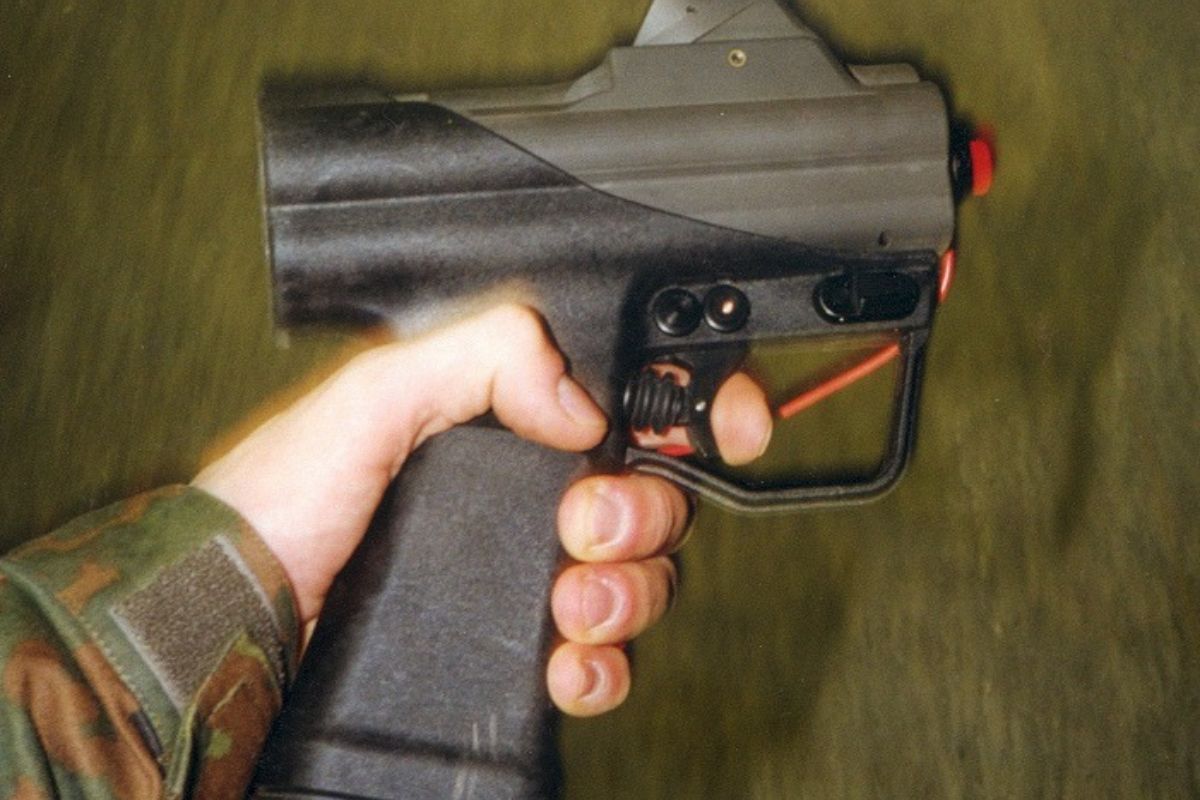
The Heckler & Koch P11 was designed for combat divers, a setting where ordinary handguns were unsuitable. Adopted by West Germany in 1976, it used five sealed barrels and electrically initiated ammunition instead of a conventional magazine-fed action. Special cartridges launched dart-like projectiles underwater, while separate ammunition allowed use above the surface. The unusual arrangement avoided relying on a normal pistol mechanism in water. The P11 remained secret for years, reflecting its specialized military role. Its five-shot layout made it unlike almost every conventional sidearm.
3. FP-45 Liberator: A Disposable Resistance Weapon
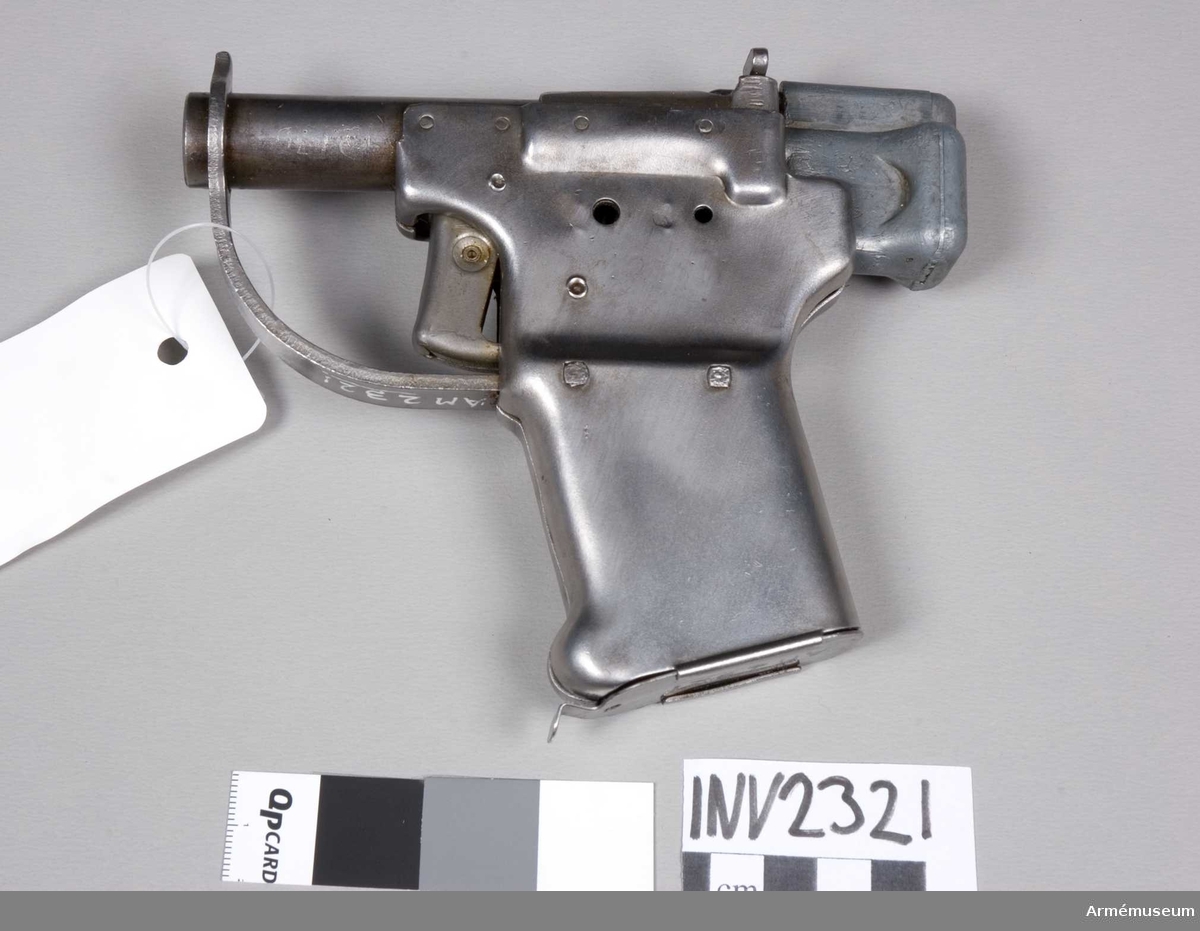
The American FP-45 Liberator was never intended to compete with service pistols. Developed in 1942, it was a crude, single-shot .45 ACP handgun intended for resistance groups in occupied territory. General Motors’ Guide Lamp Division produced roughly one million, keeping the unit cost near $2.10. Each package included 10 cartridges and an illustrated instruction sheet. The plan was to provide an emergency weapon that could be abandoned after use, not a dependable sidearm for prolonged combat. Its simple construction reflected a very specific wartime requirement.
4. MBA Gyrojet: A Rocket-Powered Handgun
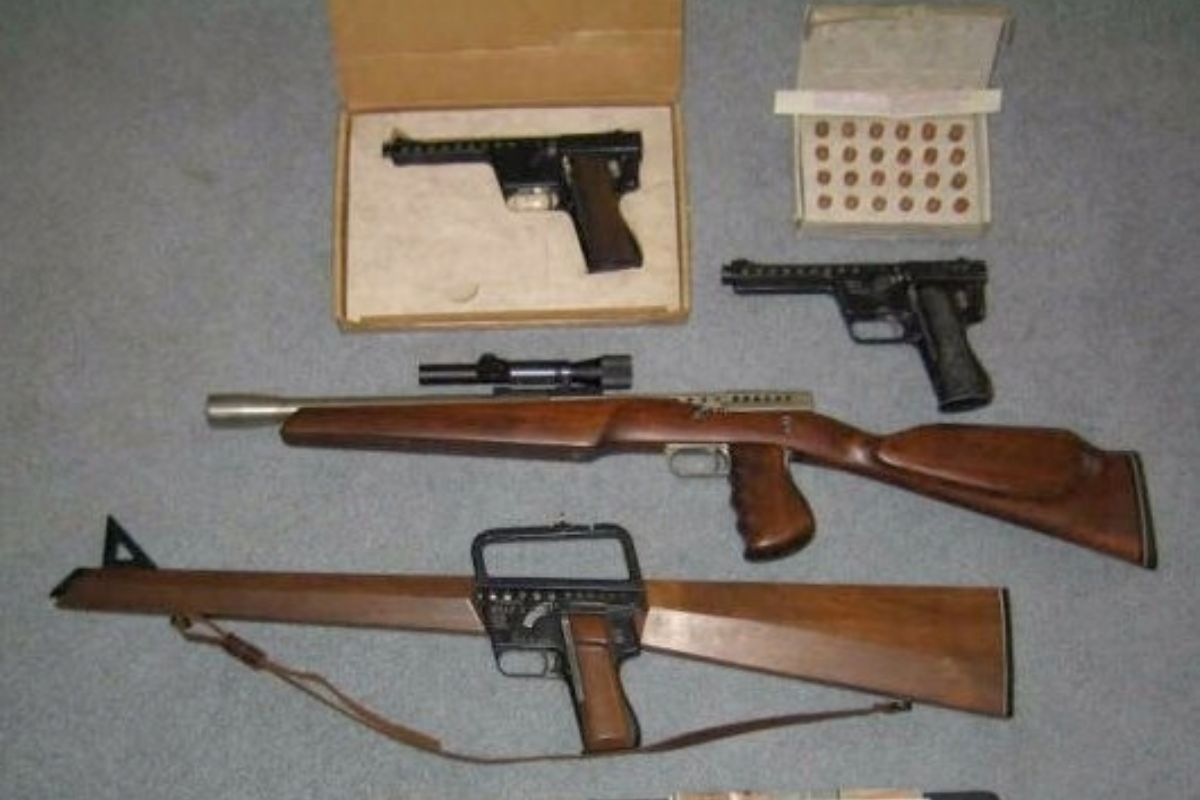
The Gyrojet pistol pursued a science-fiction-like idea. Developed by MB Associates in the 1960s, it fired small self-propelled rockets instead of ordinary bullets. Its magazine held six 13mm rockets, later reduced to 12mm in some versions. The projectile accelerated after leaving the muzzle, producing little recoil but struggling at very short distances. High ammunition costs, reliability concerns and poor accuracy kept it from becoming practical. It remains a rare attempt to replace the conventional cartridge with miniature rocket propulsion.
5. Remington XP-100: A Handgun for Long-Range Sport
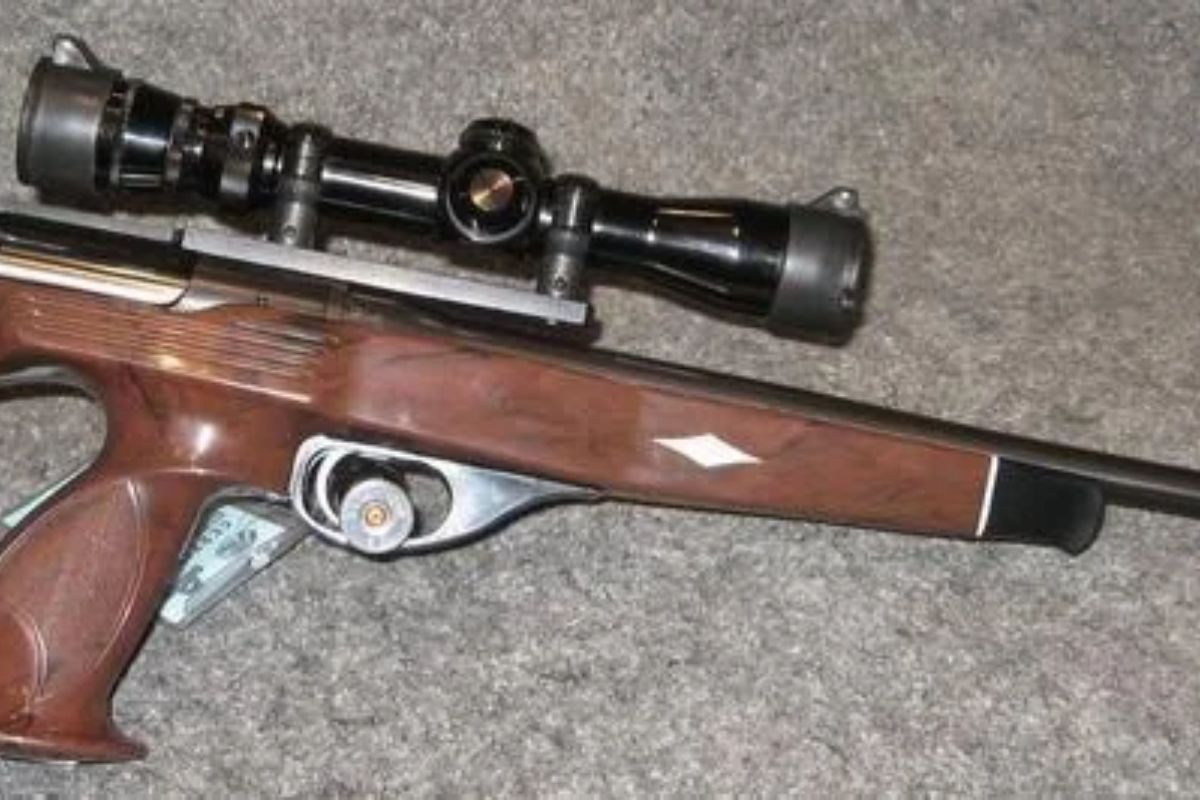
The Remington XP-100 was built for shooters seeking rifle-like precision. Introduced in 1963, it used a bolt action and initially fired the .221 Remington Fireball cartridge, developed alongside the pistol. Its original barrel measured about 10.75 inches; later silhouette versions stretched to 14.5 inches and used cartridges such as 7mm BR. It suited varmint hunting and metallic-silhouette competition far better than defensive use. Remington continued the line until 1994, offering several specialized variants. Its purpose was deliberate sporting accuracy, not everyday portability.
6. LeMat Revolver: Two Types of Firepower in One
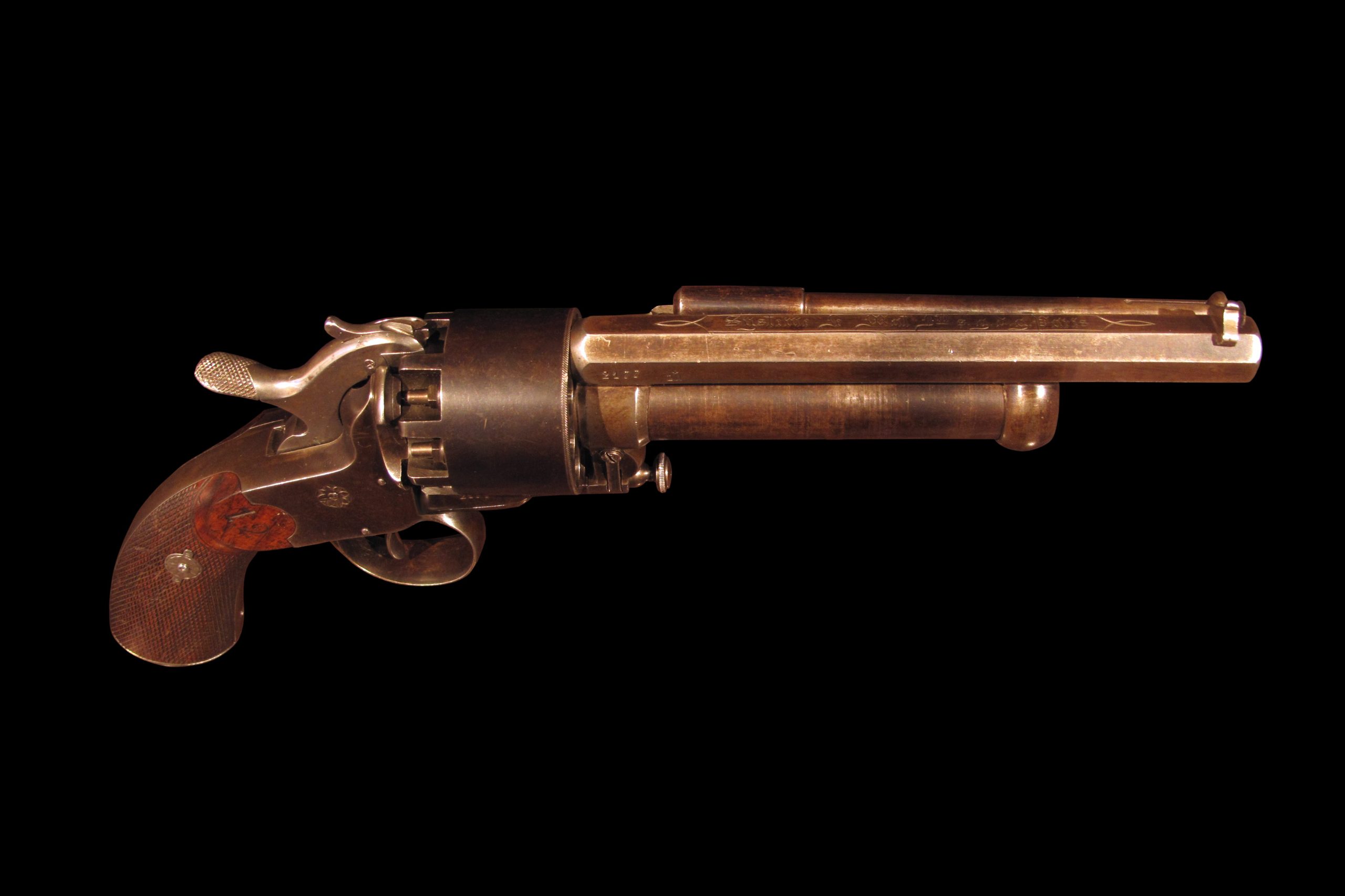
The LeMat revolver combined a revolving cylinder with a second barrel beneath it. Designed by French physician Jean Alexandre LeMat, the Civil War-era handgun carried nine .40-caliber bullets in its cylinder and a 16-gauge smoothbore barrel at the center. The extra barrel offered a separate close-range option, making the weapon heavier and more complicated than an ordinary revolver. The Smithsonian records that nearly 3,000 were shipped to the Confederacy. Its dual-barrel arrangement reflected an era when designers were exploring how much capability one sidearm could combine.
7. Sedgley OSS Glove Gun: A Highly Unusual Concealed Device
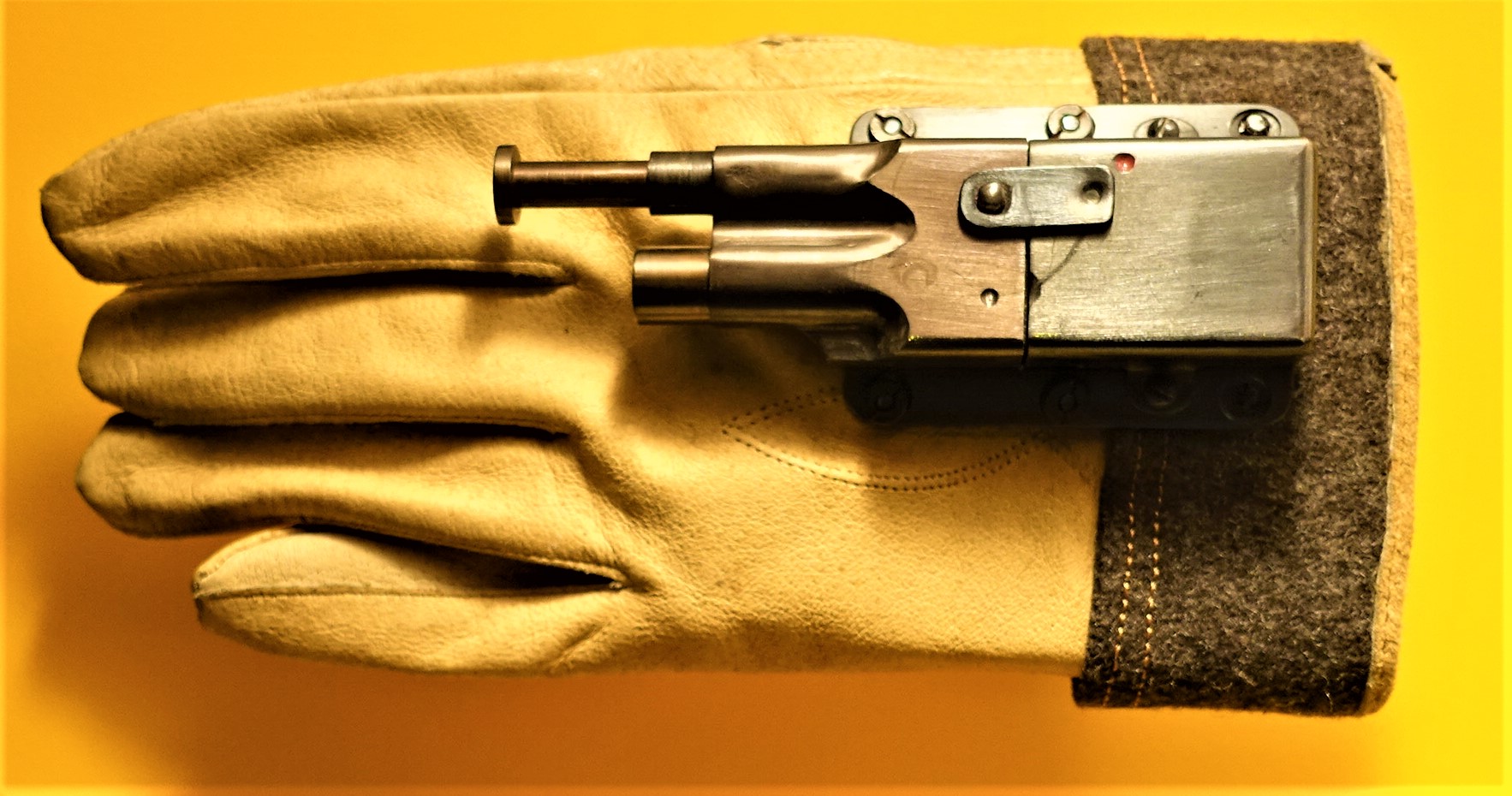
The Sedgley OSS Glove Gun was developed for a narrow wartime purpose and looked nothing like a conventional handgun. It consisted of a single-shot .38 S&W barrel and firing mechanism attached to a leather glove, without a normal frame or grip. Surviving descriptions give the barrel length as about 2⅞ inches. It is associated with the Office of Strategic Services during World War II, although documented operational use appears limited. Its novelty lay in disguising a firearm as clothing, not in offering the capacity or handling expected from a service pistol.
8. COP .357 Derringer: Four Barrels in a Pocket Pistol
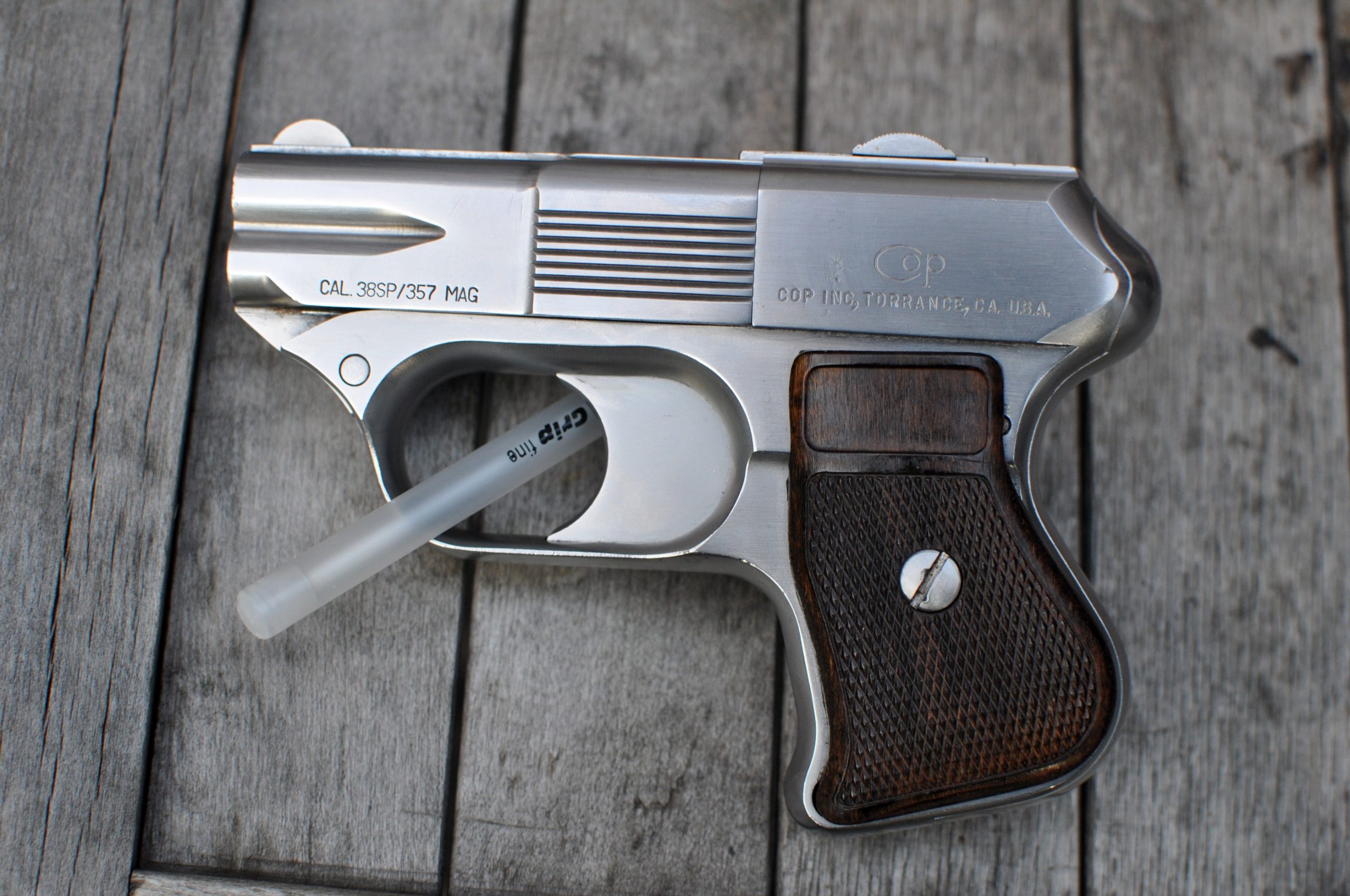
The COP .357 was designed for buyers wanting more than the two shots offered by traditional derringers in a compact format. Produced from 1979, it used four short barrels and was chambered for .357 Magnum or .38 Special. The pistol measured about 5.6 inches long and weighed roughly 1.75 pounds, unusually dense for its size. A double-action mechanism fired the barrels in sequence, while its break-open design set it apart from ordinary pocket pistols. It served a small market for unusual backup handguns rather than becoming a mainstream design too.
9. Apache Revolver: A Folding Weapon for Close Quarters
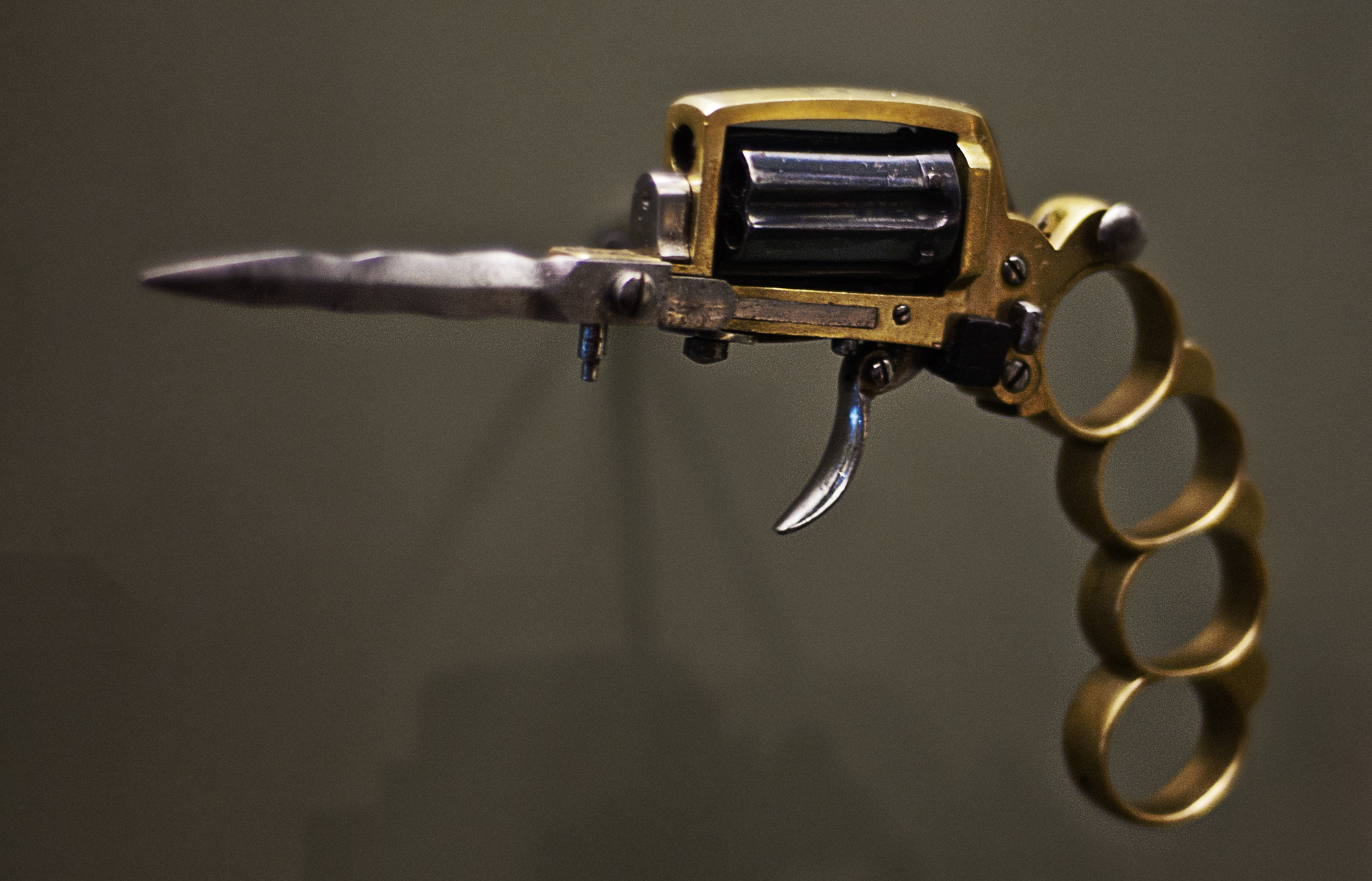
The 19th-century Apache revolver combined several personal weapons in one folding device. Usually associated with French manufacture, it joined a small pepperbox-style firearm to brass knuckles and, on some examples, a folding blade. It had no conventional grip or trigger guard, and its short barrels reflected its close-range role. Examples varied, so no single capacity or measurement applies to every specimen. The design belonged to an era when pocket weapons blurred the line between firearm and personal tool. Its awkward compromises kept it from replacing an ordinary revolver.