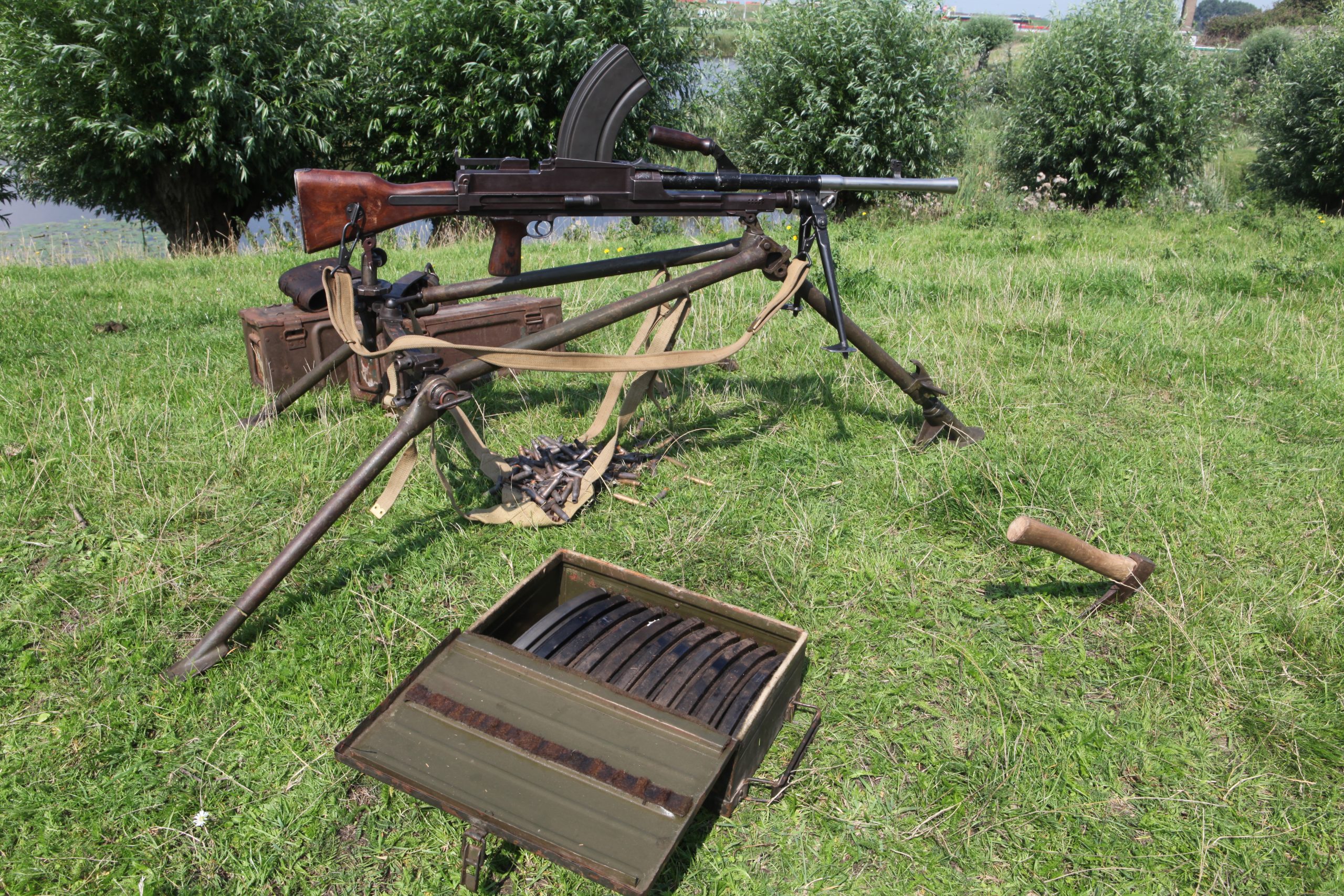
Machine guns did not always depend on the familiar linked-metal ammunition belt. Early designers experimented with woven cloth belts, rigid feed strips, rotating pans, and detachable box magazines, each offering a different solution to the problem of supplying cartridges. These systems affected ammunition capacity, portability, reliability, and the way crews handled sustained fire. Some disappeared as metal links improved, while others remained highly successful. The eight examples below show how inventive machine-gun ammunition feeding became during the first half of the 20th century.
1. Maxim Gun
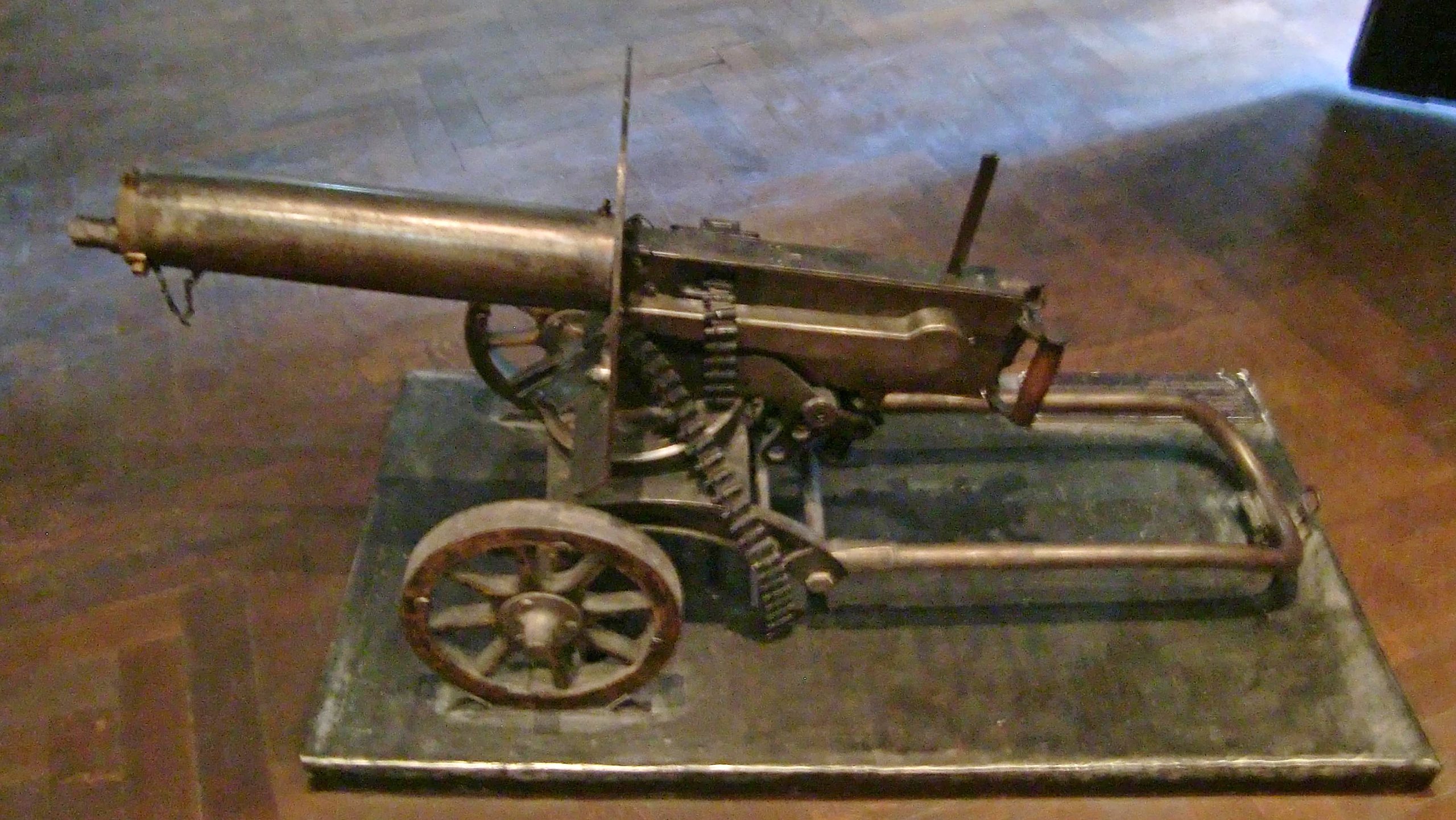
The Maxim was among the first successful machine guns to rely on a fabric ammunition belt instead of a rigid metal belt. Introduced in the 1880s, it commonly used a 250-round cloth belt with individual pockets that carried rifle cartridges through the receiver. Its recoil-operated action advanced the belt as each shot cycled, while a water-cooled barrel helped control heat during prolonged firing. Cloth made large ammunition supplies flexible and relatively easy to pack, although dirt, oil, moisture, and wear could weaken the material. The Maxim’s belt system became a foundation for many later machine-gun designs, especially those that favored long, reusable ammunition belts.
2. Vickers Machine Gun
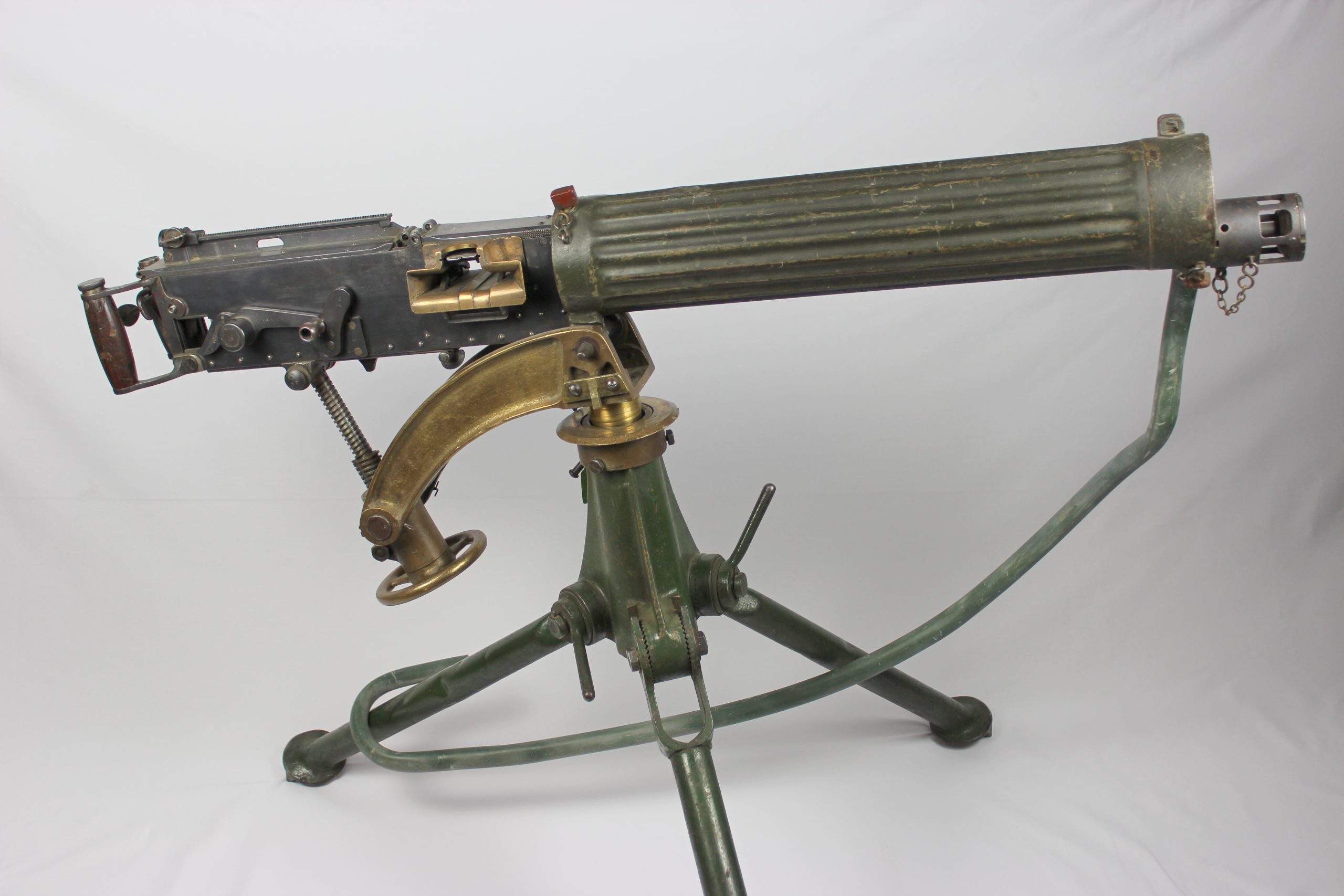
The Vickers refined the cloth-belt idea into one of the most recognizable machine-gun systems of the early 20th century. Adopted by the British Army in 1912, it normally used a 250-round woven belt for .303 British ammunition. Its recoil-operated mechanism worked with a water-cooled barrel, allowing sustained fire when the crew maintained the gun and water supply. Compared with rigid carriers, the cloth belt was flexible and relatively light for its ammunition capacity, but it was more vulnerable to contamination and wear. The Vickers remained in service for decades, proving that fabric could support a highly durable automatic weapon under demanding military conditions.
3. Browning M1919
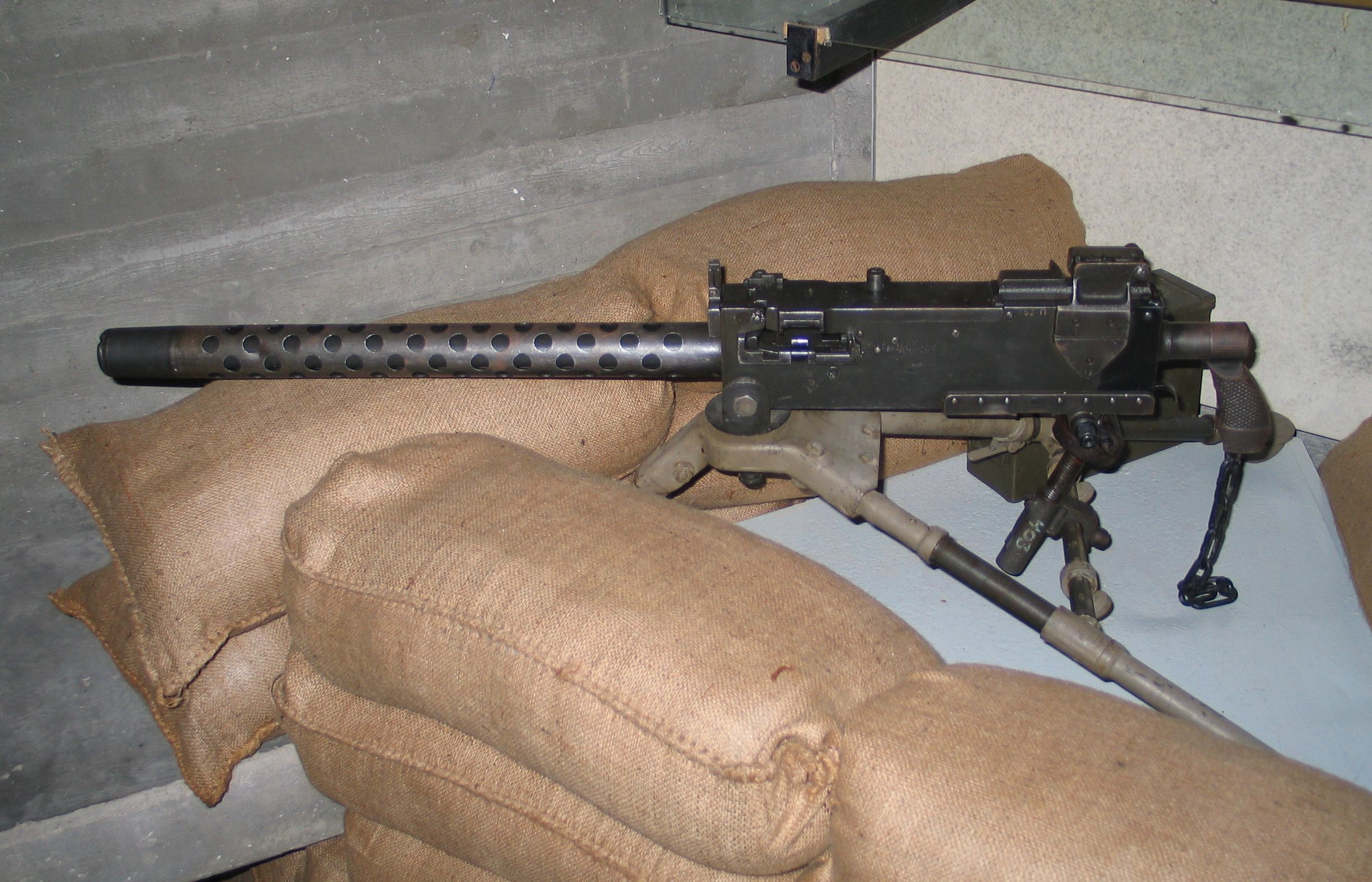
The Browning M1919 is strongly associated with metal links today, yet early and widely used versions also fed from woven cloth belts. The .30-06 M1919A4 could use a 250-round cloth belt, providing a long ammunition run without a heavy rigid carrier. Its air-cooled construction made it more portable than water-cooled predecessors, although sustained fire still generated substantial heat. Metal-link ammunition later became increasingly attractive because it handled oil, dirt, and rough treatment better. The M1919 therefore sits between two eras: the fabric-belt tradition inherited from earlier guns and the linked-metal systems that became dominant.
4. Lewis Gun
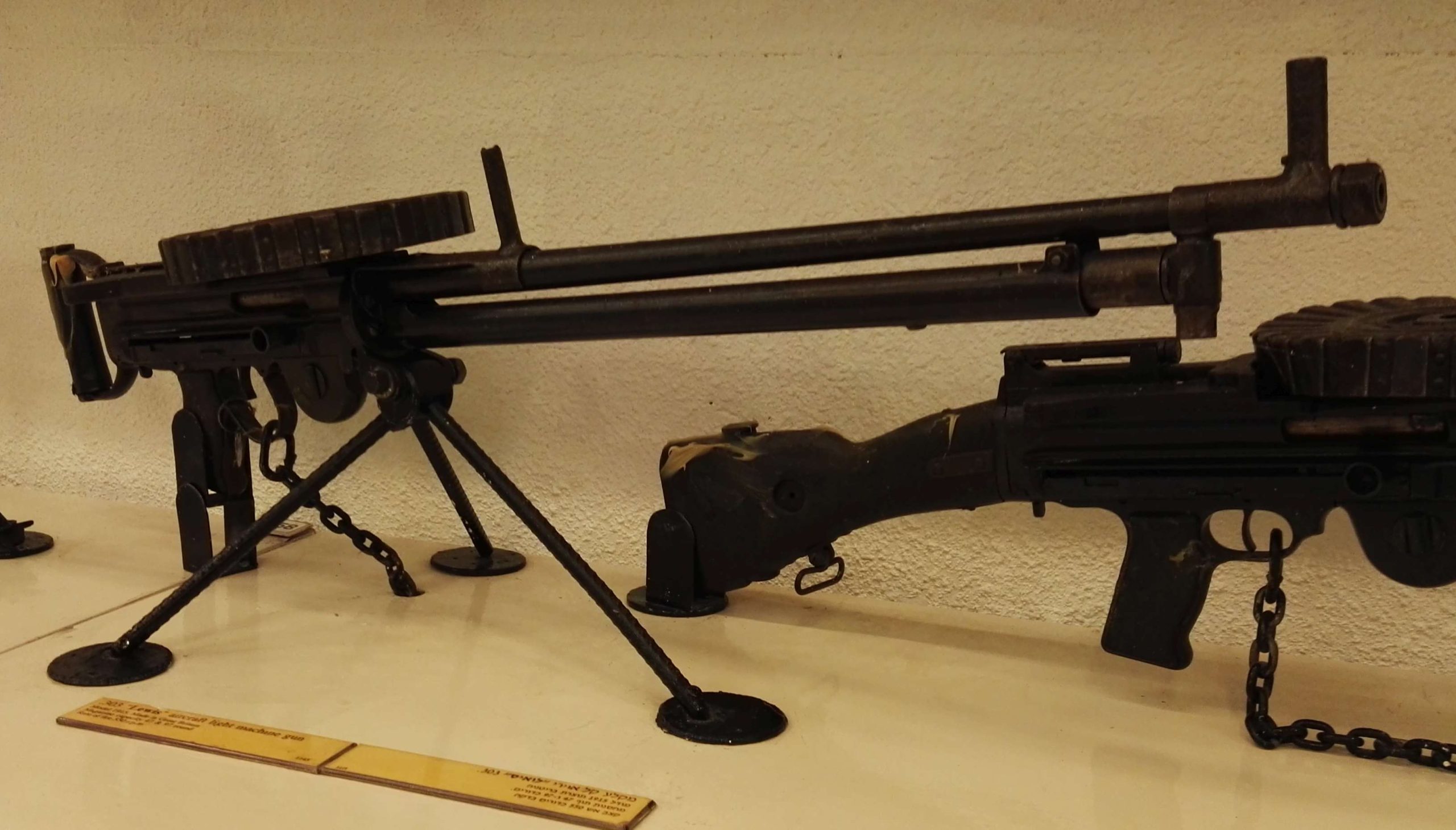
The Lewis gun avoided belts altogether by feeding from a rotating pan magazine mounted above the receiver. Developed in the early 20th century, it became especially prominent with British and Commonwealth forces during the First World War. A standard infantry pan held 47 rounds of .303 British ammunition, while some aircraft versions used 97-round pans. The gun used a gas-operated action and an air-cooling system built around a distinctive barrel shroud. Its magazine could be removed and replaced without handling a long belt, giving crews a compact ammunition package. The Lewis proved that sustained automatic fire could be supported by a non-belt feed.
5. Hotchkiss M1909
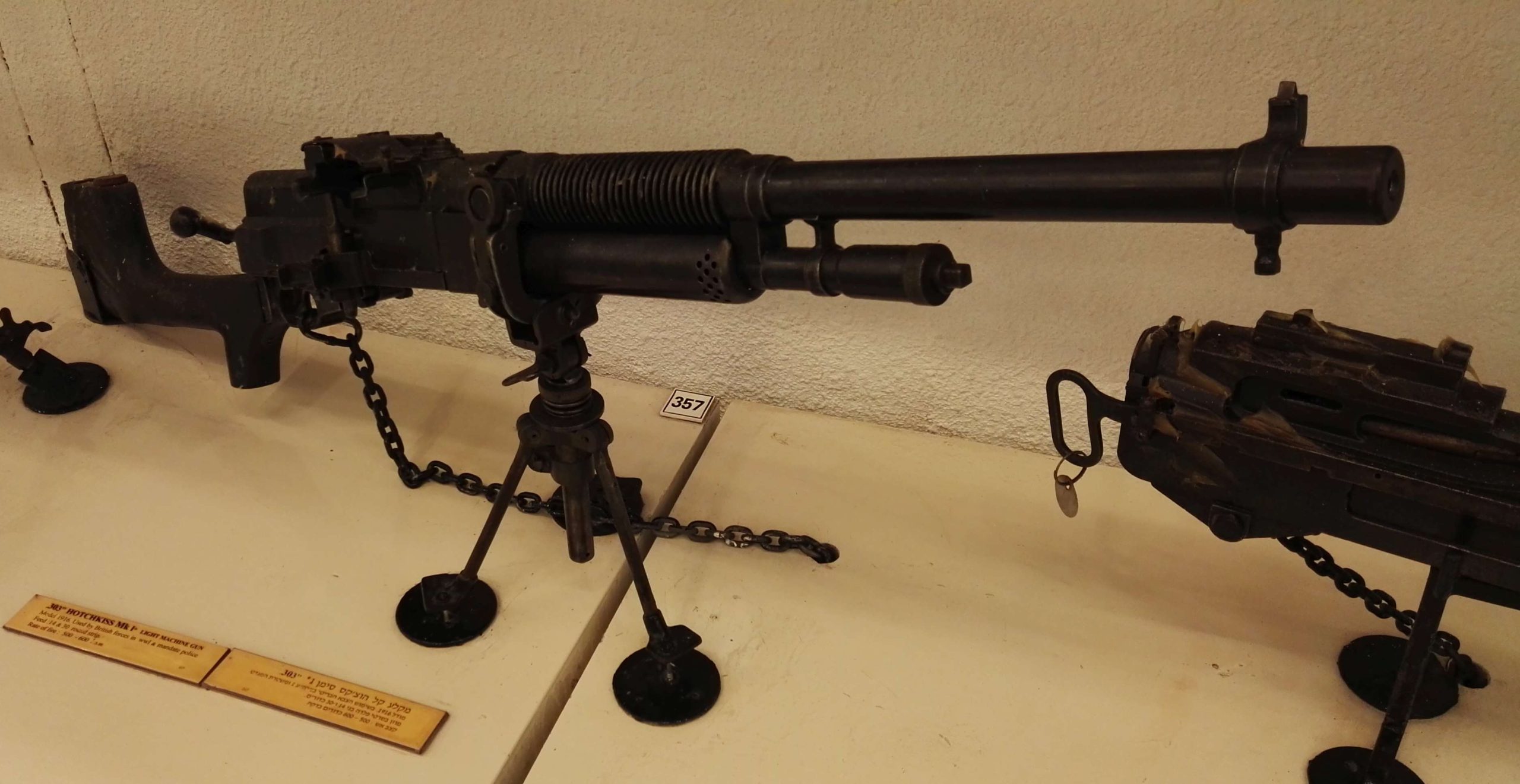
The Hotchkiss M1909 Benét-Mercié used rigid feed strips rather than the flexible belts that later became standard. Early versions commonly carried 30 rounds on a strip, and the gun appeared in several chamberings, including .303 British and .30-06. Each strip held cartridges in a fixed row, allowing the feeding mechanism to advance them through the action in sequence. The metal strips were reusable and resistant to moisture, but their limited capacity meant frequent changes during prolonged firing. With a weight of about 12 kilograms and a cyclic rate commonly listed around 400–600 rounds per minute, the M1909 shows how varied early feed systems were.
6. DP-28
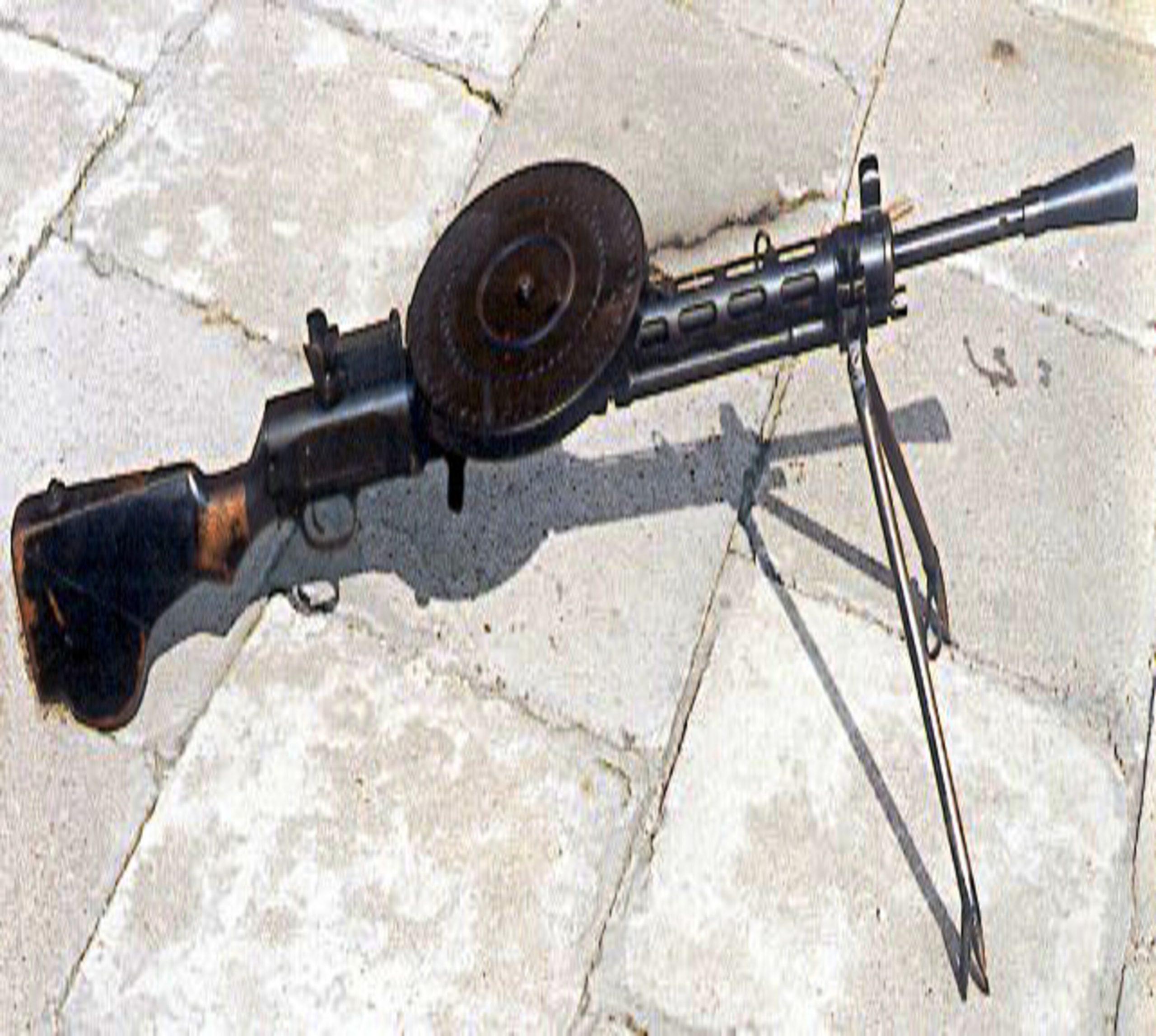
The Soviet DP-28 took a different path by using a large rotating pan magazine rather than an ammunition belt. Adopted in the late 1920s and chambered for the 7.62×54mmR cartridge, it normally carried 47 rounds in its top-mounted pan. The gas-operated, air-cooled weapon weighed roughly 9 kilograms and had a cyclic rate commonly given around 550 rounds per minute. The pan kept ammunition compact and protected compared with an exposed belt, but changing the magazine interrupted the feed more often than a long belt could. Its distinctive circular magazine became one of the most recognizable features of Soviet infantry weapons, and the basic concept remained associated with the DP family for years.
7. ZB vz. 26
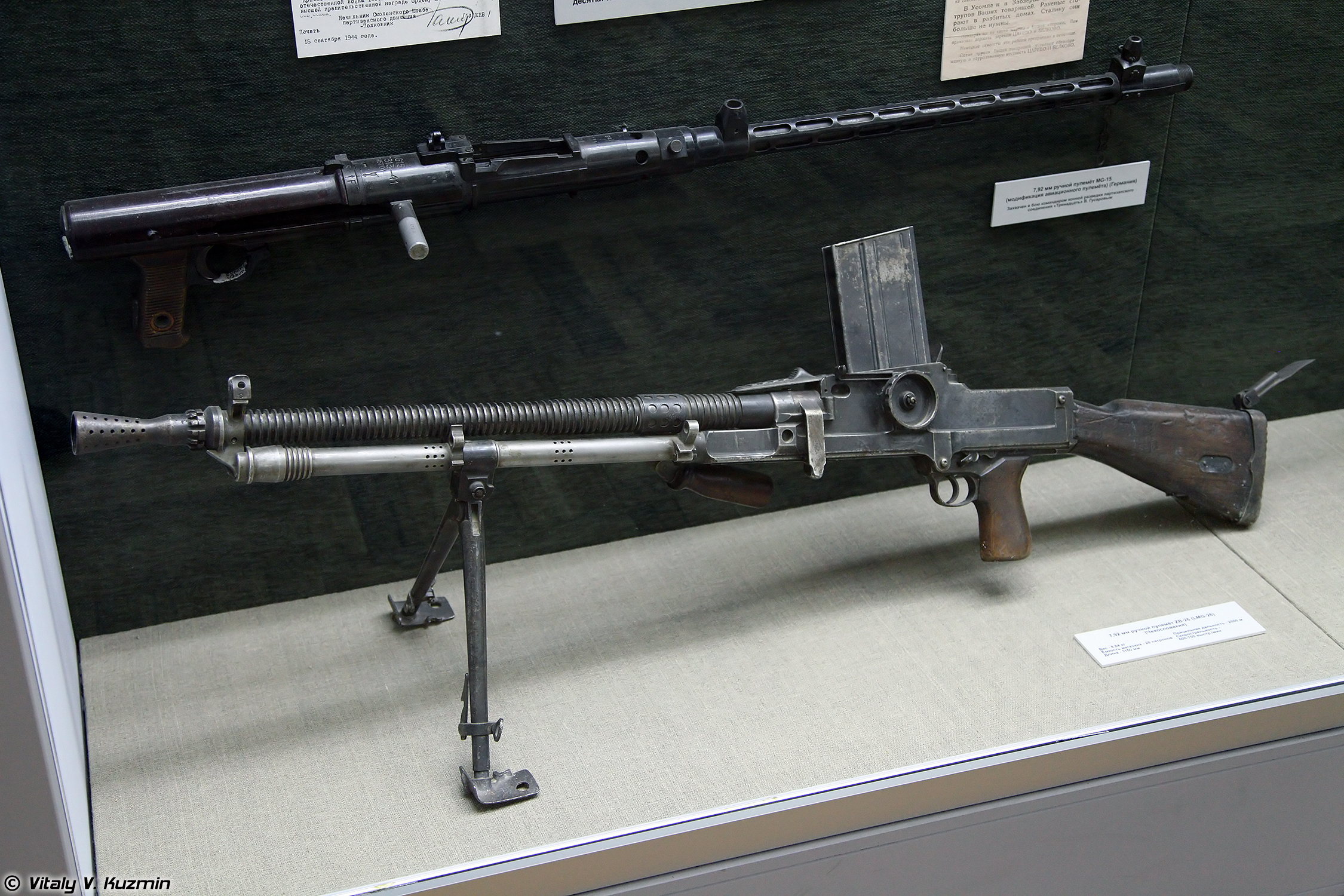
The Czechoslovak ZB vz. 26 relied on a detachable box magazine instead of a belt, giving it a very different ammunition-handling character from heavy machine guns. Developed during the 1920s, it was gas-operated, air-cooled, and chambered for 7.92×57mm Mauser ammunition in its original form. A top-mounted sheet-steel magazine held 20 rounds, while the quick-change barrel helped manage heat during extended use. Its magazine feed also influenced the layout of the later Bren family. With a weight of about 8.8 kilograms and a rate of roughly 500 rounds per minute, the ZB vz. 26 became an influential light machine-gun design, with its feeding layout influencing later weapons beyond Czech service.
8. Bren Gun
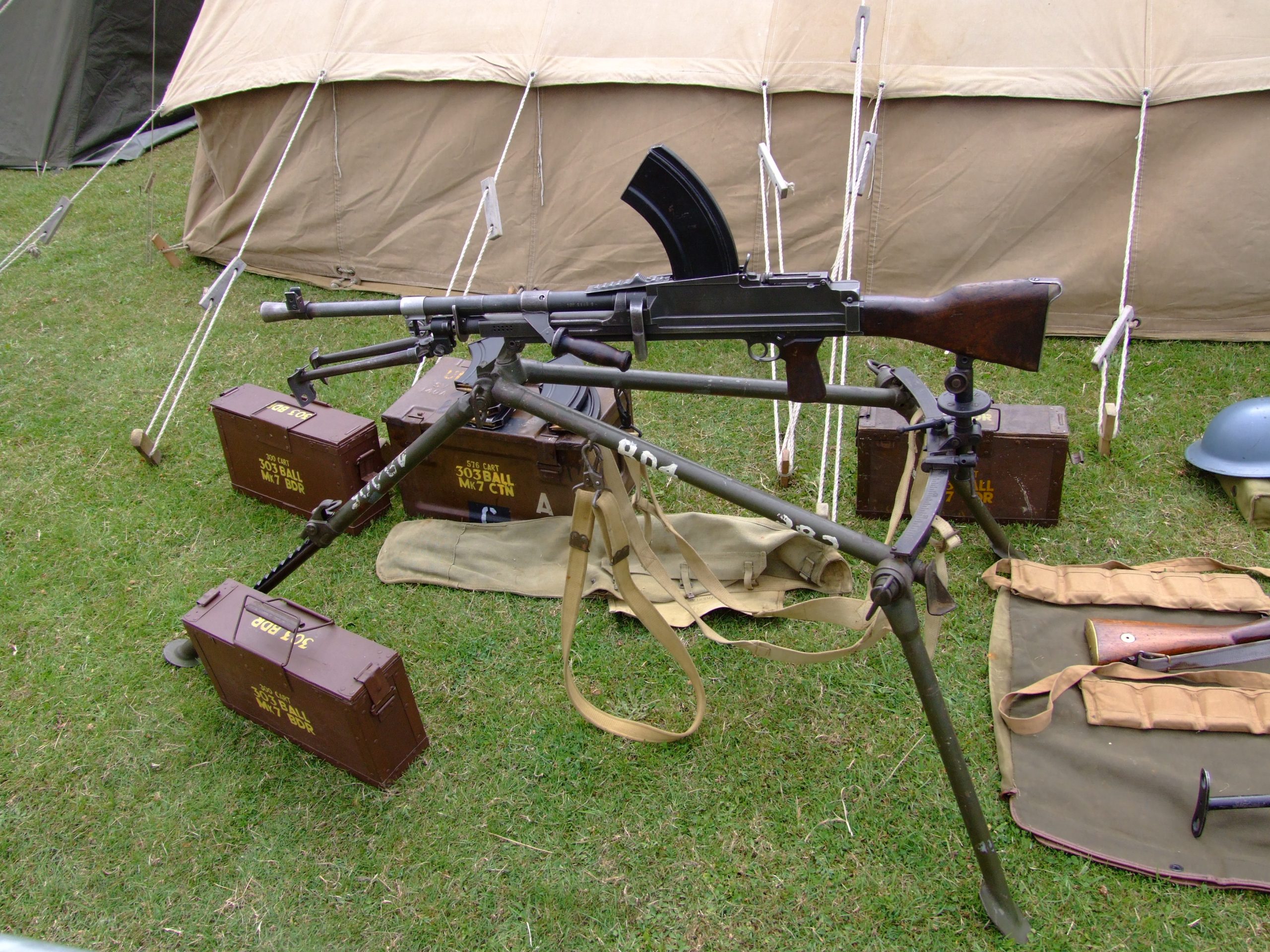
The Bren carried the ZB family’s magazine-fed concept into British and Commonwealth service, replacing the belt with a detachable top-mounted magazine. The .303 British version used a 30-round box magazine, although troops commonly loaded about 27 or 28 rounds for dependable operation. The gas-operated, air-cooled gun weighed about 10 kilograms in its early form and had a cyclic rate near 500 rounds per minute. A 100-round pan was also developed for some roles, including anti-aircraft use. Its magazine system kept ammunition contained and made the Bren lighter than many belt-fed guns, helping it serve as a highly portable infantry automatic weapon.