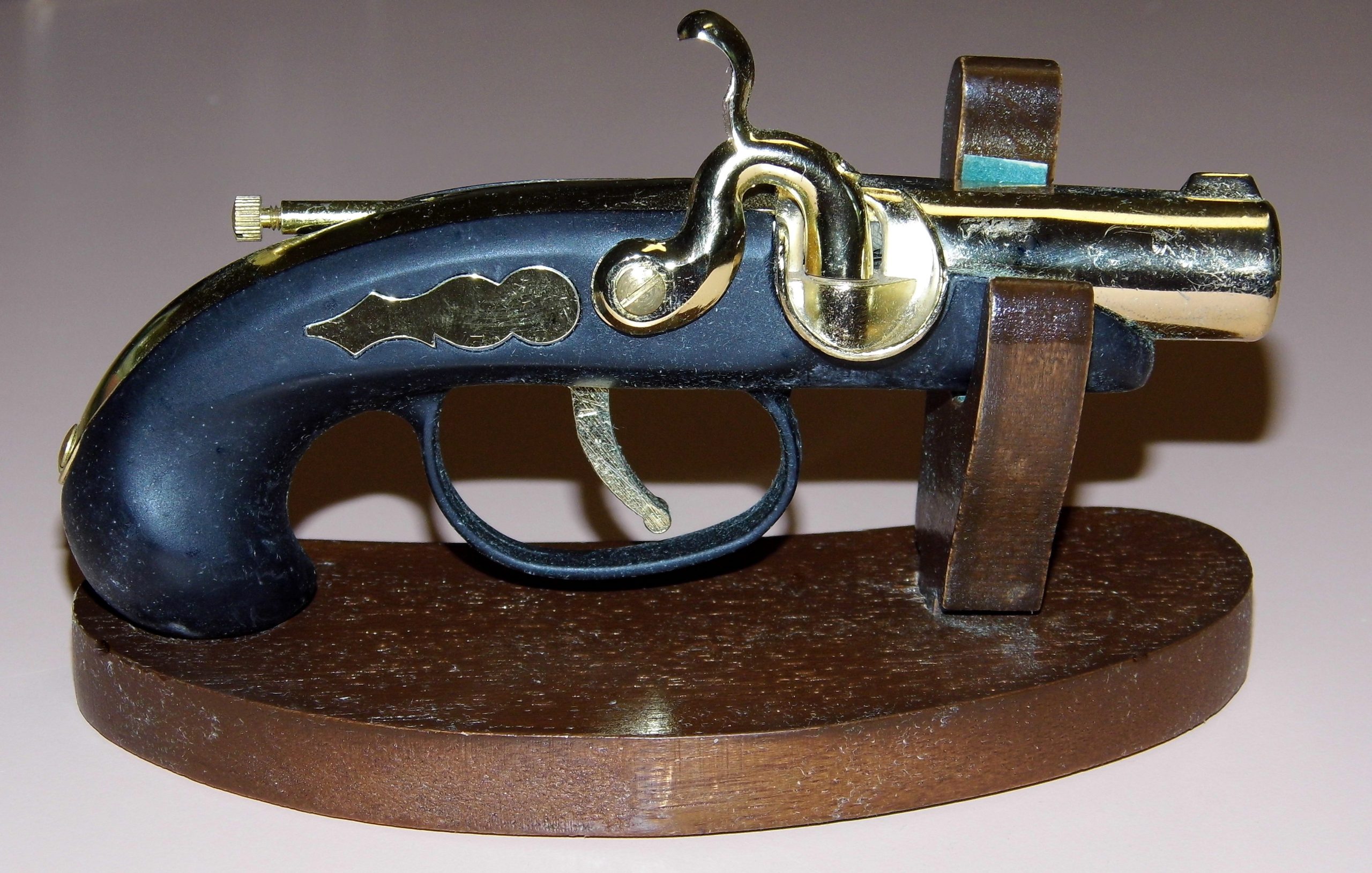
Long before modern compact handguns became popular, derringers offered an unusual solution for people who wanted a firearm small enough to carry discreetly. These pocket-sized pistols challenged traditional handgun design by prioritizing compact dimensions, simple construction, and, in some cases, multiple barrels. During the 19th century, American manufacturers experimented with percussion ignition, metallic cartridges, and innovative firing mechanisms to make these little firearms more practical. Some became recognizable symbols of the American Old West, while others remained relatively rare collector’s pieces. From Henry Deringer’s original Philadelphia pistol to Remington’s famous double-barrel design, these eight examples demonstrate how much ingenuity went into making concealed firearms smaller and more distinctive.
1. Henry Deringer Philadelphia Pistol
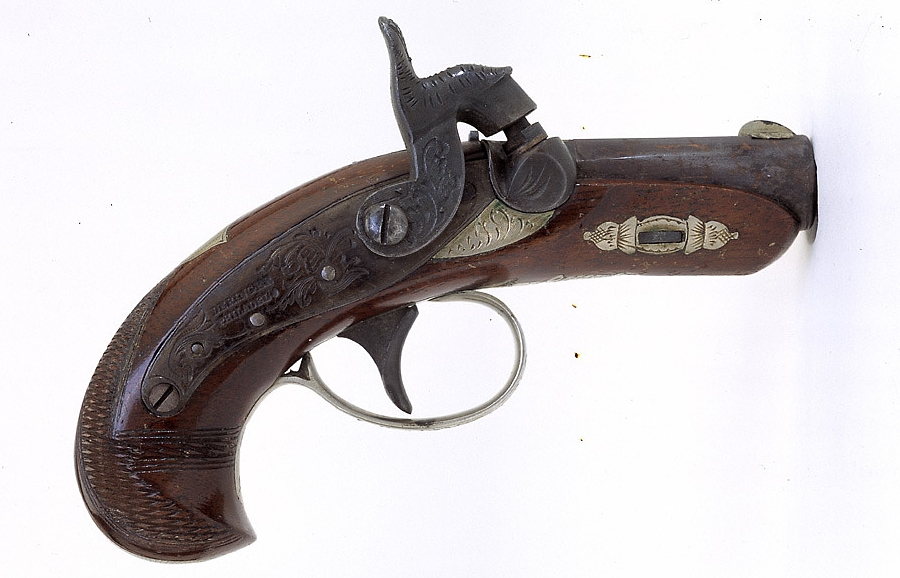
Henry Deringer’s Philadelphia pistol established the pattern later makers tried to improve. Introduced in the 1820s and refined into its familiar percussion form by the early 1850s, it was a single-shot, muzzleloading pocket arm with a rifled barrel and wooden stock. Surviving examples vary: barrel lengths ranged from about 1½ to 6 inches, while calibres commonly fell between .31 and .55. Its fame grew beyond the gun trade when John Wilkes Booth used a Deringer in the 1865 assassination of Abraham Lincoln. Its success brought imitation and counterfeit markings. The generic word “derringer” grew from that copying, turning the maker’s surname into the name for a class of compact pistols.
2. W.W. Marston Three-Shot Derringer
W.W. Marston’s three-shot percussion derringer showed that pocket pistols did not have to be limited to one shot. Made in the late 1850s, this unusual .31-calibre design appeared just before metallic cartridges transformed the category. Its multi-shot arrangement was ambitious, but production remained extremely small. Collecting references suggest perhaps only 20 examples were made, making surviving specimens exceptionally scarce. Marston soon shifted toward rimfire versions as cartridge technology advanced. Its short run captures a period of experimentation before cartridge derringers became dominant. It remains a rare and revealing example of an early multi-shot pocket pistol.
3. Williamson Single-Shot Derringer
The Williamson single-shot derringer blends percussion-era styling and the metallic-cartridge age. Appearing around 1866, it used a .41-calibre cartridge and a 2½-inch blued-steel barrel, set into a brass frame and chequered walnut grip. Its unusual feature was a dual-ignition arrangement: it could accept either a .41 rimfire cartridge or a supplementary percussion chamber. That flexibility reflected a period when ammunition systems were changing quickly. Although David Williamson held the patent, Moore’s or National handled production, not a separate Williamson factory. Its hybrid design makes it a distinctive transitional pistol from a rapidly changing era.
4. Moore’s Patent Fire Arms Derringer
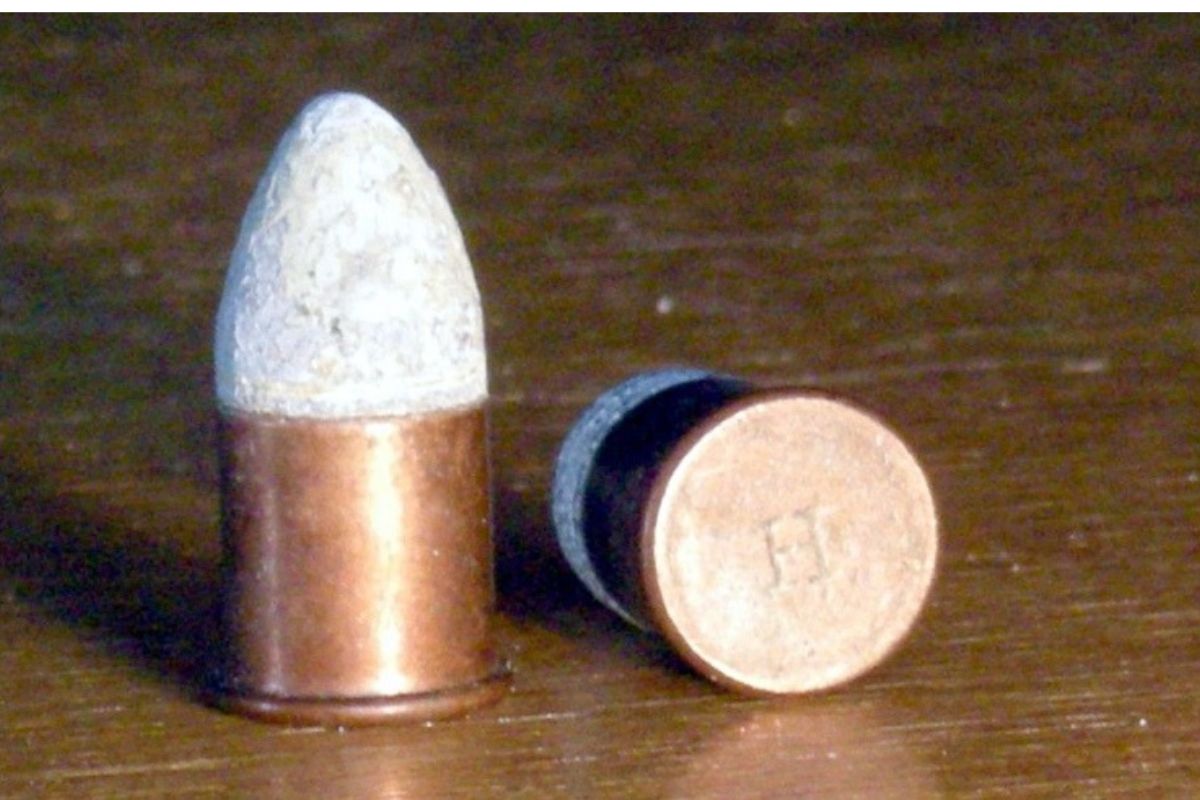
Moore’s Patent Fire Arms Company helped popularize the cartridge derringer with its .41 rimfire pistol, patented in February 1861. The all-metal design had a barrel about 2½ inches long and a silver-plated brass frame, although scarce iron-framed examples are also recorded. Its barrel pivoted down and to the left to expose the chamber, giving it a distinctive profile. Period examples often carried scroll engraving, giving the pistol a decorative appearance. Moore’s design marked an important move from percussion ignition toward metallic ammunition. Production continued under Moore and its successor, National, with collectors estimating roughly 10,000 examples across the two companies.
5. National Arms Company No. 1 Derringer
National Arms Company’s No. 1 derringer developed the Moore pattern after taking over the business in 1865. It retained the compact .41 rimfire format and metal-bodied construction, while National offered related versions with different stocks. The No. 1 is associated with the metal-stock configuration, while the No. 2 used a walnut bird’s-head grip. These variations offered buyers a choice of appearance without abandoning the small single-shot layout. National kept the design in circulation until Colt acquired the company in 1870. The pistol illustrates how a successful pocket-arm design could pass between manufacturers and remain recognizable across successive versions.
6. Sharps Four-Barrel Derringer
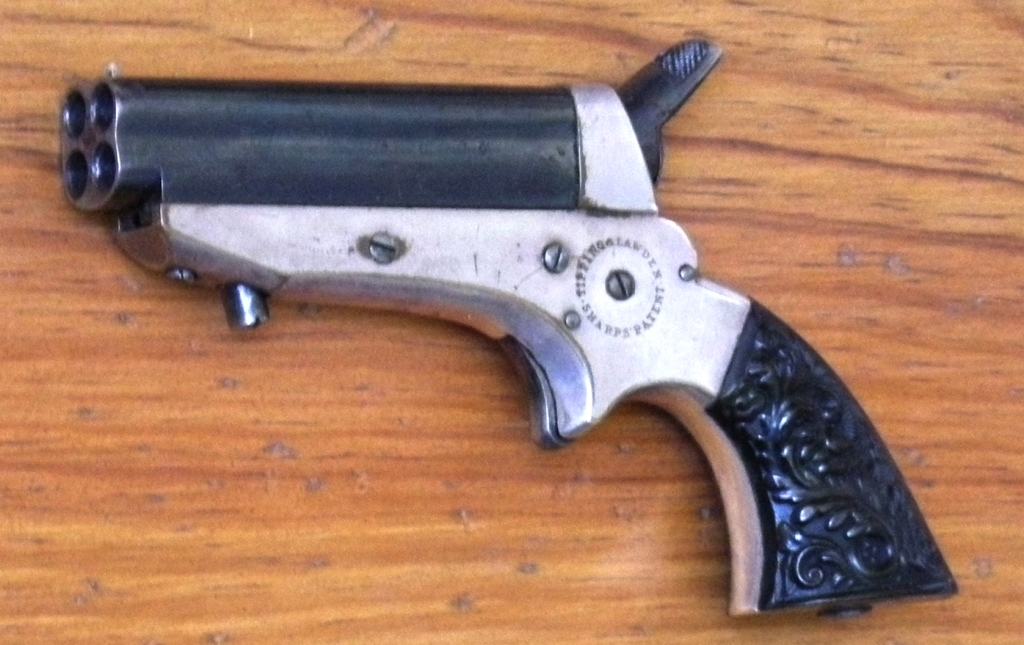
The Sharps four-barrel derringer took a different route from the single-shot pistols that began the category. Produced from about 1859 to 1874, it used a cluster of four barrels and appeared in .22, .30 and .32 rimfire chamberings. Its brass or iron frame and unusual profile made it instantly recognizable, while the sliding barrel assembly distinguished it from conventional pocket pistols. The design was associated with Christian Sharps and, for part of its history, the Sharps & Hankins partnership. British makers Tipping and Lawden also produced licensed examples until about 1880. With four barrels in a pocket-sized package, the Sharps became an unusual multi-shot design.
7. Colt Third Model Derringer
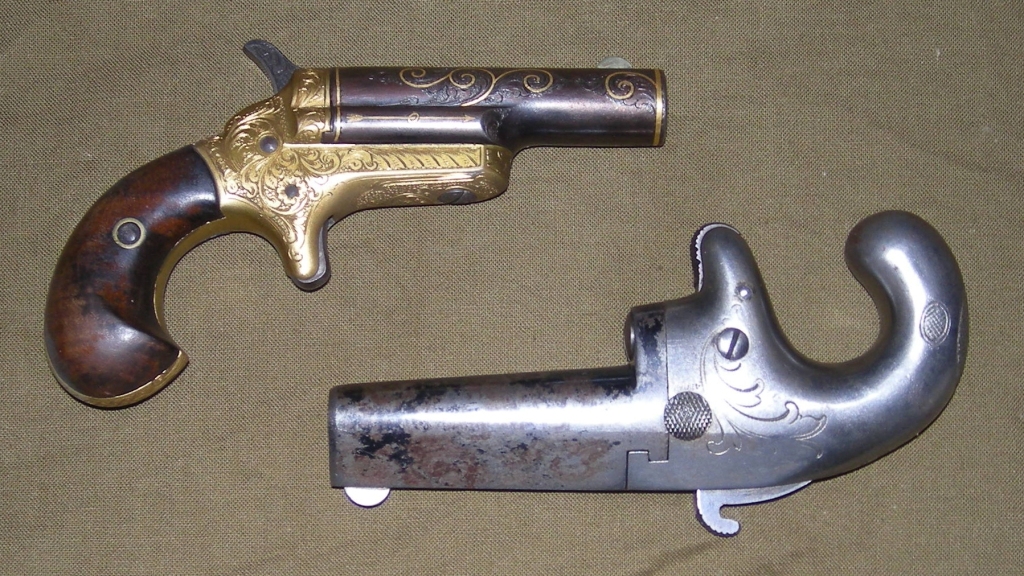
Colt’s Third Model derringer showed the company’s effort to refine the single-shot pocket pistol after acquiring National Arms in 1870. Designed by Colt gunsmith F. Alexander Thuer, it was covered by patent No. 105,388, granted on July 12, 1870. The pistol retained the .41 rimfire chambering but introduced a spring-assisted ejector, a useful refinement in a one-chamber design. Colt records show the model was advertised in Britain in July 1874 and in the United States that October. Its compact proportions and Colt manufacture made it a notable rival to Remington’s better-known double derringer. Surviving examples remain valued pieces of Colt’s small-pistol history.
8. Remington Model 95 Double Derringer
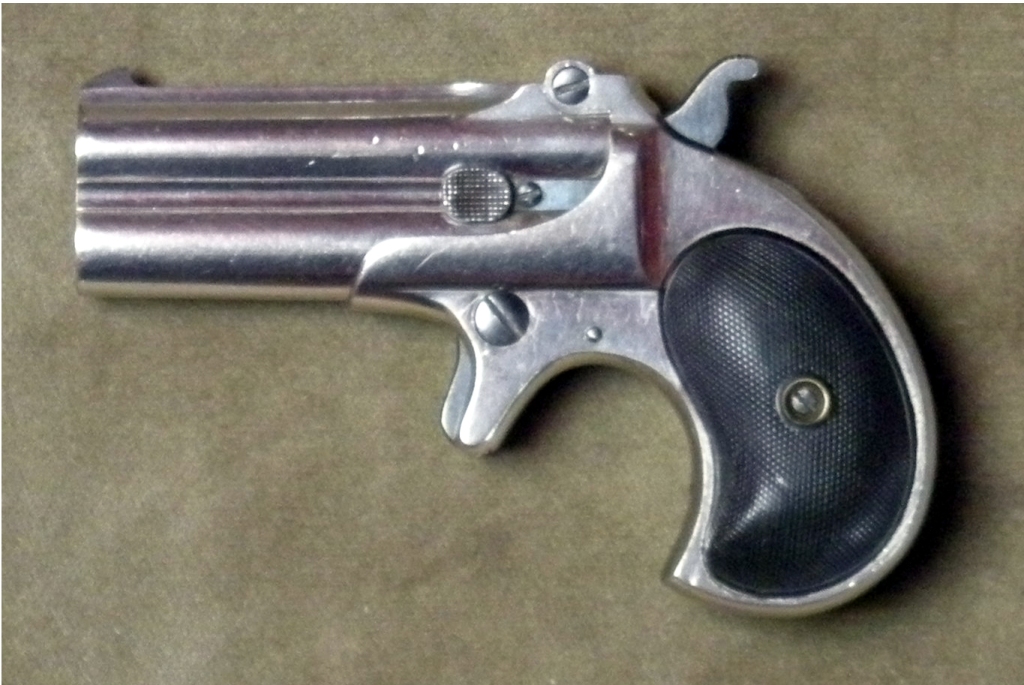
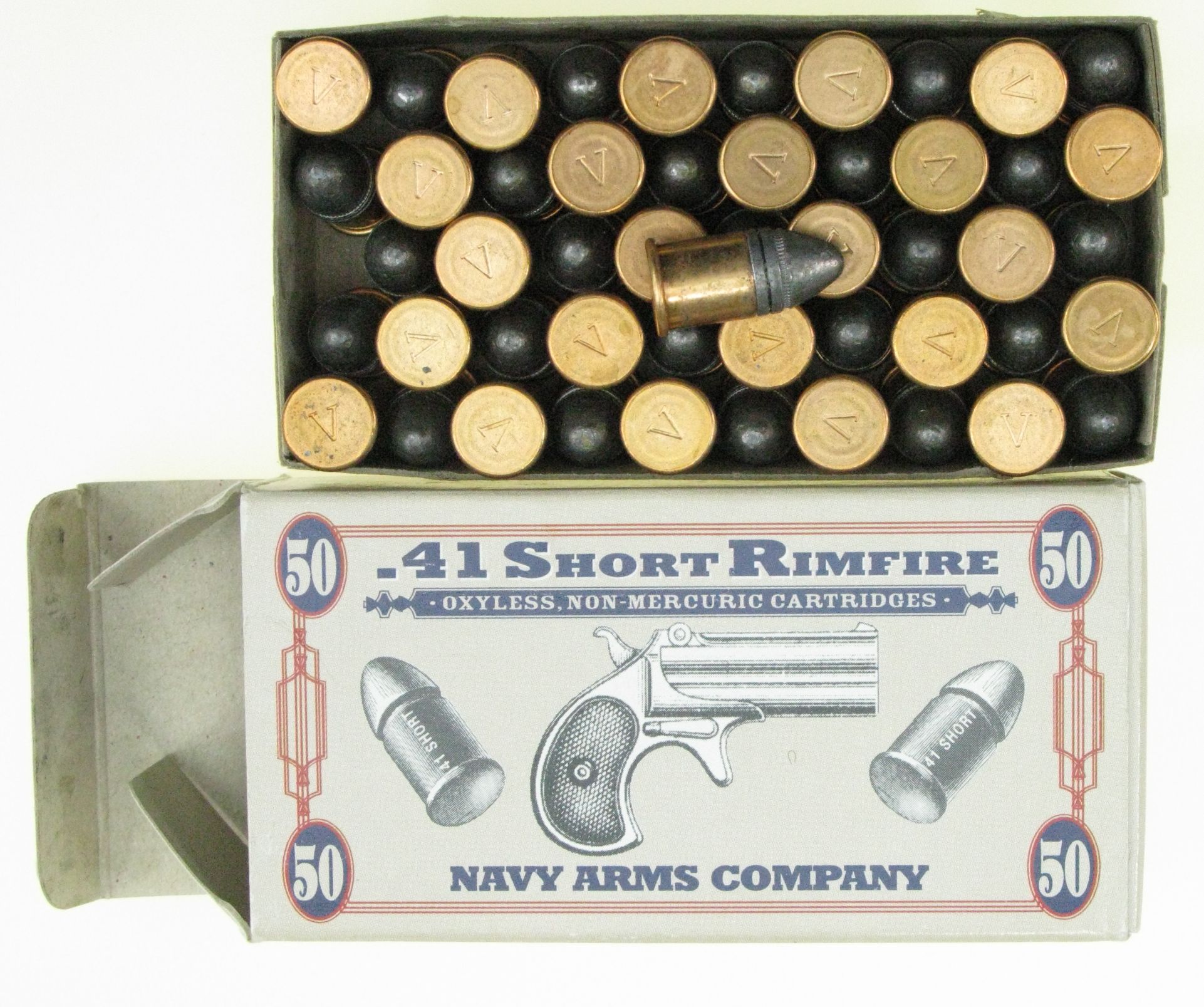
Remington’s Model 95 Double Derringer became the best-known member of the family. Introduced in 1866 from a design associated with William H. Elliot, it paired two 3-inch barrels in an over-and-under arrangement and used .41 Short Rimfire ammunition. The compact pistol remained in production until 1935, an extraordinary run of nearly seven decades. Estimates place total production around 150,000, helping explain its familiarity in popular images of the Old West. Its two-shot format set it apart from many single-shot pocket pistols, while its simple outline made it instantly recognizable. The Model 95 became the design most people picture when they hear the word “derringer.”