Carbines have often served purposes that full-length rifles and handguns could not comfortably fulfil. Some were developed for soldiers who needed lighter equipment, while others addressed the demands of airborne operations, specialised military assignments, horseback travel or civilian sporting use. Their shorter dimensions were only part of the story. Cartridge selection, operating systems, magazine arrangements and overall design gave each model a particular place in firearms history. These eight examples demonstrate how different manufacturers and military designers approached problems that conventional rifles were not always suited to solve.
1. M1 Carbine
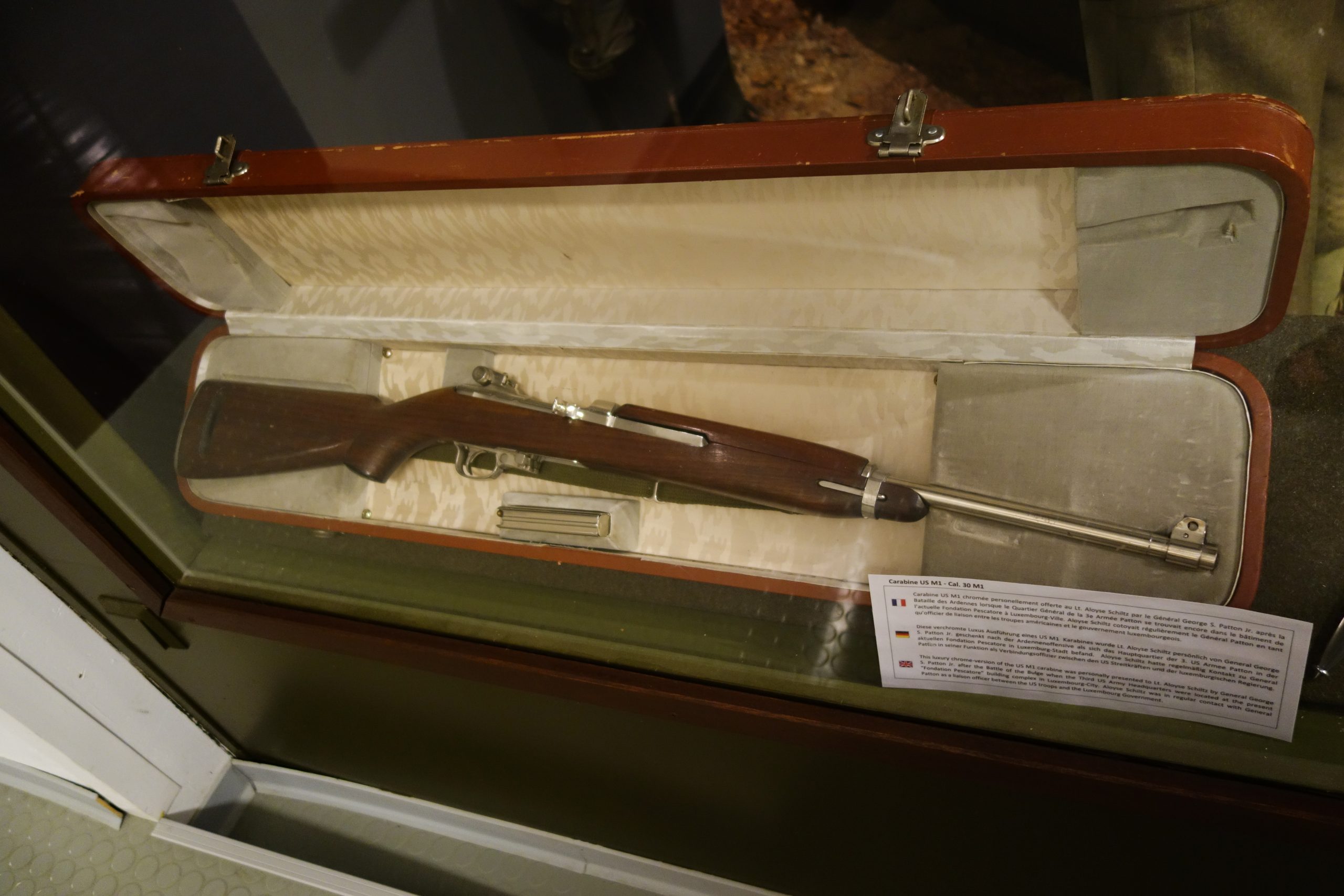
The U.S. M1 Carbine solved a wartime problem: many soldiers needed more reach and control than a pistol offered, but could not easily carry a full-size M1 Garand. Adopted in 1941, it weighed about 5.5 pounds and had an 18-inch barrel chambered for the .30 Carbine cartridge. Its standard magazine held 15 rounds. It went to support troops, drivers, radio operators, and officers whose main duties did not require a full-length rifle. More than 6 million were produced during the Second World War, making this compact arm one of the era’s most widely issued American firearms.
2. M1A1 Paratrooper Carbine
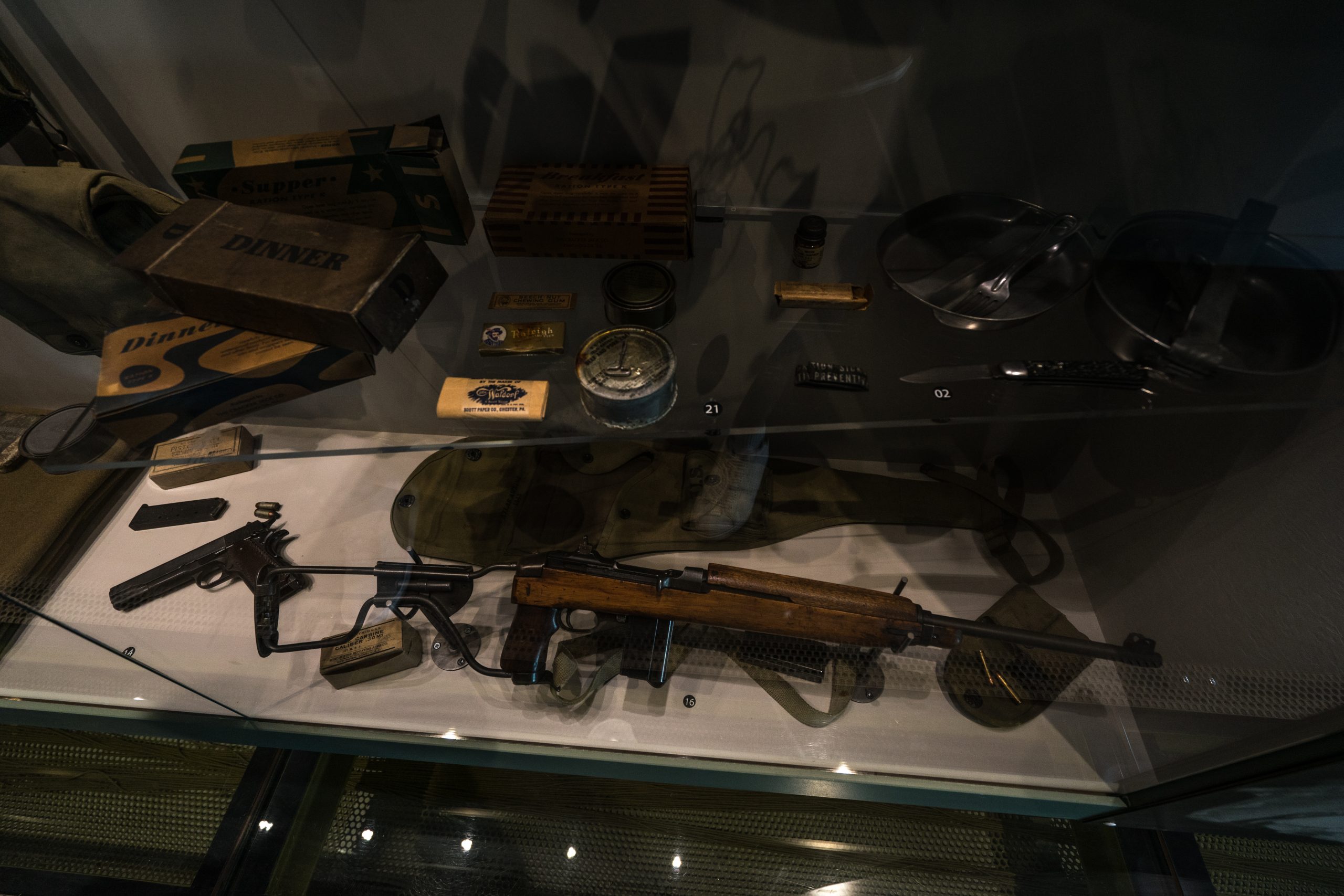
The M1A1 was designed for airborne troops, whose equipment had to fit into cramped aircraft and remain manageable after landing. Standardized in May 1942, it retained the M1 Carbine’s 18-inch barrel, .30 Carbine chambering, and 15-round magazine, but replaced the fixed wooden butt with a folding wire stock and wooden pistol grip. The change made storage easier without altering the basic action. Inland produced 140,591 by December 1944. Its purpose was specific: give paratroopers a shoulder arm that took up less space during a jump while retaining the familiar handling of the standard carbine.
3. De Lisle Commando Carbine
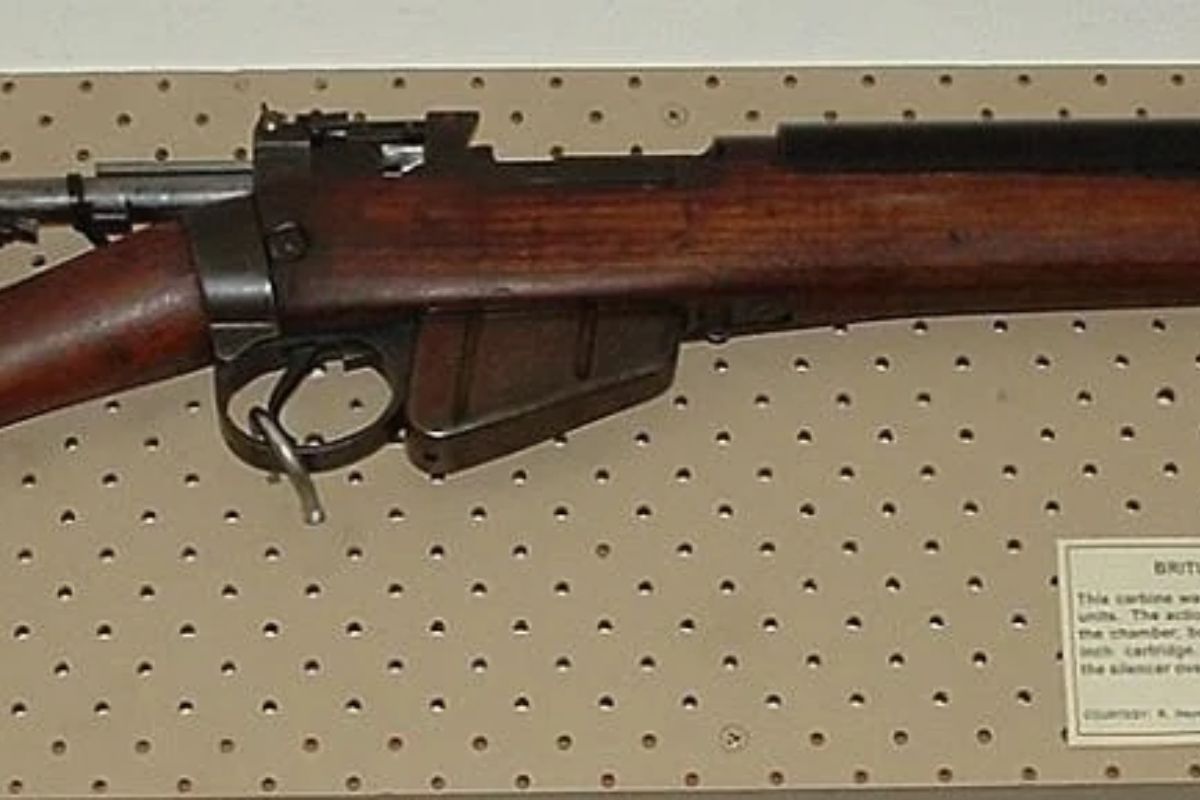
The British De Lisle was built for a rare wartime requirement: a compact firearm for quiet operation. Developed during the Second World War, it paired a modified Lee-Enfield action with the .45 ACP cartridge and an integral suppressor surrounding its short 7.45-inch barrel. The subsonic pistol cartridge helped reduce the report, while the large suppressor gave the weapon an unusual profile. Only a small number were made for special operations. It filled a role an ordinary service rifle could not, although its specialist construction and limited production kept it from wider military issue.
4. SKS Carbine
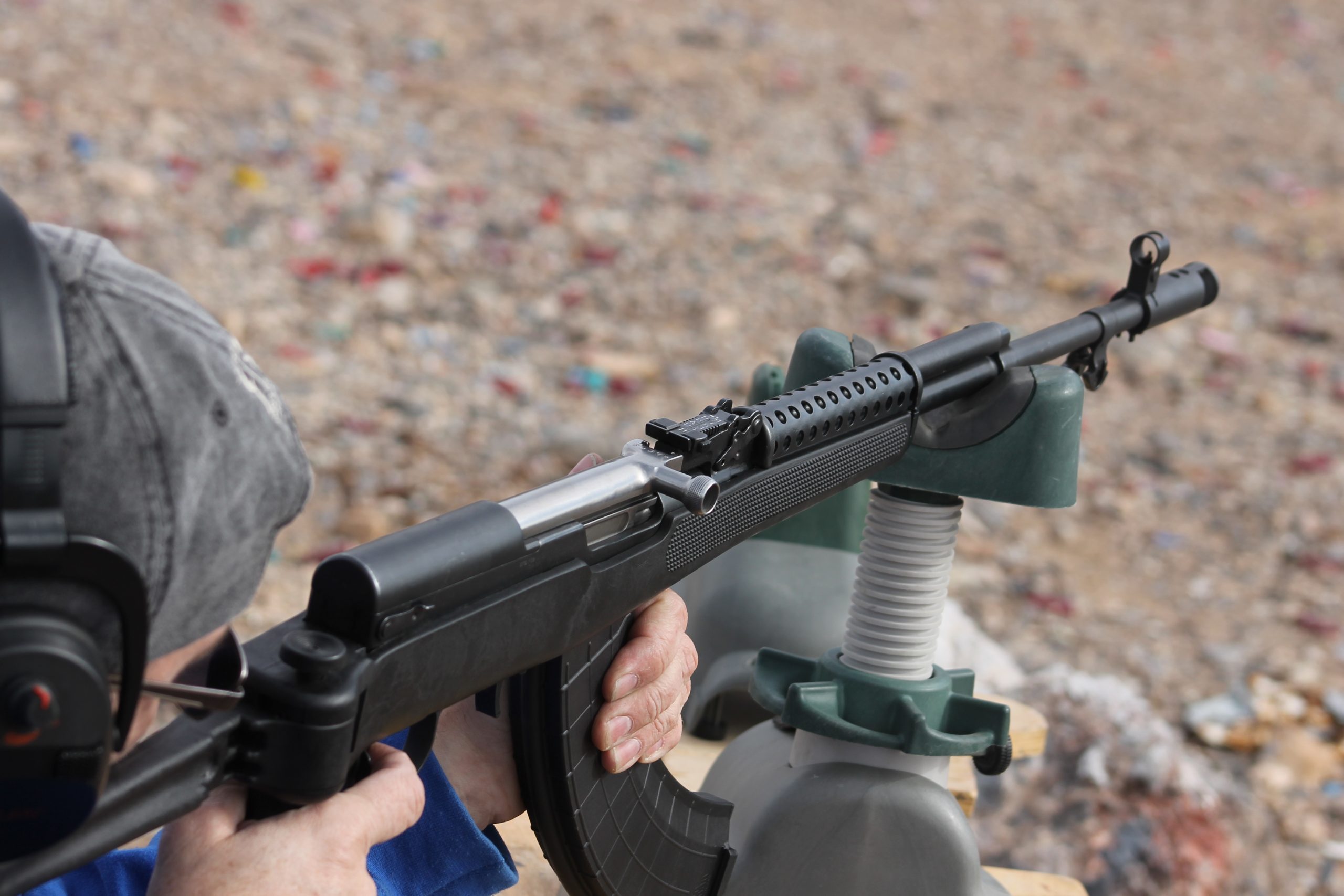
The Soviet SKS was a transitional design between the bolt-action Mosin-Nagant and the later AK family. Sergei Simonov’s 7.62×39mm carbine entered Soviet service in 1949, with a 20-inch barrel, fixed 10-round magazine, and folding bayonet on standard military versions. It was handier than a full-length infantry rifle, yet kept a traditional wooden stock and familiar rifle layout. The SKS was soon displaced in front-line Soviet service by the AK, but remained in use in many countries. Its brief first-line career makes it a revealing link in the shift to intermediate-cartridge military arms.
5. M4 Carbine
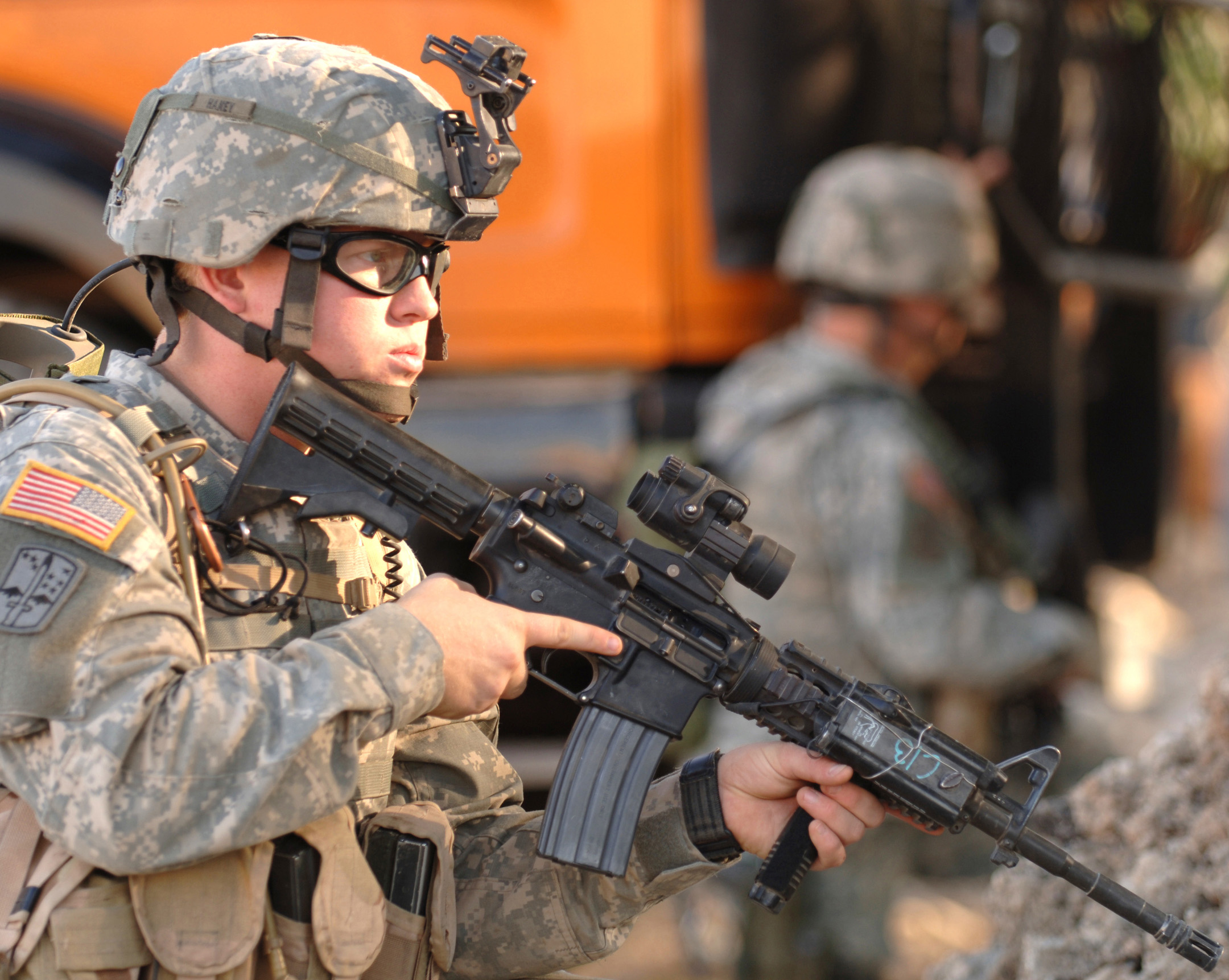
The M4 met the need for a shorter service arm that shared much of the M16 family’s design and parts. Adopted by the U.S. military in the 1990s, it has a 14.5-inch barrel and telescoping stock, rather than the longer barrel and fixed stock of the M16A2. It fires 5.56×45mm NATO ammunition and typically uses a 30-round magazine. The compact format suited vehicle crews and troops working in confined spaces, while commonality simplified training and supply. The M4 did not make the full-length rifle obsolete; it gave the same service family a more manageable option for particular duties.
6. Ruger Mini-14
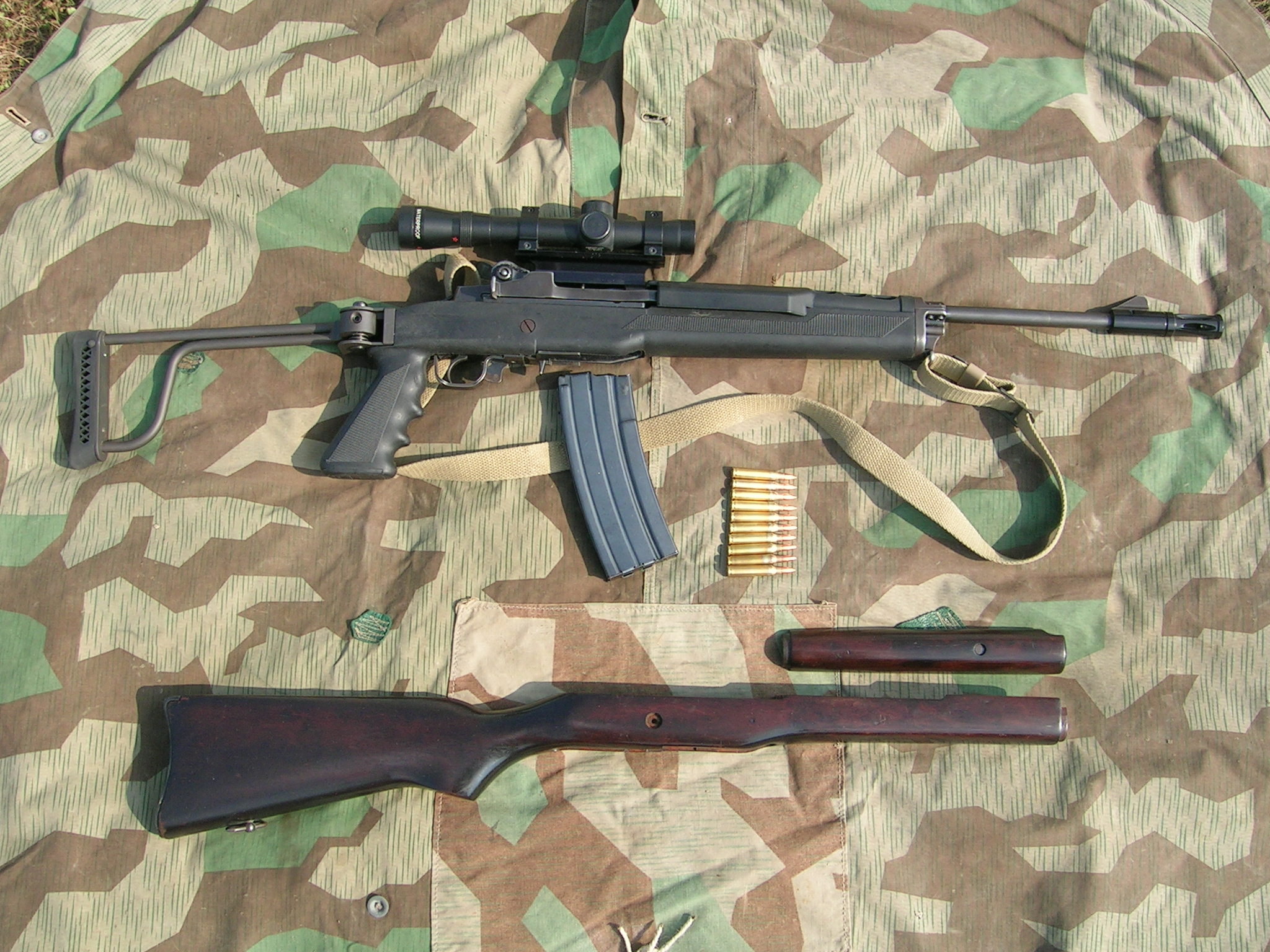
Introduced in 1973, the Ruger Mini-14 brought a traditional rifle outline to the .223 Remington cartridge. Designed by L. James Sullivan and William B. Ruger, it used a Garand-influenced rotating bolt and gas system in a smaller frame. The original model had an 18.5-inch barrel; magazine capacities varied, with 20-round magazines common. Its traditional stock appealed to ranchers, sporting shooters, and some law-enforcement users seeking a lightweight .223 alternative to AR-pattern rifles. Ruger later added the Ranch Rifle in 1982, with integral scope mounts.
7. Winchester Model 1892 Carbine
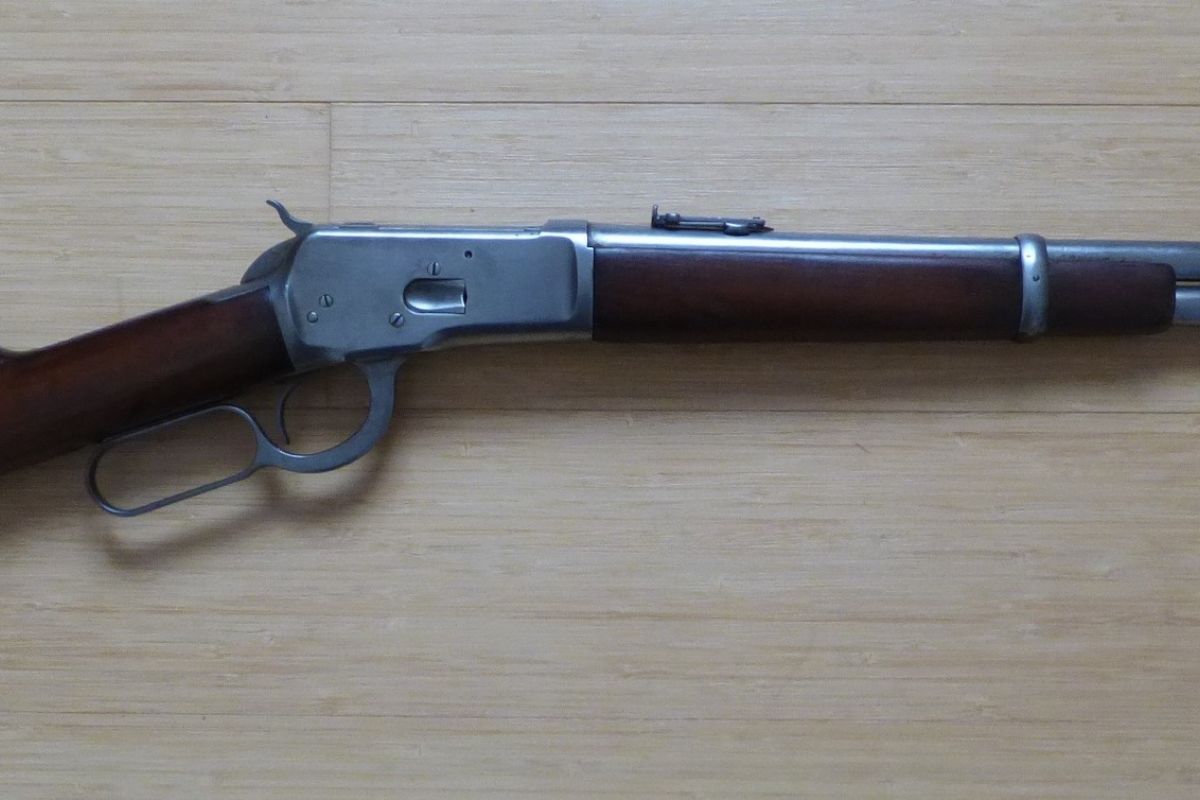
John Browning’s Winchester Model 1892 was designed for shorter pistol cartridges, allowing users to carry one ammunition type for a handgun and a saddle gun. Introduced in 1892, it was a compact lever-action repeater offered in chamberings such as .44-40 and .38-40. Carbine versions commonly had a shorter barrel and saddle ring, making them easier to carry on horseback than a full-length rifle. It was not intended to match a military rifle’s power; it offered a handy repeating companion for frontier travel and ranch work. More than a million Model 1892 rifles and carbines were produced.
8. Marlin Camp 9
Introduced in 1985, the Marlin Camp 9 occupied a niche between a handgun and a conventional sporting rifle. It was a blowback-operated 9mm semi-automatic carbine with a 16.5-inch barrel and wooden sporter stock. A notable feature was its use of compatible Smith & Wesson 59-series pistol magazines, letting owners of the matching handgun share a magazine pattern. The Camp 9 was neither a military replacement nor a long-range rifle. Its compact proportions, familiar sporting layout, and pistol-caliber chambering made it a distinctive recreational option. Production ended in the late 1990s.