Air rifles have long occupied an interesting space between everyday pest control, target shooting, and hunting. Many were valued because they were quieter and cheaper to operate than conventional firearms, making them practical around farms, gardens, and rural properties. Over time, shooters discovered that several designs offered enough accuracy and capability for legitimate small-game use where local laws allowed it. The result was a fascinating overlap between the humble vermin gun and the hunting rifle.
1. Benjamin Model 312
The Benjamin Model 312 became a classic American multi-pump rifle that blurred farm pest control and hunting. Benjamin’s pneumatic designs were valued because they could be pumped for each shot without an external air tank. The 312’s .22-caliber format gave small-game hunters a step up from lighter target guns. Benjamin’s history began with Walter R. Benjamin’s 1882 air rifle, while later Benjamin and Sheridan guns became associated with hunting and vermin work. The Model 312 fits the pattern: a quiet pest-control tool that gained a second life in the field.
2. Sheridan Model C

Sheridan’s Model C, better known as the Blue Streak and Silver Streak family, was never merely a toy. Introduced in 1949, the pneumatic rifle became Sheridan’s longest-running design through several ownership eras. Its .20-caliber bore sat between common .177 and .22 choices, giving it a distinctive hunting identity. The multi-pump system lets users vary pump pressure, within the maker’s limits, for different needs. Farm shooters valued that flexibility for pests, while hunters found it useful for small game. Its exact production total is uncertain, but its decades-long run shows its reach.
3. BSA Meteor
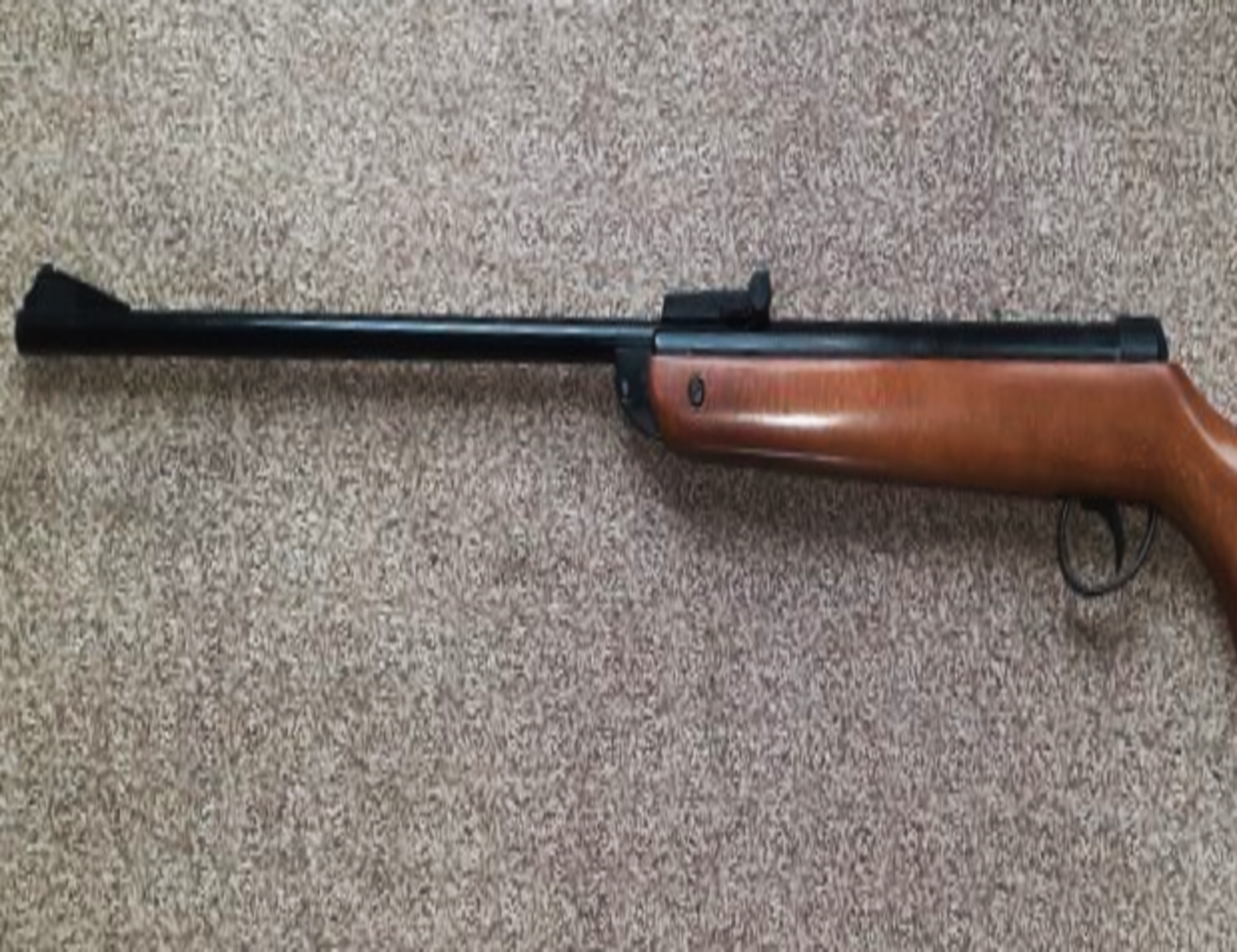
BSA’s Meteor helped turn the ordinary British air rifle into a serious sporting tool with appeal for vermin control. Introduced in 1959, it was BSA’s first air rifle supplied with a telescopic sight, helping with deliberate shooting at small targets. BSA entered the commercial market with the Lincoln Jeffries in 1905 and its first break-barrel design in 1933. The Meteor belonged to a mature sporting tradition rather than a military one. Its practical format made it an easy choice for shooters who wanted one rifle for targets, pests, and occasional small-game outings.
4. Webley Mark 3

The Webley Mark 3 arrived in 1947 and became a respected British sporting air rifle. It used a fixed barrel, underlever cocking system, and tap loading, a configuration descended from earlier BSA thinking. At roughly 43.5 inches long and with an advertised weight of 6 pounds 13 ounces, it was substantial rather than a pocket-sized plinker. Webley produced the Mk3 until 1975. Although built as a sporting arm, its accuracy and traditional handling made it attractive for the quiet vermin and small-game duties that kept airguns popular in the countryside.
5. Crosman 760 Pumpmaster

The Crosman 760 Pumpmaster began as an accessible pneumatic rifle rather than a dedicated hunting specialist, yet its versatility made it useful beyond casual plinking. Introduced in 1966, the 760 became one of the most successful airgun models ever made, with Crosman reporting more than 16 million sold. Its multi-pump mechanism allowed repeated shots after pumping, while its light format suited pest-control chores. Versions changed over time, but the basic idea endured: inexpensive air power that moved from practice to practical pest duties. That usefulness explains its longevity.
6. Sheridan Model A

The Sheridan Model A, introduced in 1947, showed how an American pneumatic rifle could be engineered as a serious sporting arm rather than a novelty. About 2,130 Model A rifles were produced from 1947 to 1953, making surviving examples scarce. Its aluminum receiver, bronze barrel and pump tube, walnut stock, adjustable trigger, and peep sight reflected a premium approach. Published figures put its velocity at up to about 700 feet per second. Sheridan aimed for a high-quality pneumatic, and hunters valued its quiet, self-contained system for small game and nuisance animals.
7. Crosman Multi-Pump Rifles

Crosman’s early multi-pump rifles became useful wherever shooters wanted inexpensive air power without the noise of a conventional firearm. The company’s traditional design could use roughly 3 to 10 pump strokes to pressurize the reservoir for a shot. That suited pest-control work, where targets varied. Crosman identifies sparrows, starlings, mice, rats, and pigeons among typical pest species for airguns. Hunters also adopted suitable models for rabbits and squirrels, turning a farm tool into a small-game platform. Its versatility kept it relevant for generations.
8. BSA Airsporter

The BSA Airsporter linked Britain’s sporting air-rifle tradition with field use. Introduced in 1948, it followed BSA’s Lincoln Jeffries and Cadet designs and drew on the company’s experience with sporting rifles. It evolved through multiple versions and became a major name in classic British airgunning. Its controlled handling appealed to shooters dealing with pests as well as those pursuing small game where legally permitted. BSA later added the Superstar and repeating Goldstar. The Airsporter shows how naturally target, pest-control, and hunting roles overlapped.