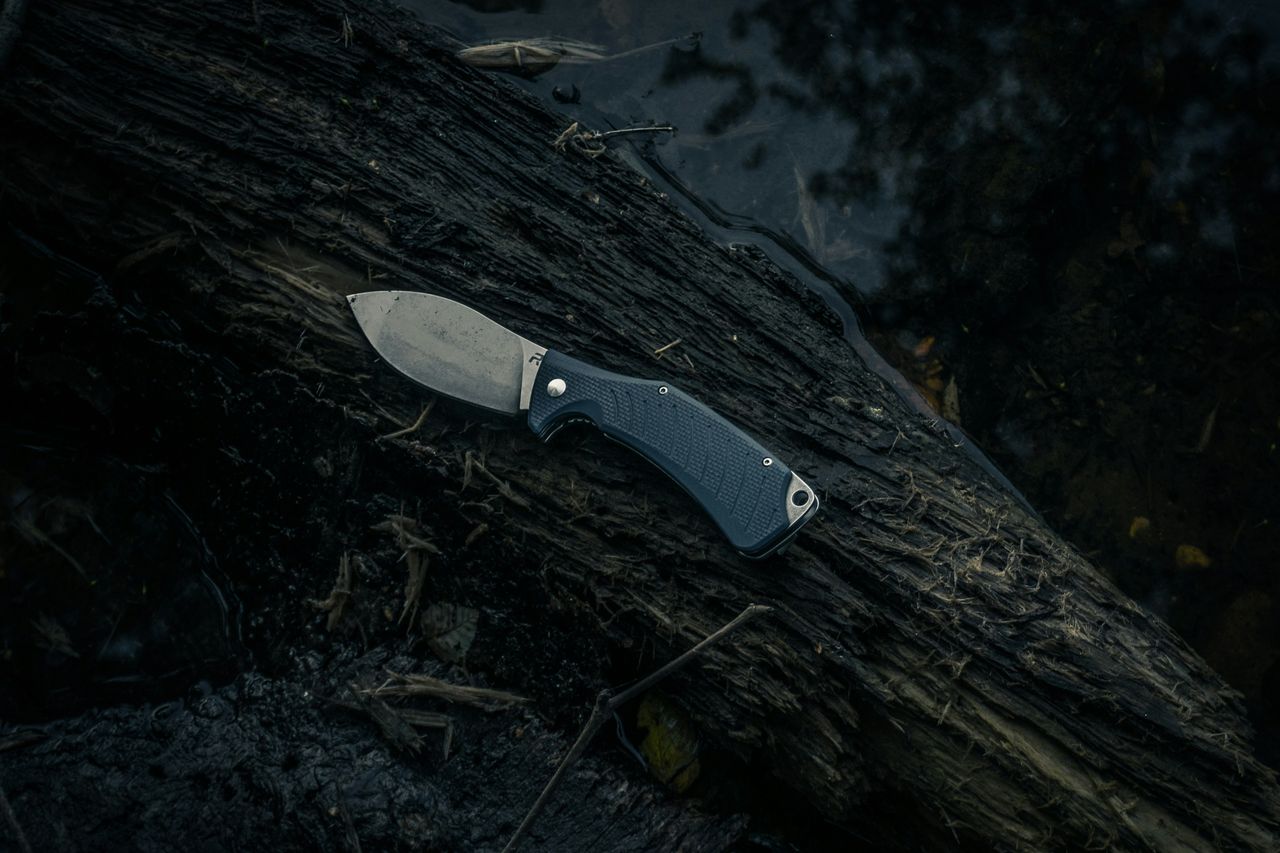
Multi-tools are brilliant for quick fixes, light cutting, and everyday convenience. But when the job gets wet, dirty, tough, or unpredictable, a good fixed blade steps into a completely different league. This gallery breaks down seven things a fixed blade knife can do with more confidence, safety, and power than a folding multi-tool ever could.
Take hard impact without folding

A fixed blade is built as one solid cutting tool, which changes everything the moment force enters the picture. When you bear down hard, twist through dense material, or strike the spine for extra power, there is no hinge to become the weak point. That simple structural difference gives the user much more confidence.
A multi-tool blade is designed for convenience first. It can cut plenty of everyday items, but heavy impact work asks a lot from a folding mechanism. If you need to drive a blade through thick material, process rough wood, or tackle stubborn jobs in the field, a fixed blade is the one tool made to absorb that punishment.
Process wood for fire and shelter

When people talk about real outdoor utility, wood processing is usually near the top of the list. A good fixed blade can split kindling, shave feather sticks, notch branches, and help shape stakes for shelter building. The blade length, handle security, and overall strength make these tasks far more manageable.
A multi-tool can whittle a little and trim some cordage, but it is not ideal for sustained, forceful work on wood. The compact grip gets tiring, and the folding format limits how much pressure you want to apply. In camp, where repeated cuts matter more than quick convenience, a fixed blade behaves like a true working tool.
Handle messy work and clean up fast

Mud, sap, blood, fish slime, food residue, and wet dirt have a way of finding every tiny gap in a tool. A fixed blade shines here because it is simple. With no pivot, springs, or cramped interior spaces, it can be rinsed, wiped, scrubbed, and dried quickly without much fuss.
That matters more than many people realize. The more complex the tool, the more places moisture and grit can hide, and the more annoying cleanup becomes. A fixed blade is especially useful for hunting, fishing, camp cooking, and any job where sanitation matters. When the work is dirty, simplicity is not just convenient. It is a real advantage.
Give a safer grip under heavy pressure

A good fixed blade usually offers a fuller handle, stronger ergonomics, and a shape designed to lock the hand in place. Under hard cutting pressure, that makes a noticeable difference. Whether your hands are cold, wet, gloved, or tired, the knife often feels more secure and more predictable.
Multi-tool handles are necessarily compromised by everything packed inside them. They can be narrow, angular, and awkward when serious force is involved. For light package duty that is fine. For repetitive cutting, field dressing, or controlled slicing through resistant material, comfort turns into safety. A fixed blade gives your hand a purpose-built grip instead of an emergency one.
Draw instantly when seconds matter

A fixed blade comes ready to work the moment it clears the sheath. There is no unfolding, no nail nick, no stiff joint, and no fiddling to get the blade locked into place. That speed can be valuable in practical situations, from cutting rope under tension to dealing with a problem one-handed.
It is not about drama. It is about direct access. In stressful conditions, fine motor skills tend to get worse, and simple actions become better actions. A multi-tool asks for extra steps before the blade is truly usable. A fixed blade removes that delay, which is exactly why many outdoors people, rescue-minded users, and tradespeople still prefer one nearby.
Maintain a stronger, more specialized edge

Because it is designed around one primary job, a fixed blade can be ground, heat treated, and shaped with cutting performance in mind. Many hold a robust edge profile that is better suited to carving, food prep, skinning, or demanding utility work. You are getting a blade that is not trying to share space with pliers and screwdrivers.
A multi-tool blade is usually smaller and built around compromise. That does not make it bad. It just means it serves a broader mission. A fixed blade can offer more belly, more edge length, and more control across the whole cutting stroke. For users who actually cut a lot, that dedicated geometry matters every single time.
Stand up to prying and twisting abuse

Knives are not pry bars, and any blade can be damaged by misuse. Even so, a fixed blade generally tolerates accidental side loads and rough treatment far better than a folding blade on a multi-tool. If a cut binds, the material shifts, or the user has to torque the knife slightly to free it, the construction offers more margin.
That extra durability can be the difference between finishing the task and babying the tool. A multi-tool hinge is simply not the place you want stress concentrating during a difficult job. In real life, perfect technique is not always possible. A fixed blade gives you a sturdier platform when work gets clumsy, awkward, and less than ideal.