The title is dramatic, but the surviving historical record needs one important distinction. A documented explosion is associated directly with Samuel Colt’s earliest experimental revolver. For several of the other designs below, the evidence instead concerns burst cylinders, chain-fire hazards, dangerous prototypes, or mechanical problems rather than a confirmed case of the inventor himself being injured. That distinction makes the history more accurate while still showing how hazardous early revolver development could be.
1. Samuel Colt’s First Experimental Revolver
Samuel Colt’s first experimental revolver is the clearest case behind this dramatic title. In about 1831–1832, Colt worked with gunsmith Anson Chase on an early revolving pistol based on his wooden concepts. The prototype lacked the later safeguards that separated neighboring percussion chambers. During a test, ignition spread to other charges and the gun exploded, destroying the experimental arm rather than killing its designer. Colt survived and treated the failure as part of the design process. The episode mattered because it exposed a basic problem of early revolvers: reliable cylinder rotation was not enough; ignition had to be controlled just as carefully.
2. The Cochran Turret Revolver

The Cochran turret revolver of 1834 shows another way early revolving guns could become dangerous. Instead of a conventional cylinder rotating around an axis parallel to the barrel, its turret turned like a wheel, leaving chambers facing in several directions. About 150 examples are believed to have been produced, making it rare even for its era. The main concern was chain fire: if more than one chamber ignited, some projectiles could travel toward the shooter. There is no strong evidence that inventor Andrew Cochran was injured by an explosion from his own pistol, so the documented lesson is design risk rather than a confirmed inventor casualty.
3. The Colt Walker
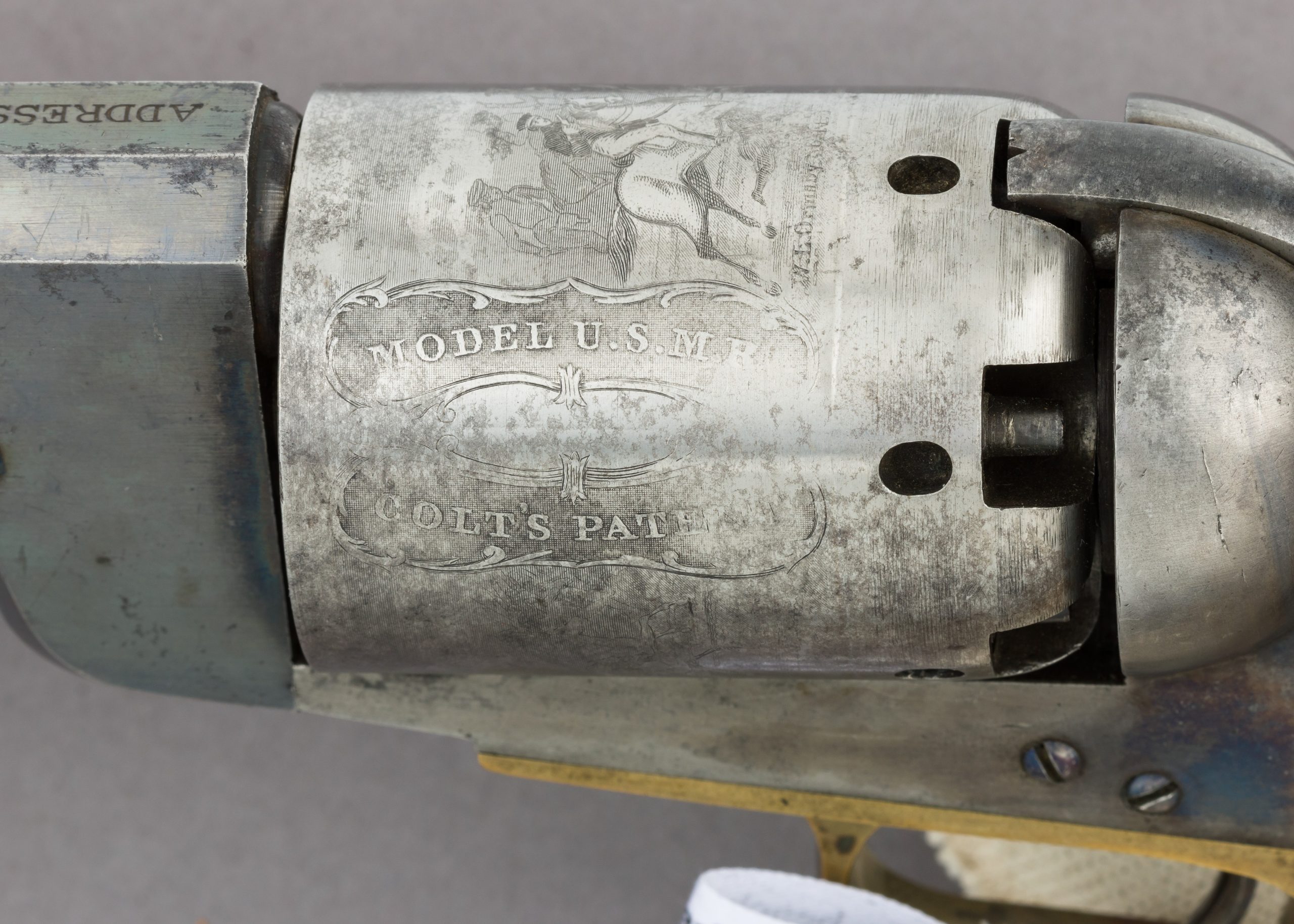
The Colt Walker of 1847 was powerful for its day, but its development exposed how quickly a revolver could reach the limits of its materials. Designed through cooperation between Samuel Colt and Texas Ranger Samuel Walker, the six-shot .44-caliber pistol used a very large black-powder charge. The cylinder could hold about 60 grains, although Colt recommended 50 grains. More than 1,000 were produced for the original military contract and private sales, and historical records describe numerous ruptured cylinders. The Smithsonian also notes burst cylinders and accidental discharge of all six chambers as recurring problems among inexperienced users.
4. The Colt Paterson
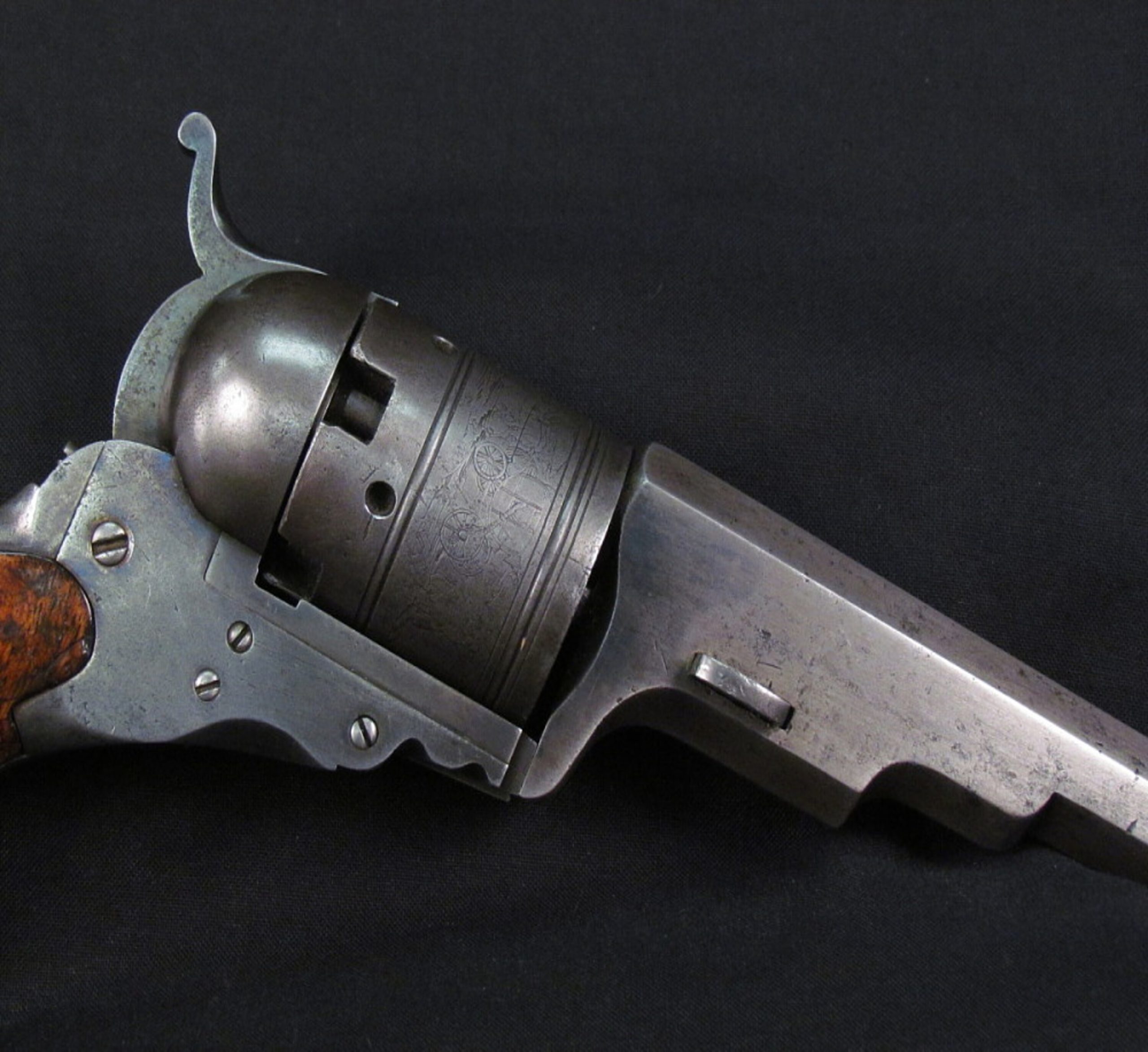
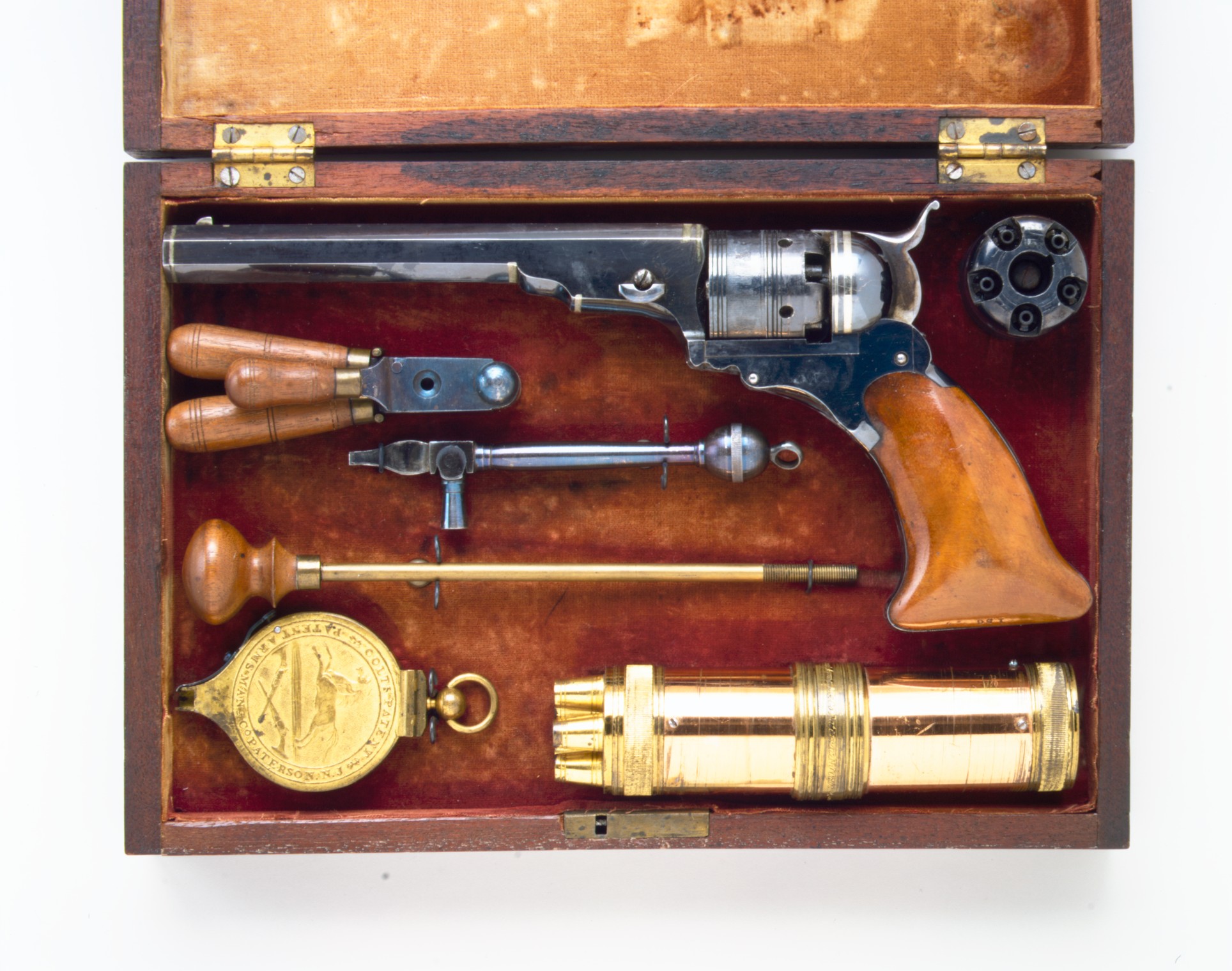
The early Colt Paterson revolver illustrates how a successful idea could still have dangerous weaknesses. Patented in 1836, the five-shot design used a rotating cylinder and percussion ignition, but early versions could suffer from chain firing if ignition reached neighboring chambers. That mattered because one uncontrolled ignition could release several charges at once and place unusual stress on the mechanism. The Paterson also had an awkward loading system and appeared in several forms during Colt’s short New Jersey production period. Later designs added improvements that reduced these hazards, showing how repeated testing turned an inventive concept into a more dependable revolver.
5. The Allen & Thurber Pepperbox
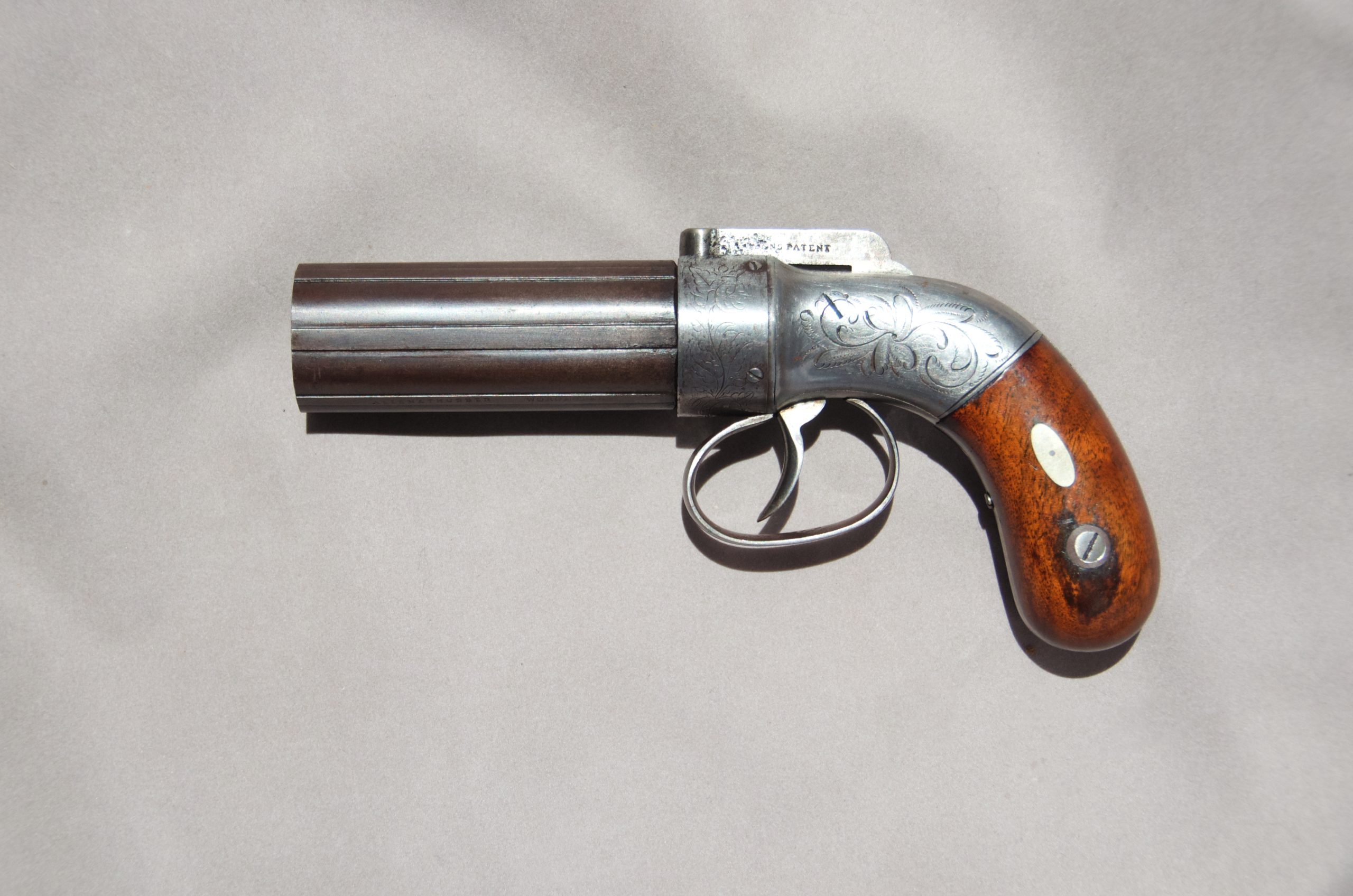
Allen and Thurber pepperboxes belonged to an earlier family of repeating handguns that revealed hazards designers had to solve before the modern revolver matured. Ethan Allen patented several revolving-firearm mechanisms, and Allen & Thurber later produced large numbers of pepperbox pistols in calibers including .31. Their clustered barrels avoided some problems found in single-barrel revolvers because each barrel served its own chamber. Yet early percussion systems could still suffer chain fires when flame reached neighboring caps. These dangers explain why shields, recessed nipples, and better ignition separation became increasingly important as American repeating pistols evolved.
6. Alexandre Le Mat’s Revolver
Alexandre Le Mat’s revolver shows that unusual engineering could create new failure concerns even without a documented inventor explosion. Patented in 1856, the Le Mat combined a revolving cylinder with a separate central barrel, giving it 9 chambers plus the smoothbore tube. That arrangement required a specialized hammer system so the shooter could select which barrel fired. The design was more complicated than a typical revolver. Thousands were eventually produced, including European-made examples, yet surviving records do not establish that Le Mat himself suffered an explosive accident with one. Its story is therefore a useful lesson in the risks of complex firearm mechanisms.
7. The Lefaucheux Model 1854
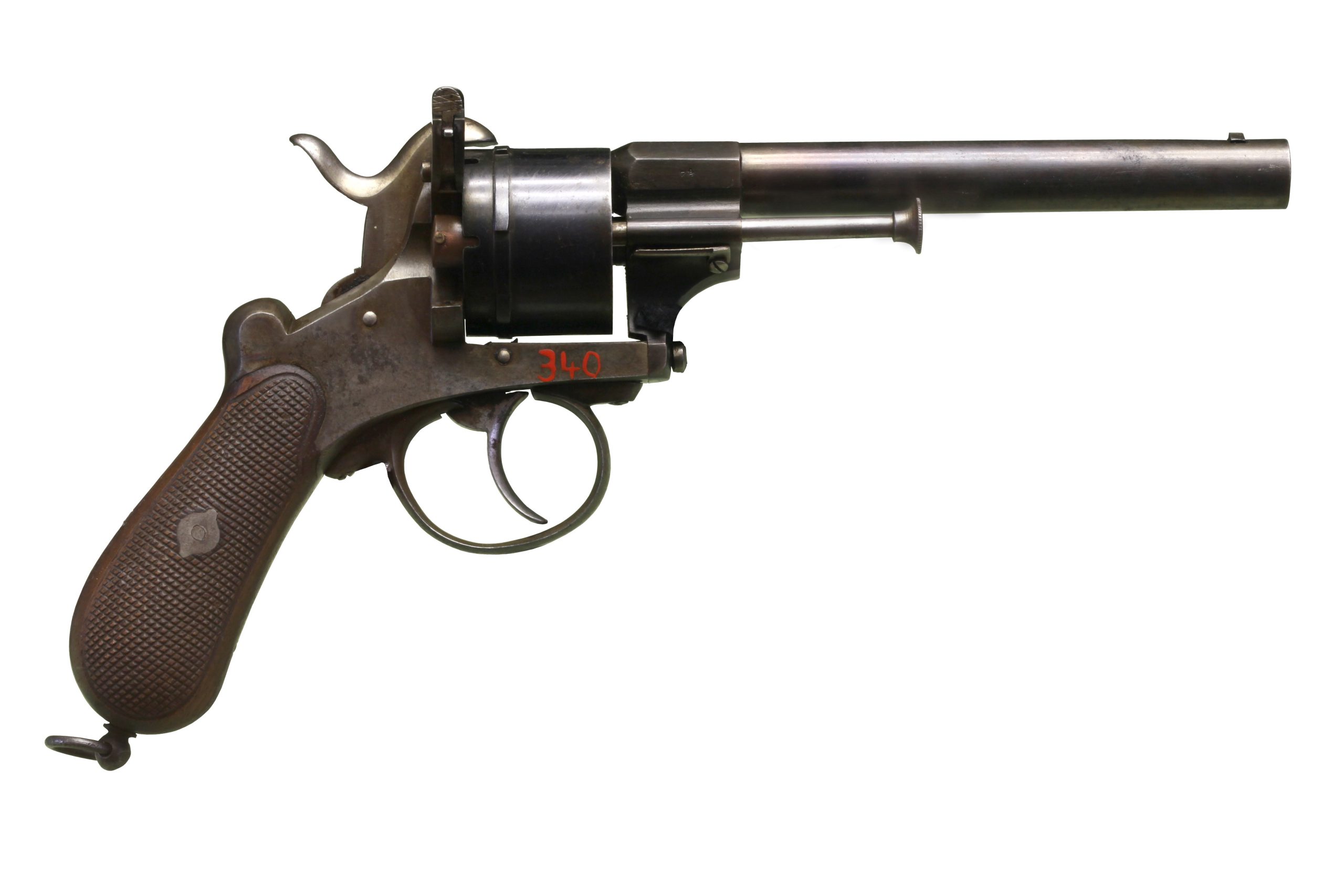
The Lefaucheux Model 1854 marked another major step in revolver development, but the record does not support claims of its inventor being blown up by the design. Eugène Lefaucheux patented his six-shot pinfire revolver in 1854, using 12mm self-contained metallic cartridges rather than loose powder and separate percussion caps. The system simplified loading but introduced a projecting pin struck by the hammer. An early prototype, the LF 0, is documented as the starting point for the M1854 series. That history shows how revolver development involved constant mechanical experimentation, not a string of confirmed inventor casualties at the time.