Some handguns become tools. Others become institutions.
The 1911 and CZ 75 sit in that rare second category, each representing a different era, a different engineering mindset, and a different idea of what a fighting pistol should be.
Two legends built in different worlds

The 1911 was born from early 20th-century American military demands, with John Browning refining a design that would become the U.S. service pistol for generations. Adopted in 1911 and battle-proven through two world wars, Korea, and Vietnam, it built a reputation on simplicity, authority, and a trigger that many shooters still consider the standard. Its identity is wrapped up in .45 ACP, single-action operation, and a manual safety system that rewards training.
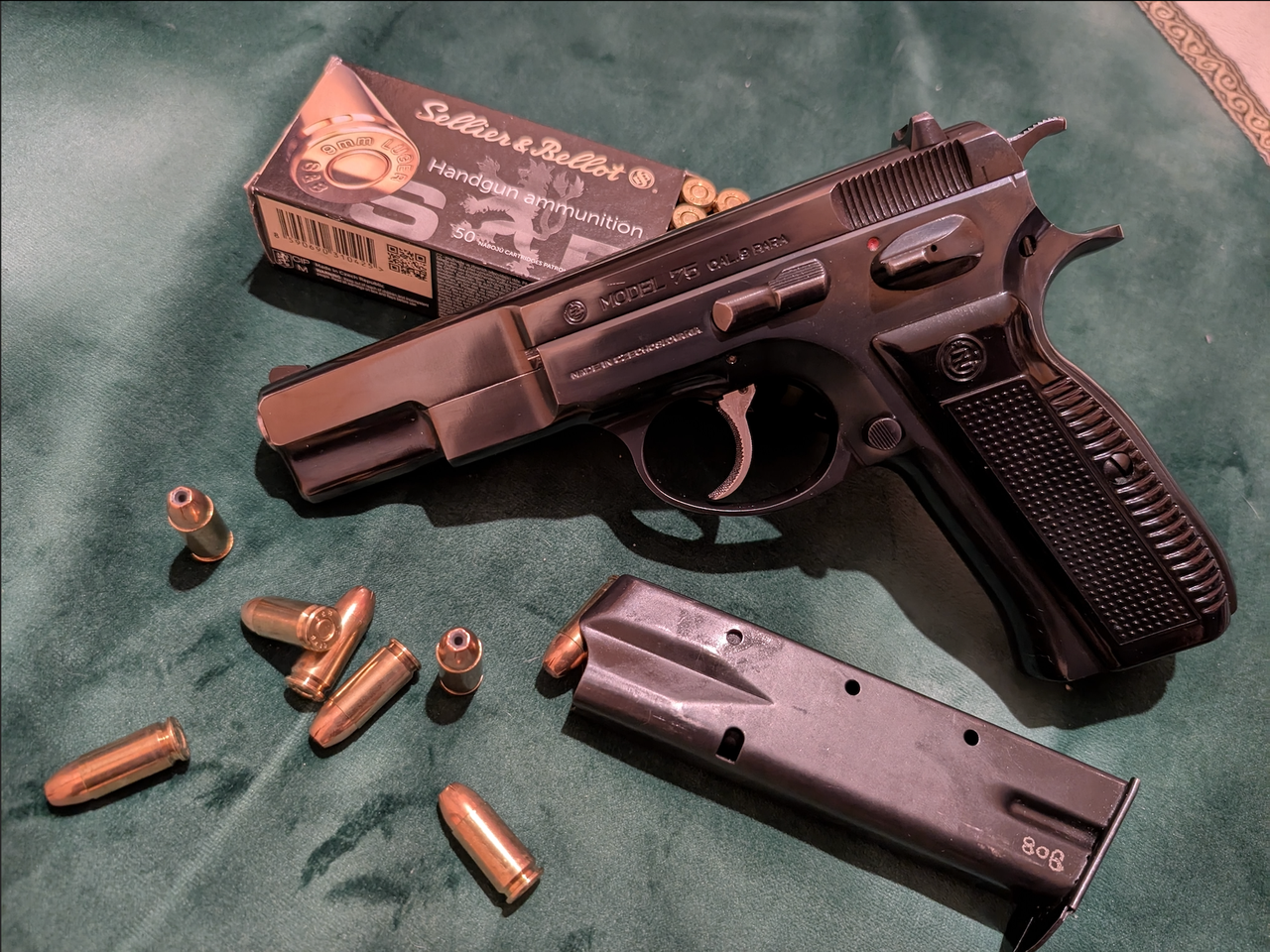
The CZ 75 arrived much later, introduced in Czechoslovakia in 1975 by the Koucky brothers. It came out of the Cold War, but unlike many Warsaw Pact sidearms, it was elegant rather than crude. The pistol combined high capacity, excellent ergonomics, and a slide-in-frame design that gave it a distinctive feel in recoil and handling. While it was not initially exported freely to the West, it gained cult status and later broad influence.
What makes this comparison so enduring is that neither pistol is merely surviving in history. The 1911 still dominates custom shops, competition bays, and premium handgun catalogs. The CZ 75 remains one of the most copied double-stack steel pistol patterns in the world, influencing everything from the Tanfoglio line to modern competition variants like the Shadow series.
So the question is not which one mattered more historically. It is which design stands up better when judged by reliability, shootability, maintenance, capacity, and practical long-term ownership? That is where old guard meets old world, and where sentiment starts giving way to measurable strengths.
Design philosophy shapes everything.

The 1911 is a pure single-action pistol. That means the trigger pull can be short, crisp, and remarkably consistent from shot to shot, which is a huge part of its appeal. In skilled hands, that trigger makes precise shooting feel almost unfair. The tradeoff is that it is designed around cocked-and-locked carry, with the hammer back and safety engaged, a system some shooters love, and others never fully trust.
The CZ 75 follows a different logic. Most classic versions are traditional double-action/single-action pistols, allowing a long first trigger pull followed by lighter subsequent pulls. Many variants can also be carried cocked and locked, which gives the gun unusual flexibility. It can behave partly like a service double-action pistol and partly like a single-action enthusiast’s gun, depending on model and user preference.
Ergonomically, the CZ 75 often wins people over faster. Its grip shape is famously natural, and many shooters describe it as one of the best-feeling pistols ever made. The 1911, however, remains exceptionally slim for a full-size steel handgun, and that narrow grip works beautifully for shooters with smaller hands or anyone who values a straight-back trigger press.
Then there is the mechanical feel. A good 1911 feels precise, almost like fitted machinery, especially in higher-end examples. A good CZ 75 feels planted and fluid, with rails running inside the frame and a low bore axis that helps keep movement controlled. They both feel refined, but in different languages.
Capacity, caliber, and real-world practicality
The classic 1911 carries 7 or 8 rounds in the magazine, depending on setup, and usually chambers .45 ACP. That combination reflects the thinking of its time: fewer rounds, bigger bullets, high confidence in deliberate shot placement. Modern versions broaden the picture with 9mm options and double-stack 2011-style descendants, but the traditional 1911 formula remains low capacity by current standards.
The CZ 75 emerged in the age of the high-capacity wonder nine. Standard magazines commonly hold 15 or 16 rounds of 9mm, and many modern magazines push beyond that. For range work, defensive use, or duty-style roles, that extra onboard ammunition changes the practical equation immediately. Reload frequency drops, and the pistol fits more comfortably into modern expectations.
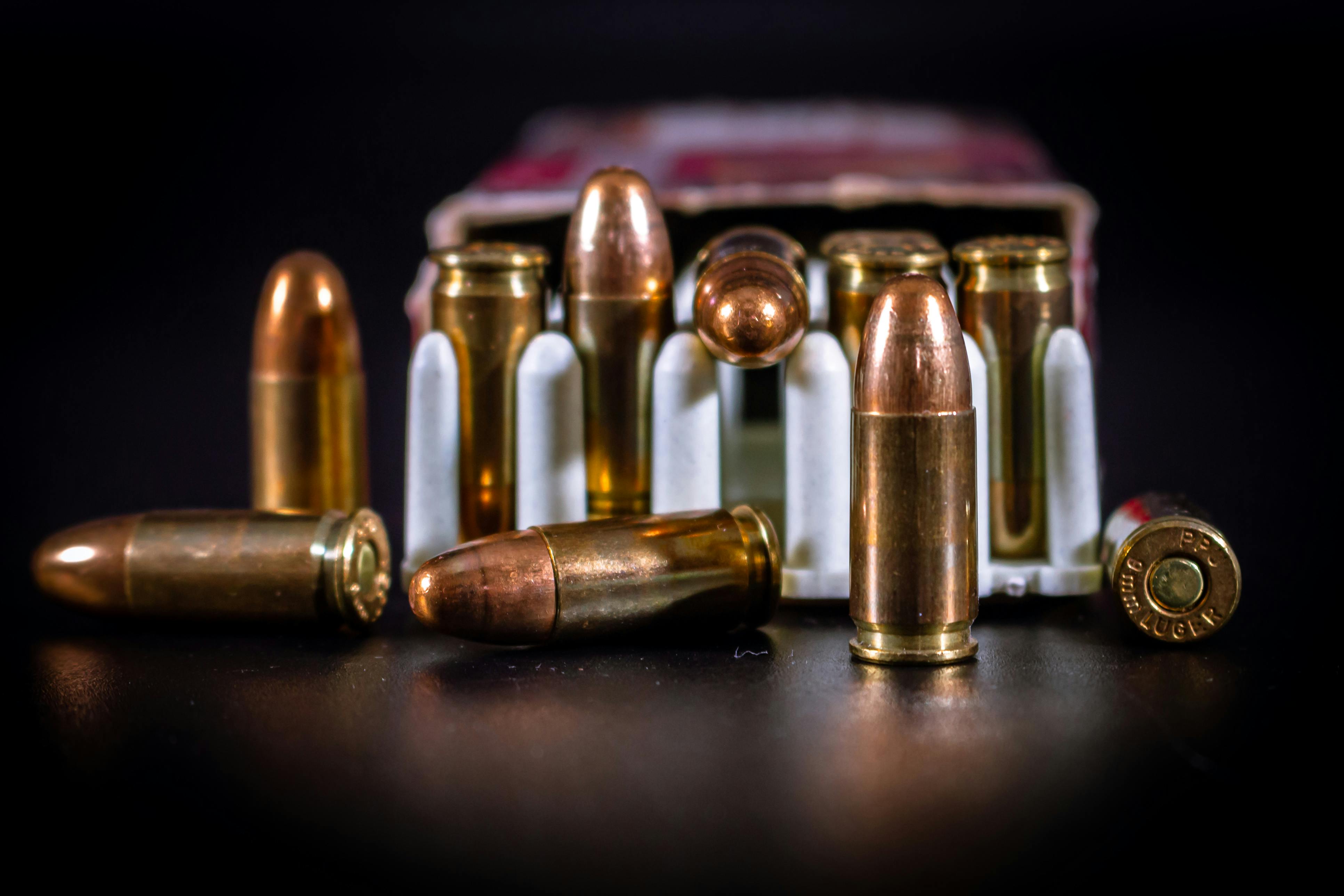
Ammunition cost matters too, especially if you actually train. In most markets, 9mm remains significantly cheaper and easier to find than .45 ACP, which gives the CZ 75 an advantage in long-term affordability. A shooter who saves money on ammo often shoots more, and more repetitions usually matter more than romantic caliber debates.
Still, the 1911’s caliber advantage is not imaginary if you prefer larger projectiles and enjoy the authoritative recoil impulse of .45 ACP. Many experienced shooters also argue that a steel 1911 in 9mm offers one of the softest, most shootable target setups available. In other words, both pistols can be practical, but the CZ 75 starts with fewer compromises for the average owner.
Reliability depends on the example, not just the name

The 1911 has a reputation that is both deserved and complicated. Military-spec pistols built with hardball ammunition in mind were famously dependable under harsh conditions. But modern 1911s vary enormously because the platform spans budget imports, production guns, semi-custom builds, and hand-fitted masterpieces. Tolerances, magazines, extractor tuning, and ammunition choice can all affect reliability more than casual buyers expect.
That variability is the platform’s blessing and curse. A properly built 1911 from a strong maker can run for tens of thousands of rounds with impressive consistency, and many do. But the design asks more from parts quality and setup than newer service pistols. Owners often learn quickly that magazine selection alone can transform a troublesome gun into a reliable one.
The CZ 75 generally enjoys a more forgiving reputation in stock form. Full-size steel models are known for digesting a wide range of 9mm loads while maintaining excellent durability. Police and military derivatives, along with extensive competition use, have shown that the pattern can absorb heavy round counts with minimal drama. According to long-running competitive shooting circles, CZ-based guns earned trust because they blended accuracy with repeatable function.
That does not mean every CZ is perfect. Slide stop wear, trigger return spring issues, and small-part breakage can appear over very high round counts, especially in competition-heavy guns. But if you compare average off-the-shelf examples, the CZ 75 usually asks less from the owner to reach dependable day-to-day performance.
Shooting experience is where loyalties are made
The 1911 wins hearts with its trigger. Even people who are not devoted fans usually admit that a good 1911 trigger makes accurate shooting easier, especially at speed on smaller targets. The straight-pull geometry, short reset, and clean break have made it a benchmark in bullseye, action shooting, and defensive training circles for decades. It feels intuitive in a way that is hard to explain until you shoot one. The recoil coil character is also part of the story. In .45 ACP, the 1911 tends to push rather than snap, particularly in a full-size steel gun. Many shooters find that sensation comfortable and rhythm-friendly. Add the slim grip and naturally pointable frame, and the platform can feel almost tailored to deliberate, accurate shooting.
The CZ 75 answers with balance and control. Its extra capacity does not come with awkward handling, because the grip contour and weight distribution are so well judged. The low slide profile and internal rails contribute to a smooth cycle, and many shooters find split times easy to manage once they adapt to the smaller gripping surface on the slide during manipulation.
This is why both pistols have such enduring fan bases. The 1911 feels like a precision instrument with a warrior’s résumé. The CZ 75 feels like a service pistol designed by someone who deeply understood human hands. One often wins the first magazine on trigger alone. The other often wins the full range session.
Maintenance, customization, and ownership costs
Owning a 1911 can be wonderfully rewarding if you enjoy tinkering, parts selection, and fine-tuning. Few handgun platforms have a deeper aftermarket. Triggers, safeties, sights, hammers, barrels, bushings, grips, and magazines are available in a staggering variety. A basic production gun can become highly personalized, and that ecosystem is one reason the design remains culturally powerful.
The downside is that not all parts are truly drop-in, despite how they are marketed. Proper fitting often matters, particularly when changing ignition components or safeties. That means the 1911 can become expensive quickly if you chase perfection. Maintenance also tends to be more hands-on, with owners paying attention to springs, extractor tension, lubrication, and magazine health.
The CZ 75 is less customizable in the old-school hot-rod sense, but it is easier for many owners to leave it alone. Good factory examples usually arrive ready to shoot well with only modest upgrades, such as sights, grips, or trigger work. Companies that specialize in CZ tuning have proven how far the platform can go, especially in competition, but the average owner does not need to rebuild the gun’s identity to enjoy it.
From a cost perspective, the CZ 75 often makes the calmer case. Purchase prices for standard models have historically been competitive, and 9mm keeps recurring expenses lower. The 1911 can absolutely justify its price when done right, but it is more likely to invite the owner into a deeper and pricier relationship.
Which one really survives the test
If the test is of historical significance, both survive easily. The 1911 helped define the American fighting handgun, while the CZ 75 anticipated many features shooters now take for granted in full-size service pistols. They each outlived trends that buried lesser designs, and both continue to inspire clones, updates, and devoted communities.
If the test is modern practicality for the widest range of shooters, the CZ 75 probably edges ahead. It offers better standard capacity, lower ammunition costs, excellent ergonomics, and strong reliability in stock form. For someone buying one all-steel classic to shoot often and own for years without turning the experience into a hobby project, the CZ makes an unusually persuasive argument.
But if the test includes emotional durability, mechanical character, and pure shooting pleasure, the 1911 refuses to fade. There is still nothing quite like a good one. It remains the pistol that many experts compare everything else against when discussing trigger quality and the shooter’s connection to the gun.
So which survives the test? In practical terms, the CZ 75 may be the more adaptable old-world survivor. In cultural and tactile terms, the 1911 remains an old guard. The honest answer is that both endure because each solved the handgun problem so well that later generations are still trying to improve on them.