The AK-47 is surrounded by myth, politics, and pop culture, but its staying power comes down to something simpler: it keeps working when conditions turn ugly. From desert dust to subzero cold, this rifle built a global reputation for shrugging off abuse that can rattle more refined designs. Here are 11 extreme-condition traits that helped make the AK seem brutally simple, and sometimes brilliantly so.
It keeps cycling in heavy dust

Fine desert dust is the enemy of machinery, and firearms are no exception. Yet the AK earned its reputation in places where sand gets into magazines, actions, clothing, and every exposed surface. Its generous internal clearances give grit more room to move instead of instantly choking the mechanism.
That does not mean dust is harmless, because any rifle can eventually fail when enough debris builds up. But the AK’s long-stroke gas system and sturdy moving parts tend to power through contamination that might slow tighter, more precision-focused platforms. In real-world terms, that rugged tolerance is a major part of why the design became famous across arid regions.
It still runs when caked with mud

Mud is a special kind of mechanical nightmare because it is heavy, sticky, and unpredictable. It can pack into controls, block moving parts, and turn a clean action into a grinding mess in seconds. The AK’s reputation grew from countless stories of rifles dropped in muck, wiped down roughly, and put back to work.
Of course, no firearm is invincible, and a barrel obstruction is dangerous in any design. Still, the AK’s simple controls and robust action make it more forgiving when exposed to filth. That forgiving nature is exactly what makes more delicate-looking modern rifles seem fussy by comparison when the ground turns wet and ugly.
It tolerates freezing temperatures with less drama

Extreme cold can turn lubricants sluggish, stiffen springs, and make small operating issues suddenly obvious. Rifles built around tight tolerances may feel crisp in ideal weather but less happy once ice, frost, and thickened oil enter the picture. The AK’s looser fit and straightforward mechanism are often an advantage when temperatures plunge.
That is one reason variants of the platform have seen service across brutally cold climates for decades. The rifle is not magic, and proper maintenance still matters, especially with moisture and icing. But compared with systems that demand more exact cleanliness and lubrication balance, the AK often appears refreshingly unfazed when winter gets serious.
It shrugs off rough handling

Some rifles seem to demand careful treatment, as if they belong more on a bench than in the back of a truck. The AK built its image in the opposite direction. Stamped or milled components, solid magazines, and a robust operating system gave it a reputation for enduring drops, bumps, and the kind of abuse that comes with hard field use.
That durability matters when gear is being carried through brush, dragged over rocky ground, or handled by tired people under stress. A rifle that can take knocks without instantly losing confidence inspires trust. The AK’s appeal is not elegance, but the sense that it was built with the expectation that life will be messy.
It can handle neglect better than most designs

Neglect is not a virtue, but it is a reality in war zones, remote camps, and low-resource environments. Cleaning kits get lost, schedules break down, and maintenance standards vary wildly. The AK became famous partly because it could continue functioning after long periods of less-than-ideal care.
Its piston-driven system and roomy internal geometry help explain that reputation. Carbon fouling and grime still matter over time, yet the rifle often keeps going longer before neglect turns into immediate stoppages. That resilience has always been part of the AK mystique, especially when compared with rifles that reward careful upkeep but punish inconsistency much faster.
Its magazines are famously tough

A rifle is only as reliable as the magazine feeding it, and this is one area where the AK made a lasting impression. Steel AK magazines, in particular, are known for feeling more like tools than accessories. They are heavy, unapologetically rugged, and built to survive hard use that would leave lighter magazines dented or cracked.
That matters in extreme conditions because feeding problems often start before the bolt ever moves. Dirt, impact, and rough handling can ruin an otherwise capable rifle if the magazine fails. The AK’s durable magazine design became part of the platform’s broader reputation for practical toughness, even if it added weight and sacrificed some refinement.
It keeps working with simple field maintenance

One reason the AK feels uncomplicated is how quickly it can be broken down for basic cleaning. The top cover, recoil spring, bolt carrier, and gas tube come apart in a way that is intuitive even for people with limited training. In difficult environments, that simplicity is a major strength rather than a small convenience.
A rifle that is easier to inspect and wipe down in the field is easier to keep alive. When light is fading, hands are cold, and tools are scarce, straightforward maintenance becomes a real advantage. The AK’s design philosophy favors essential function over mechanical fussiness, and that becomes especially obvious under pressure.
Its long-stroke piston delivers brute-force reliability
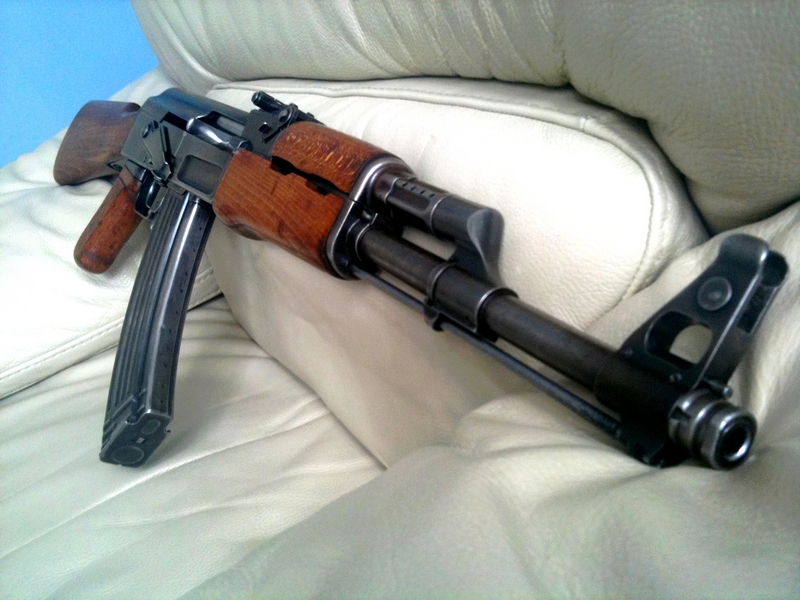
The AK’s operating system is not subtle, and that is exactly the point. Its long-stroke gas piston moves with real mass, carrying momentum through the cycle in a way that helps overcome fouling, debris, and resistance. Where some rifles feel refined, the AK often feels determined.
That extra mechanical authority can be an advantage when conditions are ugly and ammunition quality is inconsistent. It is a system designed less around finesse and more around dependable energy transfer. For many shooters, that is the heart of the AK story: not precision engineering in the luxury sense, but a rugged machine built to keep doing the basic job.
It manages wide temperature swings without much fuss

Some environments do not stay hot or cold. They swing wildly from freezing nights to scorching afternoons, putting constant stress on metal, lubricants, and optics. The AK’s old-school mechanical layout has a way of looking smart in those conditions because there is simply less to baby and less to tune.
A platform with fewer delicate dependencies can feel more predictable when the weather will not make up its mind. Expansion, contraction, condensation, and dust all become part of the daily equation. The AK’s reputation was built in exactly these kinds of places, where consistency matters more than technical polish and where rugged simplicity keeps paying dividends.
It remains usable with minimal support gear

Modern rifles often shine brightest when paired with a full ecosystem of optics, mounts, specialized lubrication, and carefully matched accessories. The AK comes from a different philosophy. At its core, it is a rifle meant to function as a basic fighting tool even when the support package is sparse.
That matters in remote or austere conditions where replacement parts and specialized equipment are not close at hand. A rugged iron-sighted rifle with simple controls can still be effective when batteries die or extras disappear. The AK’s appeal in extreme conditions is not that it rejects modernization, but that it never depended on it in the first place.
It digests inconsistent ammunition better than many rifles
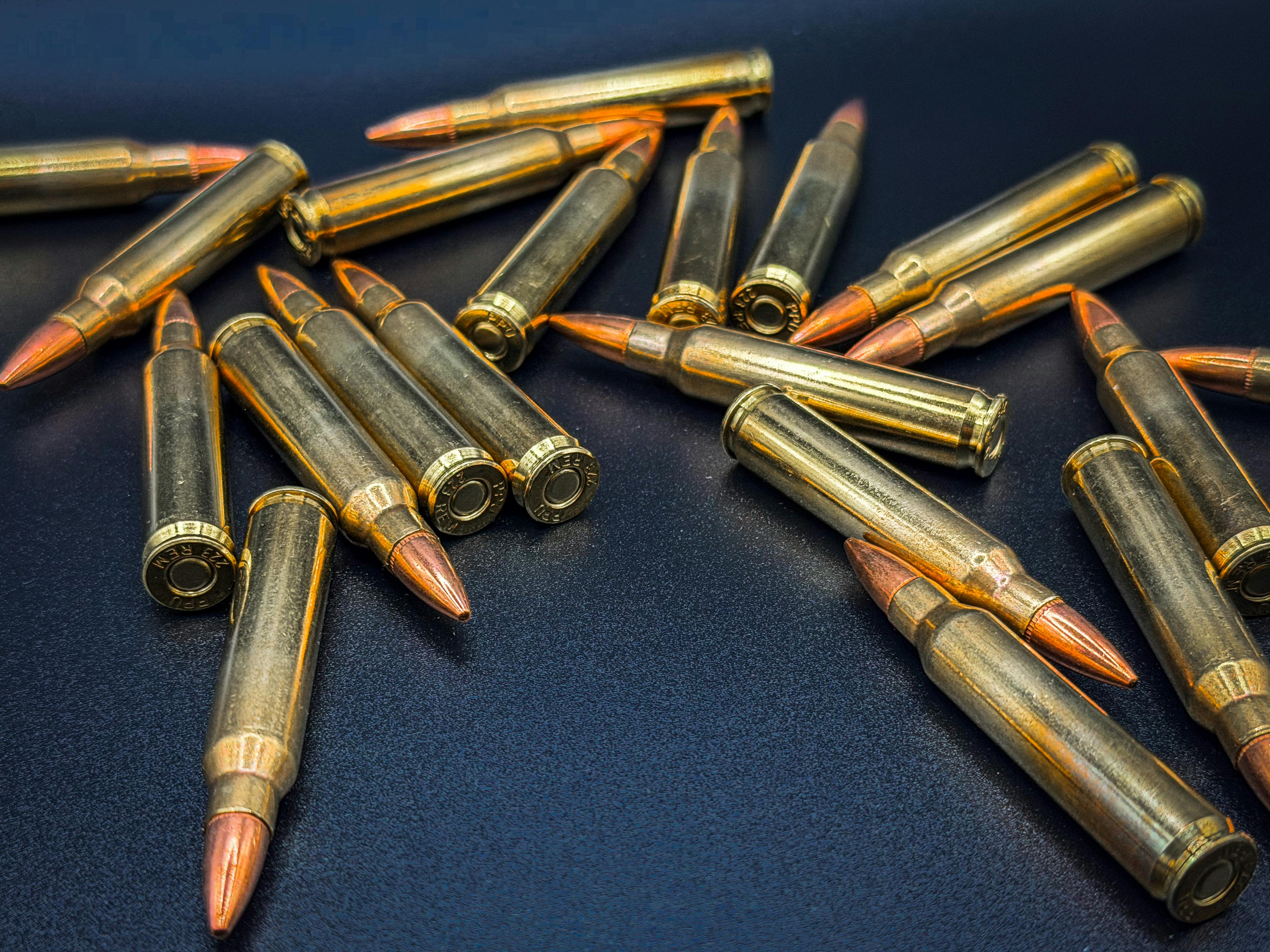
Not every shooter has access to match-grade ammunition stored in perfect conditions. In many parts of the world, cartridges vary in age, cleanliness, and consistency, and that can expose weaknesses in more tightly tuned systems. The AK built part of its reputation by functioning with a broad range of ammunition quality.
That tolerance comes from the same general formula seen elsewhere in the design: strong extraction, robust cycling energy, and an action that is not obsessively tight. There are always limits, and bad ammunition can cause problems in any rifle. Still, the AK has long been admired for making the most of imperfect conditions and imperfect supplies.
It proves simplicity can be a survival feature

The bigger lesson of the AK in extreme conditions is not that newer rifles are bad. Many modern platforms are more accurate, more modular, and more adaptable than the original Kalashnikov ever was. But when everything is dirty, cold, wet, rushed, and under-supported, simplicity starts to look less old-fashioned and more like wisdom.
That is why the AK still commands respect far beyond nostalgia. Its genius lies in choosing reliability over elegance and practicality over complication. In environments where the world actively tries to stop machines from working, the AK’s stripped-down logic continues to make a powerful case for doing fewer things, but doing them dependably.