Some firearms look familiar until their intended purpose, unusual mechanism, or specialized ammunition comes into focus. A compact pistol may actually be engineered for covert operations, while a rifle-shaped weapon may have been designed around an entirely different battlefield problem. The 11 firearms below stand out because their appearance does not fully reveal what makes them unusual. Each one reflects a specific requirement that pushed its designers well beyond conventional firearm design.
1. Welrod
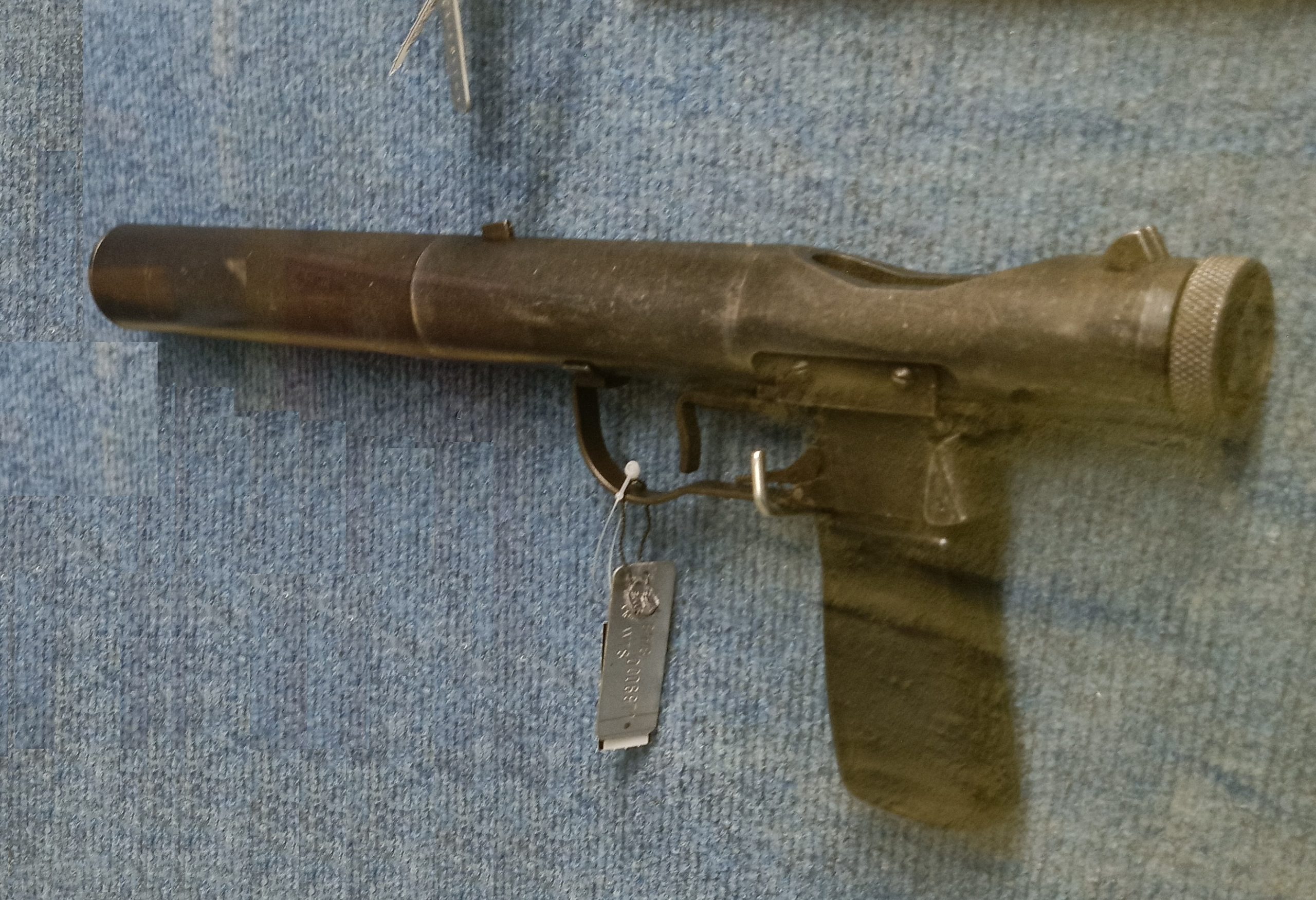
The Welrod looks less like a conventional pistol than a short metal tube, and that appearance reflects its very narrow mission. Developed in Britain during World War II for clandestine work, it combined a manually operated bolt with an integral suppressor to keep both muzzle blast and mechanical noise low. The Mk II used .32 ACP, while the later Mk I used 9×19mm. Its detachable magazine doubled as the grip, and wartime production is estimated at roughly 2,800 units, making it a specialist tool rather than a general-service pistol in the field.
2. De Lisle Commando Carbine

The De Lisle Commando Carbine resembles a compact sporting rifle, but nearly every major feature was shaped around quiet operation. British designers combined a .45 ACP cartridge, a shortened Lee-Enfield action, and a very large integral suppressor for World War II special operations. The bolt action avoided the cycling noise of a self-loader, while the subsonic .45 ACP projectile helped reduce the report. Only a small production run was completed, with commonly cited figures around 130 carbines, reinforcing how specialized its intended role really was.
3. Heckler & Koch P7
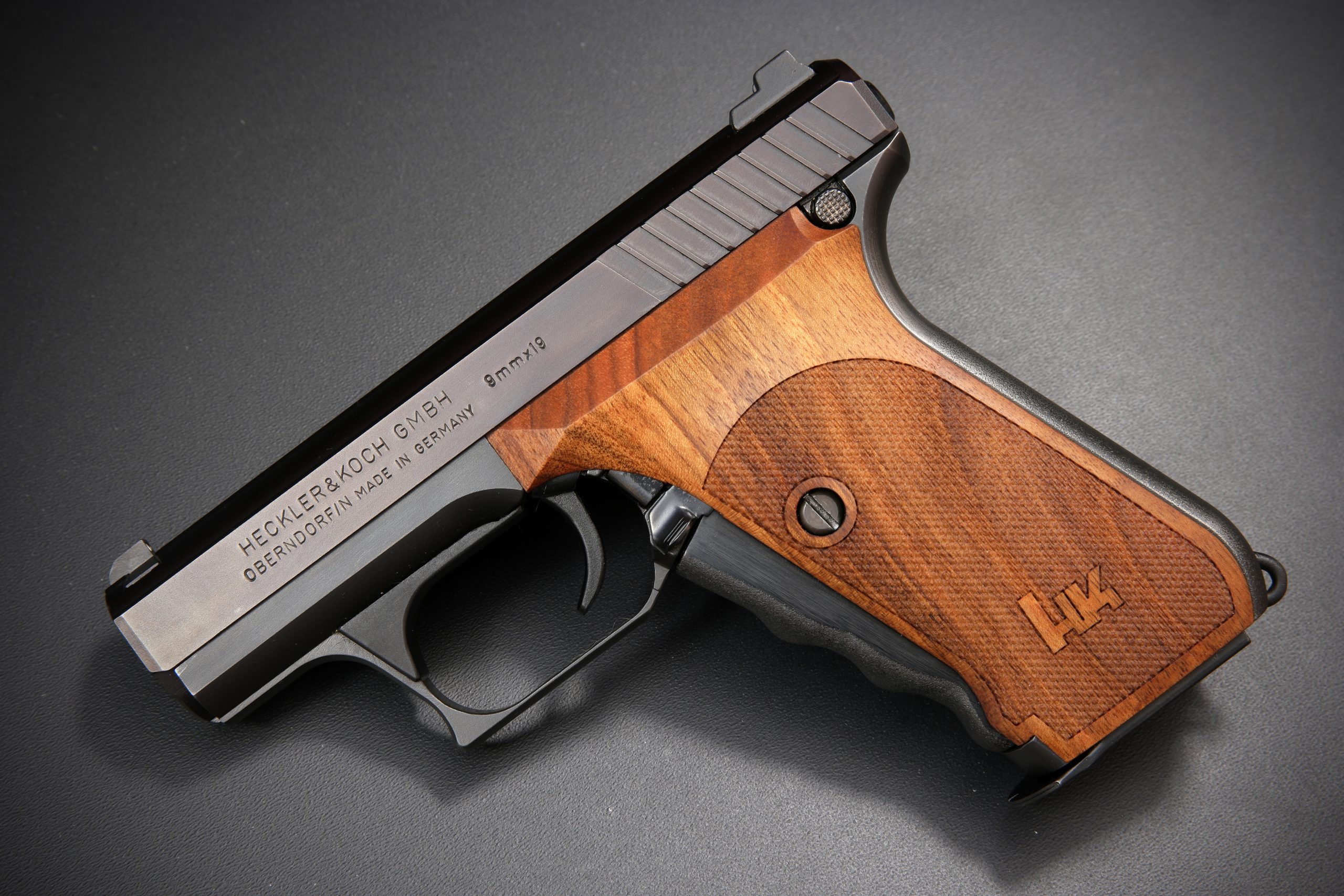
The Heckler & Koch P7 can pass at a glance as an ordinary compact 9mm pistol, yet its operating system is unusually specialized. Instead of a conventional locked breech, it uses gas-delayed blowback, with pressure acting on a piston beneath the barrel to hold the slide closed briefly. The chamber also used 18 flutes to help extraction. Introduced in 1979, the P7 family became known for its squeeze-cocking lever, compact dimensions, and distinctive heat behavior, making it one of the most mechanically unusual service pistols of its era. Its heat management was a trade-off.
4. Franchi SPAS-12
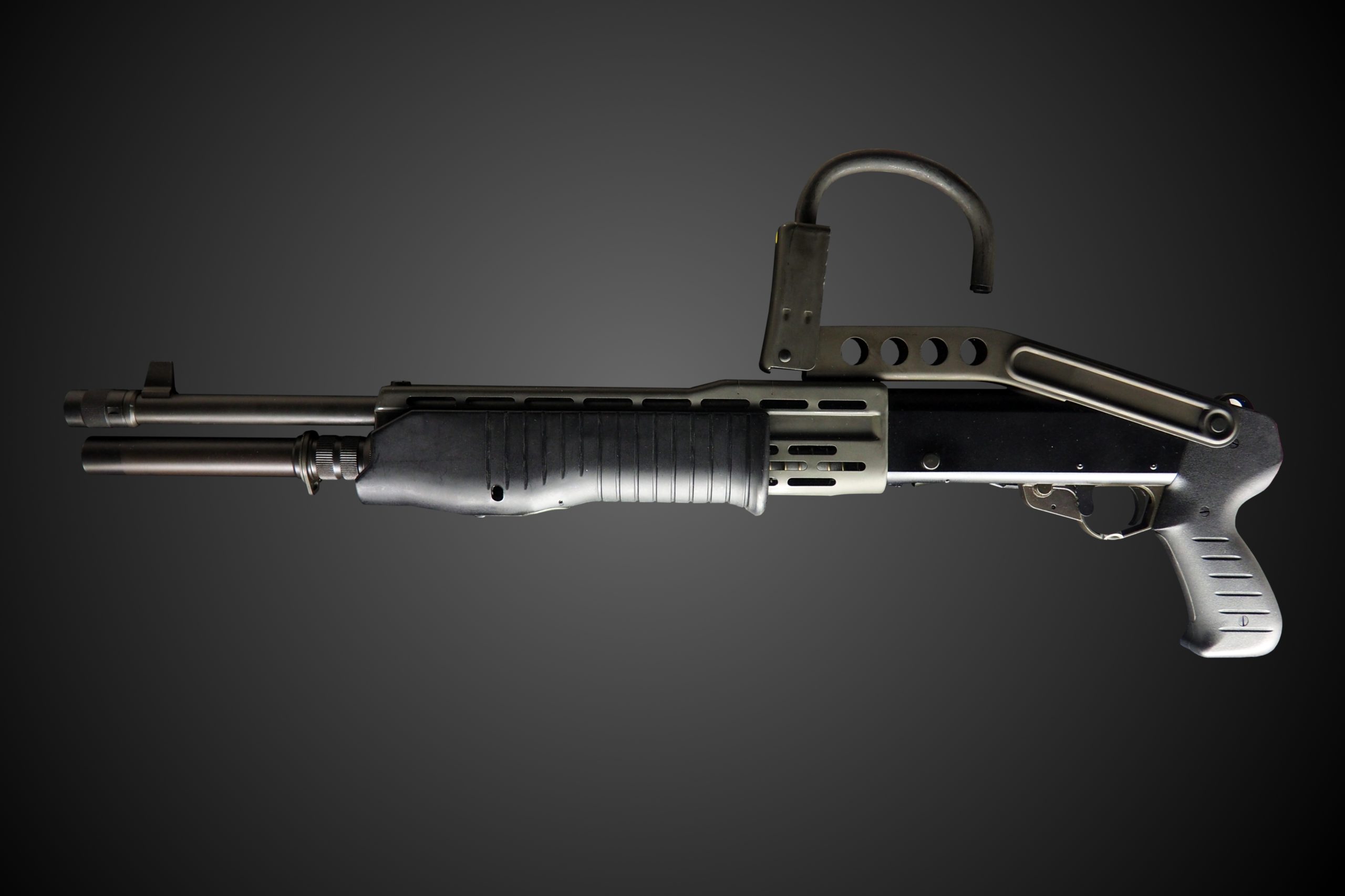
The Franchi SPAS-12 looks like a classic combat shotgun, but its design was aimed at a more specific problem than appearance suggests. It could operate in both semi-automatic and pump-action modes, allowing the user to switch between rapid cycling and manual operation as ammunition characteristics demanded. Developed in Italy during the 1970s, it also incorporated a folding stock and heat shield. Its 12-gauge chambering and distinctive controls made it recognizable, while its dual-action concept made it far less ordinary than a standard sporting shotgun.
5. Heckler & Koch G11
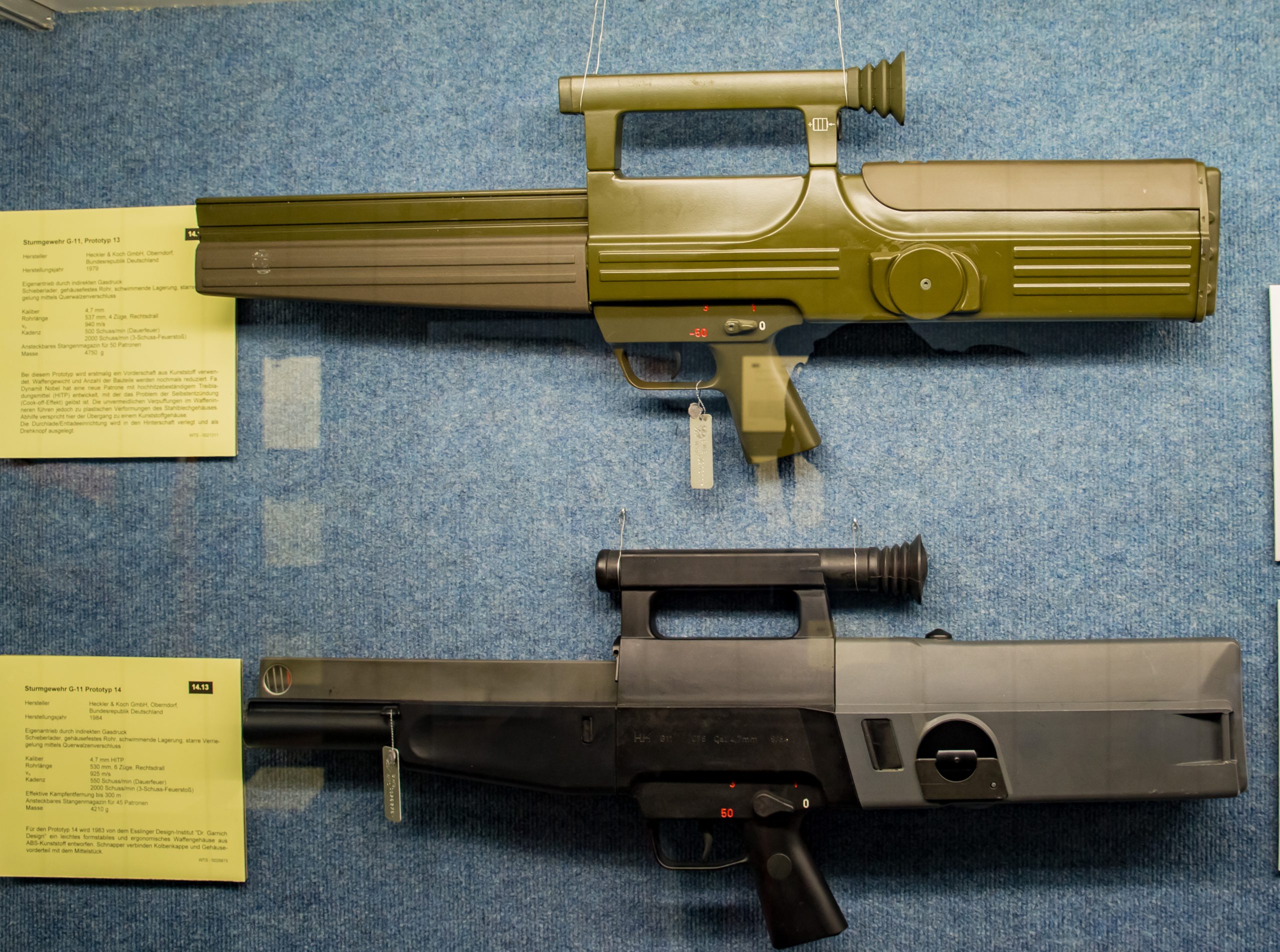
The H&K G11 looks like a futuristic rifle because its internal architecture was built around an equally futuristic ammunition concept. Heckler & Koch developed it around caseless 4.73×33mm ammunition, eliminating the conventional cartridge case and supporting a high-speed firing sequence. Its rotating chamber and unusual feed arrangement were central to the design. The project consumed decades of research and never became a standard-issue rifle, but it remains a remarkable example of a firearm designed around ammunition technology rather than simply adapting a familiar action.
6. MBA Gyrojet Pistol
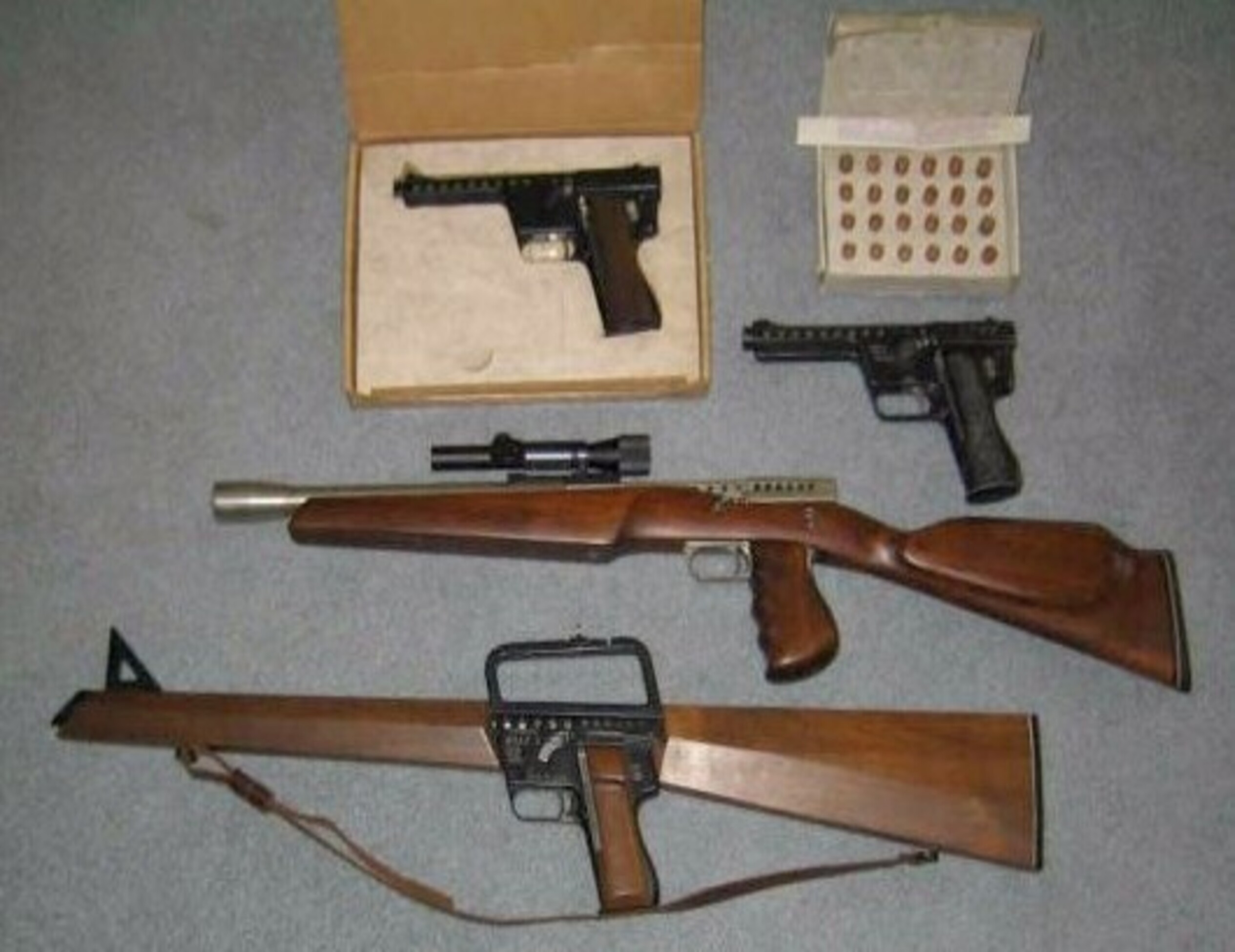
The MBA Gyrojet pistol looks like a science-fiction prop because it was built around rocket propulsion instead of ordinary bullets. Developed in the 1960s, it fired small self-propelled projectiles that accelerated after leaving the barrel, reducing the need for a conventional high-pressure cartridge case and locking action. Several Gyrojet calibers were explored, while the best-known pistol used 13mm-class ammunition. The system promised low recoil and futuristic performance, but reliability, ammunition consistency,y and limited practical advantages kept it from replacing conventional handguns.
7. Heckler & Koch VP70
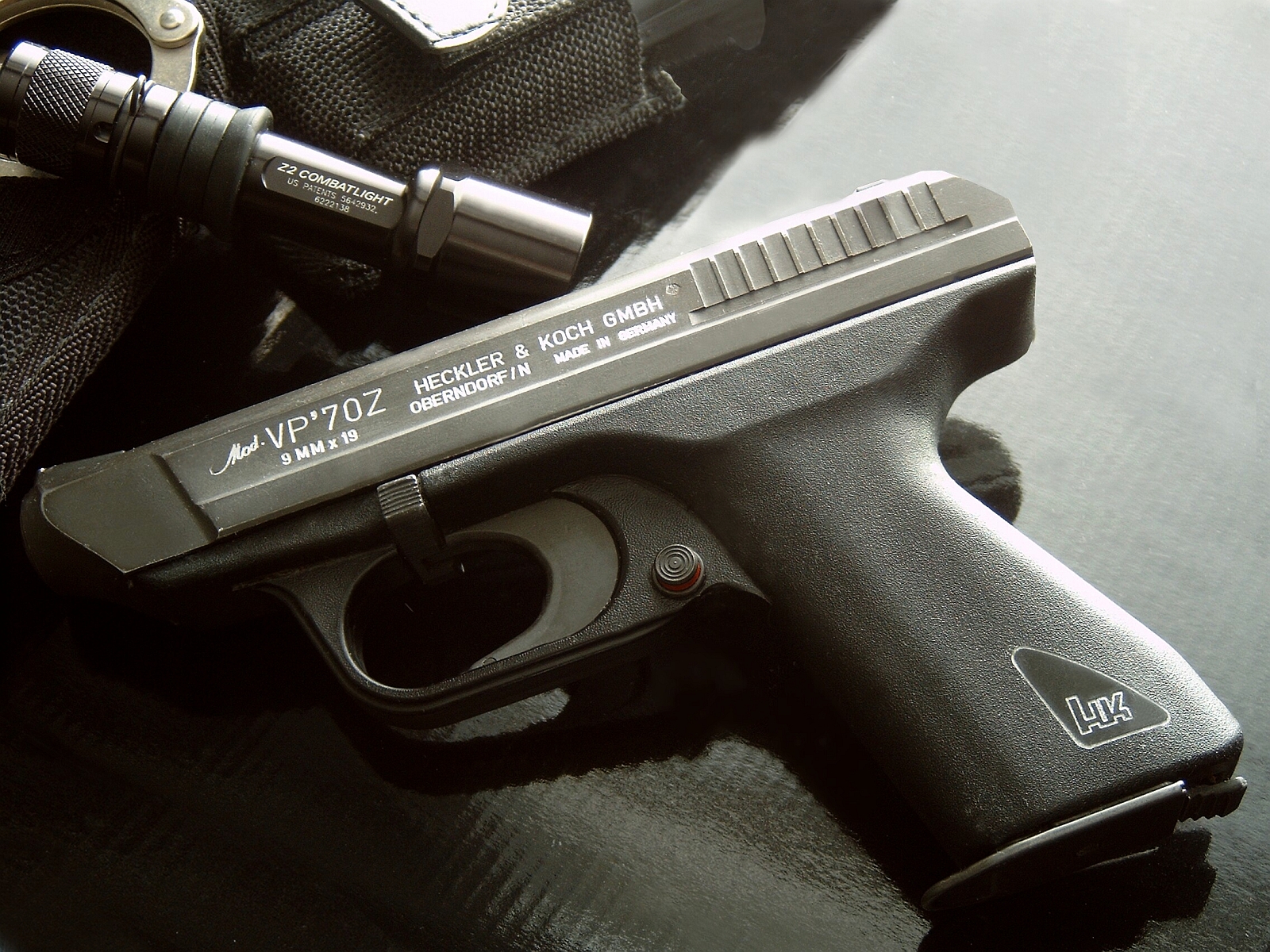
The Heckler & Koch VP70 looks like a chunky service pistol, but it was conceived around a very unusual combination of features. Introduced in 1970, it used a fixed-barrel, gas-delayed blowback system and could fire from an extended detachable shoulder stock. With the stock attached, the VP70 could deliver three-round bursts, giving the pistol a role closer to a compact machine-pistol concept. Its 18-round magazine was notable for the period, yet its unusual controls and handling kept it from becoming a mainstream military sidearm. That made it especially distinctive.
8. Pancor Jackhammer
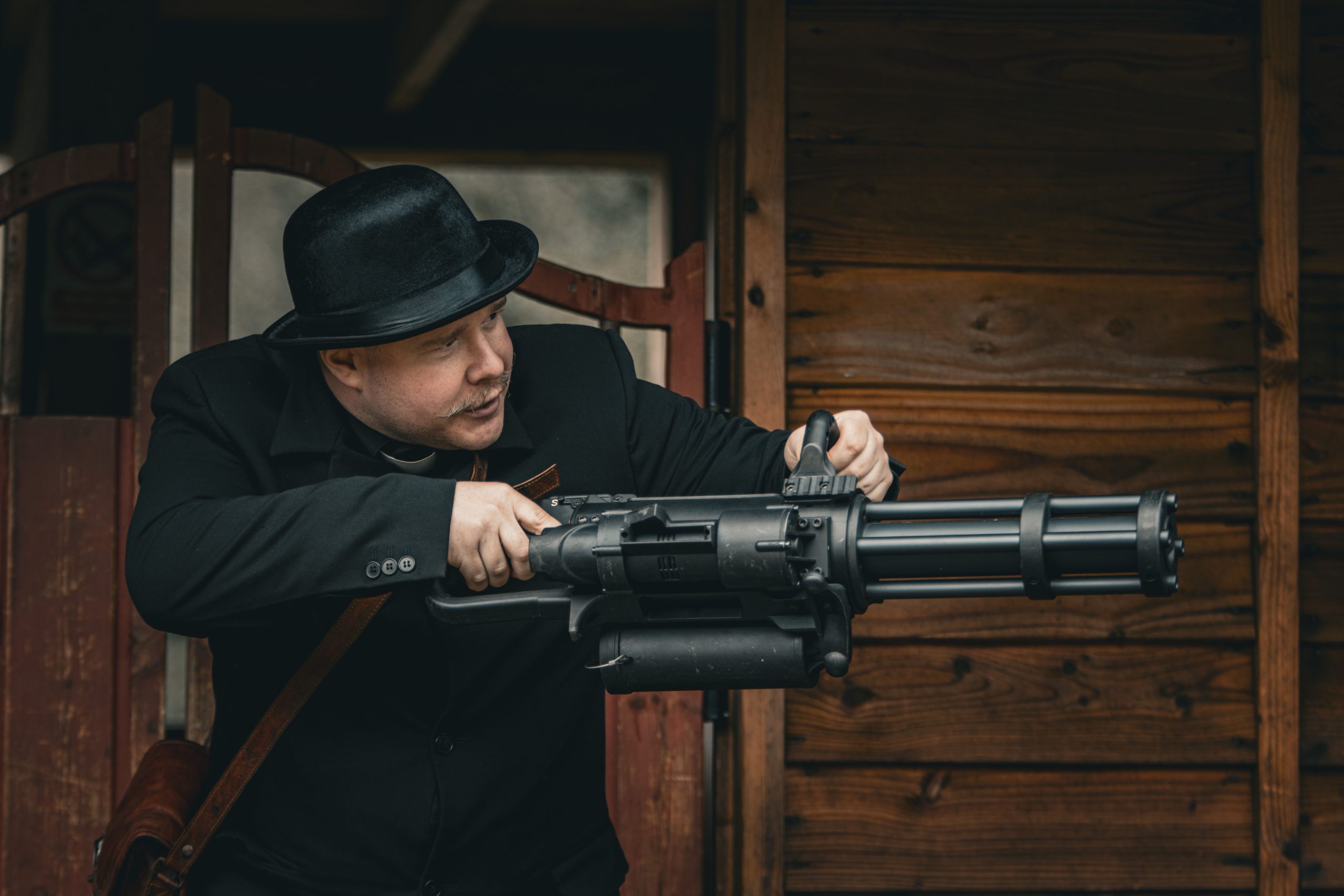
The Pancor Jackhammer resembles a bulky automatic shotgun, but its real distinction was a highly unusual rotary magazine concept. Designed in the United States in the 1980s, it used a bullpup layout and a detachable cylindrical magazine that also served as part of the feed and could be removed as a unit. The concept targeted military and law-enforcement users who wanted rapid shotgun fire in a compact package. Despite prototypes and considerable attention, the Jackhammer never entered normal production or service in meaningful numbers. It remained a prototype.
9. Heckler & Koch MP7
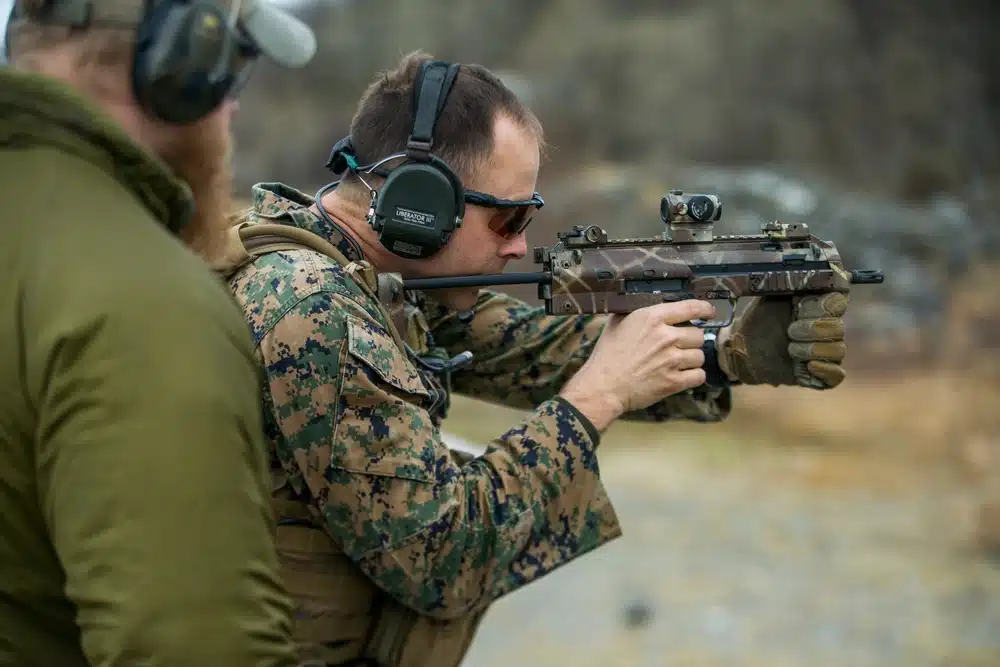
The Heckler & Koch MP7 looks like a miniature rifle, yet it was developed for a very specific class of users who needed more capability than a pistol without carrying a full-size rifle. Introduced in the early 2000s, it fires the proprietary 4.6×30mm cartridge and uses a compact gas-operated system. Its folding stock, short overall length,th and lightweight construction were intended for military and specialist personnel working in confined spaces. The result is a personal-defense weapon whose proportions hide how specialized its original requirement was.
10. Barrett M82
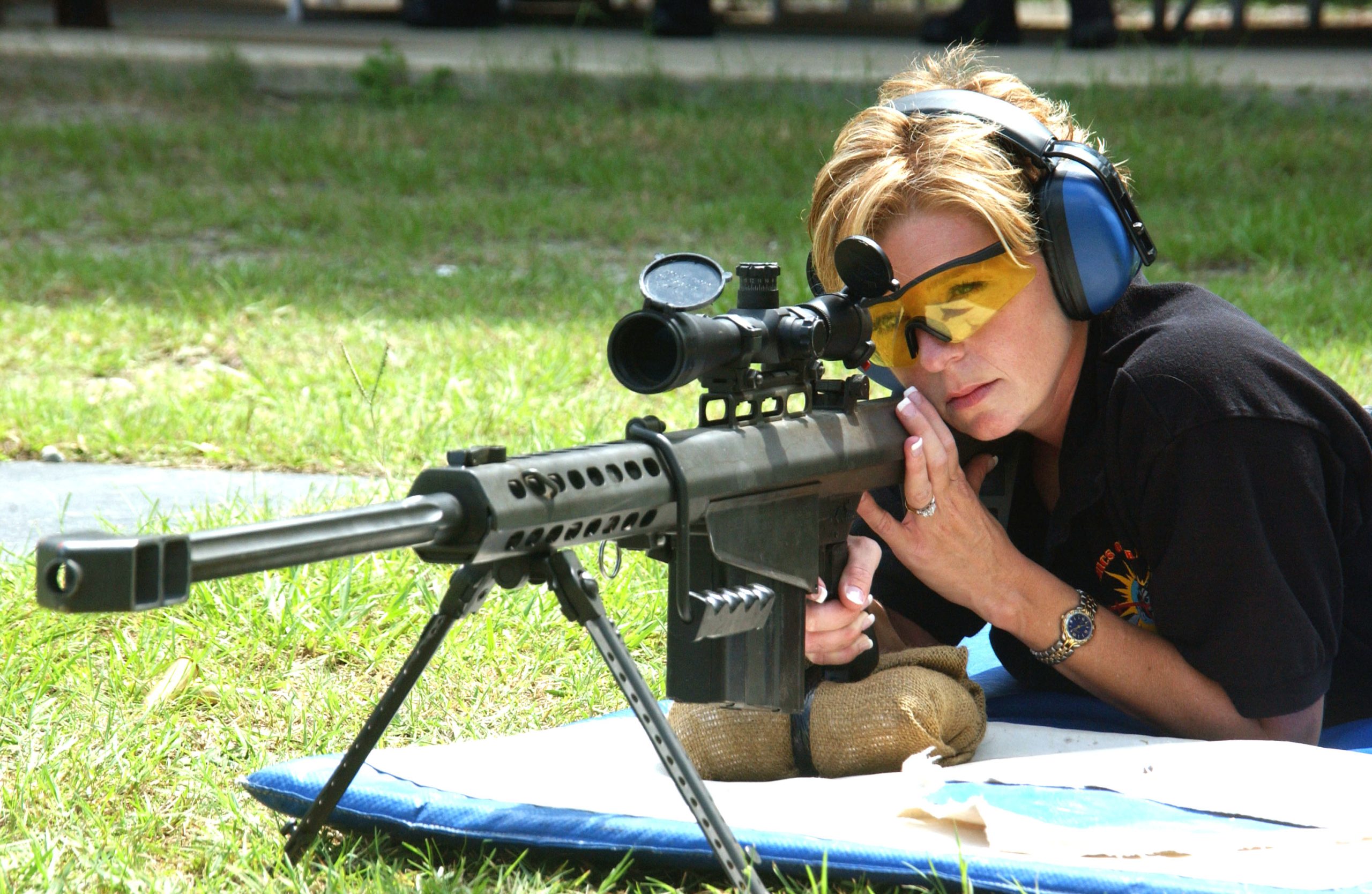
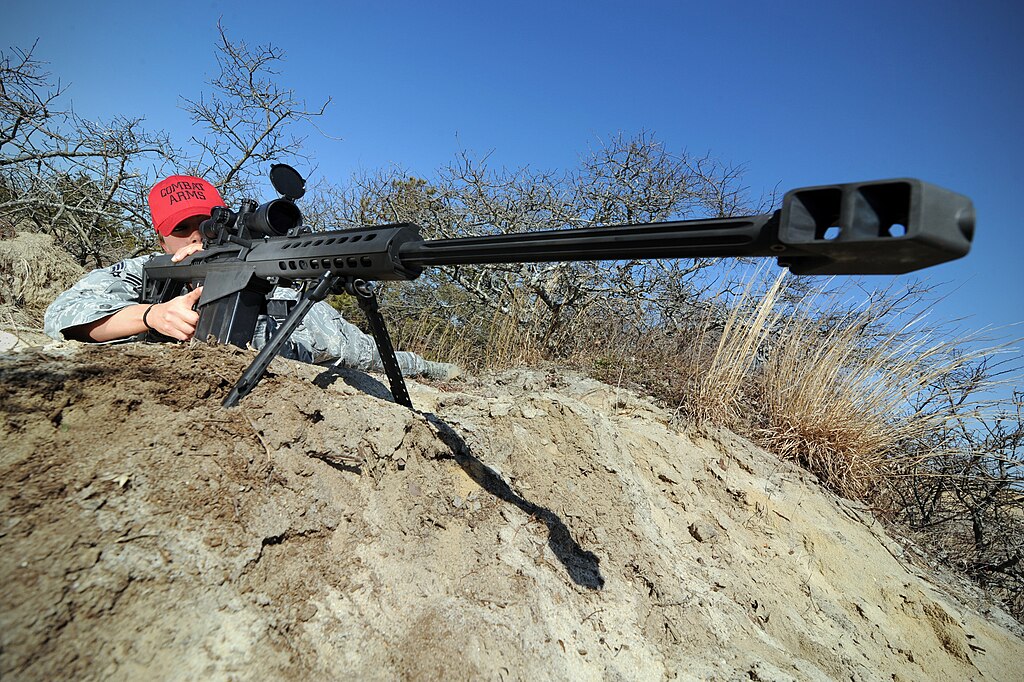
The Barrett M82 looks like an oversized rifle, but its scale is the clue to its specialized purpose. Developed in the United States around the powerful .50 BMG cartridge, it was designed primarily as an anti-materiel rifle rather than a conventional infantry arm. The semi-automatic action uses a short-recoil operating system, while the long barrel and substantial mass help manage the cartridge’s energy. First developed in the 1980s, the M82 family became associated with long-range material targets and specialized military roles rather than routine rifle work.
11. Dardi Roundund Firearms
Dardick firearms look superficially like unusual revolvers, but their defining feature was the ammunition itself. Developed by David Dardick in the 1950s, the system used triangular Tround cartridges that were fed through an open-sided chamber rather than traditional cylindrical revolver chambers. Different models were offered in several configurations, including the Model 1500 with a 20-round capacity. The unusual ammunition allowed feeding from a magazine concept while retaining a rotating chamber system, but the design never achieved the scale needed to challenge conventional cartridges.