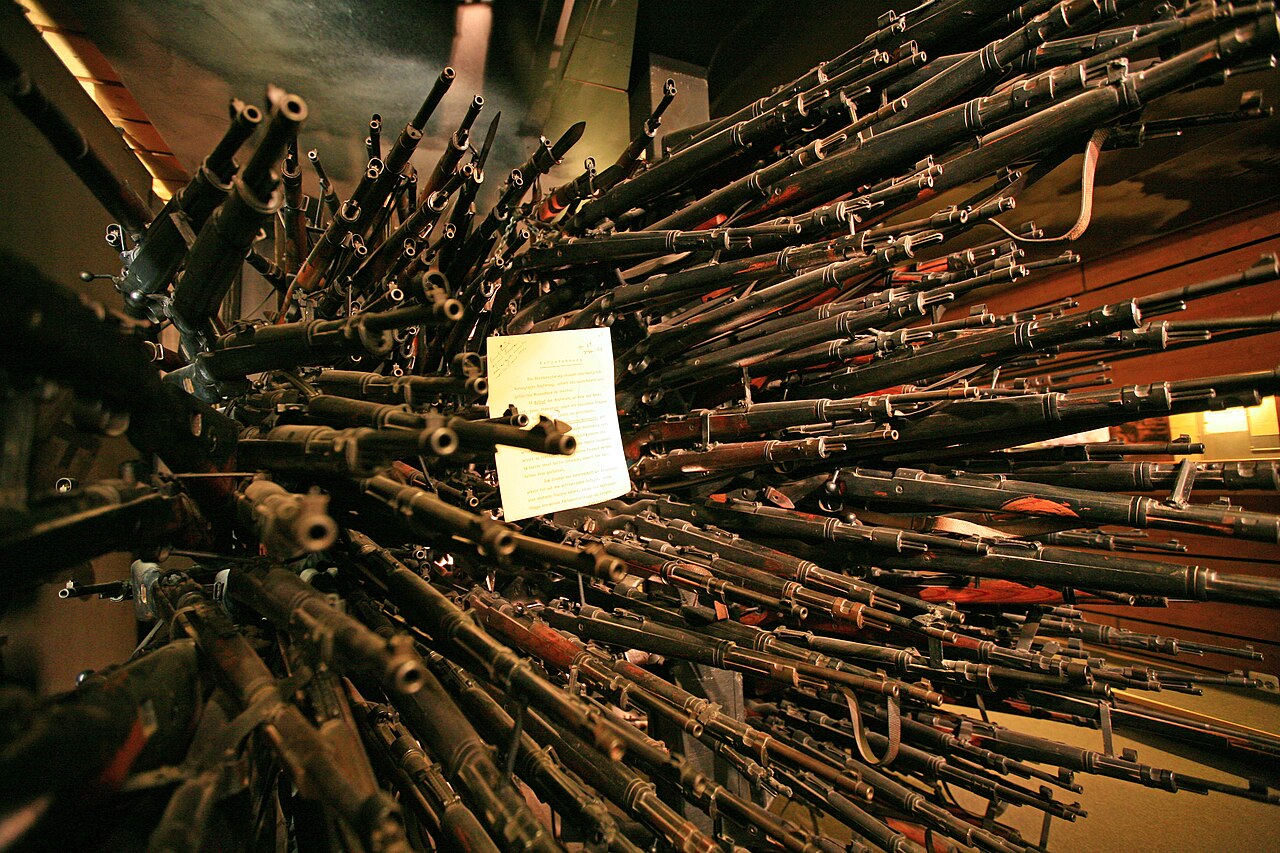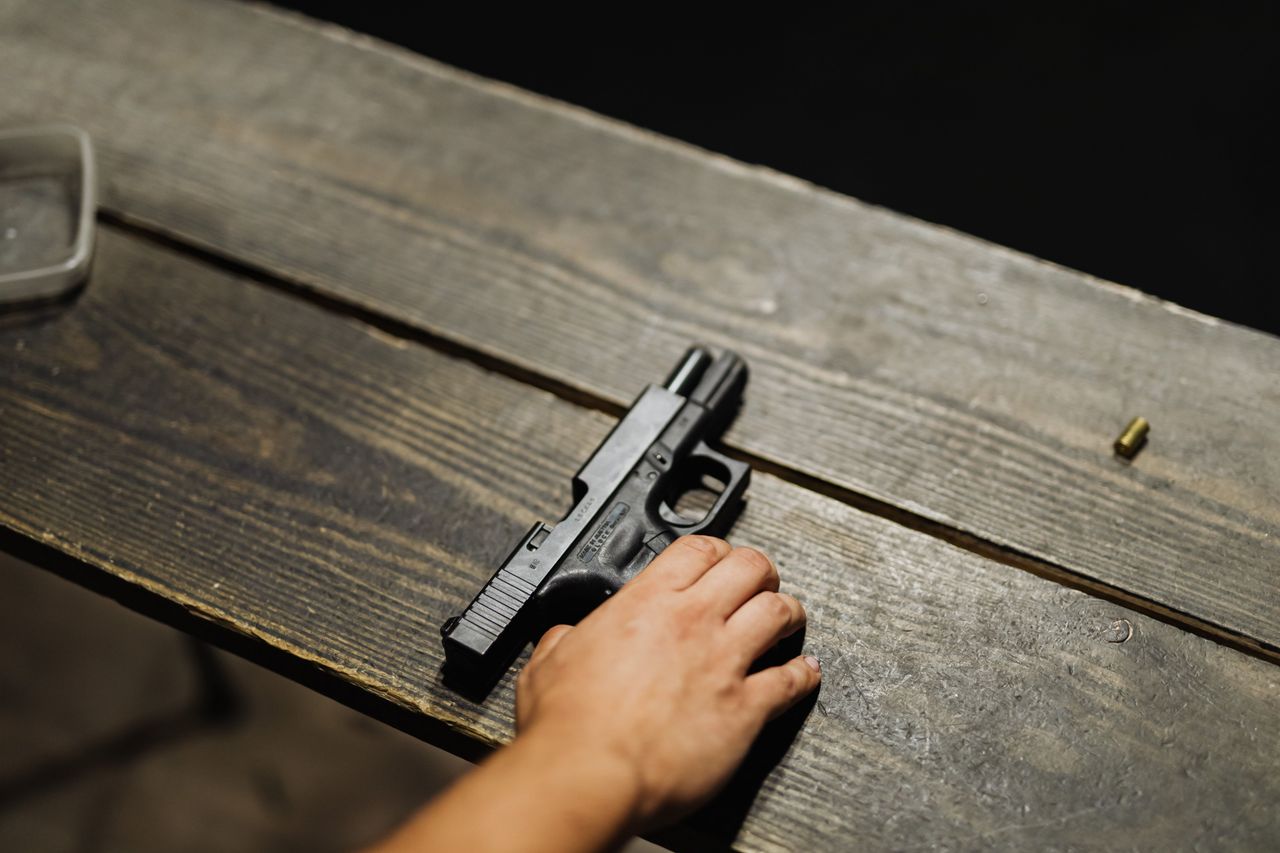
Firearms have influenced far more than military history. Across the centuries, the engineering challenges involved in firing, measuring, timing, and manufacturing guns have encouraged ideas that eventually found applications in photography, industrial machinery, scientific instruments, and everyday technology. Some connections are direct, while others involve engineers adapting techniques developed in one field for another. The most interesting examples reveal how inventions rarely remain confined to their original purpose. These 10 firearms and firearm-related mechanisms offer a closer look at how weapon technology helped inspire innovations well beyond the shooting range.
1. Colt Revolvers and the Rise of Interchangeable Machine Parts
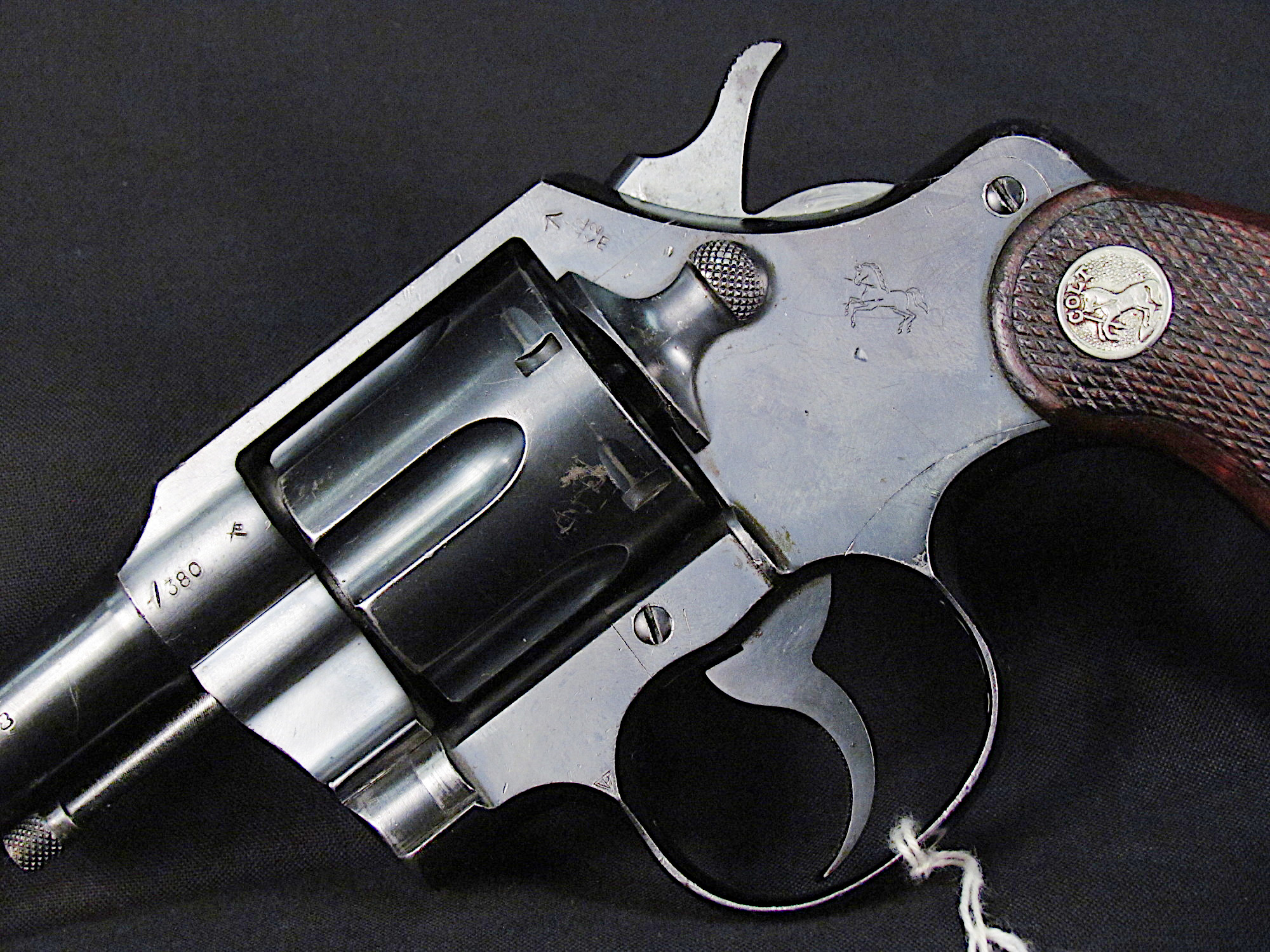
Samuel Colt’s revolvers helped demonstrate how precision manufacturing could transform entire industries. After receiving a US patent for his revolving-cylinder pistol in 1836, Colt developed factory methods using specialized machinery, jigs, and inspection gauges to produce consistent components. The wider achievement was making replacement parts fit without extensive hand-finishing. This approach influenced American manufacturing beyond firearms, including tools, sewing machines, and early automobiles. By the late 19th century, standardized components had become essential to efficient factory production, making repairs easier and allowing businesses to manufacture thousands of similar products.
2. Springfield Muskets and Modern Mass Production
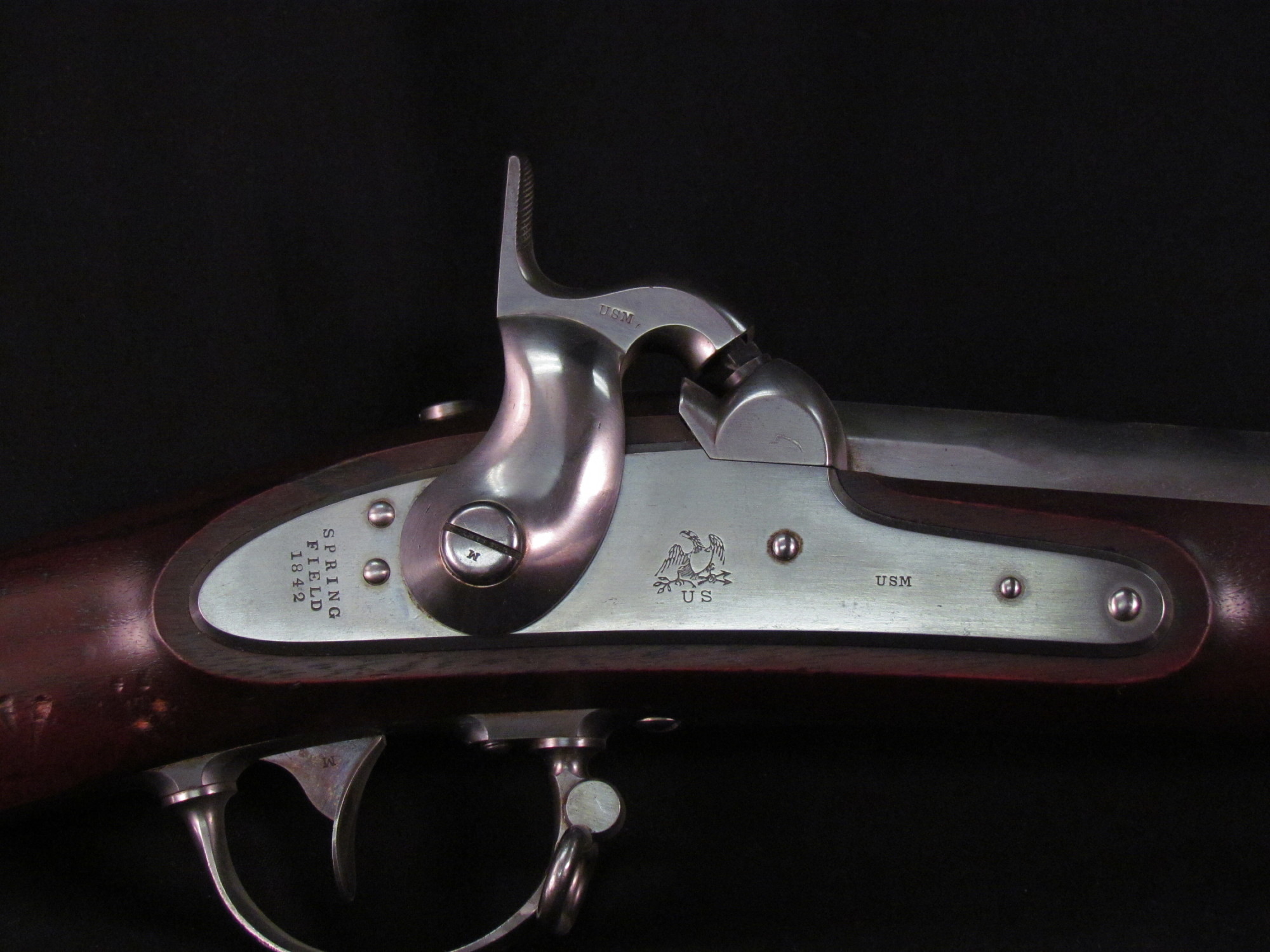
The Springfield Armory’s musket-making experiments helped advance a manufacturing principle that eventually reached countless civilian products: interchangeable parts. In the early 19th century, traditional gunsmiths often fitted components individually, making repairs slow and expensive. Armory engineers worked toward standardized dimensions, gauges, and repeatable machining methods so that parts could fit different examples of the same model. The system developed gradually rather than through one sudden breakthrough. Its influence extended into agricultural equipment, clocks, sewing machines, and industrial machinery, where reliable replacement parts became increasingly important for large-scale production.
3. Blanchard’s Gunstock Lathe and the Shoe Industry
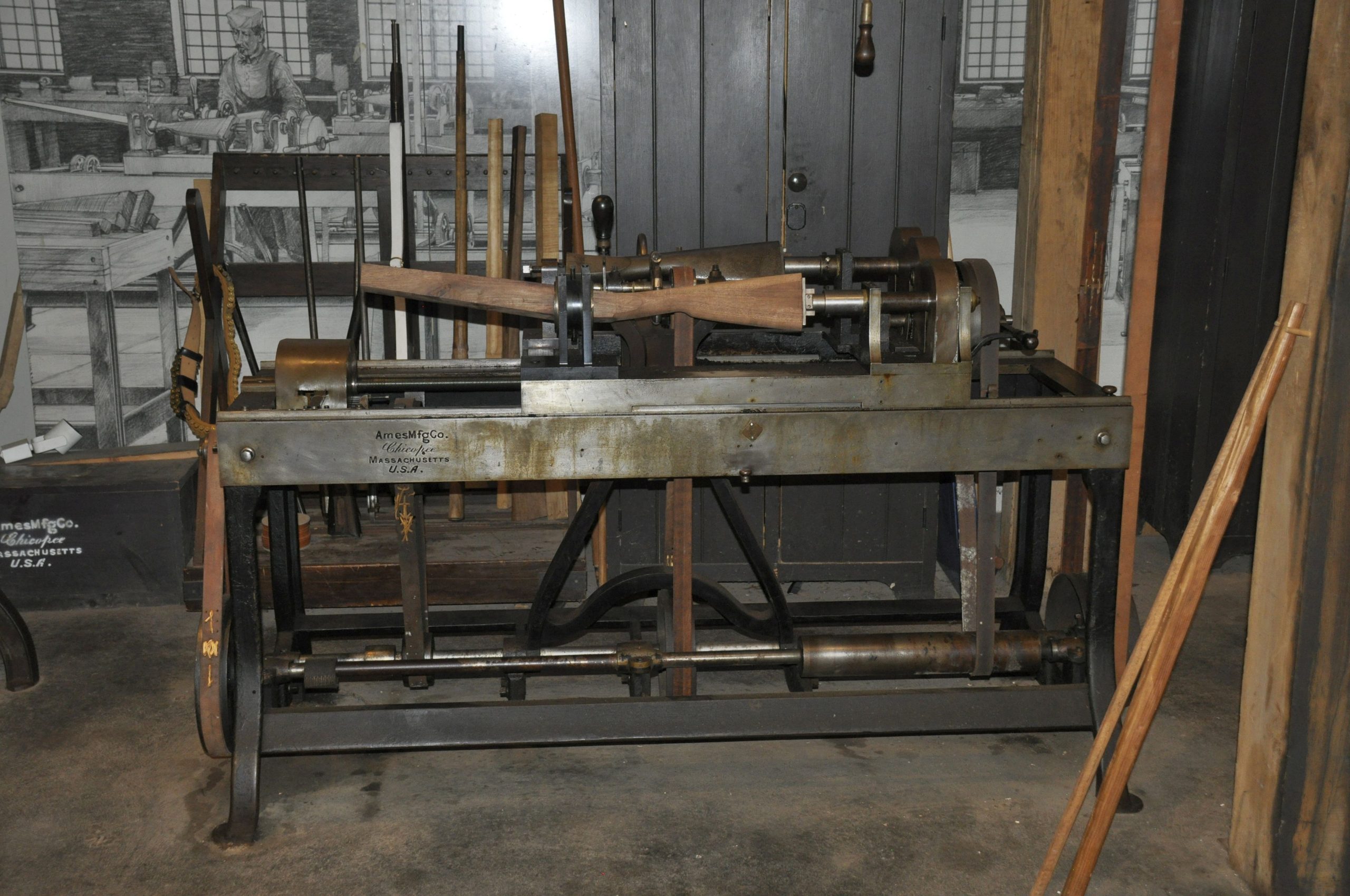
Thomas Blanchard developed a copying lathe in 1818 to speed up the production of wooden gunstocks for military firearms. Instead of shaping every piece entirely by hand, the machine followed a pattern to reproduce a similar shape repeatedly. The principle proved useful far beyond armories. Related copying-lathe technology could produce shoe lasts, wagon components, and other wooden objects requiring consistent contours. This was an important step toward automated woodworking, showing how a machine designed to meet military production demands could help ordinary manufacturers increase output while reducing repetitive manual labor.
4. Colt’s 1851 Navy Revolver and the Sewing Machine Factory
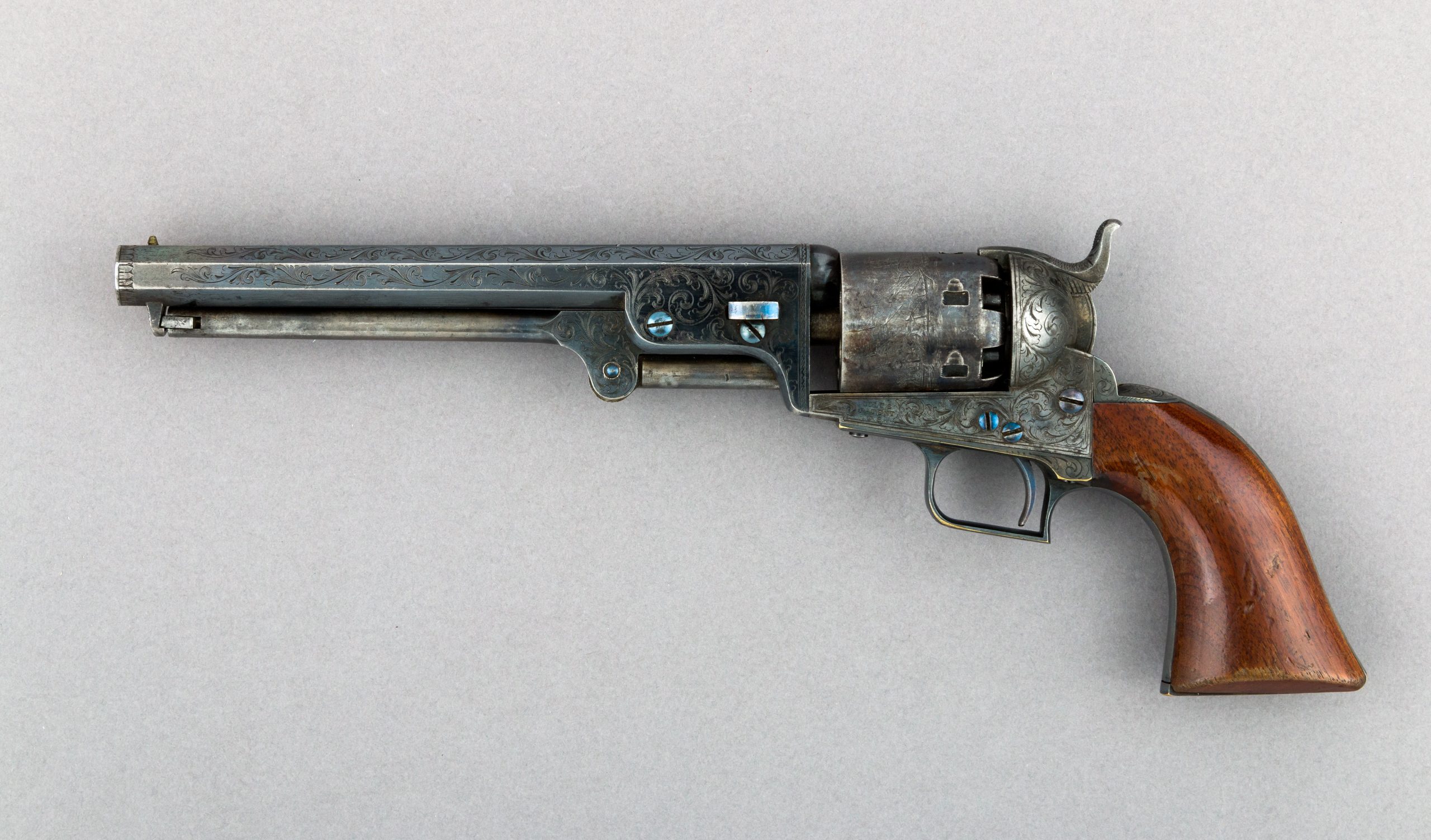
The Colt 1851 Navy revolver belongs to a manufacturing story that also includes sewing machines, bicycles, and early electric automobiles. In Hartford, Connecticut, factories developed precise machining methods, standardized components, and specialized production jobs that other industries could adopt. These were not inventions copied directly from one revolver, but lessons learned while manufacturing firearms at scale. By the late 19th century, the same industrial environment helped manufacturers produce complex consumer goods more consistently. The connection shows how a gun factory’s production system could influence products used in homes, workshops, and transport.
5. The Gatling Gun and Rotary Machine Design
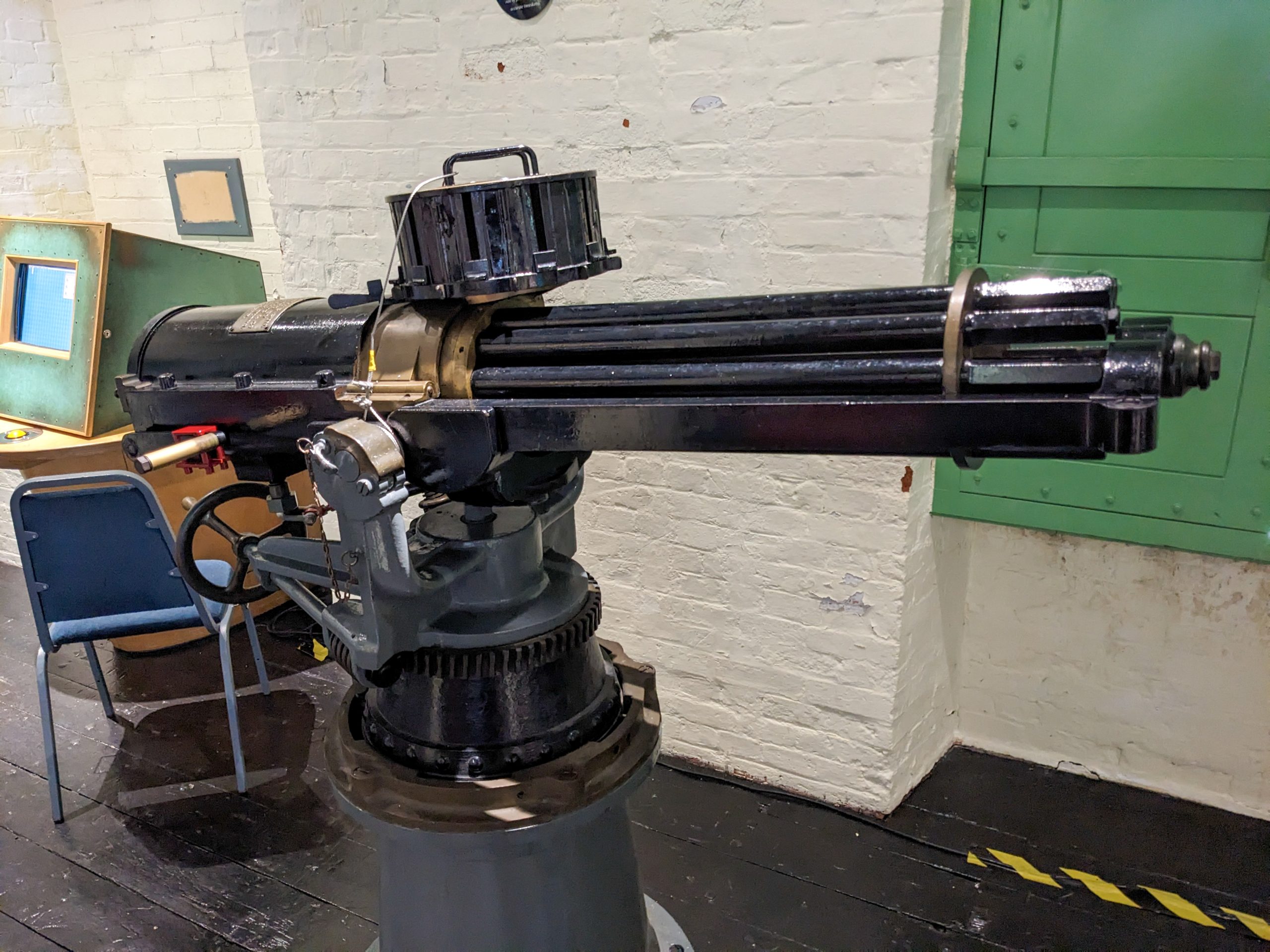
Richard Gatling patented his hand-cranked, multi-barrel gun in 1862, creating a mechanism that coordinated several barrels through a rotating assembly. The design demonstrated how rotation could organize repeated mechanical actions into a continuous cycle. Rotary systems later became important across many industries, from food processing to agricultural equipment, although these machines had independent development histories and should not be described as direct copies of the Gatling gun. The historical significance lies in the broader engineering principle: carefully timed rotation can coordinate multiple operations and help machinery perform repetitive work efficiently.
6. The Maxim Gun and Automatic Machinery
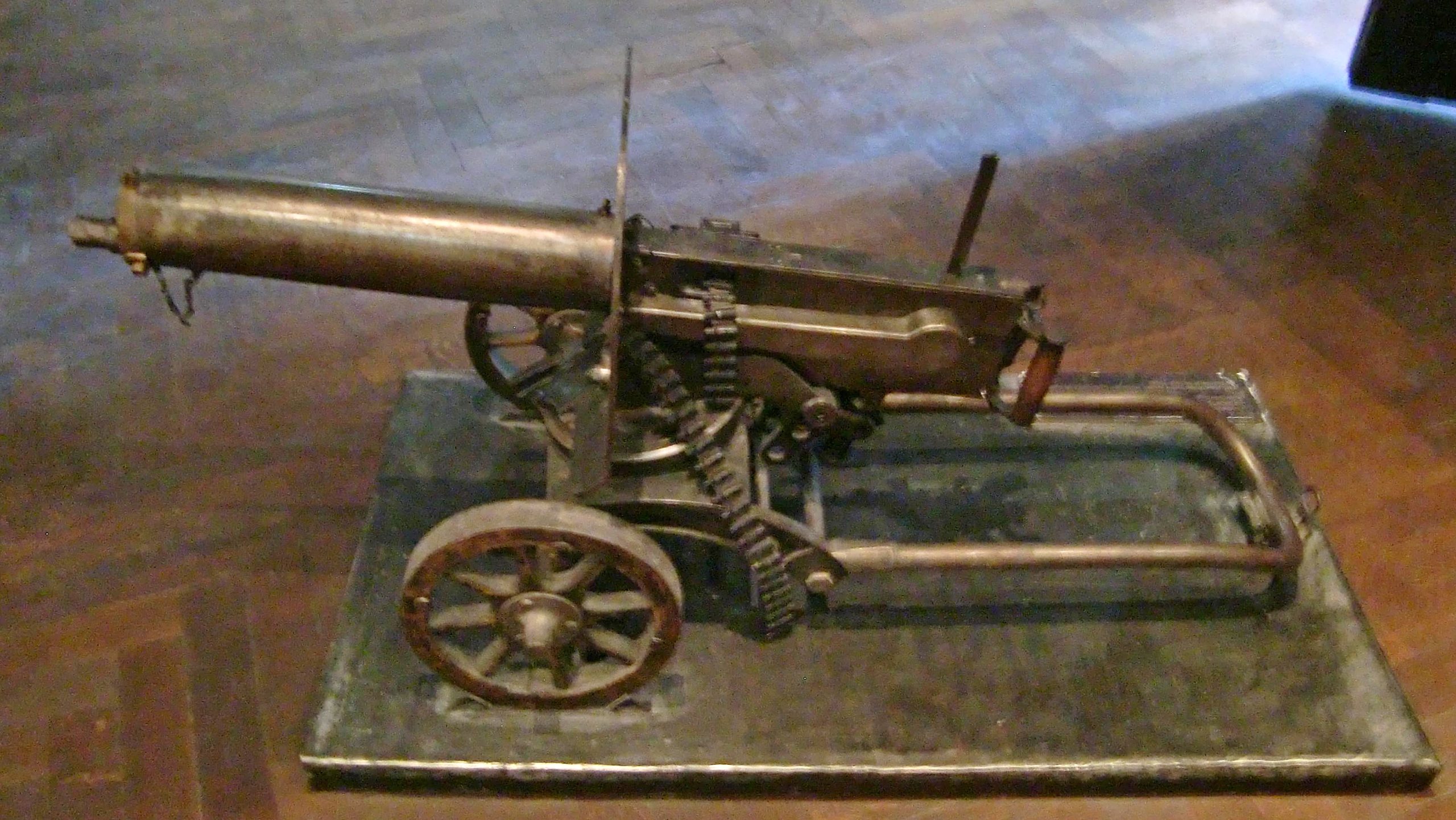
Hiram Maxim’s machine gun, introduced in 1884, used recoil energy to cycle its mechanism automatically. Each shot powered the next stage of the firing cycle, reducing the need for manual operation between shots. This was a striking demonstration of self-acting mechanical systems, but it would be misleading to claim that the gun directly invented modern factory automation. Automatic machinery developed through many parallel advances in engineering. The Maxim gun nevertheless illustrates an important industrial concept: a machine can use energy generated during one operation to prepare itself for the next, provided its moving parts remain properly coordinated.
7. The Colt Walker Revolver and Precision Metalworking
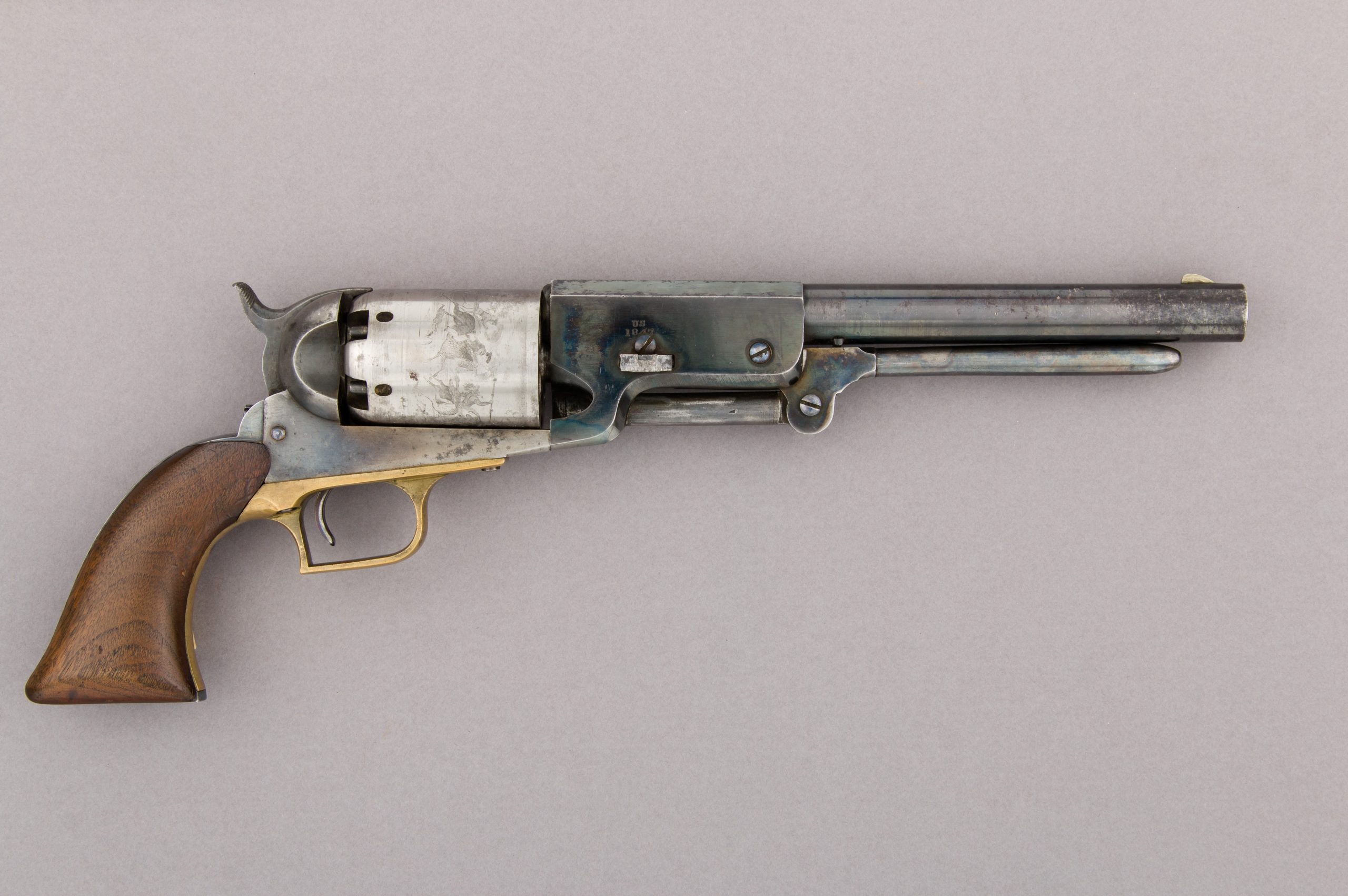
Introduced in 1847, the Colt Walker revolver represented the growing ambition to manufacture complex mechanical products with consistent dimensions. Its production demanded accurately formed metal components that could work together under substantial mechanical stress. During the same period, American armories were advancing machine tools, measuring gauges, and repeatable metalworking methods. These techniques later supported industries producing engines, pumps, agricultural machines, and other equipment. The Walker itself did not invent modern machining, but firearms such as this helped create commercial demand for increasingly precise manufacturing. That demand encouraged improvements useful wherever metal parts needed to fit and function reliably.
8. The Springfield Rifle and Industrial Inspection Gauges
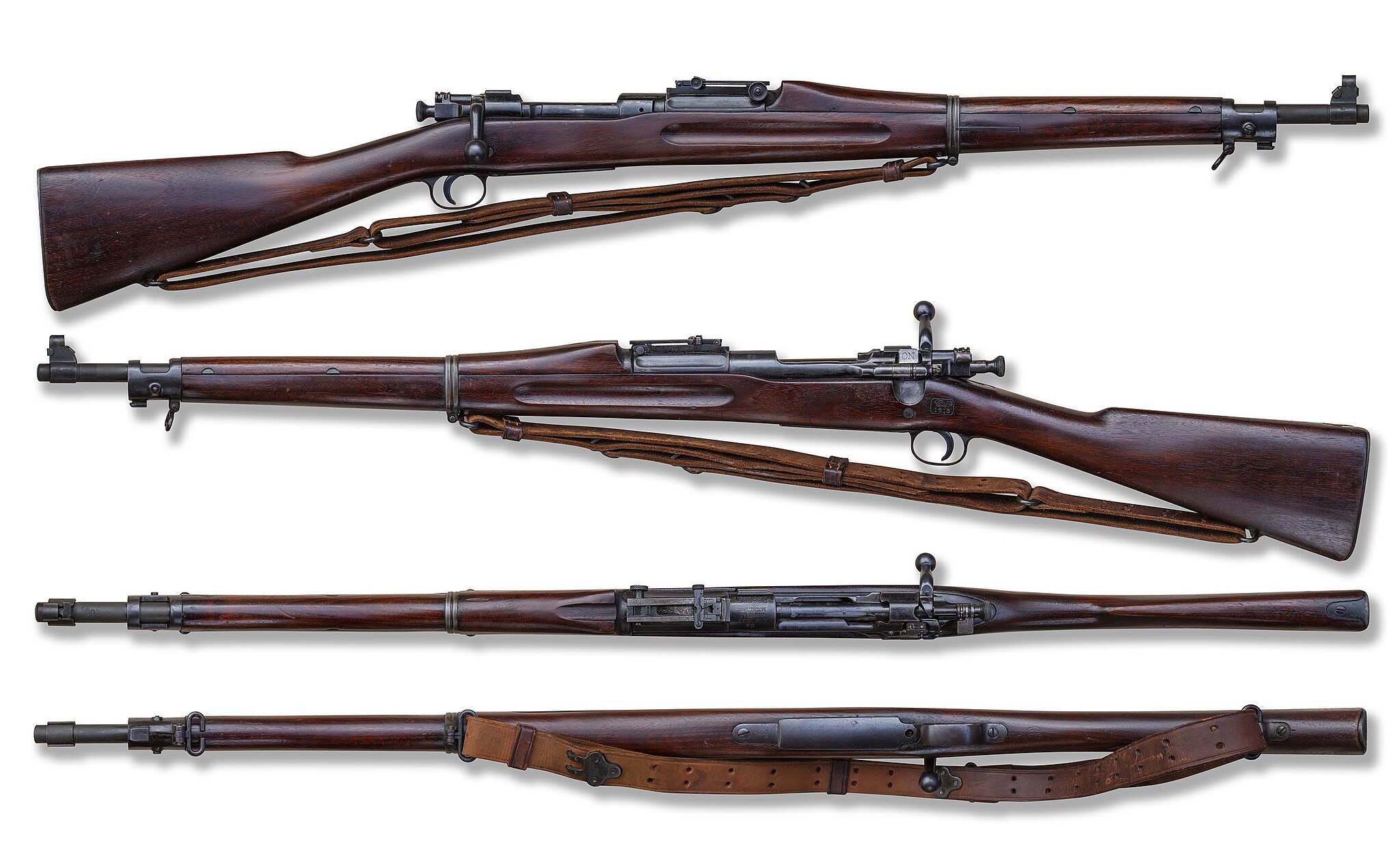
Nineteenth-century Springfield rifle production helped establish the importance of inspection gauges in precision manufacturing. A gauge allowed workers to check whether a component met a required dimension without relying entirely on visual judgment or individual craftsmanship. This mattered because interchangeable parts were only practical when manufacturers could measure them consistently. The same principle eventually became essential in automobile factories, machine shops, and electrical equipment production. A standardized gauge might appear simple, yet it helped make large-scale manufacturing more dependable. The important innovation was not a new weapon feature, but a repeatable way to verify quality across thousands of components.
9. The Colt Paterson Revolver and Specialized Machine Tools
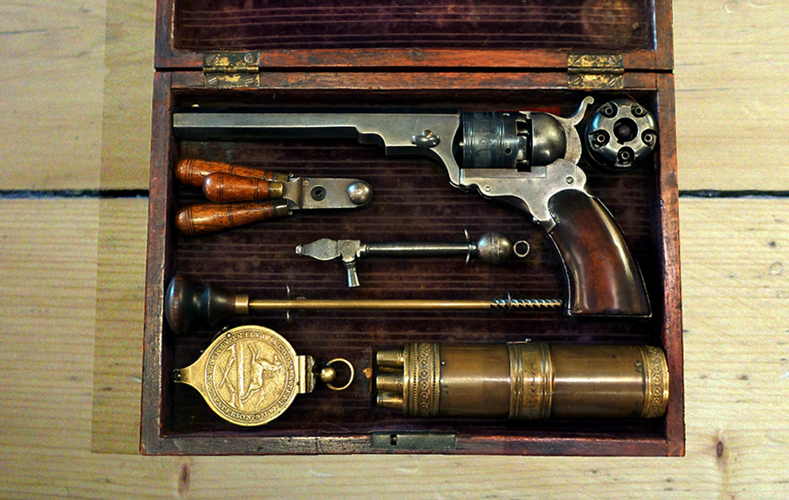
Colt’s Paterson revolver entered production in 1836, during a period when American manufacturers were experimenting with ways to reduce dependence on skilled handcrafting. Producing a complicated firearm required accurately shaped metal parts, repeatable drilling, and consistent finishing. Over time, firearm factories expanded their use of lathes, milling machines, jigs, and other specialized tools. Those tools were valuable well beyond gunmaking, helping workshops manufacture machinery and consumer products with greater consistency. The Paterson’s early production still faced quality and reliability challenges, so it is best understood as part of a larger industrial transition rather than a finished blueprint for modern factories.
10. The Lever-Action Rifle and the Broader Culture of Mechanical Design
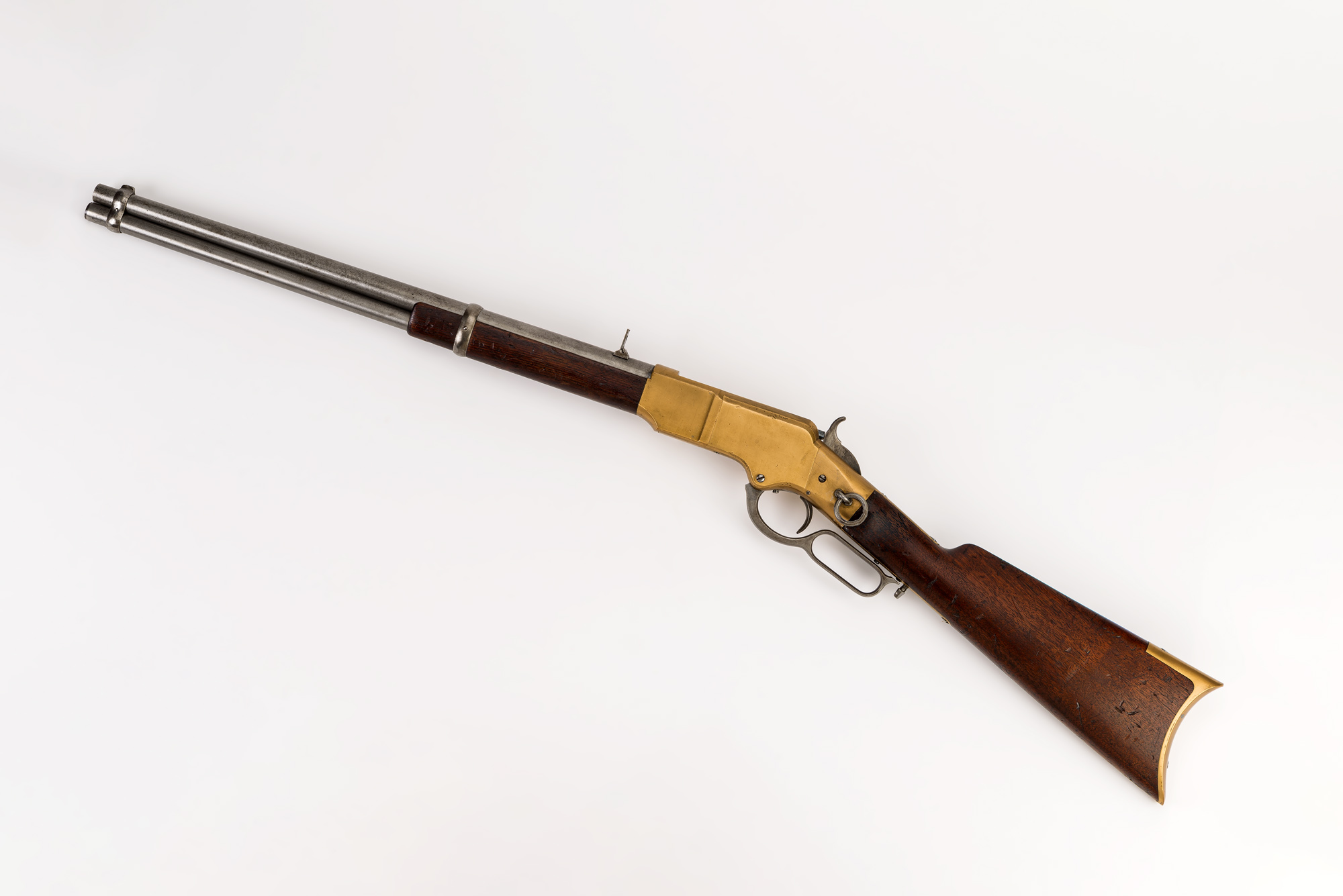
Lever-action rifles, including the Winchester Model 1866, made a hand-operated lever central to a repeating firearm’s operating cycle. The mechanism combined several movements into one familiar action, illustrating how a simple control could coordinate more complicated internal machinery. Levers themselves were ancient and were already used in presses, agricultural tools, and other equipment, so rifles did not invent the principle. Their engineering history nevertheless reflects a wider 19th-century interest in compact mechanisms that were practical to operate and maintain. Similar design priorities remain relevant in hand tools, workshop equipment, and machines built around straightforward mechanical controls.