Some rifles disappear the moment something newer shows up. The Springfield M1903 did the opposite.
It started as a genuinely excellent rifle
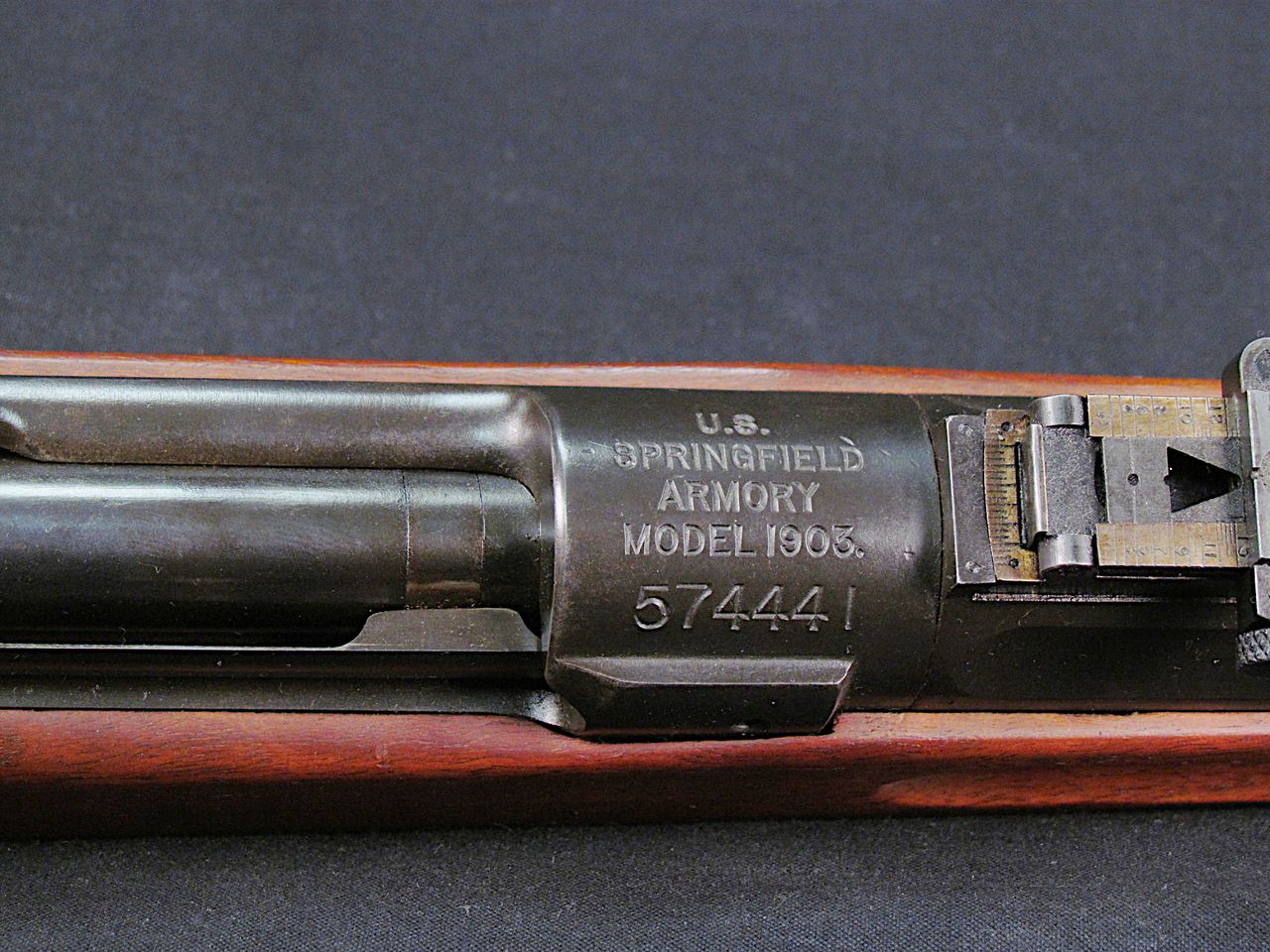
When the M1903 entered service in the early 1900s, it was not a stopgap or a compromise. It was a strong, well-made bolt-action rifle that reflected what the U.S. Army thought a modern infantry arm should be.
Springfield Armory and Rock Island Arsenal produced it in large numbers, and the design kept improving as the service learned from use. The shift to the .30-’06 cartridge helped give the rifle the reach and ballistic performance soldiers expected from a first-line weapon.
That mattered later. Rifles that begin life as mediocre tools tend to fade fast, but the M1903 built a reputation for reliability, solid sights, and excellent accuracy. According to the National Park Service, Springfield Armory alone produced more than a million M1903 rifles before 1936.
The M1 Garand did not replace everything overnight
People often imagine the Garand instantly pushing the M1903 into museums. Real military procurement never works that neatly, especially on the eve of a world war.
Although the M1 was adopted before World War II, production capacity and rearmament pressure meant the United States still needed every serviceable rifle it could get. American Rifleman notes that even after Garand production began in 1937, the M1903 remained the standard service rifle for a time simply because there were not enough M1s available.
That shortfall became serious enough that Remington restarted M1903 production in 1941 using old Rock Island tooling, and Smith-Corona also built M1903A3 rifles during the war. The National Park Service production records show wartime manufacture of M1903, M1903A3, and M1903A4 variants well into the 1940s.
Accuracy kept it valuable in specialized roles
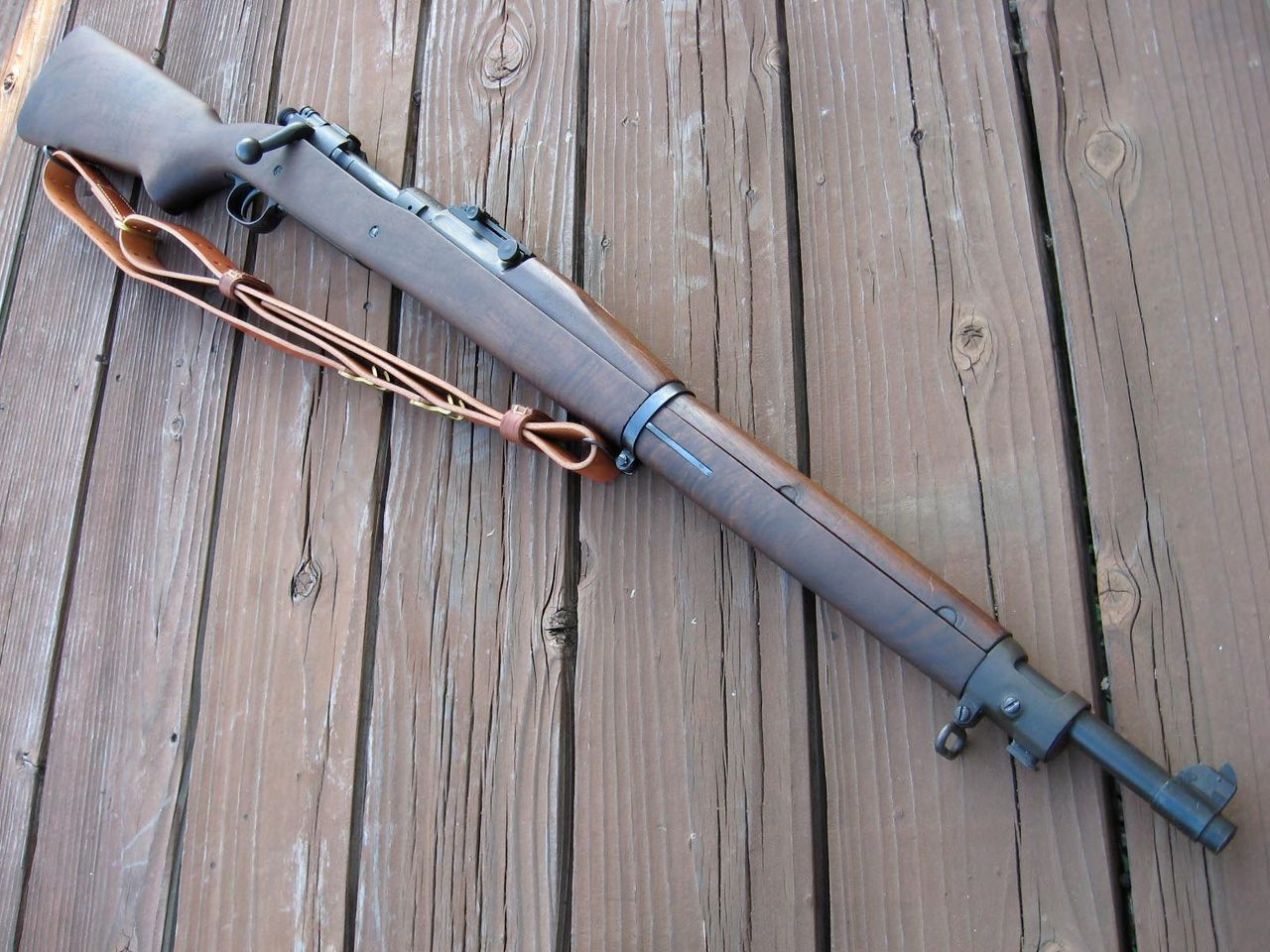
The biggest reason the M1903 hung on was simple: it shot extremely well. A bolt-action rifle with a rigid receiver and strong sights was still useful long after semi-automatic battle rifles became standard.
That made the platform especially valuable for marksmanship training and sniping. The M1903A4 sniper variant, produced by Remington, gave the Army a purpose-built scoped rifle during World War II, and Army historical material notes that it was adopted in 1943 as a sniper arm.
Even when the M1C and later sniper systems appeared, the M1903 still had a place because it was already proven. Militaries rarely discard accurate rifles if they can still do jobs newer weapons do not automatically do better.
It was familiar, rugged, and already in the system
Another overlooked reason for long service life is institutional inertia, and that is not a criticism. If armorers know a rifle, depots have parts, and troops understand the manual of arms, keeping it around makes practical sense.
The M1903 was deeply woven into U.S. training culture. Generations of soldiers and Marines had used it, and that meant the rifle came with an established body of knowledge on maintenance, zeroing, qualification, and field use.
The rifle was also durable enough for hard service. Marine Corps doctrine from the interwar era and small-wars literature emphasized accuracy, dependability, and even the M1903’s usefulness with rifle grenade launchers, showing that older did not mean obsolete in every mission set.
Wartime simplification made it even easier to keep using
The wartime M1903A3 is a perfect example of how an old rifle can survive by becoming easier to build. Remington simplified certain features to speed production, lower cost, and get more rifles into uniformed hands fast.
Those changes did not turn the rifle into something glamorous, but they made it practical. Stamped parts, revised sights, and manufacturing shortcuts helped the government treat the M1903 not just as a legacy arm, but as a living production weapon during World War II.
That is a major clue to its longevity. The U.S. military was not merely hanging on to leftovers; it was actively updating and manufacturing the design because the rifle still answered real battlefield and training needs.
Service life is about utility, not just age
In the end, the M1903 stayed because armies keep useful tools, not because they are sentimental. A newer rifle may be better overall, but that does not mean it replaces every older weapon in every role at once.
The Garand was superior as a general infantry rifle, yet the M1903 remained competitive where precision, training value, availability, and simplicity mattered more than rate of fire. That is why it kept appearing in World War II, Korea, and in some limited roles even later.
The Springfield M1903 lasted because it earned its place more than once. First as a front-line service rifle, and then as the dependable specialist, backup, and training gun that refused to become irrelevant.