It sounds technical, almost trivial. In reality, corner crossing has become a full-blown showdown over who truly gets to use the American West.
The Tiny Step That Set Off A Huge Western Fight

Corner crossing is the act of moving from one parcel of public land to another at a single shared corner where two private parcels also meet. No one is cutting fences, driving roads, or camping on private property; the dispute is about whether passing through that infinitesimal point, or the airspace above it, counts as trespass. What looks like a geometry problem on a map has become one of the most important access battles in the modern West.
The reason is the old checkerboard pattern scattered across states like Wyoming, Utah, Colorado, and New Mexico. In the 19th century, Congress granted alternating sections of land to railroad companies, leaving a quilt of public and private squares. According to onX, roughly 8.3 million acres of public land in the West are “corner-locked,” and about 72% of that sits in checkerboard ownership patterns.
That means millions of acres owned by the public are legally public but practically unreachable. Hunters, anglers, hikers, and wildlife watchers can sometimes stand yards away from federal land and still have no undisputed way to enter it. Once people understood that this was not about one fence line but about access to huge landscapes, the issue stopped being niche and turned political, cultural, and deeply personal.
Why Wyoming Became The Defining Test Case
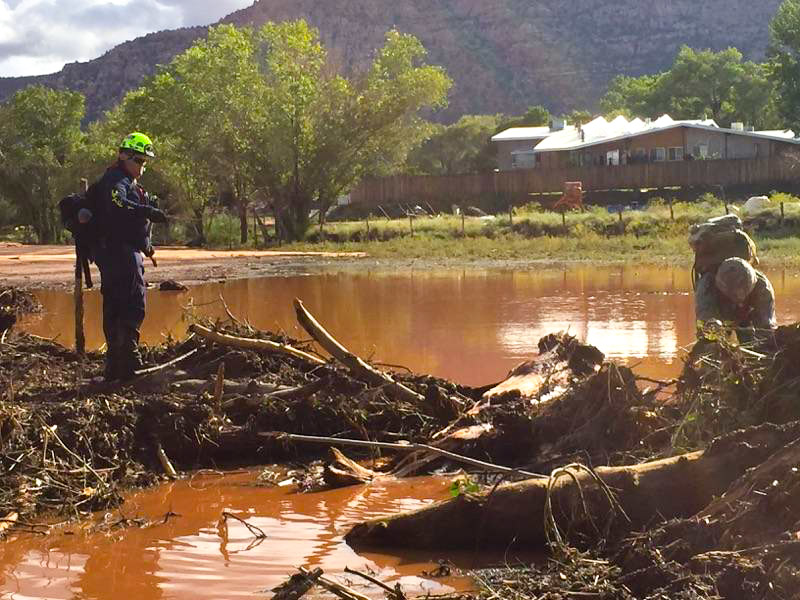
The case that changed everything began near Elk Mountain in Carbon County, Wyoming, where Missouri hunters used a small ladder to move from one parcel of federal land to another without touching the ranchland below. The ranch involved, Elk Mountain Ranch, was tied to Iron Bar Holdings, and the confrontation quickly escalated far beyond a local trespass complaint. The hunters were first acquitted in criminal court, but the civil fight kept going.
In May 2023, a federal district court ruled for the hunters, finding no trespass liability when someone corners across from public land to public land without touching the private surface and without damaging property. That alone made the case nationally significant. It turned an argument long debated in coffee shops, county courthouses, and hunting camps into a concrete legal test.
Then came the real turning point. On March 18, 2025, the U.S. Court of Appeals for the Tenth Circuit upheld the hunters’ position in Iron Bar Holdings v. Cape, relying on the Unlawful Inclosures Act of 1885 and older precedent about blocking access to public land. When the U.S. Supreme Court declined to hear the appeal on October 20, 2025, the appellate ruling stayed in place, making the Wyoming fight the case everyone in the West now studies.
Why This Is Bigger Than Hunting
Hunting helped propel the issue into public view, but corner crossing is not just a hunter’s cause. The legal logic applies to anyone trying to reach land managed for public use, including hikers, anglers, birders, photographers, and families who want to step onto federal ground they own as taxpayers. Groups supporting access have framed it as a broad public-land rights question, not a niche sporting dispute.
That wider framing matters because the American West is in the middle of a larger argument over land, ownership, and control. Public-land advocates see corner locking as a quiet form of privatization, where access is functionally monopolized even though title remains public. Landowners and some agricultural groups counter that weakening exclusion rights at shared corners chips away at core private-property protections.
Those competing values make the fight unusually potent. It is not only about recreation; it is about whether public ownership means anything without physical access. In an era when Western politics is already charged by disputes over grazing, energy development, conservation, and state versus federal authority, corner crossing has become the rare issue that fuses legal doctrine with a vivid, easy-to-understand question: can the public reach its own land or not?
The Law Is Clearer Now, But Only In Part Of The West

The Tenth Circuit ruling was a major victory for access advocates, but it did not create a neat nationwide rule. Its practical force is strongest in the six states inside that circuit: Wyoming, Colorado, Utah, New Mexico, Kansas, and Oklahoma. In those states, the ruling gives public users far more confidence that corner crossing between public parcels, without touching or damaging private land, is protected under federal law.
Even there, the decision is narrower than many people assume. The opinion turned on access to otherwise restricted public land and the interaction between federal law and state trespass claims. It did not bless careless behavior, harassment, vehicle crossings, or property damage. Anyone treating the ruling like a free pass to ignore boundaries is badly misreading it.
Outside the Tenth Circuit, uncertainty remains. Courts elsewhere may find the ruling persuasive, but they are not automatically bound by it. That leaves a patchwork where the same diagonal step could be treated as clearly lawful in one region and legally risky in another. For a public-land issue affecting millions of acres, that fragmented map is exactly why the conflict is still expanding rather than winding down.
Technology Turned A Local Dispute Into A Regional Movement

One reason this fight exploded now, and not 40 years ago, is that people can finally see the problem with precision. Mapping platforms like onX, along with public GIS data, have made parcel boundaries visible to ordinary users in the field. What used to be vague local knowledge is now a pin on a screen showing exactly where public land sits behind private corners.
That transparency changed the politics. Once people could quantify the locked acreage, the argument shifted from anecdotes to scale. OnX’s reporting has estimated that 27,120 corners are disputed and that millions of acres are affected, giving lawmakers, journalists, and advocacy groups a concrete number to rally around. A problem that felt abstract suddenly looked like a measurable public-access deficit.
Technology also sharpened the landowner response. Better maps mean more people know where corner-locked land exists, which raises fears of increased traffic, safety conflicts, litter, fire risk, and enforcement headaches on working ranches. In other words, the same digital tools that empowered recreationists also intensified private landowners’ sense that the pressure on their boundaries was about to grow. That mutual awareness has made compromise harder, not easier.
Why Landowners And Access Advocates Are Talking Past Each Other

At the heart of the standoff are two stories that both feel legitimate to the people telling them. Public-land advocates say no private owner should be able to control access to federal acreage simply because of a surveying pattern laid down generations ago. To them, corner locking converts public land into a de facto private reserve, especially in trophy hunting country where access can carry obvious financial value.
Landowners tell a different story. Many ranches in checkerboard country operate across complicated, interwoven parcels, and owners worry that even a narrow rule for crossing corners will invite trespass beyond the exact corner point. They also argue that the right to exclude is one of the most basic sticks in the bundle of property rights, and that once courts erode it in one context, the precedent can spread.
That is why the debate keeps turning so emotional. Each side thinks the other is disguising a much bigger agenda. Access advocates suspect some owners are leveraging technical boundaries to monopolize game-rich public land. Property-rights defenders suspect access groups are using a sympathetic case to normalize incursions on private space. When both camps see a slippery slope, every court ruling feels existential.
What Happens Next Across The West
The Wyoming case settled one enormous question, but it did not end the access wars. Expect more legislative efforts, more litigation outside the Tenth Circuit, and more pressure on federal and state agencies to create practical access solutions before disputes flare at the fence line. In places where corner crossing remains legally uncertain, one carefully chosen lawsuit could become the next landmark.
There is also a growing push for less dramatic fixes. Land swaps, easements, walk-in corridors, and negotiated access routes can solve problems without asking courts to redraw the balance between public and private rights. The Bureau of Land Management and conservation groups have long used those tools, and many Western communities would rather strike a deal than relive the bitterness of the Wyoming fight.
Still, the larger significance is already clear. Corner crossing has become the biggest public land access fight in decades because it compresses the West’s oldest tensions into one precise moment: public ownership versus private control, history versus modern use, and legal title versus real-world access. It may involve only a single step at a corner, but that step now carries the weight of millions of acres and a defining argument about who the West is for.