Carrying a handgun in public used to come with a simple assumption: if you were licensed, you had cleared at least some baseline. That assumption is getting harder to defend, and even many committed concealed carriers know it.
The legal floor has dropped, and everyone noticed
Over the last several years, the legal landscape around concealed carry has changed dramatically. According to Giffords, 29 states now generally allow permitless concealed carry, meaning many adults can legally carry a handgun in public without first obtaining a permit, completing training, or demonstrating live-fire competence. That shift did not just expand carry rights; it also removed the quiet screening effect that permit classes once provided, however modest those classes were.
Inside the gun community, that change created an awkward truth. A permit was never proof of mastery, but it usually meant a carrier had at least sat through a safety lecture, handled a gun under some supervision, or passed a minimal qualification. In permitless states, even that weak checkpoint can disappear. The result is a larger gap between what the law allows and what responsible carriers believe daily carry actually demands.
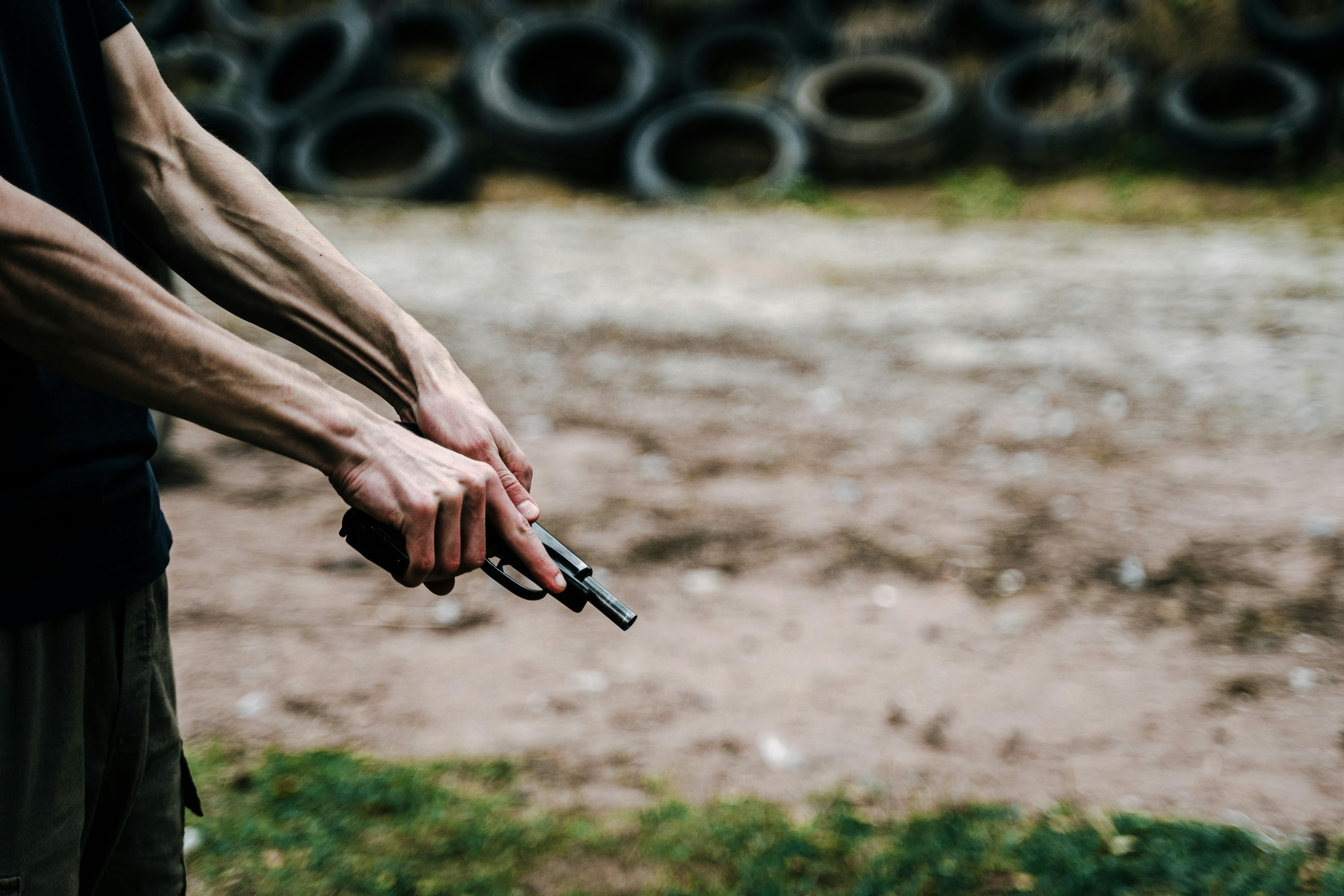
That gap matters because carrying a concealed handgun is not just ownership in a different location. It is drawing under stress, identifying threats in crowded spaces, understanding use-of-force law, avoiding negligent discharges, and storing the gun securely when it comes off the body. The honest conversation now underway begins with a plain admission: legality is not competence.
Nobody serious thinks the current “minimums” are enough
One reason this debate feels overdue is that even in states that still require a permit, the standards vary wildly. Giffords notes that 21 states generally still require a state-issued concealed carry permit, but training requirements differ sharply from place to place, with some states requiring live-fire instruction and others accepting classroom-only or alternative credentials. In practice, two permit holders from different states may have radically different preparation.
Instructors have known this for years. The recurring criticism from inside the community is not simply that some people skip training; it is that too many people treat a permit class as graduation instead of orientation. Publications aimed at armed citizens have increasingly acknowledged this point, with instructors arguing that private carriers should be able to meet measurable defensive shooting standards rather than merely pass a state test once and stop there.
That distinction is becoming more important as the carry population broadens. When millions of people can legally carry with no mandatory course at all, voluntary standards become the only realistic way to separate the careful from the careless. Nobody wants a one-size-fits-all federal rule, but more shooters are willing to say out loud that “do whatever you want” is not a serious training philosophy.
The conversation is expanding beyond marksmanship
For a long time, training debates in concealed carry circles were dominated by one question: can you hit what you aim at? That still matters, but the more mature discussion is now broader. Competence includes safe holstering, drawing without muzzling yourself, decision-making, verbal de-escalation, low-light awareness, and understanding when not to shoot. In real life, misses and bad decisions are often more consequential than slow split times.
Safe storage has become part of that broader standard too, especially as more families carry daily. The Department of Justice advises storing unattended firearms unloaded and locked, and Johns Hopkins researchers say safe storage reduces unintentional injuries, suicide risk, theft, and unauthorized access. That matters because the concealed carry lifestyle does not end when someone gets home; the gun has to be staged, secured, or transferred safely every single day.
The CDC’s data add urgency. CDC summaries report that firearm injuries were the leading cause of death for children and teens ages 1 to 19 in 2020 and 2021, and a CDC MMWR analysis found that many unintentional child firearm deaths happened at home, often involving guns stored loaded and unlocked. For a community that emphasizes responsibility, those numbers make it harder to pretend training is only about performance on the range.
Why carriers resist mandates even while asking for standards
This is where the issue gets politically delicate. Many concealed carriers are increasingly open to stronger norms, but they remain deeply skeptical of mandates. That skepticism is not just ideological reflex. For many gun owners, government-set training standards raise familiar fears: subjective licensing, cost barriers, rural access problems, bureaucratic abuse, and the possibility that “safety rules” become backdoor restrictions on a constitutional right.
There is also a practical concern. A weak mandate can produce false confidence, while a strong mandate can be expensive and unevenly available. If the state requires eight hours in a classroom but does little to improve judgment, draw safety, or retention of skills, the rule may become paperwork theater. Many carriers would rather see a culture of serious voluntary practice than a checkbox course everyone learns to game.
That is why the emerging argument sounds different from a traditional policy fight. It is less “the state should force this” and more “the community should stop lying to itself.” Instructors, competition shooters, former law enforcement trainers, and veteran carriers are increasingly telling newer gun owners that if they choose to carry, they should willingly accept a higher standard than the law demands, even if they oppose making that standard compulsory.
The best ideas sound more like norms than laws
What does that voluntary standard actually look like? Not a single national curriculum, and not universal agreement on times, round counts, or doctrine. But there is growing overlap around the basics: safe gun handling, consistent holster work, meaningful live-fire practice, knowledge of state use-of-force law, medical skills, and routine refreshers instead of one-and-done certification.
Some instructors favor benchmark drills because they reveal whether a carrier can draw, hit an acceptable target zone, reload, and manage accuracy under time pressure. Others emphasize scenario-based work: parking lots, gas stations, family movement, verbal commands, post-shooting actions, and emergency trauma care. The important change is not the exact drill sheet. It is the acceptance that carrying responsibly should involve objective performance and periodic reevaluation.
That approach also fits the decentralized nature of American gun culture. States differ. Terrain differs. Threat models differ. A retired rancher, an urban commuter, and a nurse working late shifts may need different emphases. But a voluntary standard still can exist if the community agrees on core expectations: know the law, handle the gun safely, hit on demand, avoid reckless choices, and secure the firearm when it is not on your body.
Real pressure is coming from within the community, not above it
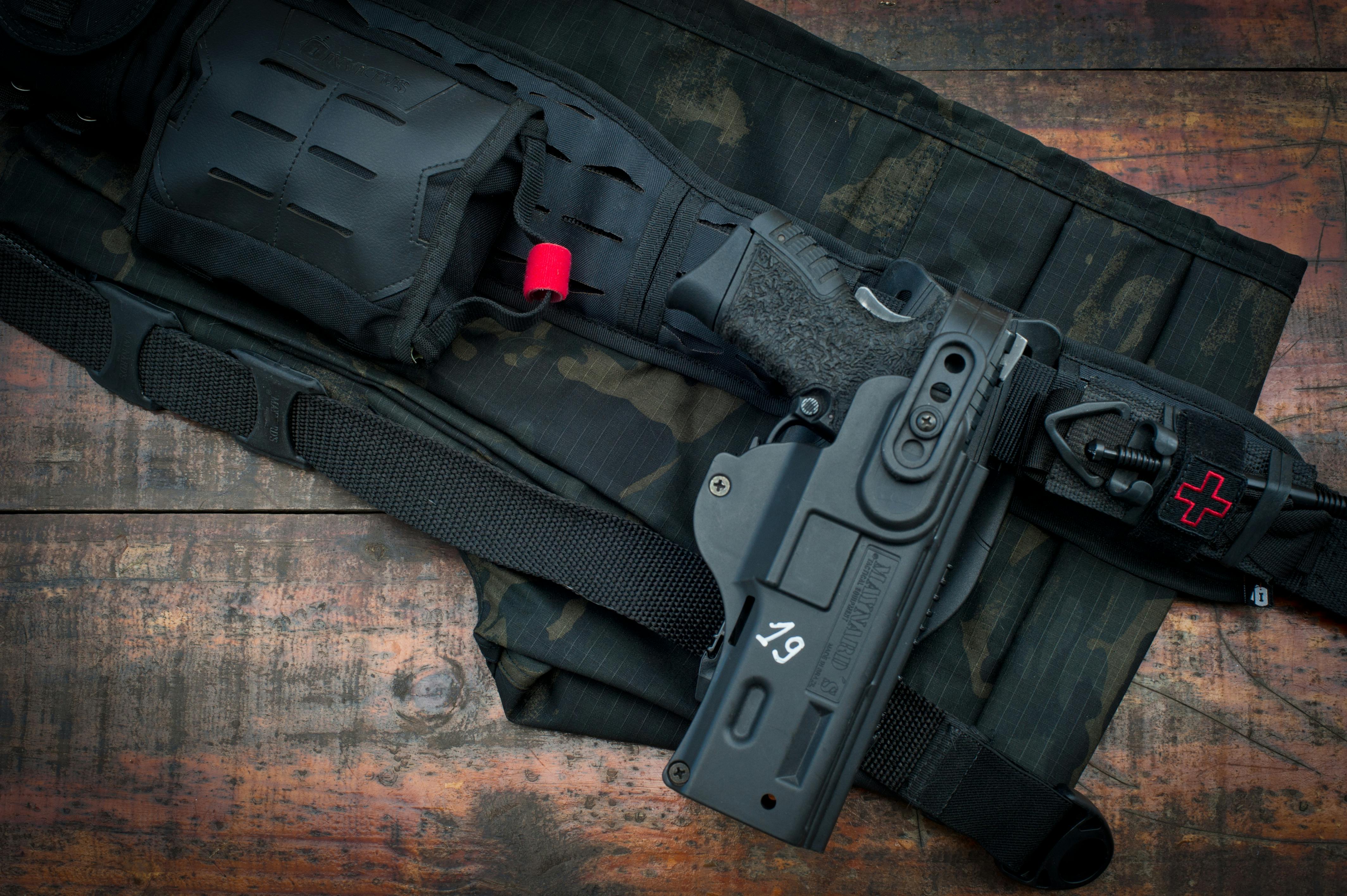
What makes this moment different is that the push is no longer coming only from critics of gun rights. More of it is coming from gun owners themselves, including people who fully support permitless carry. They are watching new carriers buy slim 9mm pistols, clip on minimalist holsters, and start carrying daily with little understanding of concealment mechanics, retention, or how quickly routine handling errors become dangerous.
The economics of the market reinforce that concern. The firearms industry has made carry guns smaller, lighter, and easier to buy accessories for, which is great for access but not automatically for skill. A micro-compact pistol in an appendix holster is efficient, but it also punishes sloppiness. The gun community increasingly recognizes that modern carry setups require more competence, not less.
There is also reputational pressure. Every negligent discharge in a restroom, store, or parking lot becomes ammunition in the larger national argument over public carry. Carriers understand that one foolish incident can do more damage to the cause than a hundred policy op-eds can repair. So the conversation about standards is also a conversation about preserving legitimacy by proving that armed citizenship can police its own culture.
The real question is whether honesty can change behavior
The concealed carry world does not lack advice. It lacks shared candor about what responsible carry truly costs in time, humility, and repetition. The honest version is not glamorous: dry practice, range work, legal study, trauma training, better holsters, safer storage, and a willingness to admit that carrying a gun in public is a perishable skill, not a political identity.
That is why this debate matters. It asks gun owners to separate rights from readiness without surrendering either. You can believe carrying is a constitutional right and still say plainly that many people carrying today are undertrained. In fact, that may be the only credible position if the goal is to defend both liberty and responsibility at the same time.
Nobody wants to mandate the perfect standard because nobody trusts who would write it, enforce it, or weaponize it. But more people in the concealed carry community are arriving at the same conclusion anyway: if the law is going to demand less, the culture has to demand more. Whether that becomes habit rather than rhetoric is the next test.