Some spy stories sound made up until you realize they were very real. The CIA’s robotic dragonfly was one of those ideas, and it says a lot about how far intelligence agencies were willing to go during the Cold War.
A spy gadget born from Cold War obsession
In the 1970s, the CIA’s Office of Research and Development created what it called the Insectothopter, a tiny unmanned aerial vehicle built to resemble a dragonfly. According to the CIA Museum, it was intended as a proof of concept for intelligence collection, not just a novelty prop built for show. The point was simple and audacious at the same time: get a listening device close to a target without sending in a human operative.
That made perfect sense in the Cold War environment. American intelligence planners were hunting for any edge they could get against foreign governments, especially in places where traditional surveillance was risky, heavily monitored, or politically explosive. A machine that looked like a harmless insect could, in theory, drift near a window, hover by a courtyard, or approach a conversation without drawing much attention.
The appeal was not only stealth. It was deniability. If a conventional bug were discovered, it could trigger a diplomatic incident. If a tiny dragonfly-shaped device slipped by unnoticed, it might solve one of espionage’s hardest problems: collecting close-range audio from guarded officials without exposing a source or method.
Why a dragonfly made more sense than a bumblebee

The first version of the idea was not a dragonfly at all. The CIA has said the original listening device was disguised as a bumblebee, but that concept ran into practical trouble. Bumblebees move in erratic patterns, and if one suddenly behaved unnaturally around a person or structure, it could attract exactly the kind of attention a spy operation tries to avoid.
A dragonfly turned out to be a better model. Dragonflies are fast, light, visually delicate, and naturally associated with hovering and darting motion. In other words, they gave engineers a more believable flight profile for a surveillance platform that needed to look organic while carrying mechanical parts.
That choice reveals how deeply the project blended biology with tradecraft. This was not just a tiny drone before tiny drones became common. It was an effort to mimic a real insect closely enough that human observers would dismiss it without a second thought. In espionage, that kind of camouflage can matter as much as raw engineering performance.
The CIA’s own account says an amateur entomologist involved with the project helped steer the design toward a dragonfly. That detail is easy to overlook, but it captures the improvisational nature of secret research. Strange breakthroughs often happen when intelligence work borrows from hobbies, obscure expertise, and offbeat technical insight.
How the Insectothopter was supposed to work
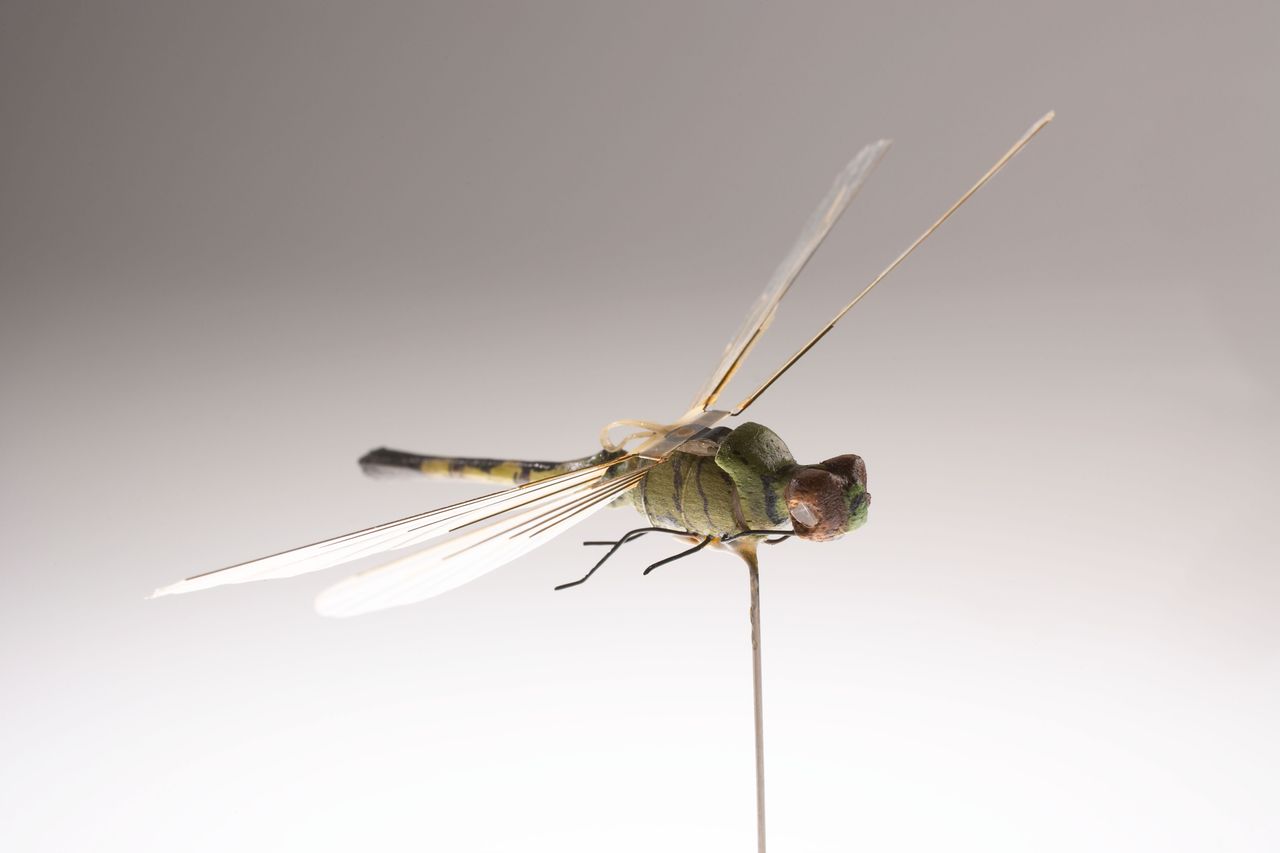
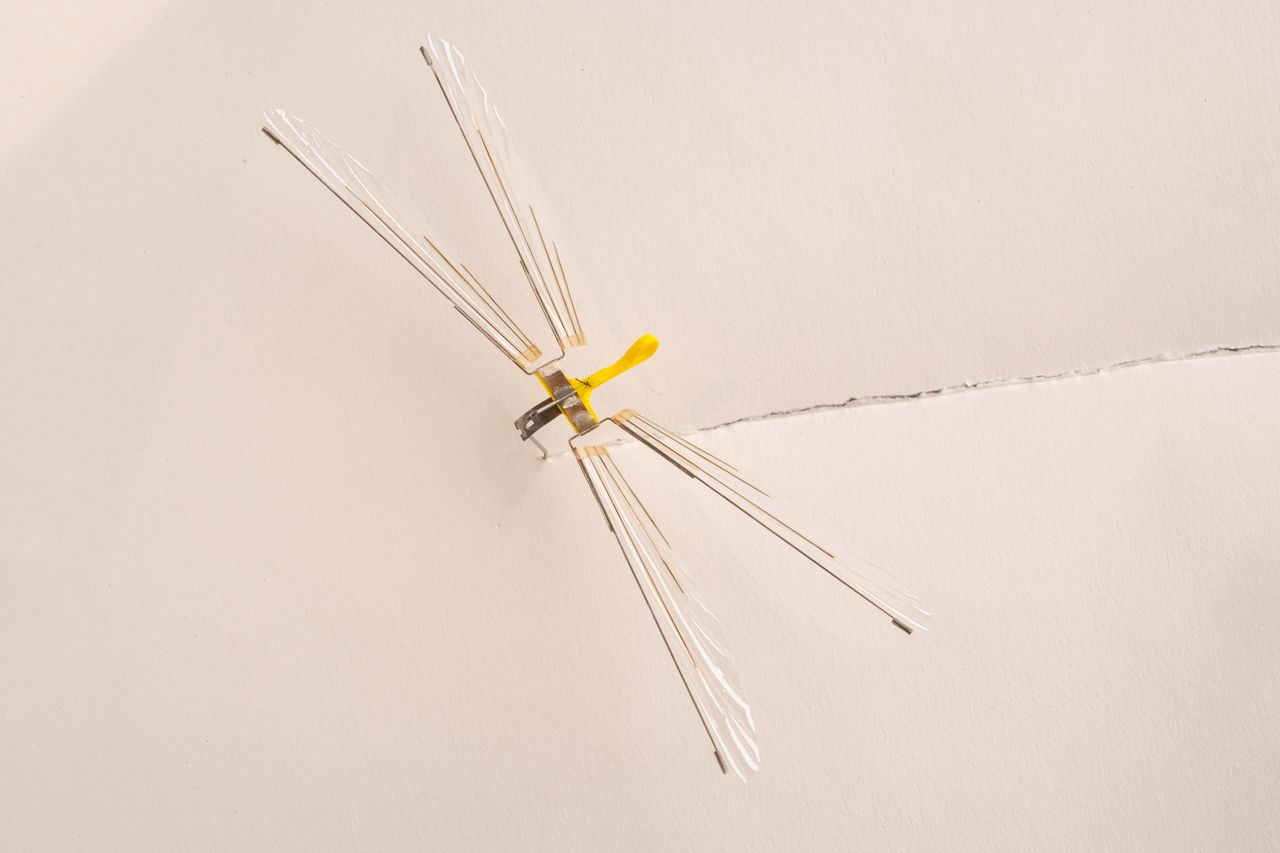
The engineering behind the device was remarkable for its time. The CIA says the Insectothopter used a miniature engine that flapped its wings up and down, with a small amount of gas driving the mechanism. Excess gas vented out the rear to provide additional thrust, which meant the little craft was doing more than merely fluttering for appearance.
The agency also says the machine was crafted by a watchmaker, which makes sense when you consider the scale involved. Miniaturized moving parts in the 1970s were not easy to design, manufacture, or assemble. Everything had to be extremely light, extremely precise, and reliable enough to work in flight despite the physical limits of the materials.
Guidance was even more unusual. The CIA has explained that a laser beam was used both to guide the device and to serve as a data link for its audio payload. In plain English, the robotic dragonfly was meant to fly toward a target while transmitting sound back to its operators, creating an airborne bug that could approach a conversation from outside.
By the standards of the era, that was a startlingly advanced idea. Today, people are used to hearing about microdrones, sensors, and remote surveillance. But in the mid-1970s, trying to build a 1-gram flying platform with directional control and a listening function was far ahead of mainstream consumer or even military technology.
The mission it was built to perform
The Insectothopter’s intended job was not broad aerial reconnaissance like a U-2 or later drone aircraft. It was meant for close-in intelligence collection, especially audio. The CIA Museum describes it as a miniaturized platform designed to carry a listening device, which meant the goal was to get physically near foreign targets rather than simply photograph large areas from a distance.
That distinction matters. Intelligence agencies often struggle with what professionals call the last few feet problem. It is one thing to know where an official lives, travels, or works. It is another thing entirely to get a microphone close enough to catch useful speech without placing a human asset in danger.
A robotic dragonfly offered a seductive answer. In theory, it could approach a patio, ledge, balcony, or open window where foreign officials were speaking. If successful, it would reduce operational risk while expanding access to guarded spaces. No trench coat, no rooftop break-in, no diplomatic car parked suspiciously nearby.
The broader context was a period when the CIA and other services were experimenting aggressively with technical collection. The same institutional mindset that backed high-altitude reconnaissance and miniature concealment devices also encouraged weird, speculative projects like this one. Some became operational legends. Others, like the robotic dragonfly, remained brilliant experiments that proved a concept without becoming a field-ready tool.
Why the tiny spy dragonfly ultimately failed

For all its ingenuity, the project ran into a brutal reality: wind. The CIA states that flight tests were impressive, with performance indicating a range of about 200 meters and a flight time of 60 seconds. On paper, that was enough to make intelligence officers imagine real-world missions.
But even slight crosswinds wrecked the idea. The agency says control became too difficult in winds over roughly five miles per hour, and that limitation was fatal. A surveillance platform can be clever, small, and quiet, but if it cannot reliably reach a target and stay on course outdoors, it is not operationally dependable.
That is the hidden lesson of a lot of spy technology. The hardest part is often not making something function in a lab. It is making it function in the messy, uncontrolled environment where real missions happen. Weather, vibration, line of sight, noise, and human unpredictability can destroy a design that looked revolutionary on the workbench.
The International Spy Museum goes even further in framing the problem, noting that the device was too small to be remotely controlled effectively and that surveillance equipment tiny enough for it to carry was a major limitation at the time. In other words, the CIA had reached the edge of 1970s miniaturization and found that physics still had the final vote.
What the project reveals about espionage innovation
The robotic dragonfly is fascinating partly because it failed. If it had become standard equipment, it would simply be another tool in the long history of surveillance hardware. Instead, it survives as a snapshot of how intelligence agencies think when the stakes are high and conventional options are not enough.
First, it shows that espionage research rewards improbable ideas. The CIA did not build the Insectothopter because someone wanted a flashy museum artifact. It was built because a machine disguised as an insect might solve a genuine collection problem. That willingness to chase bizarre concepts is often how major technical progress begins.
Second, it highlights how intelligence work can accelerate miniaturization. The demand for smaller sensors, quieter mechanisms, and more discreet collection platforms did not begin with smartphones or hobby drones. Secret services were pushing those boundaries decades earlier because they had immediate operational reasons to do so.
Finally, it illustrates the difference between a successful demonstration and a usable capability. The Insectothopter flew, and that alone was impressive. But intelligence services care about repeatable mission performance, not clever prototypes. In spycraft, a machine that works once under ideal conditions is not enough.
The dragonfly’s real legacy today
Even though the Insectothopter never became operational, its legacy is larger than its tiny frame suggests. The CIA describes it as the first flight of an insect-sized unmanned aerial vehicle, and that alone gives it a place in the history of drones. It showed that engineers were already thinking seriously about micro air vehicles long before they became a realistic field technology.
Seen from today’s perspective, the project looks almost prophetic. Modern surveillance systems are far smaller, more stable, and more capable than anything available to the CIA in the 1970s. Advances in batteries, sensors, materials, communications, and onboard control have turned ideas that once sounded outrageous into practical realities.
That does not mean today’s systems are literal descendants of the Insectothopter in a straight line. But the concept it represented clearly foreshadowed the current era, where tiny drones, miniature cameras, and compact listening tools are central to military, law enforcement, and intelligence work around the world.
And that is why the robotic dragonfly still matters. It was not just a weird Cold War gadget. It was a serious attempt to solve a real intelligence problem by shrinking surveillance to insect scale. The device failed in the field, but it succeeded in revealing where spy technology was headed long before the rest of the world caught up.