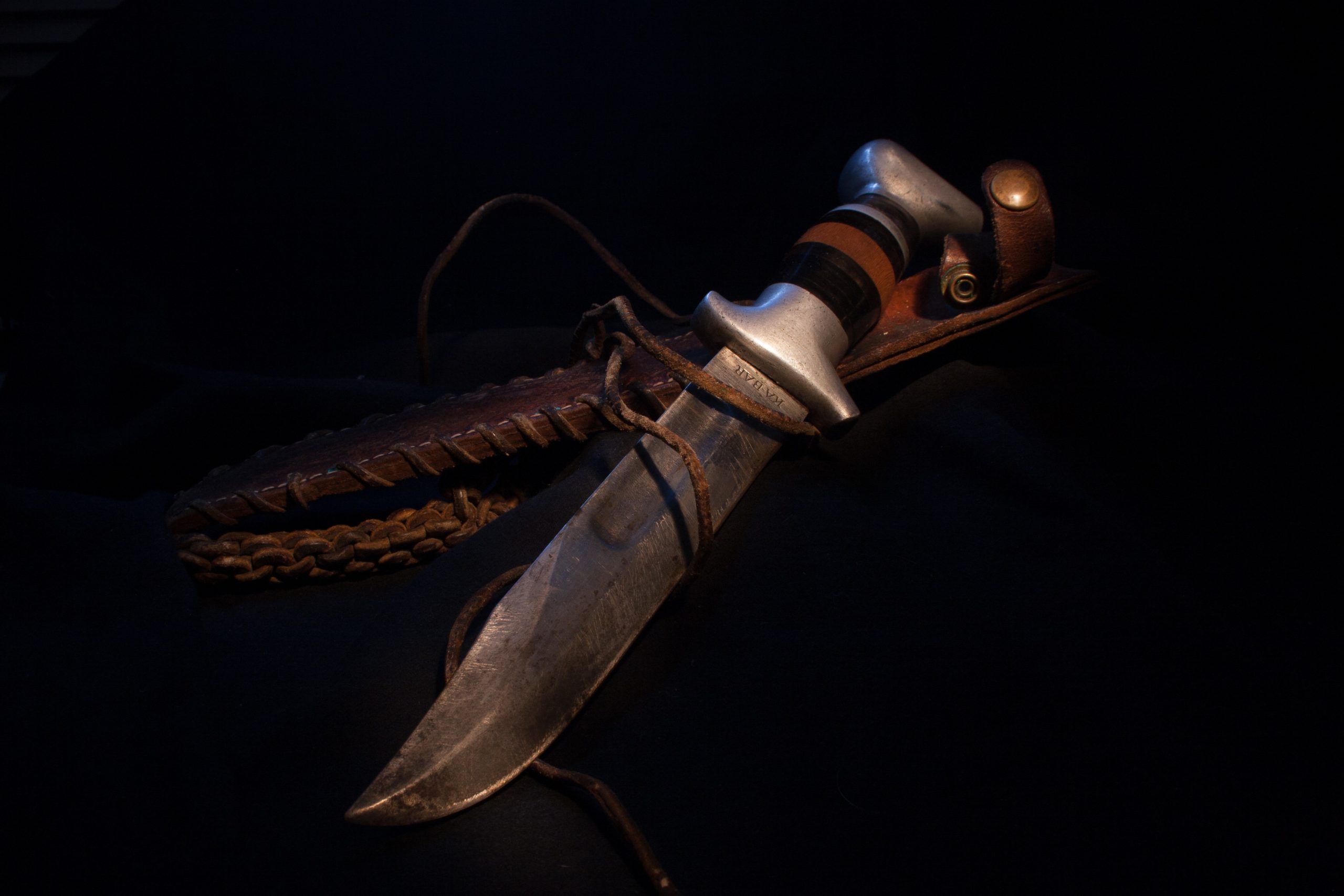
Some weapons become famous because of propaganda. Others earn their place the hard way.
The KA-BAR belongs in the second category, and its road to battlefield legend was far less certain than most people realize.
A Wartime Need Exposed the Limits of Older Military Blades
By the time the United States entered World War II after Pearl Harbor on December 7, 1941, American troops were modern in many ways but still unevenly equipped when it came to fighting knives. Marines, sailors, and soldiers had bayonets, utility knives, and older trench-knife concepts, yet none of those tools fully answered the ugly reality of jungle warfare, amphibious assaults, and close-quarters combat. According to Marine Corps and Navy historical material, the services were still using a mix of blades whose strengths were often too specialized for the demands of the new war.
The old U.S. Mark I trench knife, with its metal knuckle guard, looked intimidating, but it was a product of World War I thinking. It was designed for stabbing in narrow trenches, not for the broad set of tasks Marines faced in the Pacific, where a knife might be used to cut rope, open crates, clear brush, prepare food, or serve as a last-ditch weapon. The Navy’s long tradition with cutlasses and ceremonial blades had already faded by the early 1940s, and the practical center of gravity had shifted toward multiuse field tools. The war was forcing every piece of kit to justify its weight.
That gap was especially obvious among Marines deploying into rough, wet, unforgiving environments. A blade that snapped, rusted quickly, handled poorly, or proved awkward in camp chores was not just inconvenient; it could become dangerous. The Marine Corps wanted something sturdier than a narrow stiletto and more useful than a pure fighting dagger. The answer would have to split the difference between weapon and tool, which is exactly where many military procurement efforts initially hesitate.
That hesitation is why the famous knife almost never became famous at all. Early military institutions often favored familiar forms, and in 1942 there was no guarantee that a broad-bladed fighting and utility knife would become standard issue. But combat experience was already rewriting theory. The men doing the fighting needed a blade built not for parade-ground logic, but for the hard arithmetic of survival.
The Design That Won Wasn’t Flashy, It Was Practical
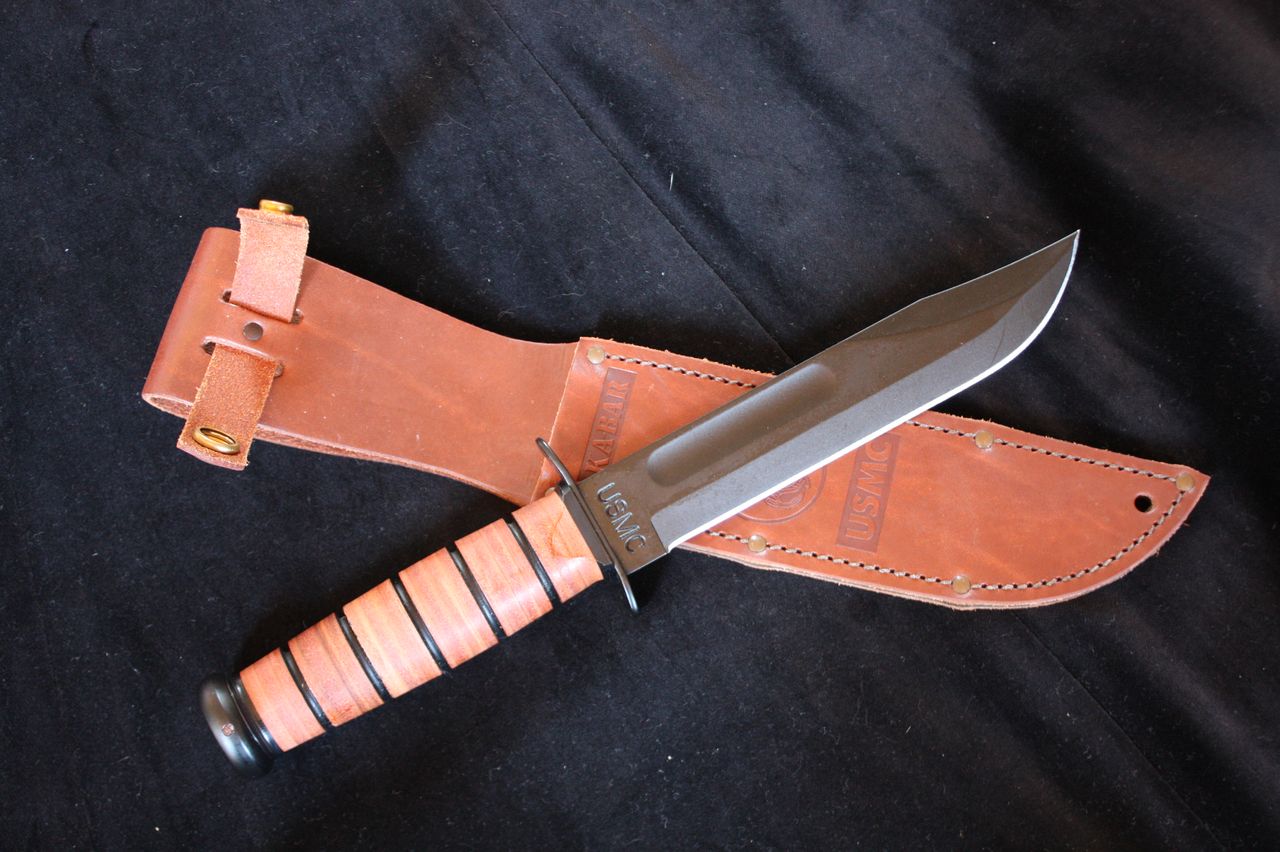
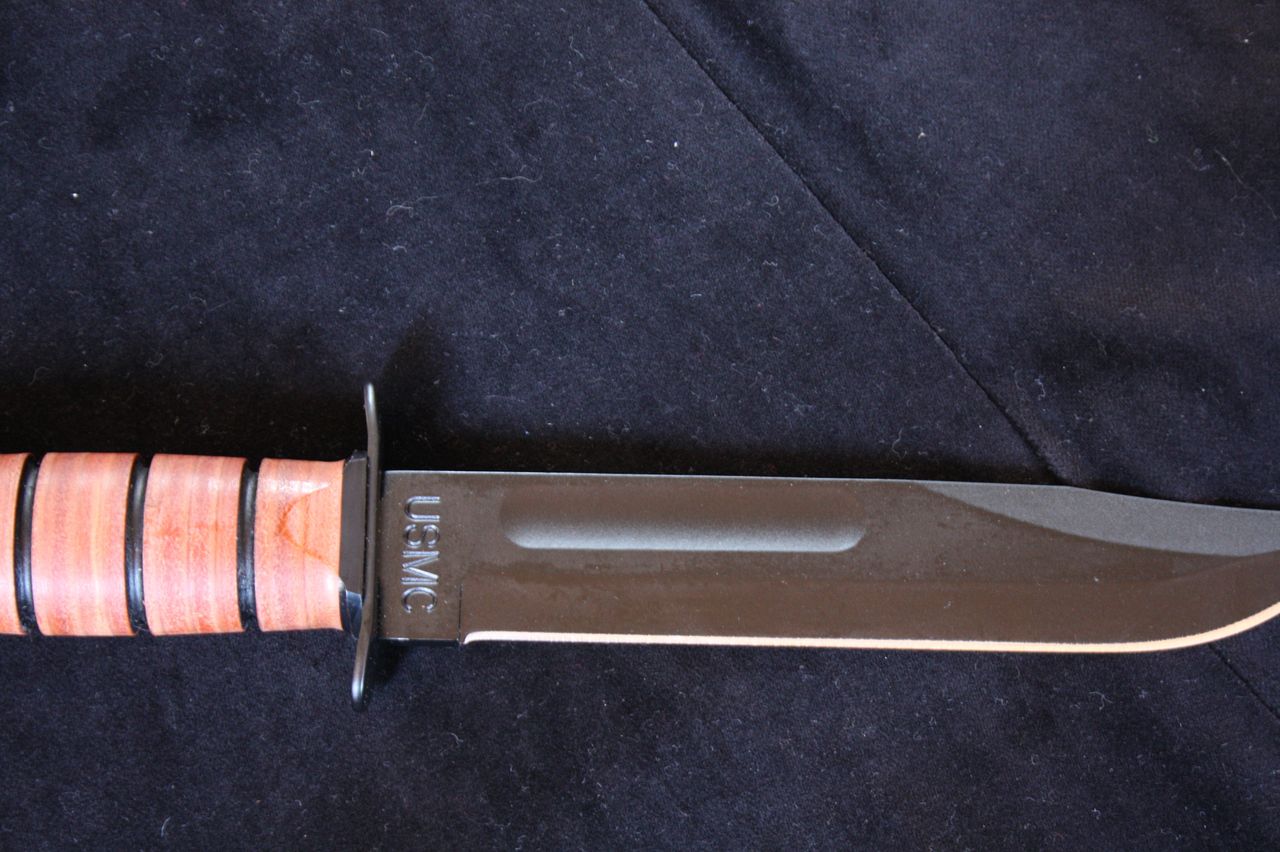
What eventually became the iconic KA-BAR emerged from a straightforward but smart design philosophy. The knife adopted by the Marine Corps as the 1219C2 Fighting/Utility Knife featured a 7-inch clip-point blade, stacked leather washer handle, steel pommel, and a shape that balanced cutting power with control. KA-BAR’s own historical material notes that Union Cutlery submitted the 1219C2 to the Marine Corps on December 9, 1942, and that the pattern was refined before wider wartime production followed.
Nothing about that recipe was accidental. The clip point gave the blade an aggressive, penetrating tip, but the overall width still allowed for slicing and utility work. The leather handle offered a secure grip even when wet, muddy, or slick with sweat. The knife was large enough to matter in a fight, yet compact enough to ride on the belt without becoming a burden during long marches, shipboard movement, or amphibious landings. In other words, it solved several problems at once.
That is a big reason it outlived more exotic alternatives. Military organizations are often tempted by equipment that looks specialized and fearsome, but wartime users consistently gravitate toward tools that do many jobs well. The 1219C2 was not a pure dagger and not a mere camp knife. It occupied the middle ground where real battlefield gear survives. According to Marine reporting that drew on KA-BAR’s corporate history, the Marine Corps sought a blade that could function as both a fighting knife and an all-purpose field tool.
Its success also came from manufacturability. The design was robust but not impossibly delicate to produce at wartime scale. That mattered in a conflict where speed, standardization, and interchangeable quality were essential. A knife can be brilliant on a drawing board and still fail if it cannot be delivered in volume. The future KA-BAR worked because it translated combat lessons into a pattern industry could actually build, issue, and keep in service under the enormous pressures of global war.
Why the Military Nearly Passed on It in the First Place
The phrase “almost passed on” is not an exaggeration so much as a reminder of how military adoption works. Institutions rarely leap instantly toward a new standard, especially when inventories already include older knives, bayonets, and legacy patterns. Before the KA-BAR became an icon, it had to compete with inertia, existing procurement pipelines, and the natural conservatism of organizations that do not change equipment lightly. Even obvious improvements can take time to be recognized in formal channels.
Part of the issue was doctrinal. For generations, many military blades had been treated either as weapons first or as tools first. The 1219C2 challenged that split by insisting on both roles at once. To desk-bound planners, that can sound like compromise. To front-line troops, it sounds like common sense. World War II repeatedly showed that gear designed for a single narrow purpose often disappointed in the field, while flexible equipment won loyalty fast.
Another complication was branding versus pattern. As KA-BAR’s own historical material explains, the Marine Corps fighting/utility knife was made by several different companies, including Union Cutlery, and Union marked its knives with the KA-BAR trademark. Over time, the brand name became so widely associated with the pattern that “KA-BAR” came to stand in for the entire type, even when another maker produced the knife. By the end of the war, the name had so much recognition that Union Cutlery changed its corporate name to KA-BAR in 1952.
That detail matters because it shows the knife’s rise was not simply a neat one-company triumph from the beginning. It was a wartime standard that became a cultural symbol through repeated field use, broad production, and Marine identification with the blade. Camillus and other long-running American knife makers also supplied military blades during the era, underscoring how wartime procurement often depended on multiple industrial partners rather than a single romanticized source.
So the military did not reject a miracle invention and then suddenly discover genius. Instead, it took a hard lesson familiar in war: the best gear is sometimes the thing that looks least glamorous on paper, but proves indispensable once men start carrying it into real combat.
The Pacific War Turned the Knife Into a Legend
The KA-BAR’s reputation was forged where equipment failures became unforgettable: the Pacific. Marines fighting on islands and in jungle terrain needed a blade that could handle punishment, salt air, soaked conditions, and endless improvisation. Historical material from Marine units and World War II institutions shows how 1942 and 1943 operations in places like Tulagi and Guadalcanal put extraordinary pressure on men and materiel alike. In that environment, a knife that only stabbed well was not enough.
The fighting knife gained stature because it was used constantly, not merely admired. Veterans employed blades for opening ration crates, cutting lines, preparing positions, and handling a hundred small camp tasks that never make headlines but define whether gear is actually useful. The same knife could then become an emergency weapon in close-range violence. That overlap between daily labor and mortal necessity is what gave the KA-BAR its unusual mystique. It was not carried for show. It was carried because men found reasons to reach for it every day.
The legend also benefited from Marine identity. Few pieces of equipment become symbols of a service, but this one did. Even official Marine writing decades later still treats the KA-BAR as a blade closely tied to Marine history and culture. That bond matters because battlefield reputation alone does not always produce enduring fame. The knife became part of the Marine image: practical, tough, stripped of ornament, and built for punishing use.
Over time, that identity blurred the difference between myth and documented record. Popular memory sometimes imagines the KA-BAR as a pure dueling weapon of silent raids and dramatic hand-to-hand combat. Those moments certainly fed the legend, but the deeper truth is more interesting. Its fame rested on reliability. The knife became legendary not because it was theatrical, but because it worked in the places where equipment was tested hardest and excuses meant nothing.
Why the KA-BAR Still Matters More Than Eighty Years Later
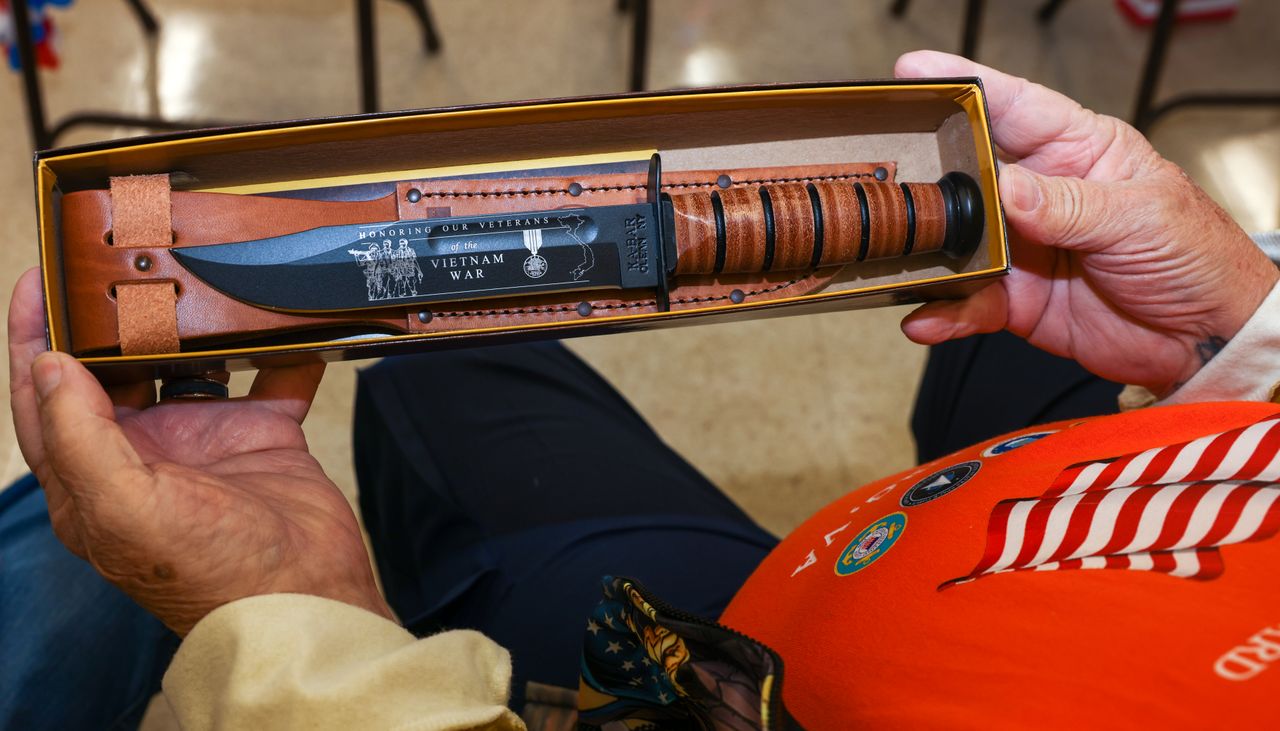
More than eighty years after World War II, the KA-BAR remains one of the most recognizable combat knives ever made because its core design answered enduring human needs. A good field knife must be strong, simple, serviceable, and intuitive under stress. Those requirements have not changed much since the 1940s. That is why the silhouette still feels current even in an era of advanced steels, synthetic handle materials, and highly specialized tactical blades.
Its afterlife in American culture has been just as remarkable as its wartime career. The original military pattern became a civilian outdoors staple, a collector’s centerpiece, and a reference point for countless later survival and combat knives. According to KA-BAR’s own company history, the wartime popularity of the brand name became so dominant that it eclipsed Union Cutlery itself. That sort of transition is rare. Most military tools remain contract items; this one became a national object of recognition.
There is also an important lesson here about procurement and battlefield innovation. The military nearly missed the knife because institutions often struggle to recognize that the best answer is not always a dramatic leap in technology. Sometimes the winning design is simply the one that understands how people actually fight, carry gear, and improvise under pressure. The KA-BAR succeeded because it accepted a blunt truth: on campaign, a man needs one blade that can do almost everything reasonably well.
That is why the story still resonates with soldiers, Marines, outdoorsmen, collectors, and historians. The KA-BAR was not inevitable. It had to prove itself against older habits, narrower ideas, and the friction of military decision-making. Once it did, however, it became more than issue gear. It became one of those rare tools whose reputation was written not in advertising copy, but in mud, saltwater, leather, and steel.