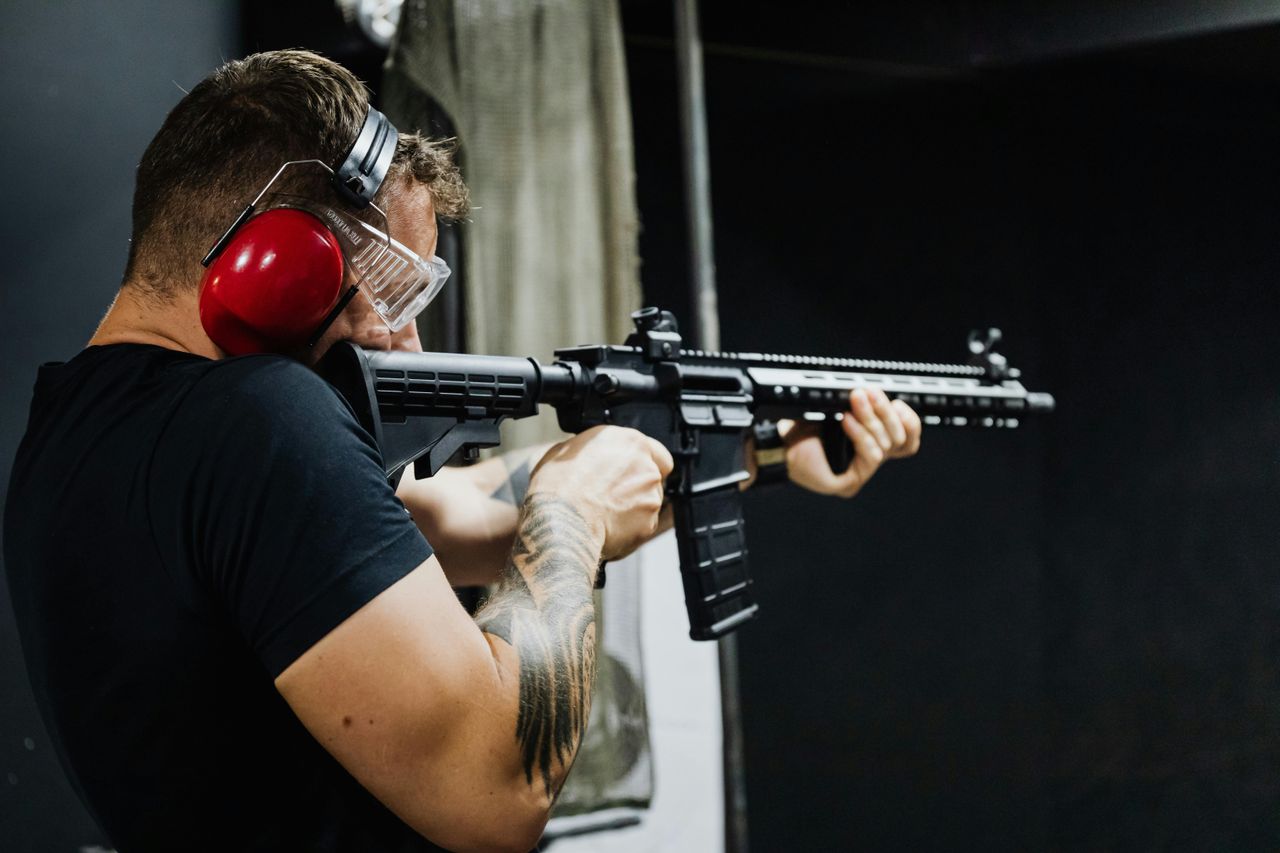
The AR-15 looks simple until you actually run one hard. That is when first-time buyers usually discover what matters and what really does not.
The platform is easy to buy, but not automatically easy to run

A lot of new buyers are drawn to the AR-15 because it is familiar, modular, and widely discussed. Store shelves, online chatter, and countless product options create the impression that ownership is almost plug-and-play. In reality, training exposes a different truth: the rifle is approachable, but proficiency is earned.
The first surprise for many people is how much the rifle asks of the shooter in terms of setup and consistency. A carbine with a poorly adjusted stock, awkward sling placement, or badly chosen optic can feel clumsy even if the underlying rifle is reliable. What looked like a simple purchase becomes a system that has to fit the body and the task.
Experienced instructors often say the AR-15 is forgiving, but only within reason. If a beginner shows up to class with a bargain optic, random accessories, and no zero confirmation, small issues quickly become big ones. According to many trainers who run high-round-count courses, the rifle usually works fine when built around sound fundamentals, not trends.
That is the gap that first-time buyers do not expect. The AR-15 is accessible, but it is not self-explanatory. The more rounds someone fires under time pressure, from awkward positions, and during reloads or malfunction drills, the more obvious it becomes that owning one and running one are two different things.
Recoil is light, but the rifle still punishes bad technique
One of the most repeated claims about the AR-15 is that it has almost no recoil. Compared with many larger-caliber rifles, that is broadly true. Chambered in 5.56 NATO or .223 Remington, the platform is generally soft-shooting, and that makes it attractive to smaller-framed shooters and beginners.
But training reveals the catch: low recoil does not erase poor technique. A loose shoulder mount, inconsistent cheek weld, or weak support-hand grip shows up fast when trying to fire controlled pairs or hold a stable sight picture. The gun may not kick hard, but it still moves, and bad habits multiply under speed.
This becomes especially obvious when shooters transition from slow bench firing to standing, kneeling, or moving drills. Many first-time owners are shocked by how quickly accuracy opens up once the timer starts. What felt effortless from a rested position becomes much less tidy when the rifle has to be driven aggressively and returned to target.
Instructors often point out that recoil management on an AR-15 is really about structure, not toughness. Good stance, proper stock placement, and deliberate hand position matter more than brute strength. That is why a well-trained shooter can make the rifle look almost motionless, while a stronger but less trained shooter appears to fight it every shot.
Reliability depends more on maintenance and ammo than people think

Many buyers hear two opposite myths about the AR-15. One says it is endlessly reliable, no matter what. The other says it is inherently finicky. Training usually replaces both myths with a more useful reality: most reliability problems come from predictable causes that shooters can control.
Magazines are a major example. A new owner may spend heavily on furniture and optics, then show up with cheap, worn, or untested magazines that create feeding problems. In many classes, instructors see more issues caused by bad magazines than by broken rifles. That lesson tends to surprise people who assumed the rifle itself would be the weak link.
Lubrication is another eye-opener. The AR-15 generally likes to run wet, especially in extended sessions where heat and fouling build up. Shooters who were told to keep the rifle nearly dry in the name of cleanliness often discover that a properly lubricated bolt carrier group can dramatically improve function during long days on the range.
Ammunition choice matters too. Underpowered steel-case loads, inconsistent bulk ammo, or mismatched defensive loads can change reliability and point of impact. After a few hundred rounds in class, first-time owners often realize that reliability is not just a brand name stamped on the lower receiver. It is the result of maintenance habits, magazine quality, ammunition selection, and realistic testing.
Most accessories solve imaginary problems and create real ones
The AR-15 market is built on customization, and that is part of the platform’s appeal. A first-time buyer can easily be convinced that a rifle needs upgraded triggers, oversized controls, muzzle devices, backup gadgets, lights, lasers, hand stops, and several pounds of other hardware before it is truly ready.
Then training happens. Suddenly, extra gear is no longer impressive. It snags on slings, shifts the balance forward, crowds hand placement, and makes the rifle more tiring during long drills. Many shooters learn within a single class that a heavy front end feels manageable for five shots but miserable after repeated strings, transitions, and positional work.
Optics are another common reality check. A quality red dot with a confirmed zero often outperforms a complicated setup in the hands of a beginner. New shooters sometimes arrive with magnified optics they do not understand, mounts installed incorrectly, or backup systems they have never actually used. Simpler gear tends to reveal more competence, not less.
That does not mean accessories are pointless. A white light for defensive use, a practical sling, and a durable optic all make sense. The lesson is narrower and more important: every addition should solve a demonstrated need. Training has a way of exposing which parts support performance and which ones just decorate the rifle.
Accuracy is less about the rifle’s label and more about the shooter
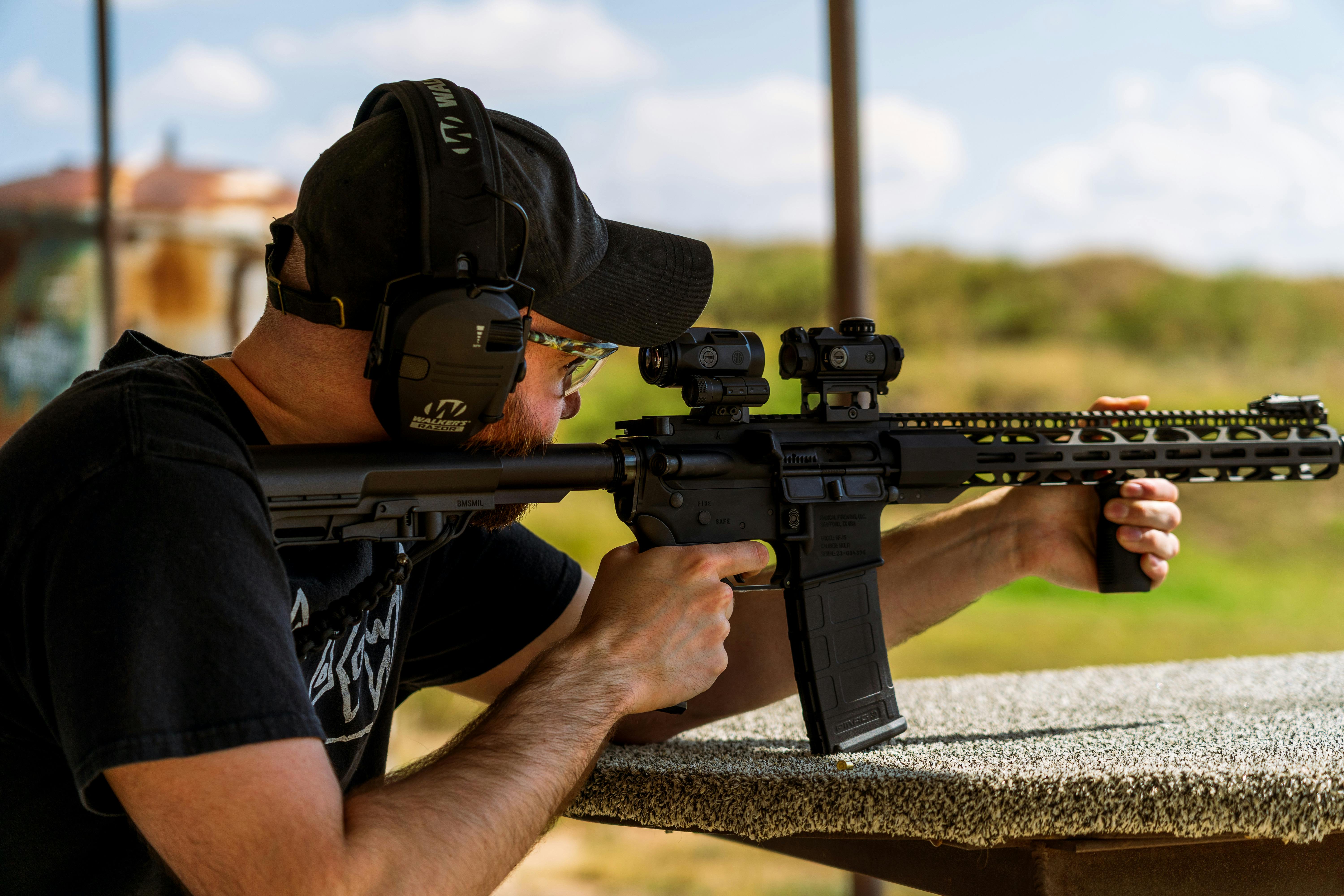
First-time buyers often obsess over brand debates, barrel profiles, twist rates, and tiny mechanical accuracy differences. Those things do matter, especially for specialized use. But during basic and intermediate training, most missed shots have very little to do with whether the rifle is theoretically capable of 1 MOA or 2 MOA.
What matters more is whether the shooter can see the sights clearly, press the trigger cleanly, and maintain stability through the shot. In practical classes, the targets often tell a humbling story. A mid-tier rifle with a decent optic and a disciplined shooter usually outperforms an expensive rifle fired by someone who has never built solid fundamentals.
Zeroing is where this truth becomes unmistakable. Many new owners vaguely understand that an optic needs a zero, but they do not appreciate how much confidence and consistency depend on it. Once they train at varied distances, they learn that offset at close range, holdovers, and confirmation at realistic distances matter far more than internet arguments about prestige.
This is also why instructors stress repetition over hardware chasing. Trigger control, visual patience, and positional stability create practical accuracy. Better equipment can help at the margins, but it cannot replace skill. Training strips away the fantasy that a premium rifle will somehow print performance the shooter has not yet earned.
The manual of arms is intuitive only after repetition
People often describe the AR-15 as ergonomic, and compared with many rifles, it is. The selector, magazine release, charging handle, and bolt catch can be used efficiently. But first-time buyers usually confuse ergonomic potential with actual proficiency, and training quickly separates the two.
Reloads are a perfect example. At home, with no pressure, a magazine change can feel straightforward. On the clock, after movement, with a rising heart rate and a partially awkward stance, many beginners fumble magazines, miss the magwell, or fail to seat a fresh magazine fully. The controls are well placed, but the skill still has to be built.
Malfunction work produces similar surprises. A shooter may intellectually understand tap-rack procedures or remedial action, yet freeze when the rifle stops unexpectedly in the middle of a drill. Instructors see this often: a student who shoots well during clean strings but loses precious seconds diagnosing a simple stoppage because their manipulations are not yet automatic.
That is one of the most valuable things training provides. It converts separate pieces of knowledge into a working sequence under stress. The AR-15 platform rewards repetition because its design allows speed and efficiency, but only after the shooter has practiced enough to access those advantages without conscious delay.
The real value of the AR-15 is versatility, not magic
By the end of quality training, most first-time buyers come away with a much healthier view of the AR-15. It is not a mythical rifle that compensates for inexperience, and it is not a fragile machine waiting to fail. It is a versatile, effective platform whose performance depends heavily on how thoughtfully it is configured and how competently it is used.
That versatility is the real reason the platform remains so common. It can serve in recreational shooting, home defense, competition, training, and ranch or property use with only moderate changes in setup. A rifle with a sensible optic, a white light, a sling, and reliable magazines can cover a wide range of roles without becoming overly specialized.
What first-time buyers do not realize until they train is that the AR-15’s biggest advantage is not any single feature. It is the combination of manageable recoil, adaptable ergonomics, strong parts availability, and a huge training ecosystem. That combination makes it unusually supportable for ordinary shooters who are willing to learn.
And that last point matters most. The rifle does not reveal its truth at the gun counter or in a spec sheet. It reveals it on the range, over repeated drills, where competence grows, and hype falls away. Training turns the AR-15 from an object of opinion into a tool, and that is when buyers finally understand what they really purchased.