Few firearms are as woven into the American imagination as the revolver. From frontier sidearms to police staples and target range favorites, these wheelguns helped define how generations learned to shoot, carry, and compete. This gallery revisits 15 standout models whose influence goes far beyond nostalgia, because they still offer real-world usefulness, smart design, and enduring charm.
Colt Single Action Army
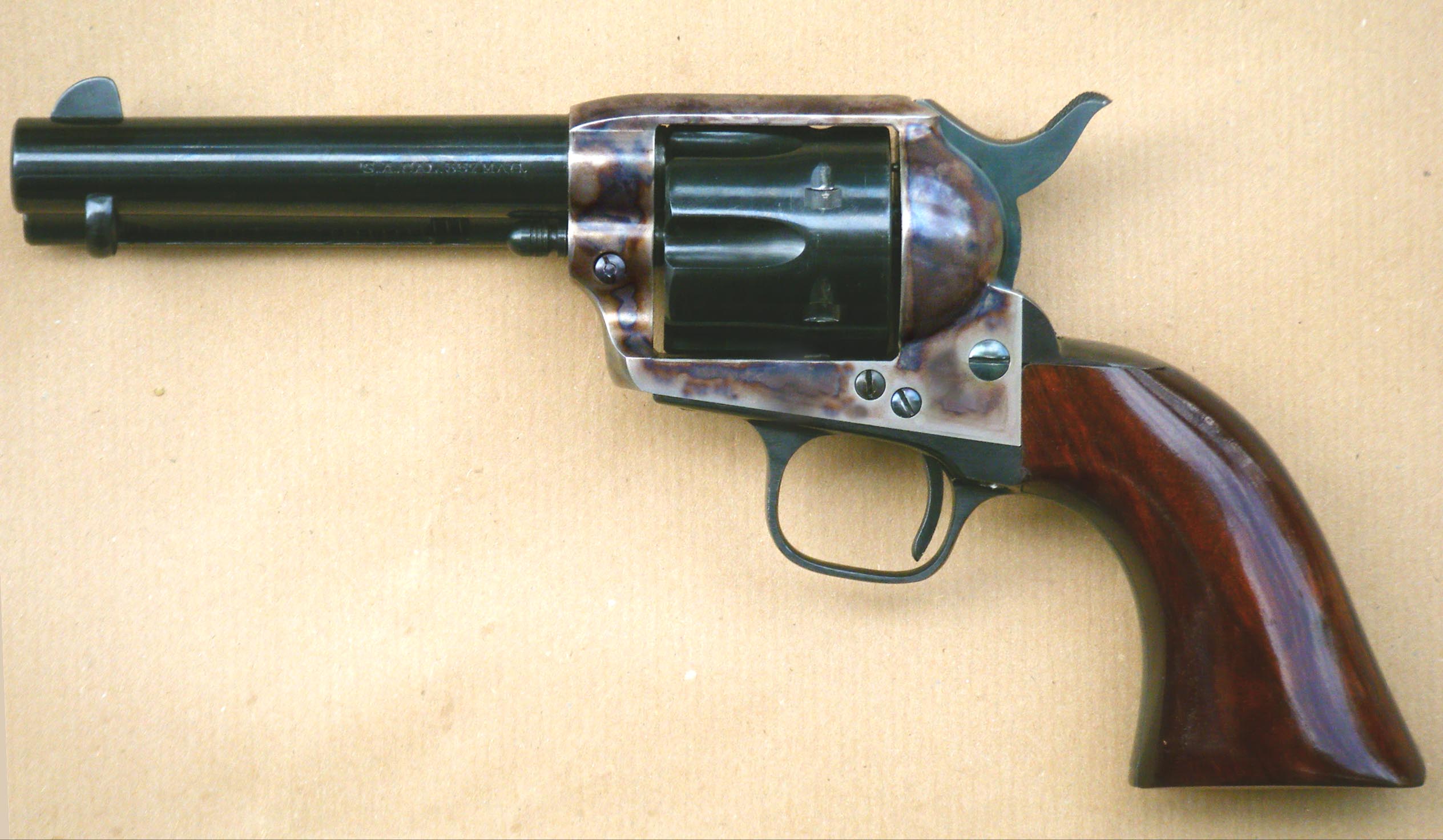
The Colt Single Action Army is the revolver that became a national symbol. Introduced in 1873, it earned a place in frontier history, military service, and eventually Hollywood, where its profile became almost shorthand for the American West.
What keeps it relevant is not just romance. The grip shape points naturally, the lockwork feels crisp, and the design remains a favorite for cowboy action shooting and collectors who actually like to shoot their guns.
Modern reproductions and originals alike still prove the idea has life. Simple, rugged, and immensely shootable, the Peacemaker remains one of the clearest links between history and hands-on enjoyment.
Smith & Wesson Model 10

If one revolver represents the everyday American sidearm of the 20th century, it is the Smith & Wesson Model 10. This K-frame .38 Special was carried by countless police officers and trusted by civilians who wanted a dependable home or duty gun.
Its staying power comes from balance and simplicity. The gun is not flashy, but it handles beautifully, has manageable recoil, and delivers the kind of practical accuracy that made it a training standard for generations.
Even today, a good Model 10 feels immediately familiar. It is the sort of revolver that reminds you why straightforward design, a smooth double-action pull, and real-world usefulness never go out of style.
Colt Python

The Colt Python has long occupied a special place in American gun culture, where craftsmanship and prestige matter almost as much as ballistics. Introduced in the 1950s, it became famous for its ventilated rib, full underlug, and a level of polish that made it feel like a custom gun from the factory.
Shooters loved it for more than looks. A good Python offered excellent accuracy, a refined trigger, and the kind of confident handling that made .357 Magnum performance feel controlled rather than punishing.
Its modern revival only confirms the legend. The Python still stands as a revolver people admire in the display case, then appreciate even more when they finally take it to the range.
Smith & Wesson Model 29

The Smith & Wesson Model 29 turned raw power into a cultural moment. Chambered in .44 Magnum, it was already respected by handgun hunters and serious shooters before movies made it one of the most recognizable revolvers ever built.
Fame alone would not have preserved its status. The N-frame design gives the big cartridge a stable platform, and in practiced hands the gun offers surprising accuracy, especially from a rested position or with carefully chosen loads.
Today the Model 29 still appeals to shooters who want a classic magnum experience with real substance behind the legend. It is large, dramatic, and unapologetic, but it also remains a capable field and range revolver.
Ruger Blackhawk

The Ruger Blackhawk took the single-action revolver idea and modernized it for postwar America. While it looks rooted in 19th-century tradition, its stronger construction and practical features gave shooters a tougher platform for magnum cartridges and heavy use.
That blend of old and new is exactly why it endures. Hunters, handloaders, and outdoorsmen embraced the Blackhawk because it could handle serious work without giving up the satisfying rhythm and clean lines of a traditional single-action.
It is still a revolver people buy to use, not just admire. Durable, accurate, and flexible across calibers and barrel lengths, the Blackhawk remains one of the smartest evolutions of a classic American form.
Smith & Wesson Model 19

The Smith & Wesson Model 19 helped define the ideal fighting revolver for generations. Developed with lawman and shooter Bill Jordan, it paired .357 Magnum capability with the handier K-frame size, creating a sidearm that was powerful without becoming oversized.
That balance made it a favorite among police officers and skilled civilians alike. Loaded with .38 Specials for training or .357 Magnum for serious use, it offered flexibility at a time when revolvers still ruled the American sidearm market.
The Model 19 still feels right in the hand today. It is trim, elegant, and responsive, with the kind of carry-and-shoot versatility that explains why so many shooters still speak of it with real affection.
Ruger GP100
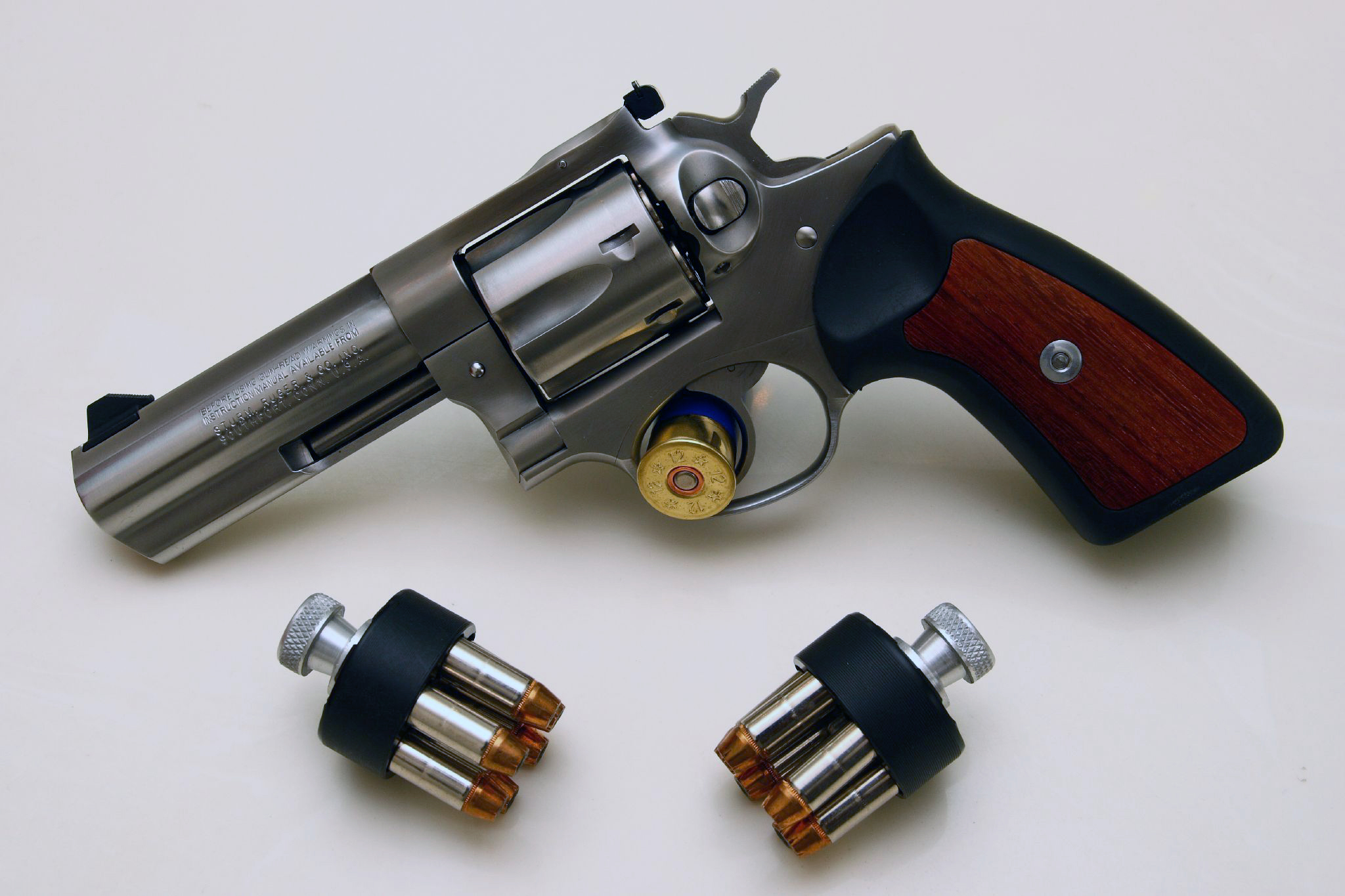
When shooters talk about modern double-action revolvers that can take real abuse, the Ruger GP100 almost always enters the conversation. Built with strength in mind, it quickly earned a reputation as the revolver you buy when you plan to shoot a lot of full-power .357 Magnum.
Its appeal is refreshingly practical. The GP100 is robust, easy to maintain, and known for durability that inspires confidence whether the gun is headed for the range, the woods, or a home-defense role.
It may not carry the old-world polish of some classics, but that is part of the charm. The GP100 endures because it delivers honest performance, solid ergonomics, and long-term reliability without drama.
Colt Detective Special

The Colt Detective Special showed America that a small revolver could still be serious equipment. Long before compact pistols became the norm, this short-barreled six-shot was a discreet carry gun for plainclothes officers and armed citizens who needed something practical and concealable.
Its influence is easy to miss until you look closely. The Detective Special helped establish the snub-nose revolver as a category, and its extra round over many rivals made it especially appealing in a compact package.
Even now, it feels surprisingly modern in concept. It is easy to understand why the design left such a mark, because portability, quick handling, and understated usefulness still matter every time someone chooses a carry gun.
Smith & Wesson J-Frame Model 36

The Smith & Wesson Model 36, often associated with the Chiefs Special line, made the small defensive revolver a mainstream American staple. Compact, dependable, and easy to carry, it became the sort of handgun people slipped into a pocket holster, glove box, or bedside drawer.
Its cultural reach comes from pure practicality. For many shooters, especially those who valued simplicity over capacity, a J-frame represented an accessible path to personal protection without a steep learning curve.
The Model 36 still holds up because the formula still works. It is light enough to carry, intuitive to operate, and mechanically straightforward, which is exactly why these little revolvers continue to attract new shooters and old hands alike.
Ruger Security-Six

The Ruger Security-Six captured a key transition in American revolver culture. Arriving when police departments still relied heavily on wheelguns, it offered a durable, affordable alternative to more established service revolvers and quickly built a loyal following.
Shooters appreciated its no-nonsense design. The gun was strong, compact enough for duty use, and straightforward to maintain, qualities that mattered to officers, agencies, and civilians who wanted a practical .357 Magnum.
Today, the Security-Six feels like a revolver built for real life rather than display. It remains admired for toughness and honest value, and many enthusiasts see it as one of Ruger’s most important contributions to the American service sidearm story.
Colt Official Police

Before newer magnum service revolvers stole the spotlight, the Colt Official Police set a standard for American law enforcement sidearms. Chambered commonly in .38 Special, it was carried widely in an era when police marksmanship and revolver handling were central parts of the job.
Its importance lies in both presence and performance. The Official Police offered solid accuracy, authoritative handling, and a level of institutional trust that helped shape how many departments thought a duty handgun should feel and function.
That legacy still gives it weight with modern shooters. Pick one up today and you get more than a period piece. You get a revolver that reflects the training culture, expectations, and everyday realities of its time.
Smith & Wesson Model 686

The Smith & Wesson Model 686 became a modern classic by giving shooters a revolver that felt substantial without becoming unwieldy. Built on the L-frame, it was designed to better digest steady use of .357 Magnum while preserving the handling qualities people loved in Smith & Wesson double-actions.
That made it a standout for range work, competition, and home defense. Stainless steel construction added durability and a practical kind of confidence, especially for owners who wanted a hard-working revolver with less concern about finish wear.
The 686 still holds its place because it remains one of the easiest revolvers to recommend. Accurate, versatile, and widely available, it bridges old-school appeal and contemporary usability better than almost anything else.
Ruger Redhawk

The Ruger Redhawk represents the American love of the big-bore working revolver. Built for serious cartridges and serious use, it became a trusted option for hunters, handloaders, and outdoorsmen who wanted strength above all else.
What separates the Redhawk is not subtlety but confidence. Its stout frame and straightforward construction let shooters run powerful loads in calibers suited for field carry, backup duty in bear country, and handgun hunting where reliability cannot be a question mark.
Despite its size, it still earns respect at the range because it is more than brute force. The Redhawk is enduring proof that a revolver can be overbuilt in exactly the right way and still remain deeply appealing.
Freedom Arms Model 83
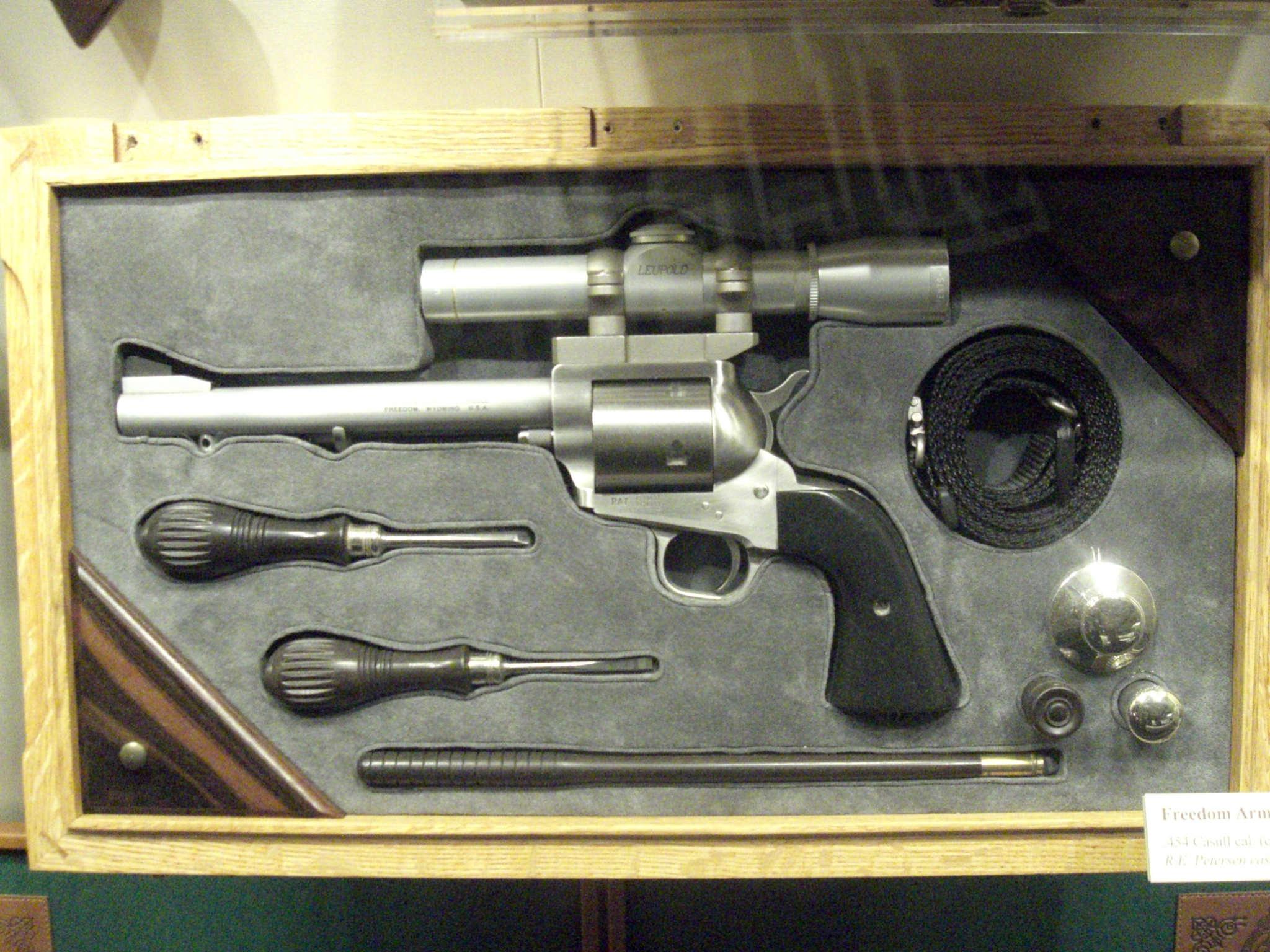
The Freedom Arms Model 83 occupies a more specialized corner of American shooting culture, but its influence is undeniable among serious revolver enthusiasts. Known for precision manufacturing and extraordinary strength, it became a benchmark for single-action performance in powerful chamberings.
This is the revolver that reminds people how accurate a wheelgun can be when every detail is treated seriously. Hunters and silhouette shooters have long valued the Model 83 for consistency, tight tolerances, and a level of fit that feels almost surgical.
It is not the most common revolver on this list, but it absolutely belongs here. The Model 83 proved that the American revolver tradition still had room to evolve upward into something truly elite.
Smith & Wesson Model 625

The Smith & Wesson Model 625 shows how adaptable the revolver remained even in the age of self-loading pistols. Chambered in .45 ACP and often used with moon clips, it brought big-bore authority and extremely fast reload potential to competition and range shooting.
That combination gave it a devoted following. Action shooters appreciated the smooth trigger and quick clip changes, while traditionalists enjoyed the novelty of a revolver that could run a familiar semi-auto cartridge so effectively.
The 625 still feels fresh because it combines classic mechanics with a surprisingly modern rhythm. It is proof that revolvers never stopped innovating, and that American shooters still make room for clever designs that are fun as well as practical.