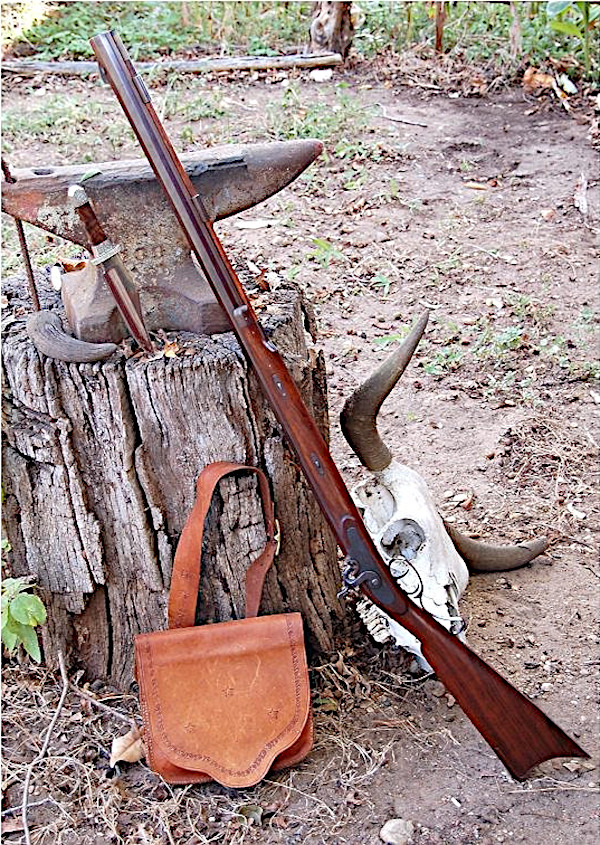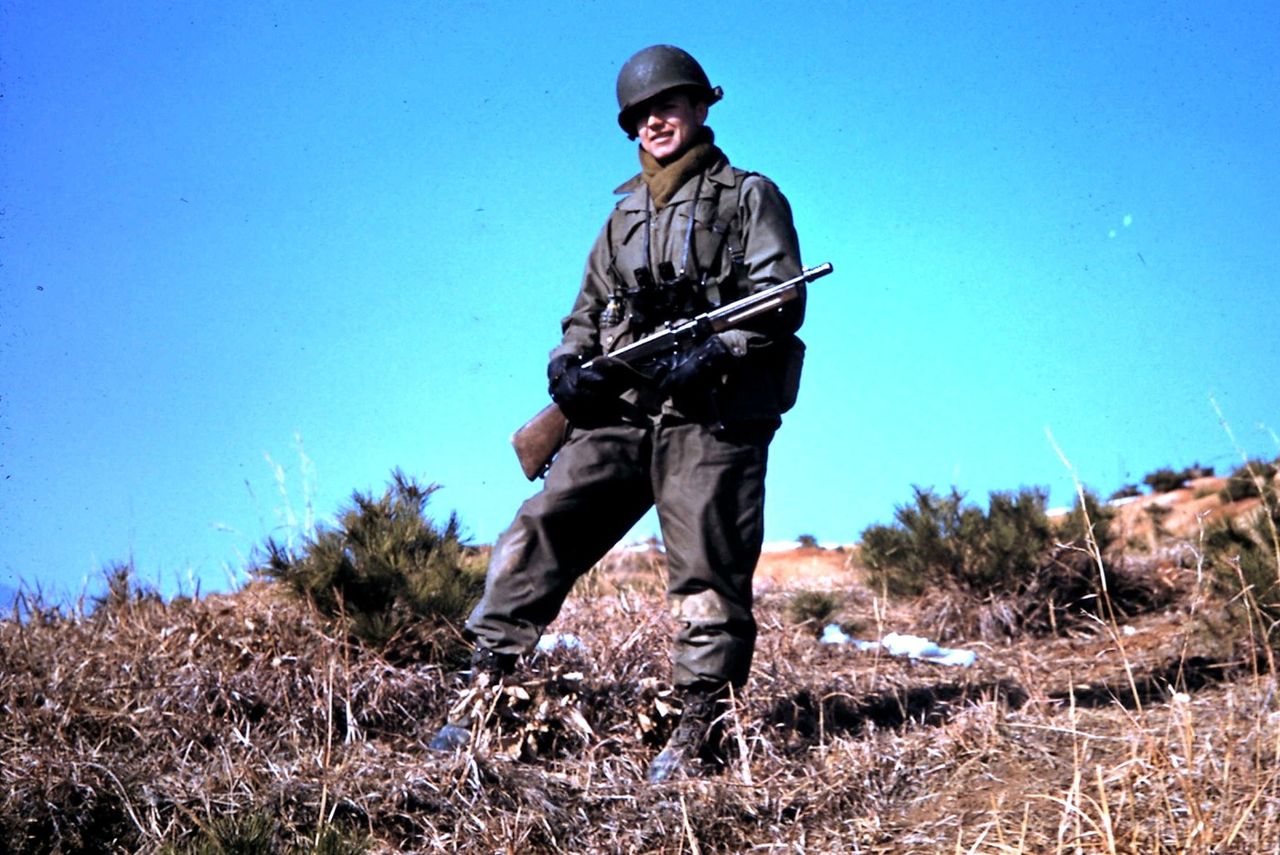
It was born from one war and made famous in another. The Thompson submachine gun is one of those rare firearms whose timing shaped its legend as much as its design.
A Gun Designed for the Mud and Chaos of Trench Warfare
John T. Thompson did not set out to build a gangster icon. He was trying to answer a brutal battlefield problem from World War I: how do you give infantry a compact weapon with far more close-range firepower than a bolt-action rifle? According to the U.S. Army Ordnance Corps, Thompson organized Auto-Ordnance in 1916 to develop just such a weapon, one intended for trench fighting and rapid assault work.
That mission explains the gun’s DNA. It was compact, shoulder-fired, and chambered in .45 ACP, a cartridge already proven in the M1911 pistol. In the tight confines of trenches, dugouts, and shattered urban spaces, Thompson believed a fast-firing arm using heavy pistol ammunition could overwhelm enemy positions more effectively than a long rifle.
The concept was so new that Thompson helped coin the very term “submachine gun.” That alone tells you how early this project was. He was not refining an established category. He was helping invent one.
Why the Thompson Missed World War I
The tragic irony is right there in the story’s title: the Thompson was built for World War I, but the war ended before the gun was ready. The Armistice took effect on November 11, 1918, and the Thompson prototype emerged too late to see service in that conflict, a point noted in U.S. Army historical material and echoed by later firearms historians.
That timing mattered enormously. Had the gun appeared even months earlier in meaningful numbers, it might have been remembered first as an American trench weapon rather than a Prohibition-era symbol. Instead, the war stopped, procurement priorities shifted, and a weapon designed for emergency battlefield need suddenly had to justify itself in peacetime.
In 1919, the arm was officially named the Thompson Submachine Gun, but commercial production did not begin immediately. Auto-Ordnance began producing and selling the gun in 1921, which widened the gap between its wartime purpose and its actual arrival.
What Made the Early Thompson So Different
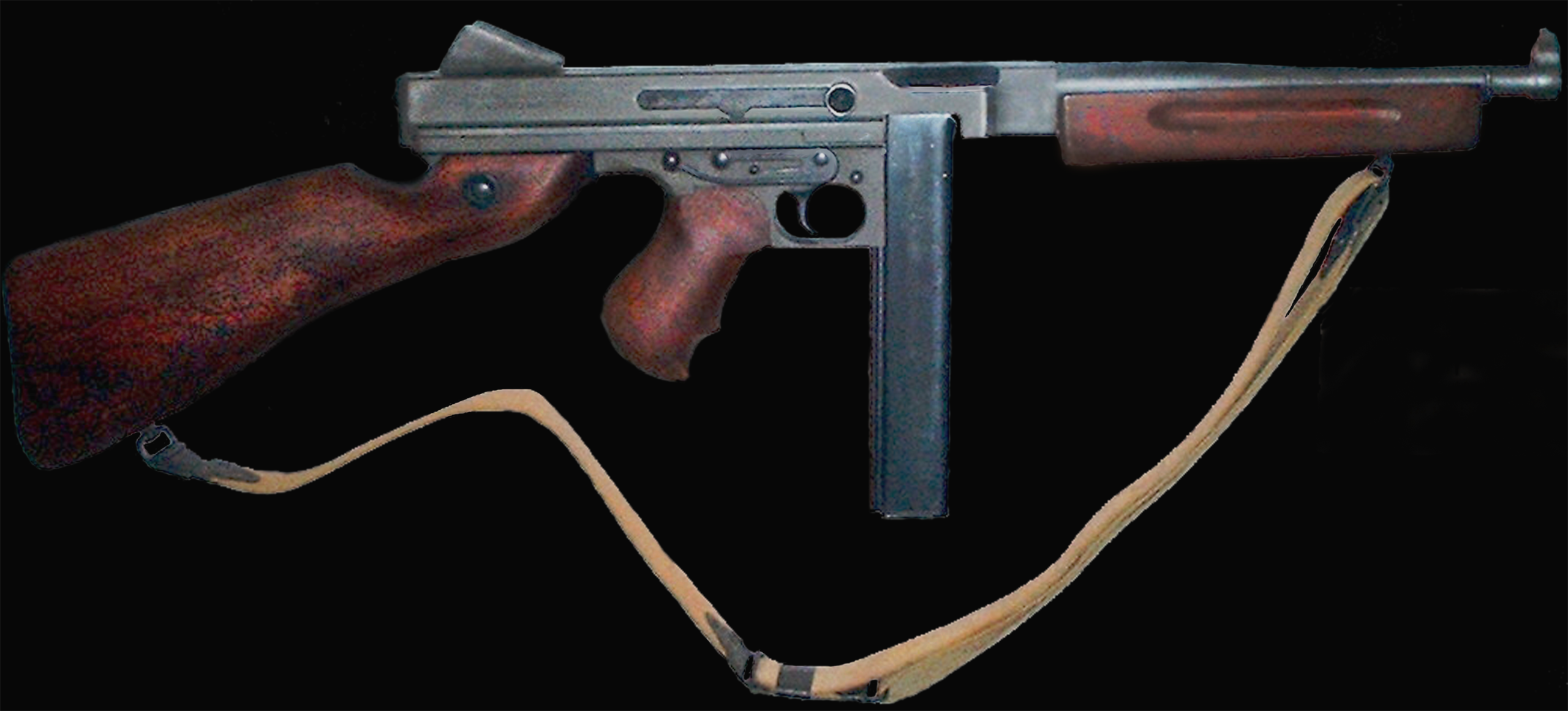
The early Thompson, especially the Model of 1921, was an ambitious piece of engineering. It fired from an open bolt and used the Blish locking system, a mechanism once believed to help delay opening under pressure. Later military Thompson variants would move away from that complexity, but in the beginning it was central to the design.
It was also chambered for .45 ACP and delivered a notably high cyclic rate. American Rifleman notes the Model of 1921 ran at roughly 800 rounds per minute, which made it extremely lively in the hands and very effective at short range, though also harder to control than later slowed-down versions.
Visually, the Thompson looked the part of a premium firearm. Early guns featured machined receivers, finned barrels, and, depending on configuration, distinctive foregrips and drum or box magazines. All of that gave it a powerful identity, but it also made the gun expensive and labor-intensive compared with the simplified wartime submachine guns that would follow.
From Trench Broom to Commercial Curiosity
Thompson reportedly promoted the concept as a “trench broom,” a vivid phrase that captured the gun’s intended role in clearing enemy positions at close quarters. But after World War I, many armies were still conservative about ammunition consumption, doctrine, and the place of automatic shoulder arms below the rifle-caliber machine gun. That slowed adoption.
Without a major war driving urgent purchases, the Thompson entered a strange middle period. It attracted attention from police agencies, security forces, and some foreign buyers, but the United States military did not immediately embrace it on a large scale. The gun was innovative, but innovation alone does not guarantee contracts.
There was another obstacle: cost. The beautifully machined Colt-made run of 15,000 guns in 1921 was high quality, but those weapons were expensive to manufacture. That limited broad uptake and left Auto-Ordnance with a product that was famous long before it was truly common.
The 1921 and 1928 Models Showed the Idea Maturing
The first big evolution came when the Navy asked for changes. In 1928, according to American Rifleman, the service wanted a lower cyclic rate of about 600 rounds per minute, a horizontal fore-end, and a Cutts compensator to help control muzzle rise. Those requests reflected a shift from flashy speed toward practical handling.
Those modified guns became the U.S. Navy, Model of 1928. Many were created by overstamping existing Model 1921 markings, a detail collectors still obsess over today. It sounds small, but it marks the transition from the original concept gun to a more mature service-oriented weapon.
Even then, demand remained modest. American Rifleman reports that the original 1921 Colt production run was enough to satisfy limited military and naval interest for years, right up to the edge of World War II. That says a lot about how slowly the military world came around to the Thompson’s basic idea.
World War II Finally Gave the Thompson Its War
The Second World War, not the First, turned the Thompson into a genuine military workhorse. On the eve of U.S. entry into the conflict, the Army standardized the M1928A1, and procurement expanded rapidly as modern combat once again proved the value of compact automatic fire at short range.
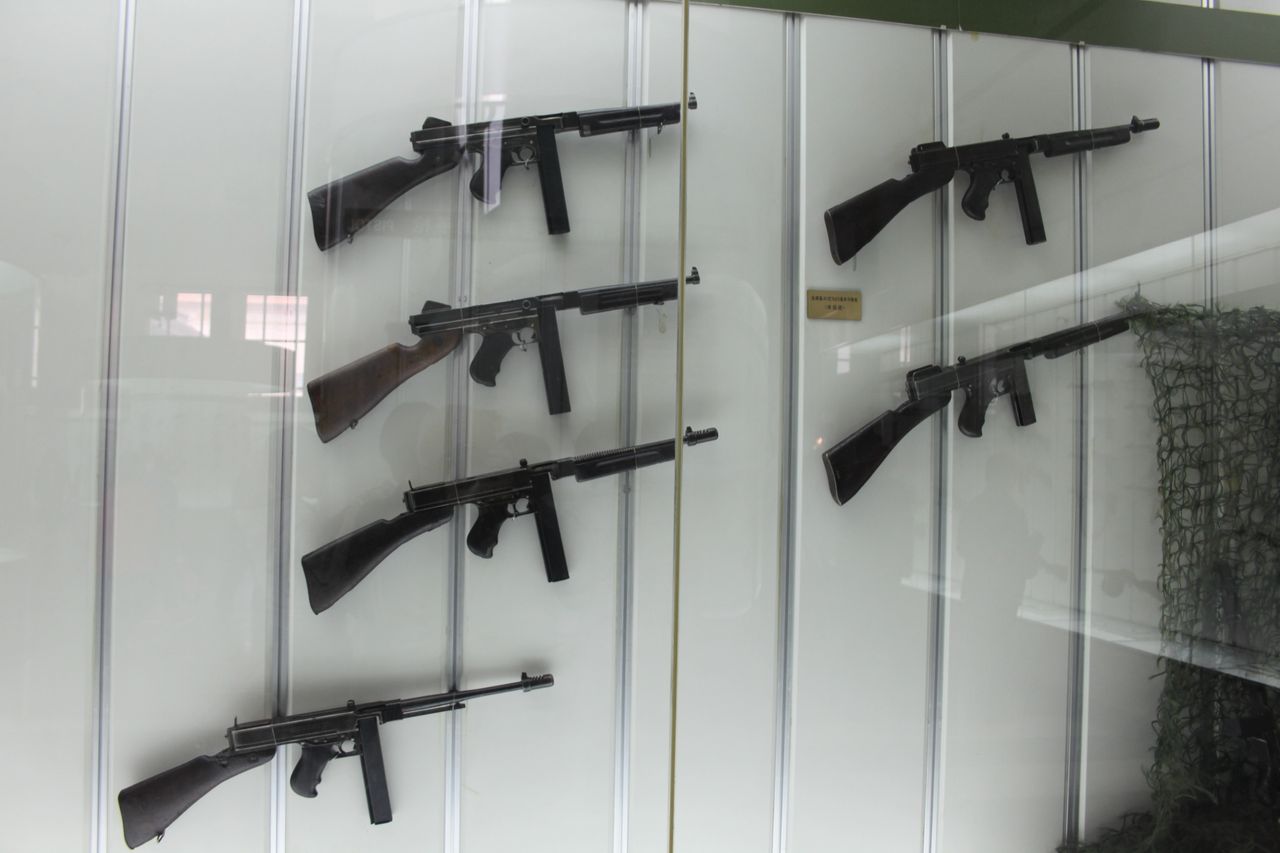
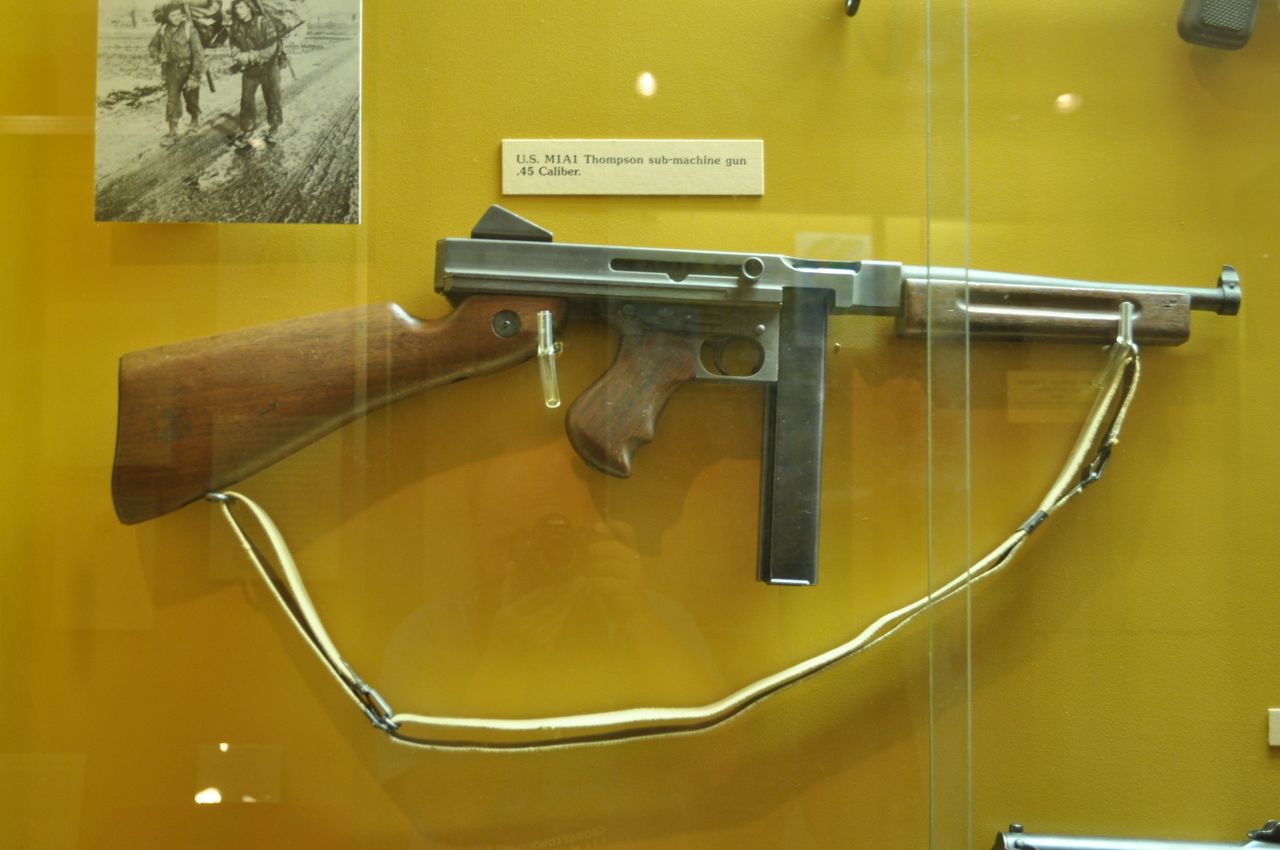
But the war also exposed the downside of Thompson’s original craftsmanship. The gun was rugged and effective, yet it was still expensive and relatively slow to make. That pressure led to simplified versions, including the M1, which discarded the Blish lock, removed the Cutts compensator, moved the charging handle to the side, and streamlined production.
In other words, the battlefield finally validated Thompson’s core idea, even as industry stripped away some of the elegant complications of the original design. The concept survived. The fine-machined prewar luxury did not.
Why the Thompson Still Fascinates People Today

The Thompson remains compelling because it sits at a crossroads of invention, timing, and myth. It was a gun designed for trench raids, introduced after the trenches had fallen silent, then absorbed into law enforcement, underworld lore, and finally full-scale military service in another world war. Few firearms have lived so many distinct lives.
Its mechanical story matters, too. The early Thompson represents an era when designers often solved tactical problems with machining skill and bold theory rather than pure manufacturing efficiency. Later guns were cheaper and simpler, but they rarely matched the original Thompson’s presence or ambition.
Most of all, the Thompson is memorable because its near-miss with World War I feels like one of history’s great what-ifs. Built for one conflict, delayed by just months, and immortalized by the next era that needed it, the Thompson became legendary precisely because it arrived at the wrong time first.