A great sniper rifle does more than shoot straight. Sometimes it exposes how quickly military technology can outrun the ranges, rules, and assumptions built around it.
A Rifle Born from a Real Battlefield Problem

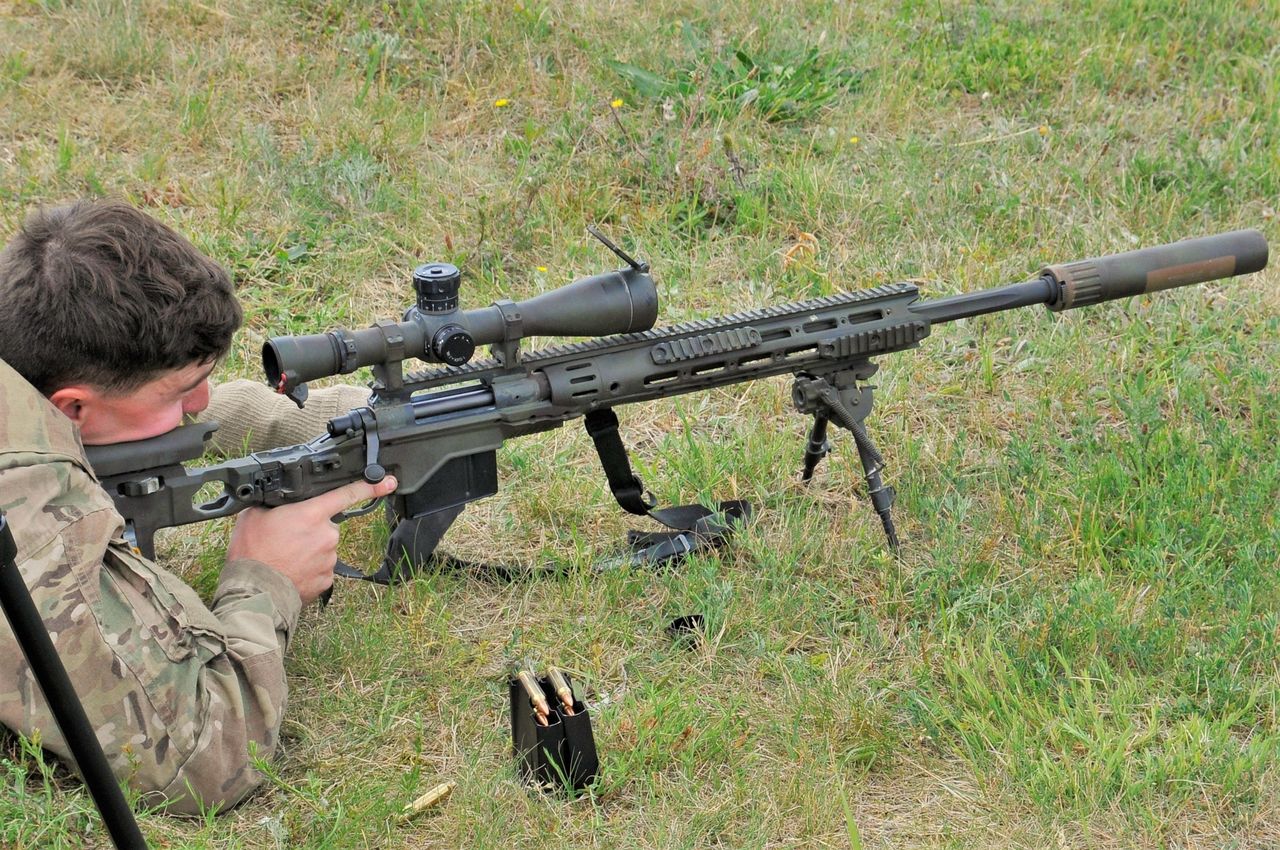
The story centers on the U.S. Army’s M2010 Enhanced Sniper Rifle, a major overhaul of the older M24 Sniper Weapon System. According to PEO Soldier, it was a rebuilt M24 rechambered for .300 Winchester Magnum and paired with improved optics and accessories. That sounds incremental, but it changed what Army snipers could realistically do.
The older M24 was respected, yet its effective range sat around 800 meters in its original 7.62×51mm NATO form. Army reporting from the 2010 upgrade period made clear that the service wanted more reach without jumping all the way to the heavier .50-caliber class. The M2010 was the answer to that middle-distance gap.
Once fielded, the rifle gave snipers a system rated to 1,200 meters. That 50% jump mattered in Afghanistan, where long sight lines and mountain terrain punished anything short-legged. In plain language, soldiers were suddenly equipped to hit farther, faster, and with more confidence than the Army’s existing training culture had fully prepared for.
Why Accuracy Created a New Kind of Problem
Most people assume better accuracy only makes testing easier. In reality, exceptional precision can make old test methods look crude. When a rifle consistently outshoots the assumptions behind a qualification course or range design, the bottleneck stops being the weapon and starts being the facility.
That was the challenge with modern long-range systems like the M2010. Army materials and training articles repeatedly emphasized its 1,200-meter reach, while many legacy ranges and sniper programs had been built around shorter practical envelopes. A rifle can only prove its value if the range has the distance, safety fans, instrumentation, and target visibility to support it.
This is where the phrase “too accurate for its own testing range” makes sense. It does not mean the gun was unusable. It means the Army had introduced a level of precision and reach that made some older range layouts feel undersized, especially when evaluators wanted to stress the weapon at the far edge of its capability.
The Technical Leap That Changed Expectations
The jump from 7.62 NATO to .300 Winchester Magnum was not cosmetic. It gave the M2010 more velocity, better retained energy, and improved performance at extended distances. Army and defense reporting described it as a way to stretch the sniper’s engagement window well beyond what the M24 routinely offered.
The rifle also benefited from an updated chassis, a free-floating barrel, suppressor compatibility, detachable box magazine feeding, and improved day optics. Those details matter because precision is never just about one part. It is the sum of ammunition, barrel quality, stock geometry, optics, and repeatable shooter interface.
Even official and semi-official descriptions stressed measurable standards, including roughly 1 MOA-class expectations in testing. For a general audience, that means the rifle was designed to keep shot groups tight enough at long distance to make real battlefield hits more predictable. At that point, the range itself becomes part of the accuracy equation.
Training Ranges Had to Catch Up

Military organizations often modernize in layers. First comes the urgent battlefield requirement, then the procurement, then the training doctrine, and only afterward the range upgrades. The M2010 fit that pattern. It arrived quickly because combat conditions demanded it, but infrastructure naturally moved more slowly.
Army reporting over the years showed repeated attention to sniper range modernization. A 2025 Army article about Fort Benning, now Fort Moore, described efforts to modernize ranges for next-generation sniper weapon training and noted that ranges must change as the battlefield changes. That is a quiet admission that weapons had already outrun parts of the old system.
In other words, the rifle was not literally too good to test. It was too capable for some inherited training spaces to test properly at full value. That distinction matters, because it turns the story from a gimmick into a useful case study in how real military innovation works.
What Soldiers Actually Needed from It
Snipers do not care much about marketing language. They care about first-round hit probability, wind calls, concealment, and whether the rifle performs after hard use. Army accounts from fielding and training described the M2010 as giving soldiers more control over larger battlespaces, especially in terrain where enemies could stay beyond older comfort zones.
That extra reach also reduced the need to close distance in exposed conditions. In Afghanistan especially, that was not just convenient. It could be lifesaving. A rifle that stays supersonic longer and carries better ballistic performance gives the shooter more margin for error in difficult wind and altitude conditions.
There is also a psychological component. Confidence in equipment changes decision-making. When a sniper team trusts that its rifle can make the shot, planning becomes more flexible. The M2010 earned that trust precisely because it brought elite long-range capability into a more standardized Army package.
The M2010 Was a Bridge, Not the Final Answer
As strong as the M2010 was, it was not the endpoint. Army documents later pointed toward newer systems such as the MK22, intended to push sniper effectiveness even farther, including at extreme ranges approaching 1,500 meters. That shows how quickly the standard moved once .300 Winchester Magnum proved what a medium-heavy precision rifle could do.
Seen that way, the M2010 was a transitional powerhouse. It bridged the world between the classic M24 era and the current push toward more modular, more adaptable, and farther-reaching sniper platforms. It solved one generation’s problem while revealing the next one.
That is often how military progress happens. A successful weapon does not just replace an older one. It changes doctrine, exposes infrastructure limits, and forces a fresh look at everything from optics to range construction.
Why This Story Still Matters
The M2010 remains a perfect example of technology outrunning the environment built to measure it. According to Army and defense sources, it offered a major increase in range and practical lethality over the M24. But the deeper lesson is not about one rifle model. It is about systems thinking.
A precision rifle is only as useful as the ammunition supply, optics support, sniper school, and range network behind it. If any one piece lags, performance on paper does not fully translate to performance in the field. The M2010 showed what happens when the hardware moves first, and the rest of the machine scrambles to keep up.
So yes, this was the sniper rifle that was “too accurate for its own testing range.” Not because it broke physics, but because it pushed past the boundaries of the old framework. And that is usually the clearest sign that a weapon has truly changed the game.