It looked like tomorrow had arrived early. Then the Army took a harder look and decided the future could wait.
The Rifle That Seemed Destined To Win
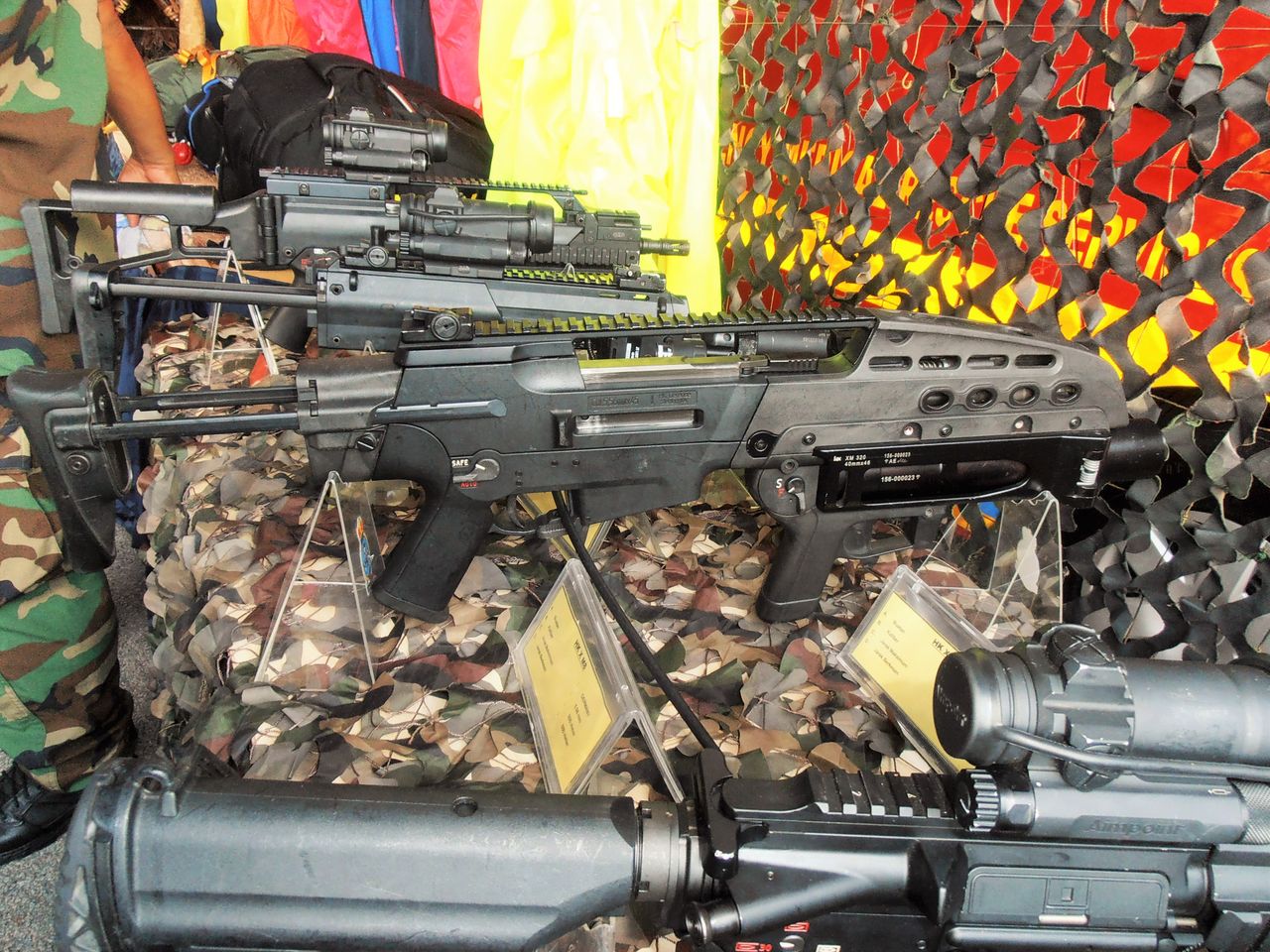
The XM8 was supposed to be more than just another carbine. It grew out of the Army’s larger Objective Individual Combat Weapon effort, specifically the 5.56mm rifle portion of the troubled XM29 program, after that larger over-under weapon proved too heavy and too complex for practical field use.
By the early 2000s, the Army was openly describing the XM8 as a lighter, more advanced family of weapons. Budget documents for fiscal year 2005 said it offered improved features over the M4, and Army planning envisioned multiple variants including a baseline carbine, compact model, sharpshooter version, and automatic rifle.
That mattered because the sales pitch was compelling. One core design could cover several infantry roles, simplify training, and give soldiers a modern-looking platform with integrated optics, rails, and polymer-heavy construction at a time when the M16 and M4 family already felt old to many observers.
Why The XM8 Got So Much Attention

Part of the XM8’s appeal was timing. The wars in Iraq and Afghanistan had put intense pressure on the Army to improve what soldiers carried, and programs promising lighter gear, better ergonomics, and faster target engagement naturally drew attention from senior leaders and lawmakers.
The rifle also benefited from being tied to a broader vision of leap-ahead infantry weapons. Army publications in the early 2000s presented the larger OICW concept as a major jump in lethality, and when the full XM29 stumbled, the XM8 looked like a salvageable near-term winner from an otherwise overambitious project.
Congress was paying attention too. In 2004, conferees encouraged the Army to accelerate fielding of the XM8 family and requested a report on plans to begin fielding it, a sign that the weapon had moved well beyond obscure prototype status and into serious institutional conversation.
The Trouble Beneath The Hype
The problem was that buzz and adoption are not the same thing. A 2006 Defense Department Inspector General report said the program office had proceeded without fully developed and approved requirements, and in some cases accepted contractor-driven specifications instead of warfighter-approved needs.
That is a giant red flag in Pentagon acquisition. A rifle can look promising on the range, but if the requirement is fuzzy, the entire procurement can become vulnerable to internal criticism, outside protest, and simple doubt about whether the Army is buying the best weapon or just the one that arrived first.
There were also practical concerns. The XM8 had developmental issues tied to weight goals and heat resistance, and its path forward became harder once the Army’s desired “family” of weapons shifted, including interest in a light machine gun model that did not fit neatly with the original XM8 package.
Testing Helped And Hurt The Case

Like many weapons programs, the XM8 generated claims and counterclaims. It performed well enough in various evaluations to build a loyal following, and cold-weather testing in Alaska was serious enough that Army outlets highlighted soldiers putting prototypes through their paces under demanding conditions.
But technical comparisons did not settle the matter. In the Army’s 2007 Extreme Dust Test III, the XM8 posted fewer stoppages than the M4, yet the Army also emphasized that soldiers still had high confidence in the M4 and treated the results as one piece of a larger modernization debate rather than a knockout blow.
That is the key point people miss. Better numbers in a limited test do not automatically force a service-wide replacement, especially when doctrine, sustainment, cost, industrial competition, and upgrade paths for the incumbent rifle all pull in the opposite direction.
Why The Army Changed Its Mind
By 2005, momentum had begun to crack. According to Congressional Research Service reporting, the XM8 was close to approval, but acquisition disputes and bureaucratic conflict helped derail it, and the program was effectively canceled in October 2005 after already being put on hold earlier that year.
The Army also moved toward a broader competition rather than an XM8-driven path. That shift reflected a basic procurement reality: once leaders decide the requirement has changed, a seemingly favored design can lose its inside track almost overnight, especially when rival manufacturers push for a more open contest.
In other words, the Army did not simply wake up and dislike the rifle. It changed the question. Once the service wanted proof of a need for an entirely new family of small arms, with cleaner acquisition logic and broader competition, the XM8 no longer fit as neatly as it once had.
The XM8’s Real Legacy
The XM8 never became America’s next standard rifle, but it still mattered. It showed how strongly the military wanted modularity, lighter materials, improved optics integration, and a family-based approach long before those ideas became routine talking points in later small-arms modernization efforts.
It also became a cautionary tale. A weapon can be promising, photogenic, and politically attractive, yet still die if requirements are unsettled, oversight gets sharper, and the service decides upgrades to an existing platform are less risky than betting on a fresh replacement.
That is why the XM8 remains fascinating. It was not a joke, not vaporware, and not a mere side note. For a moment, it looked like the future of the American infantry rifle. Then the military changed its mind, and that decision became the XM8’s defining story.