Some rifles sell on nostalgia. This one sold on proximity to a military future that suddenly felt very real.
The Brand At The Center Of The Story
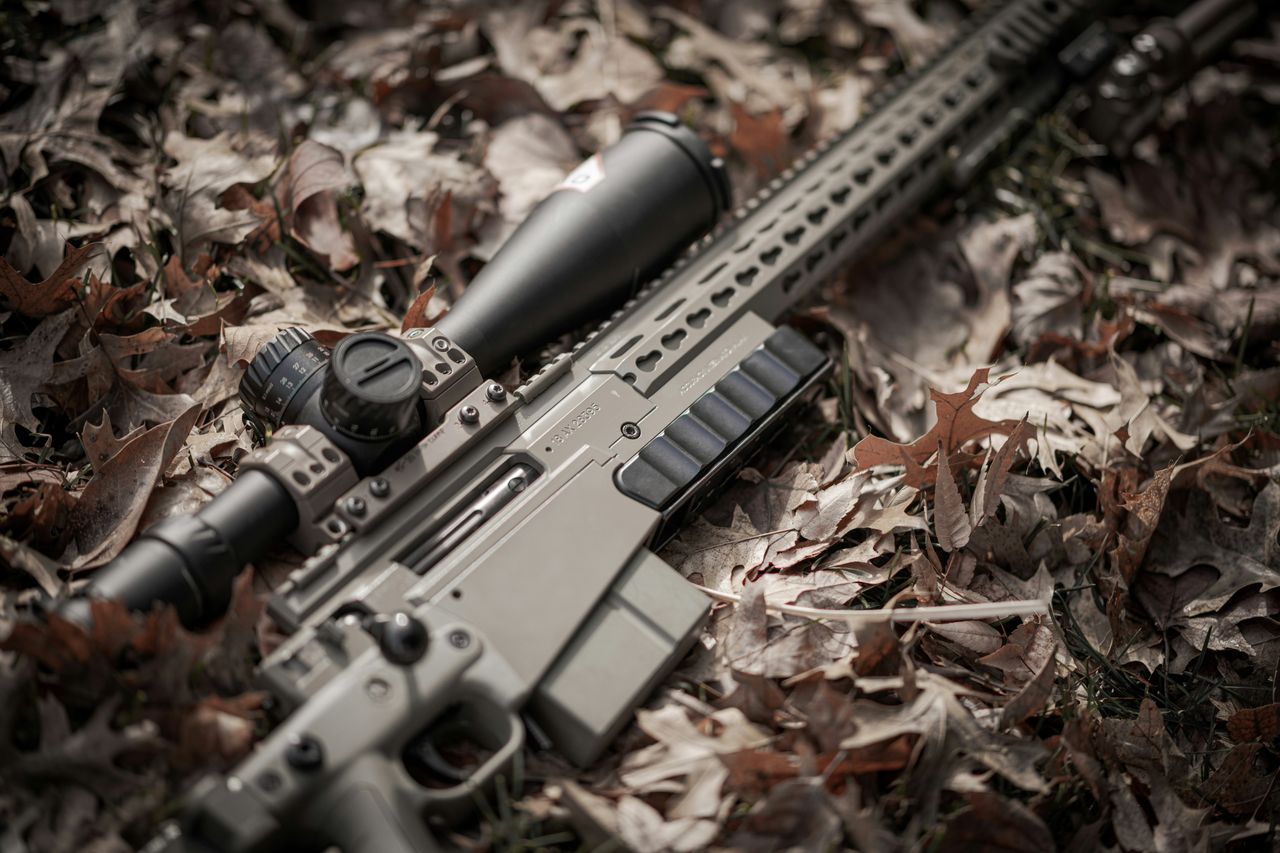
If you are looking for the rifle brand that best fits this headline, it is Sig Sauer. More specifically, it is the MCX-SPEAR family, the commercial branch of the rifle lineage tied directly to the U.S. Army’s Next Generation Squad Weapon effort. In April 2022, the Army announced that Sig Sauer had won the production contract for the XM5 rifle and XM250 automatic rifle after a 27-month prototyping and evaluation process, a huge milestone in modern small-arms procurement.
That Army decision mattered beyond defense circles because it instantly turned Sig from a respected major firearms maker into the name attached to what many shooters saw as the next serious leap in infantry rifle design. The XM5 was later redesignated XM7, but the bigger point remained the same: Sig had built the rifle platform the Army wanted to move forward with for close combat units.
Sig did not keep that momentum locked inside military channels. In January 2022, even before the formal contract announcement, the company rolled out the MCX-SPEAR as a near-match commercial rifle tied to its NGSW submission. By February 2023, Sig formally introduced the MCX-SPEAR as the civilian version of the Army’s new rifle, making the connection unmistakable.
Why The Military Came So Close To A Bigger Shift
The Army’s interest was not just about buying a new rifle because the old one looked dated. The entire NGSW program was built around concerns that legacy 5.56mm systems were running out of headroom against modern body armor and at longer engagement distances. Sig’s answer was not simply a new gun, but a weapon-and-ammo package built around the 6.8x51mm hybrid cartridge and a higher-performance rifle system.
That is what made the MCX-SPEAR story so unusual. Civilians were not just buying a cool rifle with military styling. They were buying into a platform that represented a very specific doctrinal argument: more range, more retained energy, and more capability than the M4-era setup. According to the Army’s own contract announcement, the rifle, automatic rifle, and ammunition were all part of one integrated modernization push.
Still, “almost adopted” needs a little precision. The military did adopt Sig’s system for parts of the force, but not as an instant one-for-one replacement for every M4 in uniform. The Army stated the weapon would replace the M4 and M249 within the close combat force, which is a narrower and more realistic lane than a universal overnight swap. That distinction is important, because the mystique of the rifle often outran the details.
Why Civilian Buyers Moved So Fast

Civilian demand surged for a simple reason: this was one of the rare times gun buyers could get something that felt genuinely adjacent to a major U.S. military rifle program while the news was still fresh. Sig’s own launch language leaned into that fact, describing the first production MCX-SPEAR as a near match to its NGSW-R submission. For enthusiasts, collectors, and serious shooters, that kind of proximity is irresistible.
There was also a prestige effect. Gun buyers tend to pay attention when a company wins a military trial, especially one this public and technically ambitious. The old assumption is that military contracts do not automatically prove a rifle is best for civilians, and that is true. But the market still treats a major service win as a credibility signal, especially when it involves durability testing, soldier feedback, and years of development.
Then there is the practical side of the gun itself. The commercial MCX-SPEAR brought together features that appeal strongly to today’s rifle buyer: short-stroke gas piston operation, ambidextrous controls, a folding stock, modular caliber options, and the broader MCX family’s reputation for adaptability. Even shooters who had zero intention of touching 6.8×51 were interested because the rifle represented premium modern design in a category crowded with conventional AR variants.
What Buyers Were Really Paying For
A lot of people assumed they were paying mostly for branding, but that undersells the package. The MCX-SPEAR was expensive because it sat at the intersection of advanced materials, a premium operating system, and small-volume early-market production. Sig positioned it as a flagship rifle, not a budget path into military aesthetics. That matters, because part of the demand came from buyers who wanted top-shelf engineering as much as the Army connection.
The cartridge story also added to the fascination. Sig’s 277 Fury, tied to the same development arc as the 6.8 hybrid military round, promised velocity and energy numbers that got shooters talking immediately. Not every buyer wanted to live with the cost and logistics of a fresh cartridge ecosystem, but many loved the idea of owning a rifle built around the same performance problem the Army had been trying to solve.
There is a collector mentality in the gun world that often gets overlooked by outsiders. People buy rifles not just to hunt, compete, or defend property, but to own a milestone. The first wave of MCX-SPEAR interest had a lot of that energy. Buyers saw a chance to own a firearm linked to a major procurement turning point, and they treated it less like another black rifle and more like the front edge of a historical chapter.
The Gap Between Military Hype And Civilian Reality

For all the excitement, the civilian market quickly ran into the usual truth: a military-adjacent rifle is not automatically the best rifle for every private owner. The Army’s use case involves suppressors, optics integration, combat loadouts, and battlefield concerns that do not map neatly onto deer camps or public ranges. A heavy, expensive rifle chambered for hard-hitting ammunition can be deeply interesting without being the obvious choice for ordinary recreational use.
That does not mean the enthusiasm was irrational. It means buyers were often chasing a mixture of performance, identity, and novelty. Some wanted a serious long-range-capable semiauto with battle-rifle authority. Others wanted the cachet of owning the rifle everybody was discussing after the Army’s selection. In the firearms market, those motives often stack on top of one another rather than competing.
There is also the issue of maturity. Early versions of any hot platform can attract buyers before the broader support ecosystem catches up. Ammunition cost, spare parts familiarity, magazine preferences, and real-world user feedback all tend to settle over time. The MCX-SPEAR benefited from Sig’s broader MCX experience, but civilian buyers were still stepping into an evolving platform rather than a fully settled commodity rifle.
How Sig Turned A Contract Into A Consumer Event
Sig Sauer understood the assignment better than many gun companies would have. Rather than treating the Army win as a sealed military accomplishment, it translated that development story into a consumer narrative almost immediately. The company framed the MCX-SPEAR as the next generation arriving now, not years down the line. That is powerful marketing, but it only works if the product underneath the message feels credible.
The company also benefited from timing. By the early 2020s, the civilian rifle market had matured to the point where buyers were fluent in terms like modularity, piston systems, suppressor compatibility, and caliber flexibility. In other words, Sig was not trying to sell a futuristic concept to an unprepared audience. It was offering an advanced rifle to consumers already primed to appreciate technical differentiation.
This is why the rifle moved beyond pure niche status. The story had layers: military validation, modern design, limited early availability, and a brand with enough manufacturing scale to actually deliver product. According to Sig’s own product announcements, the MCX-SPEAR arrived in commercial calibers including 7.62 NATO and 6.5 Creedmoor, with 277 Sig Fury also part of the platform conversation. That broadened its appeal beyond those fixated only on the Army cartridge angle.
The Real Legacy Of The Rifle Civilians Grabbed Early

The bigger lesson is not just that civilians bought a military-linked rifle quickly. It is that they bought into a shift in what a premium semiautomatic rifle could represent. The MCX-SPEAR was part technology statement, part military artifact-in-waiting, and part signal that the black-rifle market still responds when something genuinely new shows up. Most “next big things” in guns are incremental. This one at least arrived with a serious procurement story behind it.
Whether the MCX-SPEAR becomes a permanent classic or a fascinating transitional rifle will depend on how the platform ages, how ammunition support develops, and how deeply the Army ultimately institutionalizes the XM7 family. But the early civilian rush already tells us something important: buyers recognized that this was not just another marketing refresh with a tougher name and a cerakote finish.
So yes, the rifle brand the military almost adopted in the broad pop-culture sense, and that civilians bought up anyway, was Sig Sauer. More accurately, it was Sig Sauer with the MCX-SPEAR, the commercial cousin of the Army’s XM7 path. That combination of near-service pedigree, technical ambition, and first-wave scarcity made it one of the clearest examples in recent memory of military development driving civilian desire almost in real time.