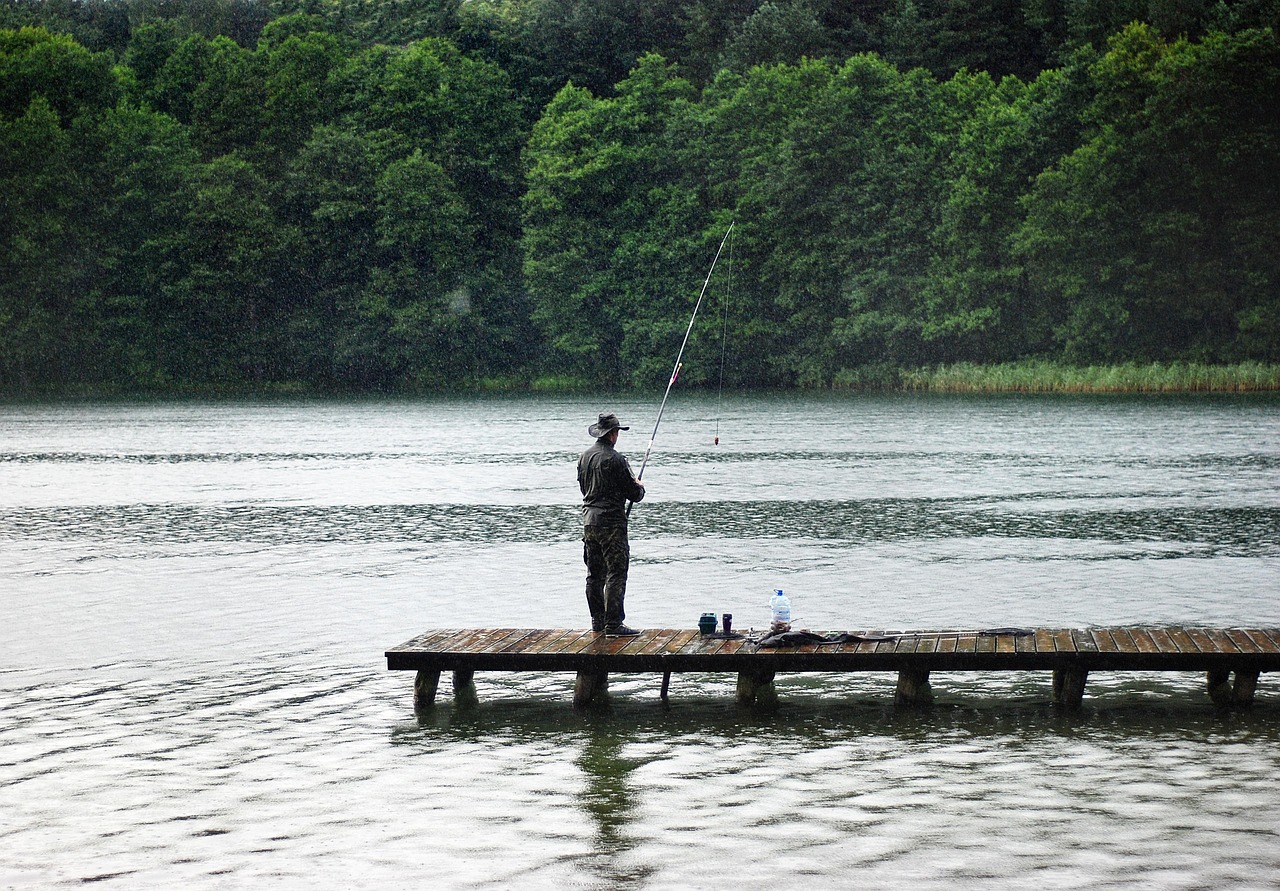
Some fishing hobbies are relaxing. Muskie fishing is closer to an obsession.
The fish is rare, difficult, and built for mythology.
Muskies have long carried the nickname “the fish of 10,000 casts,” and that reputation is not marketing fluff. Minnesota’s Department of Natural Resources openly describes muskellunge as perhaps the state’s most difficult fish to catch, while also managing them as a low-density fishery designed to produce larger fish rather than lots of bites. That scarcity matters because it turns every encounter into a story, not just a catch.
Wisconsin, where the musky is the official state fish, has spent decades managing for quality fisheries rather than mass harvest. State information notes that earlier eras with lighter regulations and little catch-and-release once produced annual harvests above 65,000 fish, a number that highlights how dramatically the culture has changed. Today, the prestige lies in finding, moving, and releasing a giant, not filling a cooler.
That mix of rarity and size gives muskies a near-mythic pull. Ontario’s muskie management materials have pointed to high-quality fisheries where even modest catch rates can still produce fish over 40 inches and occasional 50-inch-class giants. For anglers, that creates a powerful psychological loop: low odds, high stakes, unforgettable payoff. Mainstream outdoors media often struggles with sports that are exciting precisely because success is uncommon, but that is exactly what makes muskie anglers so devoted.
The community is not casual, and that is the point.

Most recreational fishing can support a broad, occasional audience. Muskie fishing usually does not. The time commitment, specialized tackle, seasonal knowledge, and acceptance of failure all act like filters, and the people who stay become deeply invested. That is how a niche turns into a cult following.
Muskies, Inc. remains one of the clearest examples of that intensity. The organization’s site says members have logged more than 453,000 muskies caught and released in its Lunge Log, and the group has built a national chapter structure around conservation, education, outings, and fishery support. This is not fan behavior in the casual sense. It is a self-sustaining subculture with institutions, rituals, and its own vocabulary.
Local chapters reinforce that identity in practical ways. Twin Cities Muskies, Inc., for example, describes direct support for stocking, hatcheries, youth events, and veteran outings. The organization’s own history also matters because it helped popularize catch-and-release well before that ethic became mainstream in freshwater fishing circles.
That helps explain why muskie anglers often seem more like members of a scene than buyers in a market segment. They gather around winter shows, chapter banquets, release photos, handmade lures, and lake-specific intelligence. The mainstream outdoors industry tends to chase large participation categories, but muskie culture generates something just as valuable: unusually high engagement per person.
Conservation is not a side note; it is the brand.
A big reason muskie fishing has earned loyalty is that the modern version of the sport is built around stewardship. In many fisheries, the goal is not harvest but sustaining a population of older, larger apex predators. That changes how anglers think about gear, handling, regulations, and even bragging rights.
Minnesota finalized a long-range muskie plan in April 2026 and said it manages 101 waters for muskies, representing only about 2% of the state’s fishable lakes and rivers but 22% of total fishable surface area. That number captures the species perfectly: not everywhere, but highly significant where it exists. Management there includes habitat protection, stocking in select waters, research, monitoring, and outreach.
Wisconsin tells a similar story. The DNR emphasizes handling practices, research, and regulations designed around sustaining the state fish, while Michigan highlights world-class muskie opportunities in waters like Lake St. Clair and the Detroit River. In other words, the sport depends on public trust in science-based management, and anglers know it.
That conservation identity has become part of the sport’s appeal. Catch, photo, release formats are now standard in many events, and some tournaments have even moved to ban forward-facing sonar. When a niche polices its own ethics this aggressively, it builds stronger loyalty than a simple consumer hobby ever could. People do not just buy into muskies. They buy into a code.
Technology has made the sport hotter and more controversial.
One reason the mainstream industry has not fully caught up is that muskie fishing now sits at the intersection of old-school craft and cutting-edge electronics. That combination is magnetic. It also makes the sport harder to explain to outsiders who still imagine fishing as a folding chair and a bobber.
Forward-facing sonar has become the flash point. The Associated Press reported in June 2026 that the technology is spreading quickly, with Minnesota surveys showing roughly 30% of anglers using it and some lakes showing usage as high as 63% in one fall survey. Researchers and managers are now openly discussing species-specific effects, including future muskie work.
Among muskie anglers, the debate is especially intense because the species is scarce, valuable, and vulnerable during certain periods. Outdoor News and the Star Tribune both described the ethical fight over “sharpshooting” muskies in post-spawn periods, when concentrated fish can be easier to target. Minnesota lawmakers even saw a 2026 bill proposal aimed at restricting sonar use for muskellunge.
That kind of controversy actually feeds the cult status. Subcultures thrive when members feel they are protecting something authentic from becoming too easy, too commercial, or too technological. Muskie anglers are not just buying electronics or resisting them. They are arguing over the soul of the sport, and that gives the whole scene unusual energy.
The economics are small in volume but huge in intensity.
The outdoors business often misreads muskie fishing because it looks small in participation terms. Broad fishing numbers are enormous. The latest national participation reporting tied to ASA and RBFF says 57.9 million Americans fished in 2024. In a market that large, muskie anglers are easy to overlook if you only count heads.
But muskie fishing is a terrible category to judge by headcount alone. The average participant spends more on rods, reels, giant lures, release tools, electronics, boats, travel, and guide trips than the average casual freshwater angler. A person chasing muskies may buy a dedicated net the size of patio furniture, own dozens of $20 to $50 baits, and travel across multiple states or provinces for seasonal windows.
That spending also concentrates geographically. Northern Wisconsin, Minnesota, Ontario, and Great Lakes destinations benefit from anglers who book cabins, hire guides, and return for specific bites on specific waters. Ontario’s tourism research infrastructure tracks the broader economic impact of travel, and muskie destinations fit neatly into that model of high-value regional recreation, even if they are not mass-market attractions.
So the industry lag is partly analytical. Mainstream outdoor brands are good at seeing scale, but muskie fishing monetizes passion. It is a smaller audience that behaves like a premium market, and those are often the most influential consumers in any enthusiast category.
Social media made muskies look cool without making them easy
For years, muskie fishing had an image problem. It could seem hyper-local, gear-heavy, and intimidating. Social media changed that by turning follows, figure-8 eats, boatside explosions, and giant release shots into highly shareable moments. The fish suddenly became cinematic.
What social media did not do was simplify the sport. If anything, it made the obsession more visible. New anglers can now watch day-by-day bait experimentation, moon-phase debates, trolling passes, electronics interpretation, and release protocols in real time. Instead of flattening the learning curve, content often reveals just how much there is to learn.
That is a powerful recruitment tool for a certain personality type. Some people see complexity and walk away. Others see a puzzle worth years of their life. Muskie fishing attracts the second group. It appeals to people who want a sport that stays difficult even after they spend money and put in time.
The result is a following that grows through fascination, not accessibility. Mainstream outdoor media usually know how to sell convenience, family fun, and quick success. Muskie culture sells earned success, difficult knowledge, and the chance to join a club that never feels fully conquered. That is a very different emotional product.
The real reason the cult keeps growing

The deepest reason muskie fishing is attracting a serious cult following is simple: it offers meaning in an era when many hobbies have been optimized into convenience. It remains stubbornly hard. You can improve your boat, your graph, your baits, your network, and your seasonal planning, and still get humbled for weeks.
That kind of difficulty creates identity. Muskie anglers do not just remember the fish they caught. They remember fish that followed, fish that vanished in the eight, missed strikes at boatside, cold fronts that killed a pattern, and one perfect evening window that made the whole season worth it. The suffering is part of the product.
The mainstream outdoors industry has not fully caught up because it tends to package recreation as frictionless enjoyment. Muskie fishing works the other way around. It turns friction into belonging. It asks more from people, and in return gives them stronger stories, tighter communities, and a deeper sense of earned expertise.
That is why the following feels cultish from the outside but perfectly rational from within. Muskie fishing is not growing because it is easy, trendy, or broadly approachable. It is growing because it offers something rare in modern outdoor life: a challenge big enough to organize a personality around.