Some handguns get purchased. The H&K VP9 tends to get adopted.
That difference explains why its owners often sound less like shoppers defending a purchase and more like longtime users defending a system.
It Starts With a Gun That Feels Right Faster Than Its Rivals
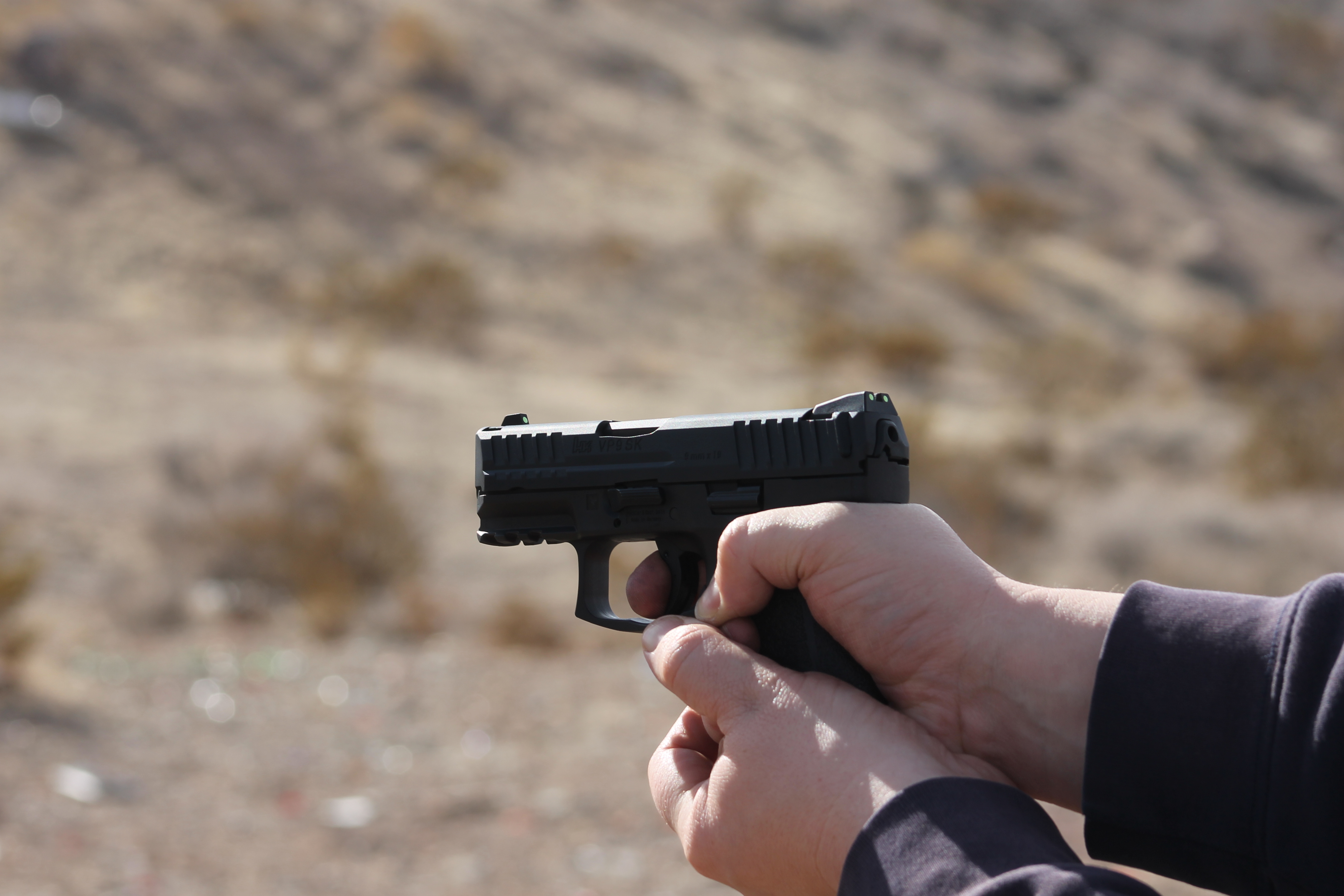
The easiest way to understand VP9 loyalty is to start with the first impression almost everyone mentions: the grip. When Heckler & Koch launched the VP9 in June 2014, it entered a market already packed with proven striker-fired 9 mm pistols, so it could not survive on brand mystique alone. It had to win in the hand, and it did. H&K built the VP9 around interchangeable backstraps and side panels, giving users more ways to tailor grip shape than many competitors in the same class, according to the company’s original launch materials.
That sounds like a small feature until you watch new shooters and experienced shooters arrive at the same conclusion from different directions. Beginners notice comfort and controllability right away. Experienced shooters notice trigger reach, palm swell, and how naturally the sights track during recoil. Those are not glamorous talking points, but they matter more than marketing slogans once live fire begins.
American Rifleman and Shooting Illustrated both emphasized this same trait in their VP9 coverage over the years: the pistol fits a broad range of hands unusually well, while still preserving duty-gun dimensions and practical control placement. In a category where many pistols are “good enough,” the VP9 often feels personally compatible from the first magazine. That creates attachment quickly, and loyalty usually begins with comfort that turns into confidence.
The Trigger Gives Owners a Constant Reason to Come Back
Ergonomics may start the relationship, but the trigger often seals it. From the beginning, the VP9 earned a reputation for a clean striker-fired trigger with short take-up, a crisp break, and a positive reset. H&K leaned into that quality in its product messaging, and later coverage from Shooting Illustrated and American Rifleman kept returning to the same point: the trigger is one of the reasons shooters stick with the platform instead of treating it like just another polymer pistol.
In practical terms, a better trigger does more than tighten groups from a bench. It makes training feel rewarding. If a shooter presses the trigger and gets predictable feedback every time, improvement becomes easier to measure. That matters for average owners, not just enthusiasts, because people tend to stay loyal to tools that help them perform well without drama.
The same pattern shows up in the newer VP9-family variants. In 2026, American Rifleman described the VP9CC as carrying the same short take-up, crisp break, and positive reset that made the larger VP9 line popular. That continuity matters. Owners do not feel like they are abandoning the characteristics they trust when they move from full-size to subcompact or compact-adjacent models. Loyalty grows when a product family keeps its core personality intact.
Reliability Is the Quiet Reason Loyalty Turns Into Trust
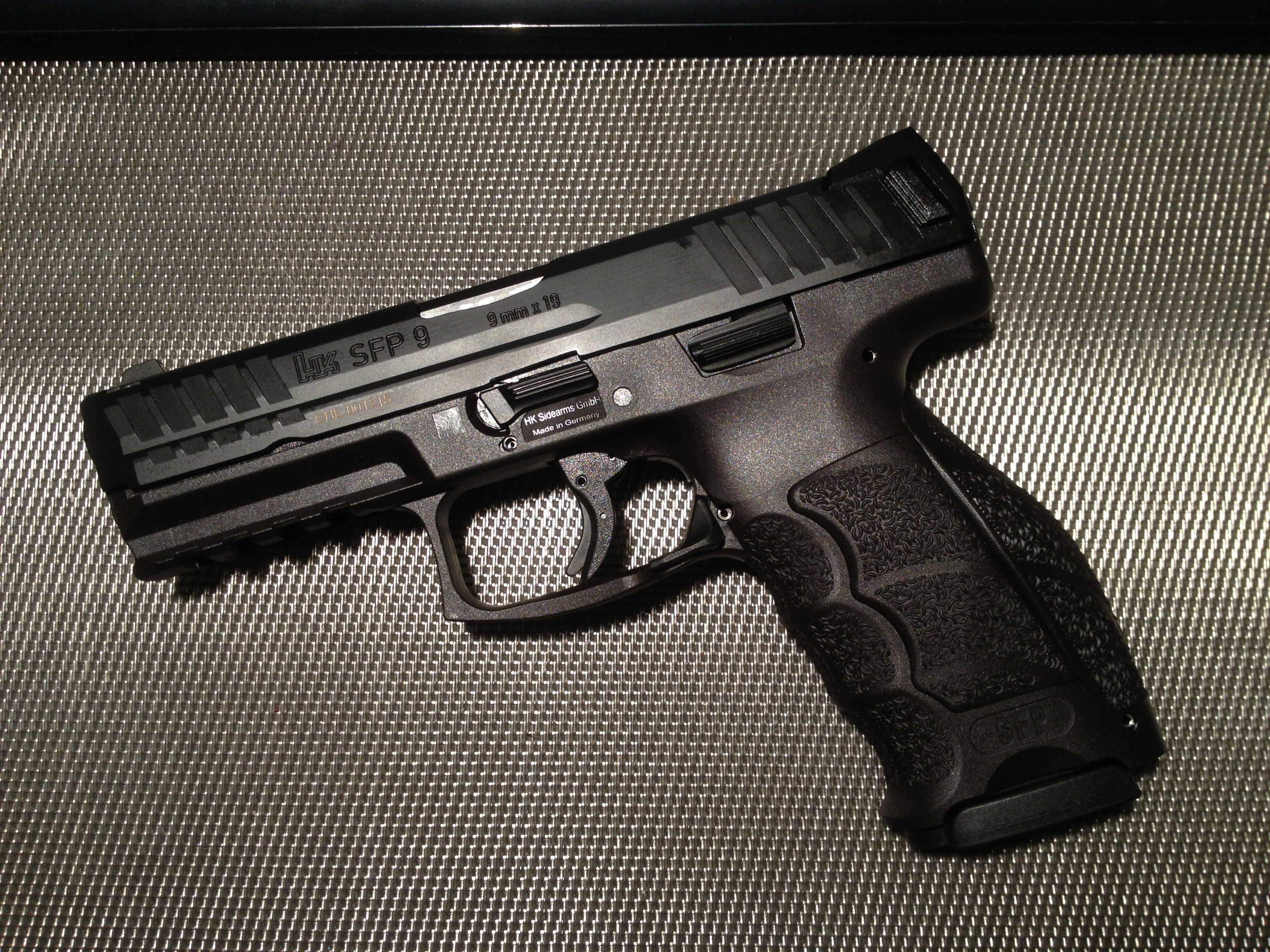
Most gun owners say they want reliability, but loyalty forms when reliability stops being a claim and becomes an assumption. H&K said at the VP9’s 2014 debut that the pistol had gone through NATO and NIJ drop tests, extreme-environment testing, durability shooting, and broad ammunition testing before release. Every manufacturer talks tough at launch, of course, but the VP9’s staying power suggests those promises translated into real-world confidence rather than brochure language.
That confidence has been reinforced by long-term use. Shooting Illustrated’s 2024 review of the VP9-OR described a training gun that had seen heavy class use and many thousands of rounds, the kind of detail serious handgun buyers pay attention to. The publication’s conclusion was telling: with its reliability and performance potential, it was easy to see why someone would commit to the VP9 family for the long haul.
This is the part many outsiders miss about loyal VP9 owners. They are not loyal because they think alternatives are bad. They are loyal because once a pistol proves itself across classes, range sessions, carry rotation, and defensive drills, switching starts to feel unnecessary. In a market overflowing with competent options, proven trust is more powerful than novelty.
The Controls Reflect a Philosophy, Not a Trend

Another reason VP9 owners become so committed is that the pistol feels deliberately engineered rather than trend-chasing. The VP9 family is known for ambidextrous slide releases, and many versions retain H&K’s paddle-style magazine release, a feature devotees often see as faster, cleaner, and less disruptive to grip once learned. Even shooters who prefer the push-button VP9-B variant usually acknowledge that H&K did not stumble into its control layout by accident.
That matters because controls shape how a pistol behaves under stress. According to H&K manuals and product materials, the platform was designed around bilateral operation, and American Rifleman has noted the same ambidextrous emphasis in newer VP9-family models. For left-handed shooters especially, that design choice can feel less like accommodation and more like respect.
The 2018 push-button supplement and later VP9-B models also show something else important about owner loyalty: H&K adapted without erasing the original concept. The company gave the U.S. market a more familiar button-release option while preserving the classic configuration for shooters who preferred it. That balance let the VP9 expand without alienating the very owners who made it a success in the first place.
H&K Turned the VP9 Into a Family Instead of a One-Off Hit
A handgun earns loyalty more easily when owners can stay inside the same ecosystem as their needs change. H&K understood that and kept extending the VP9 line instead of replacing it with something unrelated. Over time, the family grew to include optics-ready models, the VP9SK, long-slide and Match variants, button-release versions, and, more recently, the A1 updates and the 2026 VP9CC. That matters because it lets owners scale the platform to different roles.
The 2020 VP9 update from H&K added an optics-ready cut, a crucial move in a period when red-dot-ready pistols were becoming the new baseline. Instead of forcing loyal users to migrate to another brand for modern features, H&K modernized the VP9 where it counted. That preserved continuity while keeping the pistol relevant.
Recent H&K law-enforcement literature for the VP9A1 line lists optics-ready configurations and magazine options up to 20 rounds on full-size models, while still preserving the VP9’s established trigger and operating character. In plain English, owners are not trapped in the past. They can adopt current features without giving up the feel that made them choose the pistol in the first place.
The Brand’s Reputation Amplifies the VP9’s Appeal
It would be naive to ignore the H&K factor. Heckler & Koch has long carried a reputation for military-grade seriousness, hard-use engineering, and premium positioning. That image alone does not create loyalty, but when a product actually delivers on the expectations attached to the logo, owners become especially protective of it. The VP9 benefits from that dynamic because it feels like a true H&K, not a watered-down attempt to chase the striker-fired mainstream.
There is also an emotional component here. Buyers often approach H&K with the expectation that they are paying for refinement, not just function. If the pistol then proves accurate, reliable, adaptable, and easy to shoot well, the owner feels validated. That validation is powerful. It transforms a purchase into a judgment call that appears smarter over time.
American Rifleman recently called the VP9 one of the most successful handguns H&K has ever offered, and noted that the design is in use by military and law-enforcement organizations around the world. For owners, details like that reinforce the idea that they chose a platform with institutional credibility as well as personal appeal. Loyalty deepens when personal experience and brand reputation line up.
The Real Reason VP9 Owners Stay Loyal Is That the Gun Reduces Regret

In the end, the real reason VP9 owners are so loyal is simpler than fan culture makes it sound. The pistol minimizes second-guessing. It shoots well, fits a wide range of hands, offers a strong factory trigger, has a record for reliability, and now exists in enough configurations that owners can stay with the platform as their preferences evolve. In a market full of alternatives, that kind of completeness is rare.
Most handgun disloyalty comes from some unresolved compromise. Maybe the trigger is mediocre, the grip never quite fits, the controls are awkward, or the gun needs upgrades before it feels finished. The VP9 tends to avoid that trap. It often arrives feeling sorted out from day one, which means owners spend less time wondering what they should have bought instead.
That is why VP9 loyalty looks so strong from the outside. It is not blind devotion. It is the predictable result of a handgun that keeps confirming the original buying decision. When a product repeatedly proves that you chose well, loyalty stops being emotional and starts looking rational.