Appendix carry used to be the thing people argued about in classes, shops, and internet forums. Now it is the default recommendation for a huge slice of the concealed-carry world, and that shift says a lot about how gun culture changed.
It stopped being weird when the gear finally caught up.
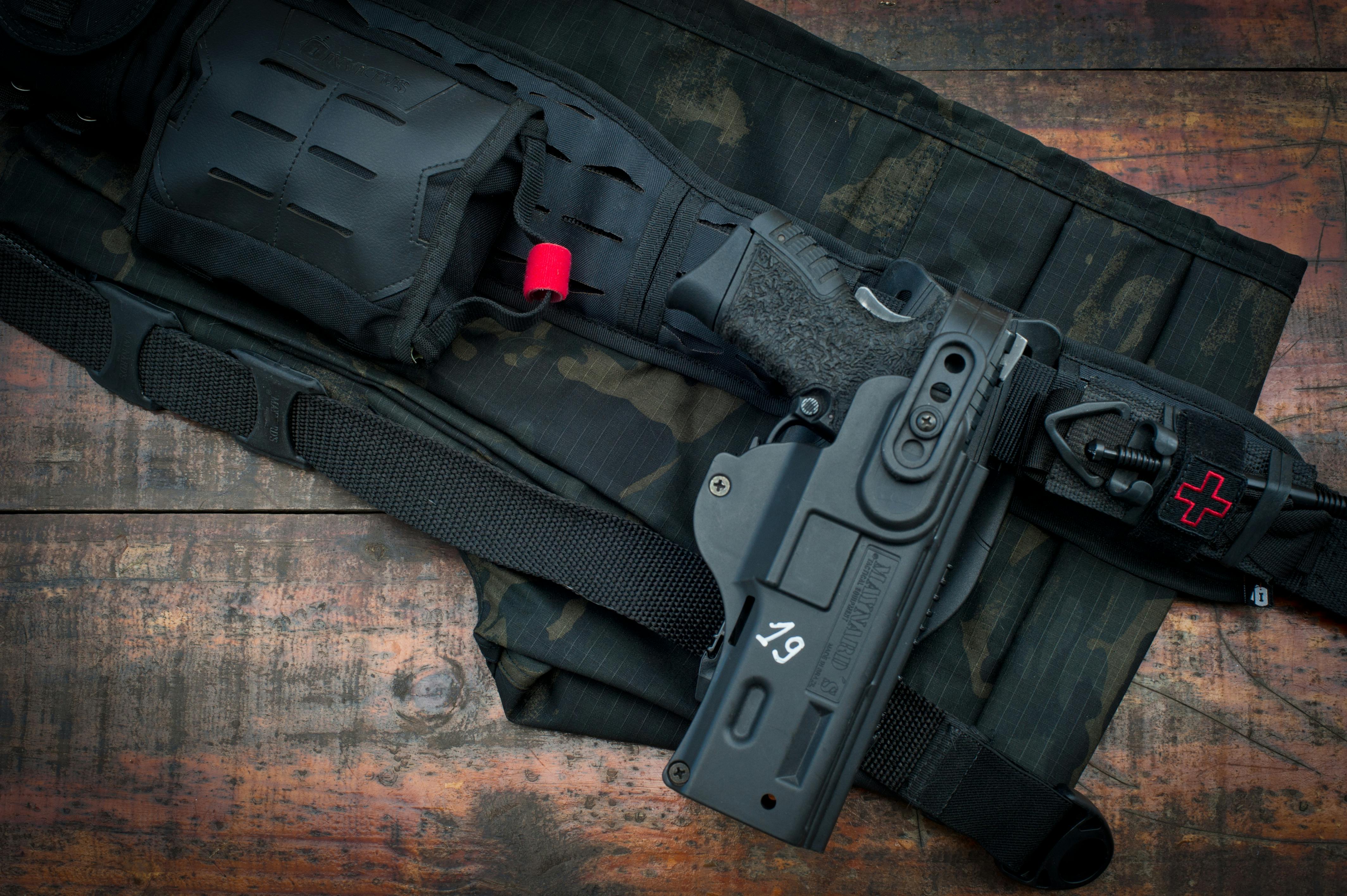
For years, appendix carry has had a reputation for being niche, uncomfortable, and a little reckless. A lot of that reputation came from older holster designs that were basically generic inside-the-waistband rigs shoved into a position they were never truly built for. People tried it, but they disliked the printing and the hot spots, and they went back to carrying behind the hip.
What changed was not a sudden revelation about tactics. It was product design. Companies like PHLster helped popularize a more systematic approach to appendix carry, especially the use of claws or wings to rotate the grip inward and wedges to push the muzzle out slightly so the gun is concealed flatter against the body. That sounds minor until you wear it for 10 hours and notice the difference.
The industry eventually realized appendix carry needed dedicated geometry, not marketing copy. According to PHLster’s appendix carry guide, ride height, grip rotation, and wedge placement are not accessories to the concept. They are the concept. Other companies followed with their own versions, and once the hardware improved, the carry method suddenly seemed much smarter rather than just more hardcore.
That is the hidden engine behind the trend. The mainstreaming of appendix carry was not really about bravery or operator culture. It was about better holsters solving old problems that many shooters had mistaken for flaws in the carry position itself.
The concealed-carry boom created the perfect market for it.
The second big driver was sheer scale. The modern carry market exploded, especially after 2020, when firearm sales and background checks surged, and millions of first-time buyers entered the market. Industry estimates cited by Fox Business, drawing on NSSF figures, said more than 8.4 million Americans bought a gun for the first time in 2020. FBI NICS data also showed an extraordinary volume of background checks in 2024, even with the usual caveat that checks are not the same as gun sales.
That matters because first-time carriers do not arrive with much loyalty to old carrier positions. They are not attached to the classic 4 o’clock strong-side setup just because that is how people carried in 1998. They want something concealable, accessible, and easy to make work with modern clothing.
As more states loosened carry laws, including the continued spread of permitless carry, the addressable market widened again. More people carrying meant more people searching for the least visible, most practical way to carry a compact handgun every day. Appendix carries met that demand almost perfectly.
Once a market gets that large, fringe methods do not stay fringe for long. They either fail publicly or get polished into mass-market products. Appendix carry clearly took the second path.
Social media and training culture normalized it fast.

The internet did for appendix carry what magazines and gun counters never could. It turned a debated technique into a visible, repeatable system. Instead of hearing one local instructor dismiss it, new carriers could watch hundreds of draws, concealment demonstrations, troubleshooting clips, and gear breakdowns across YouTube, Instagram, and training platforms.
That kind of visual proof matters. Appendix carry is easy to misunderstand in the abstract. It makes more sense when you can actually see how the grip hides under a T-shirt, how a claw changes the gun’s angle, or how a person can draw cleanly from a seated position in a car. A method that once sounded reckless started to look efficient.
Law enforcement and training voices also helped move it from the edge toward legitimacy. Officer.com described appendix carry as an emerging method several years ago, reflecting how the idea had moved into more formal professional discussion rather than remaining an internet subculture. SHOT Business went further in 2025, calling appendix carry the new favorite and arguing that women in particular helped drive the market toward better concealment solutions.
That last point is important. Once a carry method solves real-world concealment for more body types and more wardrobes, it stops being a fad. It becomes infrastructure.
The real appeal is concealment first, speed second
Plenty of people defend appendix carry by talking about faster access, especially from standing, seated, or belted positions. That is true, and it is part of the story. But speed is not the deepest reason it won. Concealment is.
Strong-side inside-the-waistband carry often struggles with the part of the handgun most likely to print: the grip. Appendix carry, especially with a claw, rotates that grip into the torso. Chambered’s glossary and PHLster’s guide both explain the same basic geometry. The muzzle gets leveraged outward just enough that the grip tucks inward, making the gun disappear better under light clothing.
That is why appendix carry spreads so effectively among people who wear fitted shirts, office casual clothing, athletic wear, or women’s clothing with less forgiving cuts and fewer belt-friendly options. PHLster’s Enigma system, which uses a beltless chassis concept, became especially influential because it widened the kinds of outfits in which a handgun could realistically be concealed.
So yes, appendix carry can be fast. But if it printed badly, pinched constantly, or only worked with oversized flannels, it would never have gone mainstream. It became dominant because it made discreet carry more achievable for everyday people living ordinary lives.
The backlash is about risk, culture, and trust.
Not everyone in the gun community is happy about that dominance, and not all of the objections are dumb. Some are cultural. Some are practical. Some are bluntly about fear.
The most obvious concern is safety. Critics dislike the muzzle orientation toward sensitive anatomy and worry that a negligent discharge during holstering could have catastrophic consequences. PHLster’s own safety guidance emphasizes slow, deliberate reholstering, visually confirming the holster opening, and avoiding the rushed, theatrical reholster that too often follows live-fire drills. Even many appendix-carry supporters admit the method demands seriousness.
There is also a tribal component. Appendix carry became associated with a newer training culture that often presents itself as more data-driven, more performance-focused, and less sentimental than older gun culture. For some longtime carriers, the message sounded less like “here is another option” and more like “you have been doing it wrong for 20 years.”
That tone created resistance. When a carry method becomes popular through evangelism as much as performance, backlash is inevitable. A lot of the anger people express about appendix carry is really anger at the way it was sold to them.
The method works, but it does not work for everyone
This is the part enthusiasts sometimes skip. Appendix carry is not universally comfortable, universally safe in practice, or universally practical for everybody and every routine. It solves many problems, but not all of them.
Body shape matters. Mobility matters. Injury history matters. Time spent driving matters. Job duties matter. Pregnancy, abdominal sensitivity, back pain, and clothing restrictions matter. The industry has gotten better at acknowledging this, but for a while, the public message was overly simple: buy the right holster, add a wedge, and your problems are over.
That is not how real life works. A carry position can be objectively effective and still be a poor fit for a specific user. Even some highly experienced carriers rotate between appendix, strong-side, pocket carry, off-body carry, or deep-concealment setups depending on weather, dress, and daily activity.
The mature view is that the appendix has earned its popularity honestly, but popularity is not the same thing as universality. The gun community gets into trouble whenever it turns a useful answer into the only respectable answer.
What the rise of the appendix carry really says about gun culture now
The rise of appendix carry tells a bigger story than just where people park a holster. It shows how gun culture now spreads through design, online education, consumer feedback, and lifestyle demands more than through tradition alone.
In older eras, carry methods were often inherited. A new shooter learned what the local cop, uncle, or range regular preferred. Today, the market is national, the instruction is digital, and product innovation moves fast. Trends can be tested by thousands of users almost in real time, then refined into the next generation of gear. Appendix carry benefited from exactly that cycle.
It also reflects a more practical concealed-carry mindset. Many carriers today care less about looking tactical and more about whether a handgun can disappear under a plain shirt during a grocery run, commute, or office day. That is a different use case from the old cultural image of the armed citizen, and appendix carry fits that world better than many legacy setups.
So the real reason appendix carry went mainstream is simple. It solved concealment problems better than its rivals at exactly the moment millions of Americans started looking for that solution. The reason some people still resent it is just as simple: when one method becomes the standard, everyone who prefers something else starts feeling judged.