Some guns fail because they are bad. The Dardick failed because it was weird, ambitious, and a little too far ahead of what shooters were willing to accept.
A handgun built around a triangle
In the 1950s, inventor David Dardick set out to rethink how a pistol could feed, fire, and eject ammunition. Instead of treating the cartridge as untouchable, he redesigned that too.
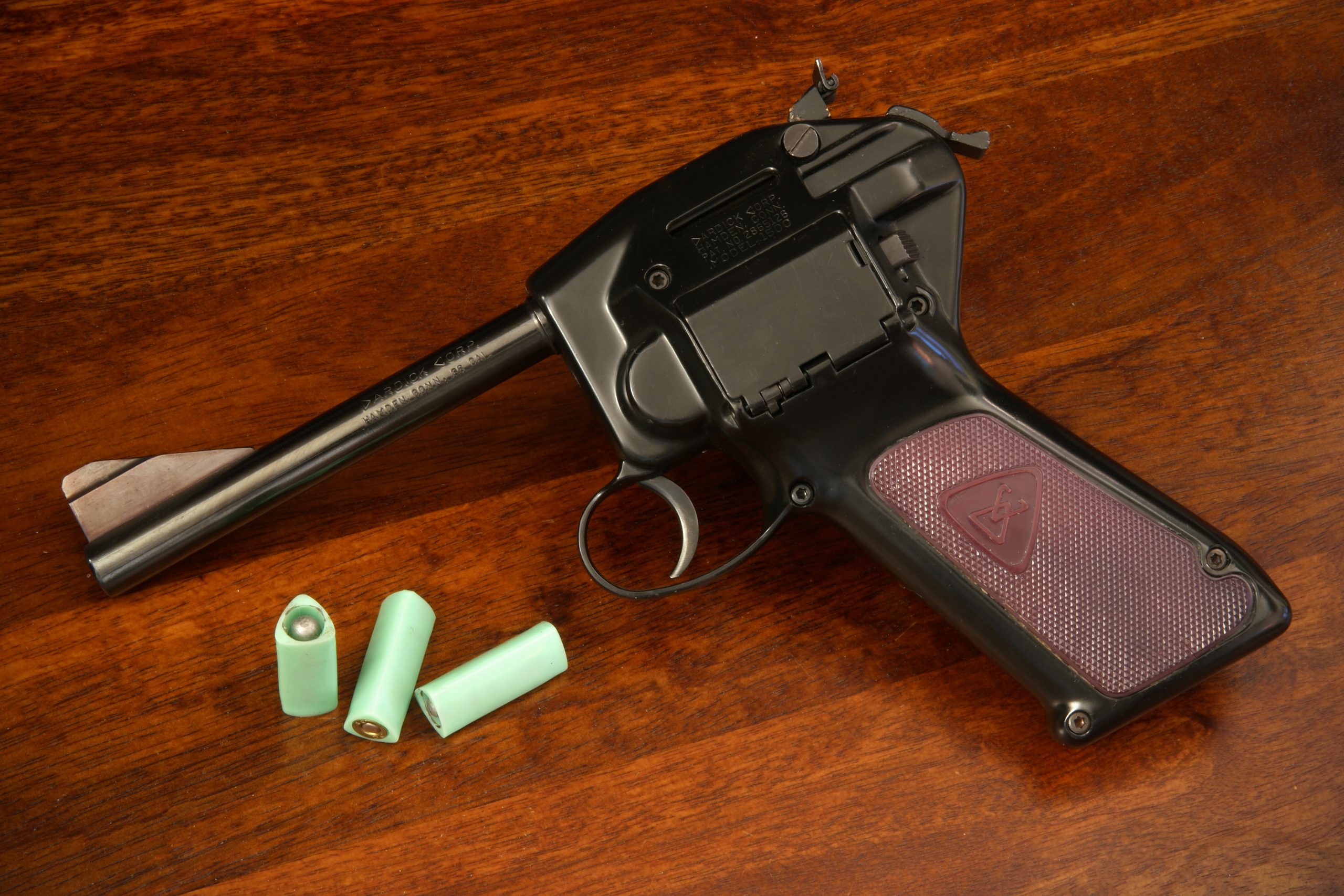
His answer was the “Tround,” a triangular cartridge meant to work with an open-sided revolving chamber. According to American Rifleman and the NRA National Firearms Museum, the Dardick pistol was marketed as a magazine-fed double-action revolver that used polymer triangular cartridges rather than conventional brass cases.
That basic idea was genuinely clever. A normal autoloader must strip a round, chamber it fully, then extract and eject it, while a Dardick rotor only had to move the Tround a short distance into firing position before dropping the empty out the side.
How the Dardick actually worked
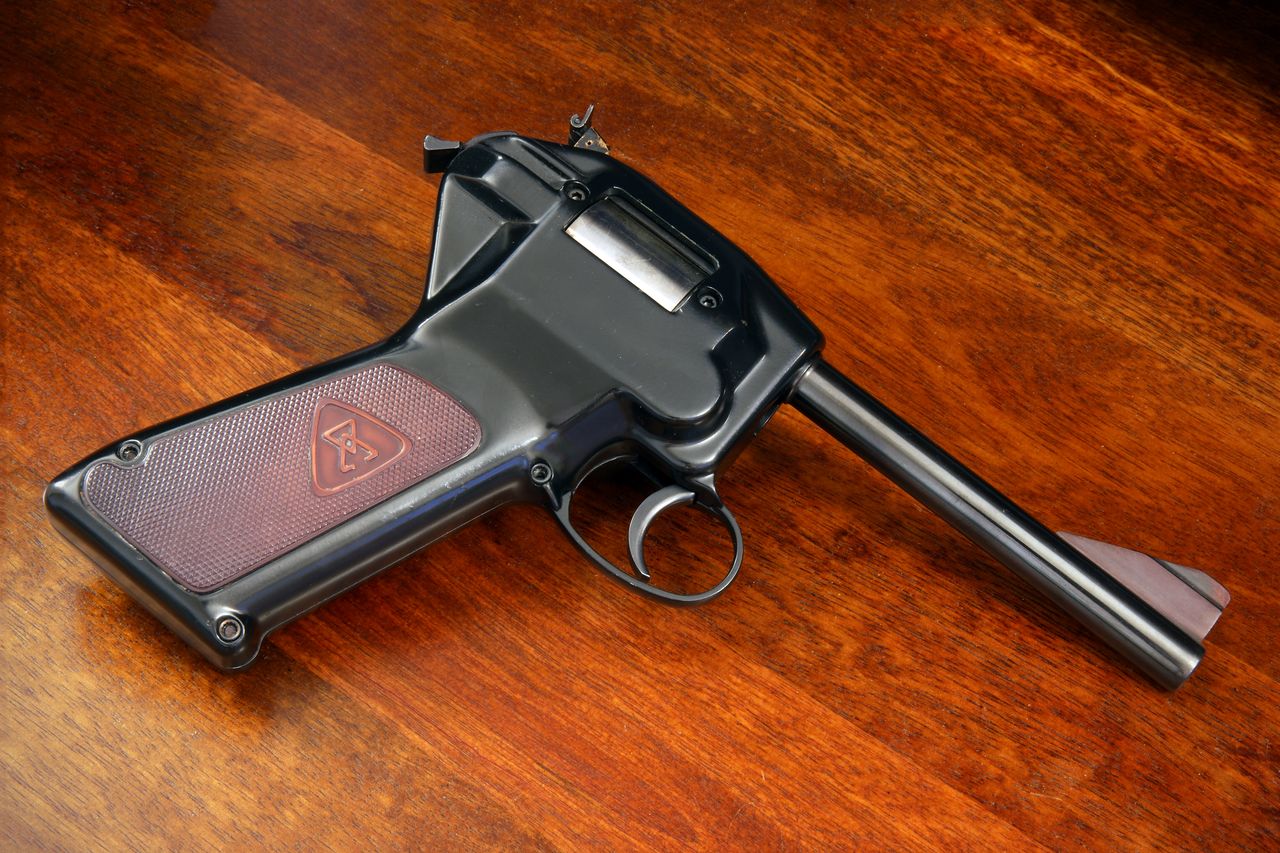
Mechanically, the Dardick looked like a cross between a revolver and a science-fiction prop. It used a rotating cylinder with open-top chambers, plus a magazine hidden in the grip.
Each trigger pull performed several jobs at once. One chamber picked up a fresh Tround from the grip magazine, another aligned a live round with the barrel and hammer, and a third let the spent case fall free from the right side.
That gave the pistol one of its biggest selling points: capacity. Forgotten Weapons notes that the Model 1500 held 15 rounds, while the more compact Model 1100 held 11. On paper, that sounded like the best of both worlds—revolver simplicity with something closer to autoloader firepower.
Why the cartridge mattered so much
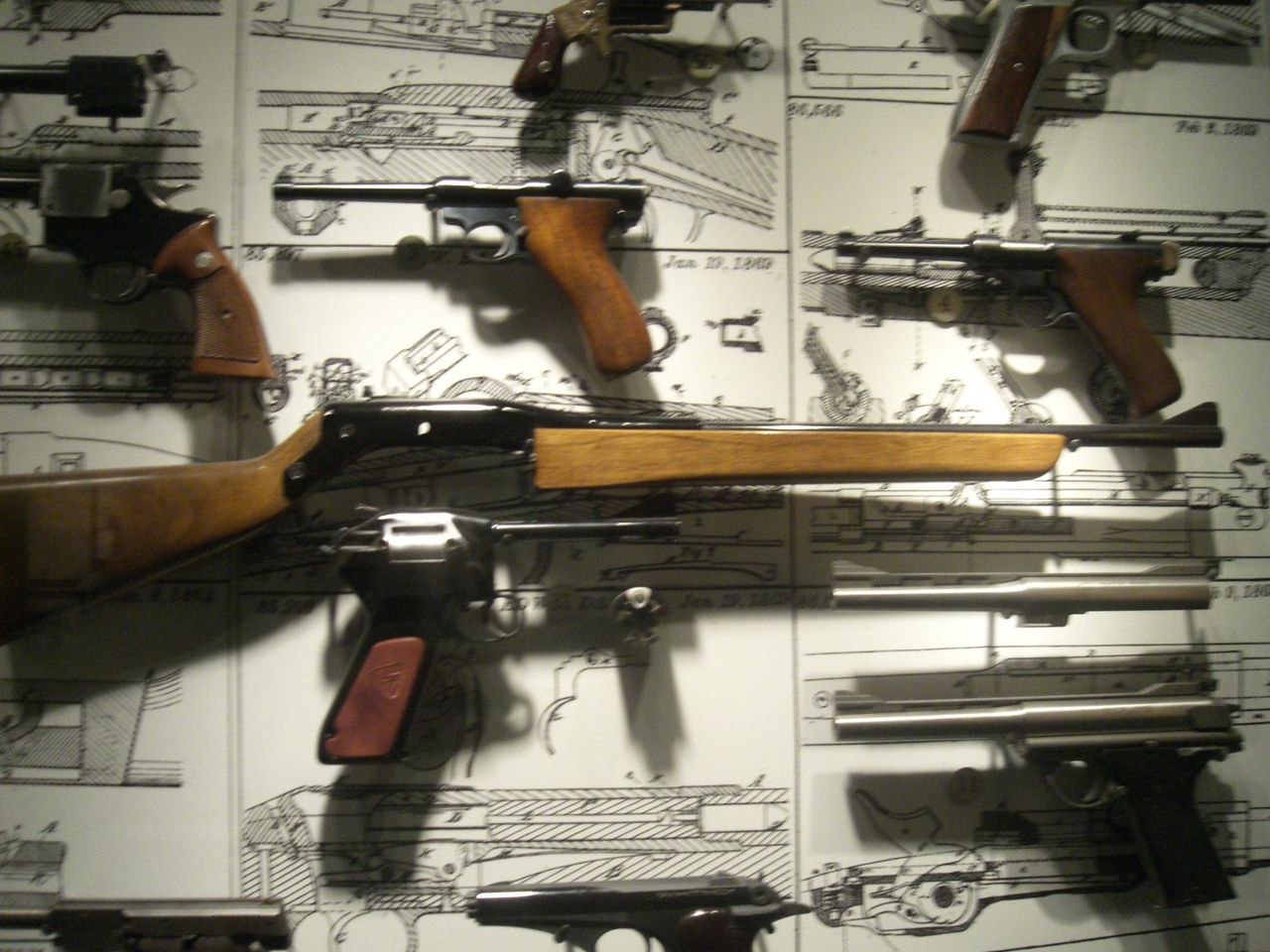
The Tround was not just a novelty shape. It was the entire reason the gun existed, because the cartridge and the gun had to work together as one system.
American Rifleman described the original Trounds as plastic-bodied cartridges strong enough to help contain pressure in the open-sided chamber. Other historical accounts note that early experimental versions also used aluminum and even adapters that allowed conventional pistol cartridges to be fired from reusable Tround carriers.
That flexibility sounded useful, but it also created headaches. If your pistol depends on special ammunition, special magazines, unusual loading procedures, and unusual chamber geometry, every advantage has to be obvious to the buyer. In the Dardick’s case, it simply was not.
The models, pricing, and big ambitions
The best-known commercial version was the Series 1500, introduced at a price of $99.50, according to American Rifleman. It was offered with interchangeable .38- and .22-caliber barrels, and a carbine conversion setup was also marketed.
There were also multiple handgun variants, including the compact Model 1100. The public got its first real look at the design in the late 1950s, though the broader commercial run was brief and production ended by the early 1960s, with the NRA museum dating the overall market life from 1954 to 1962.
Dardick’s real dream was larger than a quirky civilian pistol. Patent records and later historical coverage show the open-chamber, tround-fed concept was also aimed at military uses, especially high-rate automatic weapons where short ammunition travel could offer real engineering benefits.
Why shooters never embraced it
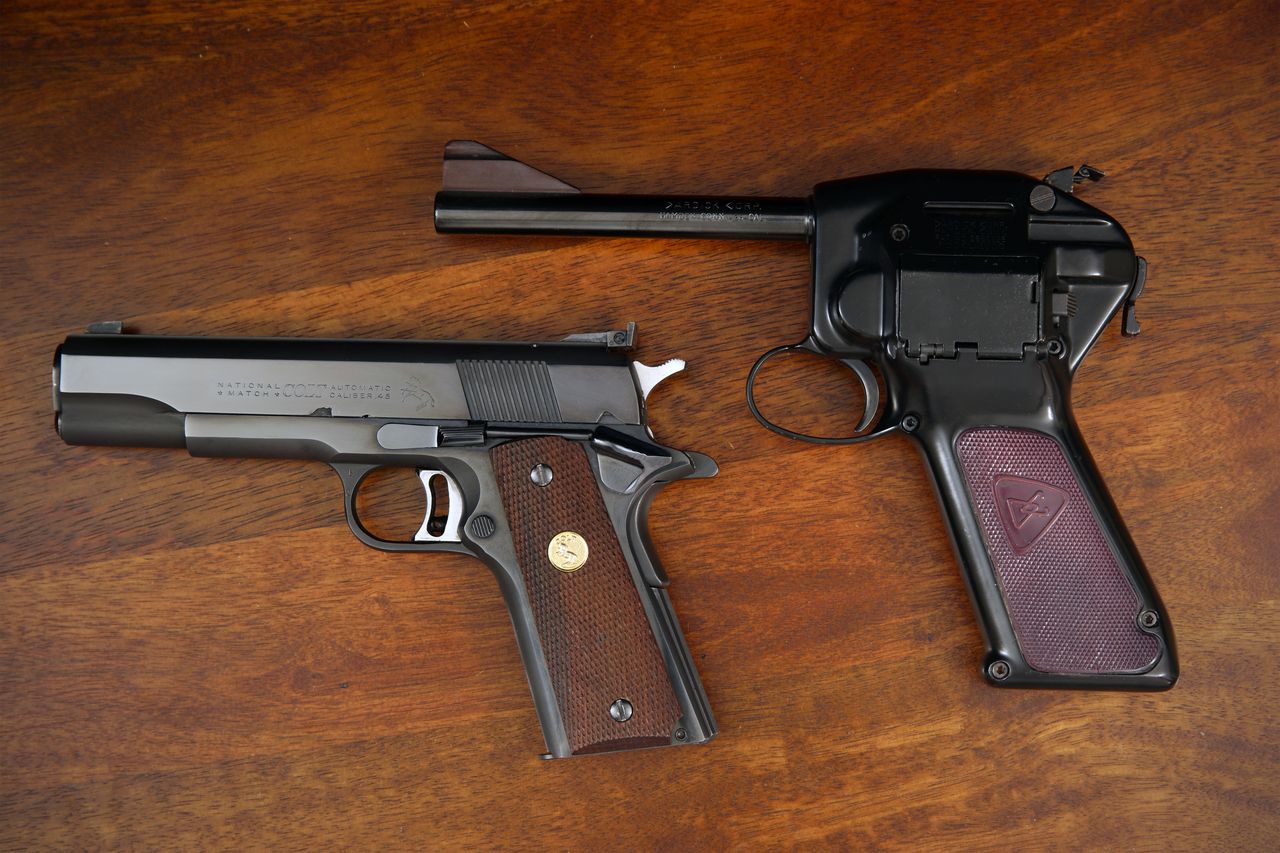
The Dardick’s problem was not imagination. It was adoption. Shooters tend to forgive odd looks, but they rarely forgive expensive, proprietary ammunition and uncertain reliability.
Forgotten Weapons reports that only somewhere around 40 to 100 examples were made in 1959 before the company went under in 1960. That tiny production run tells the story better than any slogan could. The design was intriguing, but it never built the manufacturing base or customer confidence needed to survive.
There was also a perception issue. The pistol was bulky, unconventional, and hard to classify. It was not as familiar as a revolver, not as streamlined as a semiauto, and not clearly better enough at either job to justify the leap.
Why collectors still love it today
Ironically, the very things that doomed the Dardick are what make it fascinating now. It represents the kind of mid-century firearms experimentation that modern manufacturers rarely attempt in public.
Collectors prize it because it is scarce, mechanically unusual, and tied to a genuine attempt at rethinking ammunition from the ground up. Rock Island Auction and other collectors’ sources regularly treat it as one of the standout oddball American handguns of the era.
The Dardick Tround pistol did not change the handgun market, but it did prove something important: gun design is often limited less by imagination than by logistics. A great idea still has to be affordable, reliable, and easy enough for ordinary shooters to trust.