Cheap parts can make a gun look upgraded in a hurry. They can also turn a reliable firearm into a hazard if the part is fake, out of spec, or never engineered for real use.
Why counterfeit gun parts are no longer a niche problem

Counterfeit gun parts used to be something most shooters associated with flea market junk and obvious knockoffs. That is no longer the world we are in. Today, fake optics, fake magazines, fake internals, and even illegal conversion devices are sold through slick listings that mimic legitimate brands and fool casual buyers.
The broader counterfeit economy has made that easier. U.S. Customs and Border Protection has said counterfeit trade is heavily concentrated in e-commerce, noting that about 87% of counterfeit seizures occur in the small-package environment. In fiscal 2023, CBP seized 19,724 shipments containing goods that violated intellectual property rights, equal to nearly 23 million counterfeit goods.
That matters for shooters because firearm parts are increasingly bought the same way people buy phone cases and charging cables. A buyer sees a familiar logo, a discount that feels just believable enough, and a seller promising fast shipping. The part arrives in convincing packaging, and many people never realize they bought a fake.
According to official brand warnings from companies like EOTECH and SIG SAUER, counterfeit versions of popular accessories are actively being sold through overseas websites, social platforms, online marketplaces, and local gun shows. In other words, the problem is not hidden in some dark corner of the internet. It is mixed right into ordinary retail channels.
The parts most likely to be faked and why they are risky

Optics are among the most commonly counterfeited gun accessories because they are easy to market and visually simple to imitate. EOTECH warns that fake holographic sights can look nearly identical on the outside while lacking the actual technology inside. The company says many counterfeits will not withstand recoil or shock and may fail to maintain zero.
That is not just an inconvenience. A sight that shifts under recoil can send rounds somewhere the shooter did not intend. On a square range, that means frustration and missed targets. In a hunting or defensive context, it means a shot placed where it should never have gone.
Internal parts are even more concerning because the danger is harder to spot. Recoil spring assemblies, striker components, trigger parts, extractors, and firing pin safety parts all operate on tight tolerances. Glock’s own materials stress the importance of intact safeties and warn not to fire a pistol if the firing pin safety fails its function test.
Magazines can also be a hidden weak point. A fake magazine body, weak spring, or bad feed-lip geometry can create failures to feed, failures to lock back, or nose-dives that jam a gun at the worst moment. The problem with counterfeit parts is not just that they fail. It is that they often fail unpredictably, which is the worst kind of failure in any machine that contains pressure and explosion inches from your hands and face.
How a fake part turns into a real safety hazard
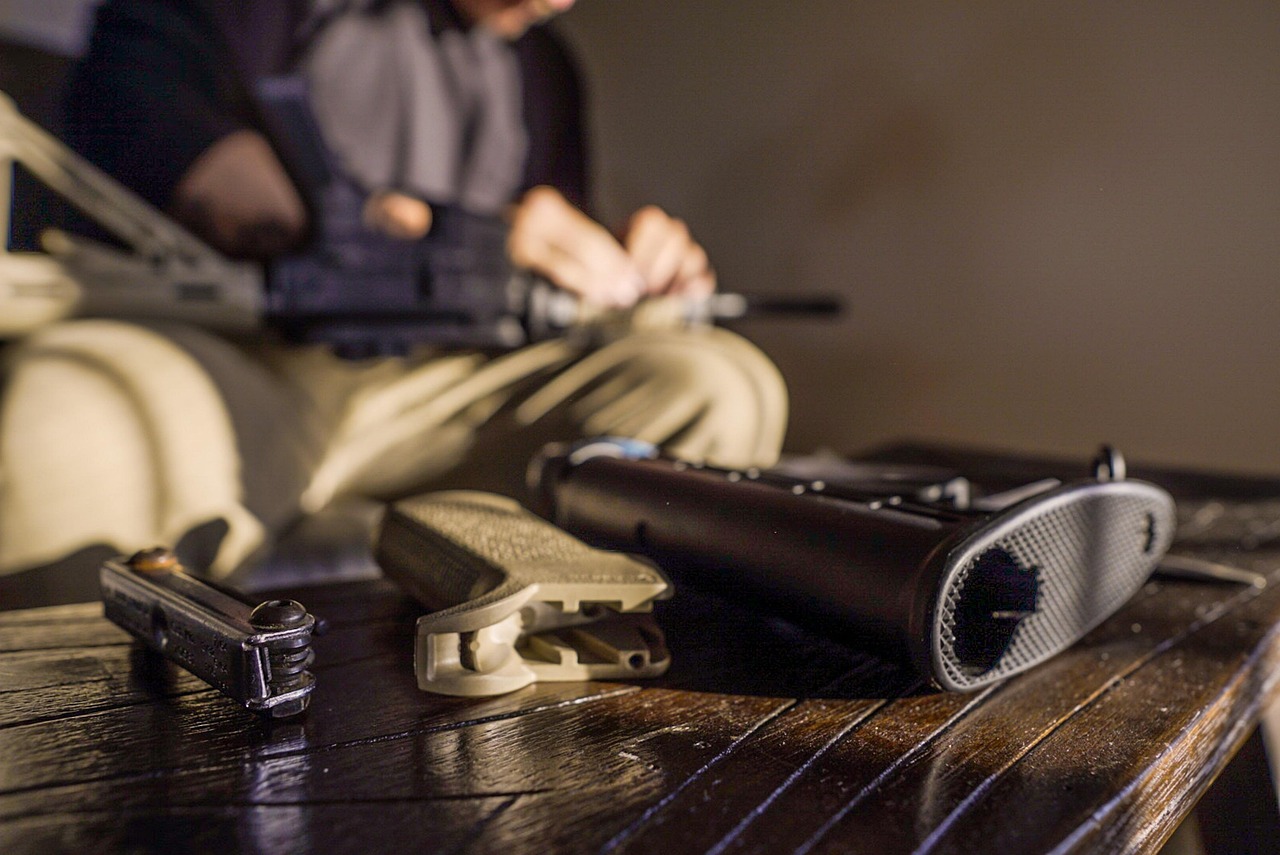
A firearm is a system, not a pile of interchangeable widgets. When one counterfeit part is slightly too soft, slightly out of dimension, or slightly mis-machined, the stress ripples through everything around it. That can produce intermittent malfunctions first, then a more serious break later.
Think about what happens when a bargain recoil assembly is underpowered, a slide part chips, or a fake optic mount screw stretches under recoil. The shooter may first notice random stoppages, wandering zero, unusual wear, or screws that mysteriously back out. Those are warning signs, not harmless quirks.
Manufacturer guidance makes clear how small failures can become dangerous ones. Glock’s manual warns that lubricant contamination or obstructions can lead to failures to fire or even a bullet lodged in the barrel, which can contribute to a burst barrel and serious injury. If a counterfeit internal part affects timing, ignition, or safe operation, the margin for error gets smaller fast.
The same goes for optics and mounts. EOTECH says counterfeit sights may not hold zero or survive recoil. A fake sight on a centerfire rifle is not just a bad value purchase. It can change point of impact, create false confidence, and cause misses that put people, property, or animals at risk. The harm may not come from the part exploding. It may come from the shooter trusting gear that was never built for the job.
The illegal side of the market is even worse
Not every dangerous fake part is merely low quality. Some are illegal by design. Machine gun conversion devices, often marketed online as switches or auto sears, have become a major federal enforcement target, and they are frequently imported through the same murky channels that move counterfeit accessories.
In January 2024, the U.S. Attorney’s Office and ATF in Los Angeles issued a public warning about machine gun conversion devices, describing the trend as a growing danger. In a separate 2025 federal case out of Massachusetts, investigators said they seized 3,093 machine gun conversion devices, along with firearms, silencers, and ammunition, while targeting websites accused of importing devices from China.
That case contained another revealing detail. Prosecutors alleged the websites trafficked counterfeit goods and unlawfully used the Glock trademark by offering purported Glock switches for sale. So the same listing can be both counterfeit and illegal, which is about as bad as a buyer can do.
These devices are especially dangerous because they can make a handgun uncontrollable. AP reported that Baltimore police recovered 65 modified Glocks in 2024, up from 35 the year before. Officials described the effect as chaotic and hard to control once the trigger is pulled. This is not harmless tinkering. It is a recipe for criminal charges, mechanical failure, and innocent people getting hurt.
Why so many buyers still fall for them
Most people do not buy fake gun parts because they are reckless. They buy them because the counterfeit market has become extremely good at copying the appearance of legitimacy. Clean packaging, believable model names, cloned logos, and polished product photos can fool people who think they are making a smart bargain purchase.
Price is the oldest trick in the book. SIG SAUER specifically warns that unusually low prices are a major red flag for counterfeit products. But counterfeits do not always come at laughably low prices anymore. Some are priced just low enough to feel like a sale, not a scam.
There is also a psychology problem. Many shooters correctly know that aftermarket parts exist and that customization is common. NSSF regularly discusses legal, mainstream upgrades like optics and triggers while also warning owners not to cross safety and legal lines. Counterfeiters exploit that culture by making fake parts look like just another upgrade path.
Then there is the confidence trap. If a fake part seems to work for 50 rounds, the buyer may assume it is fine. But gun parts are not proven by one casual range trip. Heat, recoil impulse, repeated cycling, and real-world handling reveal weaknesses over time. Counterfeits often pass the first impression test and fail the durability test later, which is exactly why they are so dangerous.
How to spot a fake before it gets onto your gun
The first rule is simple. Buy from authorized dealers or directly from the manufacturer whenever possible. That sounds boring, but it is still the most effective protection. Brand guidance from companies like SIG SAUER and EOTECH repeatedly points buyers back to official dealer networks for a reason.
Second, inspect the details, not just the logo. Counterfeits often get branding close enough to fool a quick glance, but serial formats, engraving quality, packaging language, lens clarity, turret feel, screw quality, and included paperwork may be off. EOTECH says the outside appearance of fakes can be nearly indiscernible, which means you should never rely on looks alone.
Third, function-test cautiously and never assume a new part is trustworthy just because it fits. If a safety-related component behaves oddly, stop. Glock’s own inspection guidance includes checks for firing pin safety function and warns not to load or fire the pistol if that safety fails. That same mindset should apply to any suspect component.
Finally, pay attention to the sales channel. Marketplace sellers that vanish quickly, listings with stock photos only, vague return policies, and descriptions loaded with buzzwords but thin on actual specs are all warning signs. If the seller cannot clearly explain provenance, warranty status, and model compatibility, walk away. Saving a few bucks is never worth gambling with a pressure-bearing machine in your hands.
What smart shooters and gun owners should do now
Start by auditing what is already in your safe. If you bought optics, magazines, triggers, recoil assemblies, mounts, or branded accessories from unknown marketplace sellers, take a hard look at them. Compare markings, serial numbers, packaging, and fit against official manufacturer materials. If something feels off, treat it as suspect until proven otherwise.
If the questionable part affects safety, ignition, lockup, or control, replace it with a known genuine part before shooting again. That is especially true for internal handgun parts and anything tied to the firing system. A firearm can tolerate cosmetic mediocrity. It cannot safely tolerate mystery metallurgy in critical components.
It is also worth remembering that some products are not merely counterfeit but potentially illegal. ATF and DOJ enforcement actions show that imported conversion devices and mislabeled parts are still moving through online channels. If a listing hints at turning a semiauto into something else, that is your cue to back away immediately.
The big picture is simple. Counterfeit gun parts are not just about getting ripped off. They are about degraded reliability, damaged firearms, legal exposure, and the real possibility of injury. In a hobby and a responsibility built on precision, there is no such thing as a harmless fake when the part sits inside, on top of, or directly around a firearm.