Most revolvers look like they were shaped by a century of habit. The Chiappa Rhino looks like someone asked what a revolver would become if physics got the final vote.
Why The Rhino Immediately Stands Out
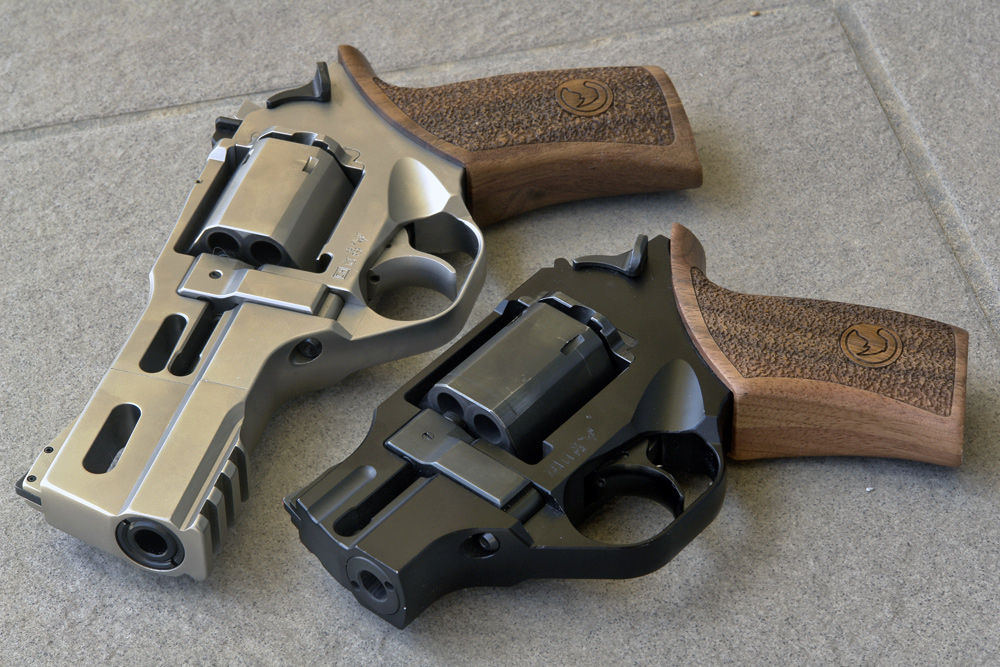
The Rhino’s defining feature is simple to describe and rare to see: it fires from the bottom chamber of the cylinder instead of the top. Chiappa’s own manual calls that lower-chamber barrel alignment the key feature of the gun, and the company built the entire revolver around that idea. According to American Rifleman, the concept came from Italian designer Emilio Ghisoni, who believed lowering the bore axis could reduce muzzle flip and make magnum revolvers easier to manage.
That low bore axis changes the way recoil feels in the hand. With a traditional revolver, recoil tends to rise upward because the barrel sits above the shooter’s grip. On the Rhino, the recoil impulse tracks more directly back into the hand and wrist, which many shooters describe as flatter and less dramatic.
The result is a revolver that looks almost futuristic, but the shape is not styling for styling’s sake. The slab-sided cylinder, angular frame, and unusually low barrel all exist because the gun was designed from the inside out. It is one of the clearest examples of form following function in the handgun world.
How The Bottom-Firing Design Actually Helps
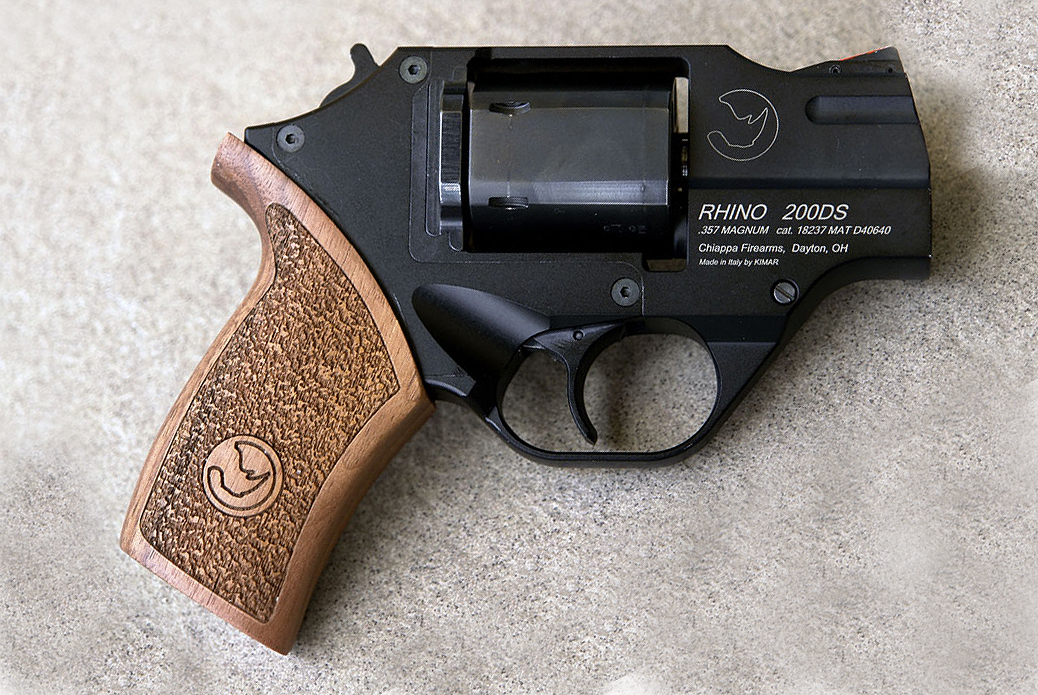
What makes the Rhino more than a visual oddity is that the bottom-firing layout produces a noticeable mechanical advantage. American Handgunner and American Rifleman both point to reduced muzzle rise as the big payoff, especially with .357 Magnum, a cartridge known for sharp recoil in compact revolvers. Instead of the gun rotating hard upward, the force comes straighter back.
That does not make .357 Magnum mild, and it does not repeal physics. A lightweight revolver launching full-power magnum ammunition will still get your attention. But the Rhino often lets shooters recover their sights faster and feel less twisting torque in the wrist, which is exactly what the design set out to accomplish.
For defensive shooting or range work, that flatter recoil can matter. Faster follow-up shots are easier when the front sight does not leap as high between rounds. In practical terms, the Rhino can feel less punishing than a conventional snub-nose firing the same ammunition.
The Unusual Controls Confuse First-Time Shooters
The Rhino also breaks expectations with its controls. What looks like an exposed hammer is actually a cocking lever, while the internal firing system works more like a striker-fired handgun than a classic external-hammer revolver, according to American Rifleman. That means experienced revolver shooters often need a moment to reorient themselves.
Its cylinder release is also not where many American shooters expect it to be. On the Rhino, the mechanism is part of the design language that makes the gun compact and distinctive, but it can slow down first impressions. Nothing about the platform invites autopilot handling.
That said, the learning curve is part of the appeal for enthusiasts. The Rhino feels engineered rather than inherited, and owners tend to appreciate that it asks them to engage with the design. It is not difficult so much as different, and different always stands out in a category as tradition-bound as revolvers.
Models, Chamberings, And What Buyers Usually Choose
Chiappa has offered Rhino variants in multiple barrel lengths and configurations, including compact 2-inch class models and longer defensive or range-oriented versions. Authoritative reviews and company materials commonly note .357 Magnum as the flagship chambering, with some models also appearing in 9 mm and other market-specific calibers. That gives the platform a broader audience than novelty guns usually get.
The shorter models appeal to concealed-carry fans who want revolver simplicity with less muzzle flip. The mid-size guns, especially the 40DS and 50DS family, are often seen as the sweet spot because they balance shootability, velocity, and carry practicality. Longer-barrel versions lean more toward range use and field carry.
In other words, the Rhino is not one single revolver. It is a design system stretched across several roles, from deep-carry sidearm to conversation-starting trail gun. That versatility has helped it stick around long after many people first assumed it was just a quirky one-off.
Where The Rhino Shines And Where It Does Not
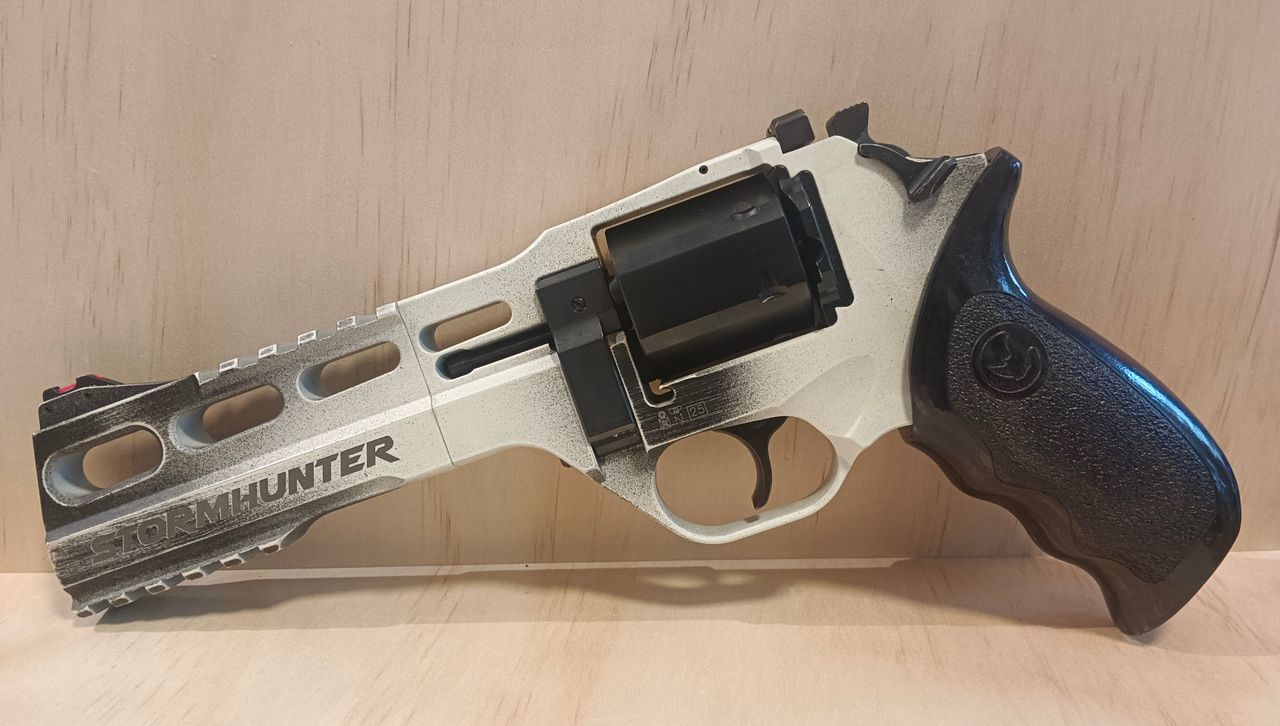
The Rhino shines with stout ammunition, because that is where its geometry earns its keep. A gun designed to redirect recoil becomes most convincing when the load is strong enough to expose the weakness of ordinary layouts. Shooters who spend time with .38 Special may still enjoy it, but the real story begins when .357 Magnum enters the cylinder.
It also has clear appeal for recoil-sensitive shooters who like revolvers but dislike violent muzzle snap. The shape can make rapid strings feel more composed, and several long-running reviews have praised its ability to keep sights tracking flatter than expected. That is a serious advantage, not just a gimmick.
Its tradeoffs are equally real. Holster availability can be more limited than for mainstream revolvers, the manual of arms is less intuitive for newcomers, and the styling is polarizing. Some people see a revolution in wheelgun design; others just see a gun that refuses to look normal.
Why The Rhino Has Earned A Lasting Following
Plenty of strange guns appear, make noise, and disappear. The Rhino endured because it offered a real answer to a real problem: how to tame revolver recoil without giving up revolver reliability. Since its public debut around 2010, reviews from outlets like Shooting Illustrated and American Rifleman have kept returning to the same conclusion: unconventional as it looks, the concept works.
That does not mean it is for everyone. Traditionalists may still prefer a Smith & Wesson or Ruger with familiar controls and decades of institutional trust behind them. The Rhino asks shooters to accept a new visual language and a new feel in exchange for measurable ergonomic benefits.
For the general audience, that is what makes the Chiappa Rhino so interesting. It is not weird merely to be weird. It is a rare firearm that looks radical because it is trying, in a very literal mechanical sense, to improve how a revolver behaves when the shot breaks.