It looked like one company failing. In reality, it was a controlled dismantling of a legend.
How a two-century-old name reached the auction block
By the time Remington Outdoor Company filed for Chapter 11 in July 2020, this was not a sudden collapse. It was the second bankruptcy in just over two years, following an earlier 2018 restructuring that had already wiped out Cerberus Capital Management’s ownership after the private equity firm had bought Remington in 2007. Reuters and AP both tied the company’s long slide to heavy debt, weak operating performance, soft gun demand in parts of the Trump era, and legal pressure connected to the Sandy Hook shooting.
That mix matters because Remington was not just another manufacturer. It was one of the oldest names in American gunmaking, tracing its roots back to 1816, with an enormous emotional footprint among hunters, clay shooters, law enforcement buyers, and generations of deer camp regulars. Even people who had never owned a Remington usually knew the 870 shotgun or the 700 rifle.
So when the company came apart, the question was never simply whether Remington would survive. The real question was which parts of Remington still had enough value to attract buyers, and whether the famous green-and-yellow brand could keep meaning the same thing once the business behind it no longer existed as one company.
The auction was not one sale, but a brand disassembly.
What happened in late September 2020 is easy to misunderstand if you only remember the headline version. Remington was not sold to a single rescuer. The bankruptcy auction split the company among multiple bidders, with trade reporting and court-linked coverage showing at least seven successful bidders connected to the breakup, including six companies that ended up with the most recognizable consumer-facing pieces of the old empire.
The list is striking because it reads less like an acquisition and more like a scavenger map. Vista Outdoor took the Lonoke, Arkansas ammunition business and the Remington brand in ammunition and accessories. Roundhill Group won the non-Marlin firearms operation. Sturm, Ruger & Co. acquired Marlin. Sierra Bullets bought Barnes. Franklin Armory got Bushmaster. JJE Capital Holdings took DPMS, H&R, Stormlake, AAC, and Parker. Sportsman’s Warehouse picked up Tapco, according to reporting in Shooting Illustrated, The Outdoor Wire, SGB Media, and SEC-filed deal materials.
That is the key to the whole story. The legendary Remington name stayed visible, but the company itself effectively shattered into specialized business units. What consumers had treated as one heritage brand was, in bankruptcy, valued as separate factories, trademarks, product lines, and dealer relationships.
Who bought what, and why those pieces mattered

Vista Outdoor arguably landed the highest-profile operating asset: Remington’s ammunition business in Lonoke for about $81 million, according to Reuters, later describing the deal as a strong strategic fit. That mattered because Remington ammunition had real shelf presence, and Vista already owned major ammo names like Federal, CCI, and Speer. In practical terms, the buyer was not purchasing nostalgia alone. It was adding capacity, distribution, and a familiar box that hunters and recreational shooters already trusted.
Roundhill Group’s purchase of the non-Marlin firearms business was different. It was smaller, more operationally fragile, and heavily tied to whether the Ilion, New York plant could be restarted. Trade reporting noted the sale terms included an expectation to offer employment to at least 200 union workers tied to the non-Marlin firearms side, a sign that keeping production alive was part of the value proposition.
Then came the brand specialists. Ruger buying Marlin made immediate sense because Marlin lever guns had a devoted following and fit Ruger’s manufacturing culture. Sierra taking Barnes united bullet expertise with a premium projectile brand. Franklin Armory getting Bushmaster and JJE Capital taking AAC, DPMS, H&R, Parker, and Stormlake showed how much value still lived in trademarks, even when the parent company was failing.
Why the Remington name became two different businesses

One of the strangest outcomes of the auction is that “Remington” survived, but not as one coherent company. Today, the official RemArms site makes that plain, stating that Remington Firearms and Ammunition are now separate new companies. RemArms also says it began producing Remington firearms in April 2021, underscoring that the post-bankruptcy firearms business was not simply the old company switching the lights back on. It was a restart under different ownership and a different corporate reality.
That split changed what the brand means at retail. A box of Remington Core-Lokt ammunition and a new Remington 870 shotgun may carry the same historic name, but they come from different corporate lineages. For the average buyer, that is easy to miss. For dealers, distributors, and warranty departments, it changes everything.
In branding terms, this is unusual but not irrational. Vista could exploit the enormous recognition of Remington ammo while Roundhill’s successor operation, RemArms, could revive the firearm side without owning the whole old conglomerate. The result is a heritage brand operating like a divided estate, where the surname stayed famous even after the family business split into separate households.
The quiet winners were companies that knew exactly what they were buyin.g
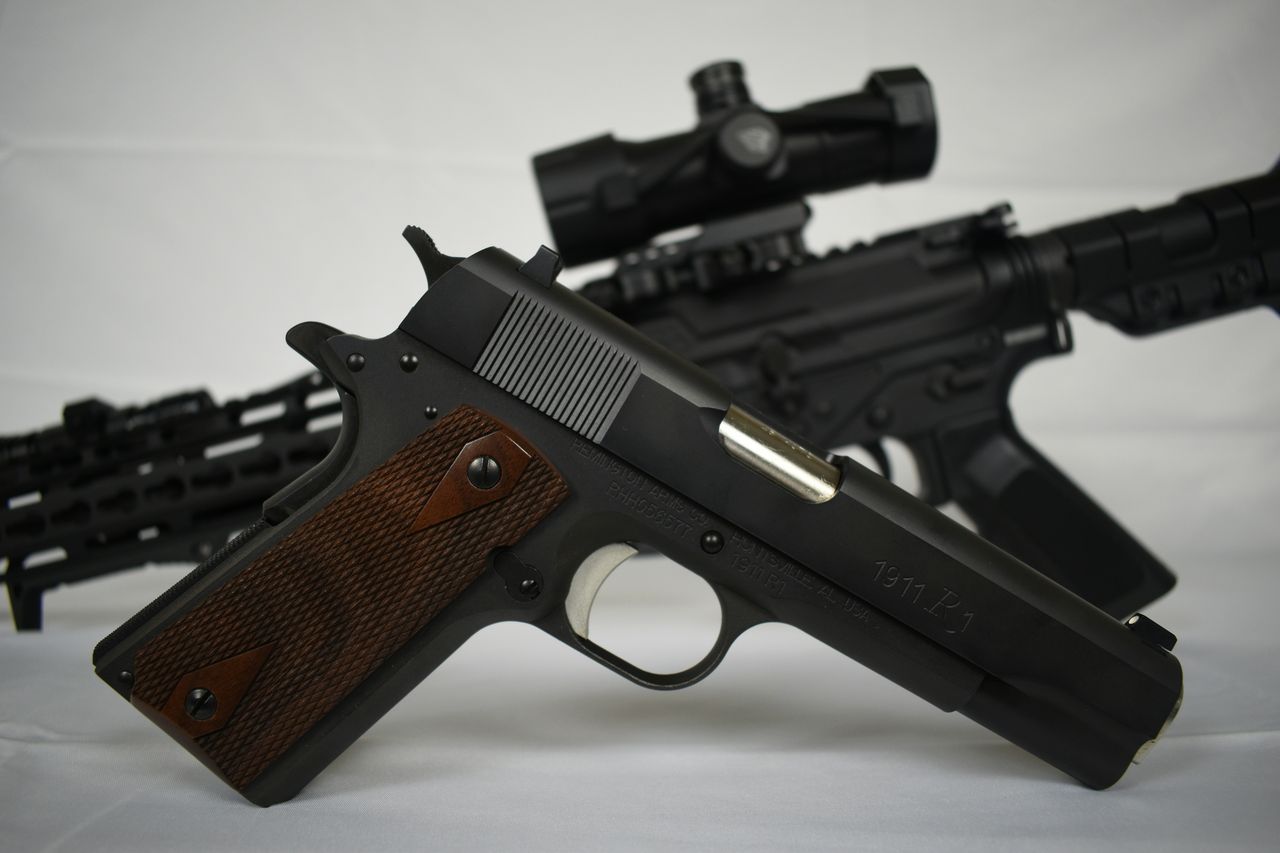
This is where the auction gets more interesting than the standard bankruptcy story. The buyers were not romantic saviors trying to preserve a museum piece. They were disciplined operators picking off assets that fit their lanes. Vista wanted ammunition scale. Ruger wanted a beloved long-gun franchise it could likely manufacture more reliably. Sierra wanted Barnes because bullets and projectile technology were its home turf.
The same logic applies to the smaller brand pickups. Franklin Armory did not need all of Remington to find value in Bushmaster. JJE Capital, tied to Palmetto State Armory, had clear use for brands like DPMS and AAC because those names still carried recognition in modern sporting rifle and suppressor circles. Sportsman’s Warehouse taking Tapco was a reminder that even accessory and aftermarket labels can hold retail value after the parent enterprise collapses.
In other words, this was less a rescue than a market verdict. Buyers were effectively saying the giant integrated gun conglomerate had failed, but many of its individual pieces still made perfect sense. The auction rewarded specialization over empire. That is a lesson well beyond firearms: when a legacy manufacturer breaks apart, the strongest survivors are often the product lines that can stand on their own.
What the breakup meant for workers, towns, and customers
For consumers, the immediate takeaway was confusion. Warranty support, parts availability, and product continuity all became more complicated once the old company ceased to exist in one piece. RemArms later acknowledged a hard truth on its support pages: as a new company, it was unable to obtain information pertaining to some historical Remington firearm products. That single note tells you how deep the break really was.
For workers and communities, especially Ilion, New York, the consequences were even more personal. AP’s reporting on Ilion captured the emotional weight of a town built around roughly two centuries of gunmaking. A famous name on a receiver is one thing. A payroll, an operating factory, and a local industrial identity are another.
And for buyers at the counter, the breakup changed the hidden plumbing of trust. A customer may think, “I’ve shot Remington for 30 years,” but post-2020 that loyalty may be spread across multiple unrelated companies. The shell ammo, the bolt-action rifle, the suppressor brand, and the old AR-pattern nameplate might now have different owners, different factories, and very different quality-control cultures.
Why this bankruptcy still matters to the gun industry

The Remington auction remains one of the clearest examples of how legacy firearm brands now function as portfolios of intellectual property, manufacturing assets, and channel access rather than as indivisible institutions. That sounds clinical, but it explains why a company can die while its labels live on. In Remington’s case, the market decided the old structure was broken, yet the names, tooling, plants, and product families still carried real value.
It also showed how strong the gun business can be at absorbing distressed heritage assets. Ruger could rehabilitate Marlin. Vista could fold Remington ammunition into a broader ammo platform. RemArms could revive flagship firearm lines under a restarted business. Each buyer was betting that brand memory, if paired with competent execution, would outlast the bankruptcy stigma.
That is the quiet twist in this whole episode. Remington was not erased. It was atomized. And once you see the deal that way, the 2020 auction stops looking like the death of a gunmaker and starts looking like a case study in modern American brand salvage, where six different companies walked away with a piece of a legend, and each hoped consumers would never fully notice the seams.