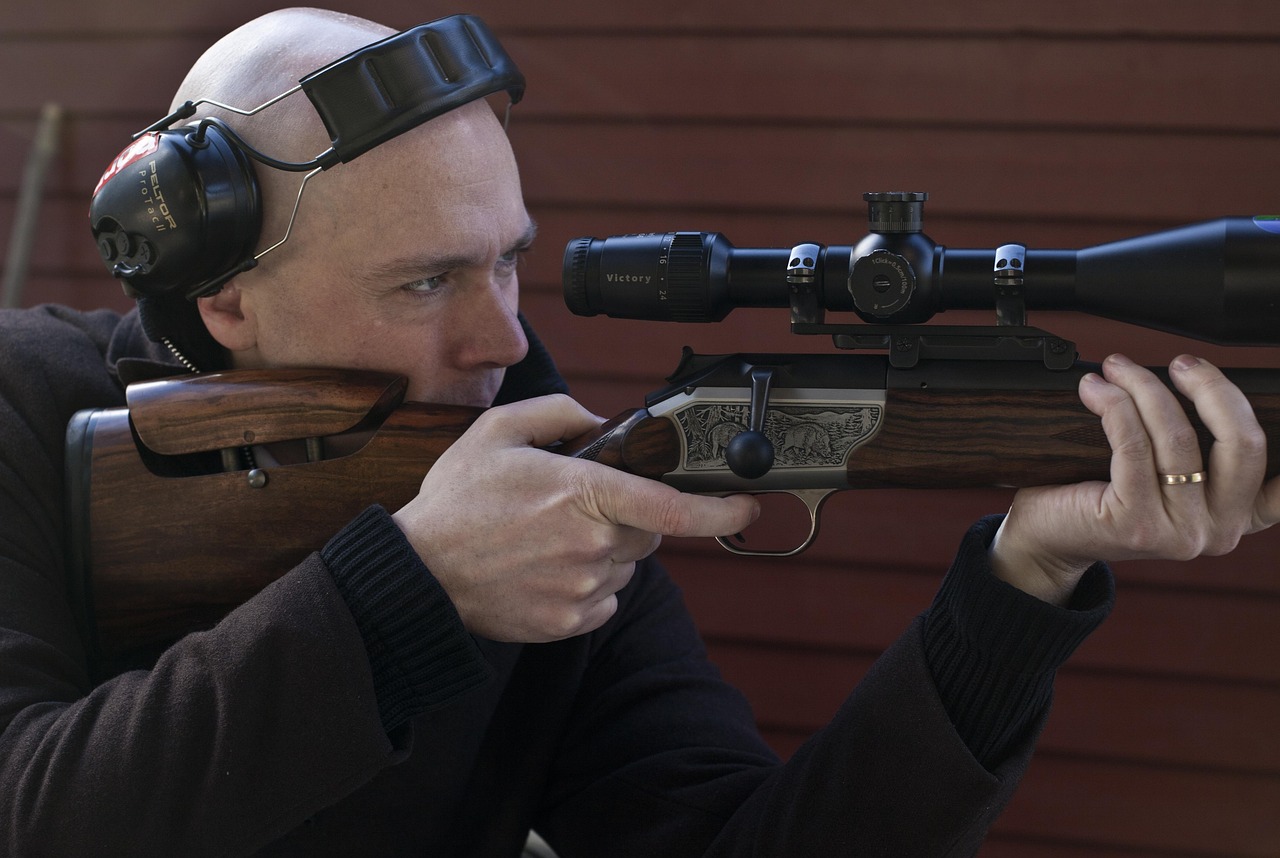
Long shots make for great campfire stories. They also create some of the hardest ethical decisions a hunter will ever face.
The Real Question Is Not Distance Alone

The first mistake in this debate is treating 500 yards like a magic line. It is not. A 520-yard shot from a calm prone position across a prairie with a rock-solid rest is very different from a 320-yard shot in gusting alpine wind at a quartering elk. Distance matters, but it is only one piece of the problem.
The Boone and Crockett Club has been unusually clear on this point for years. Its position is that ethical long-range hunting cannot be judged by yardage alone, because every situation changes with terrain, wind, angle, equipment, and shooter ability. At the same time, the group argues that fair chase is about intent: a hunter should try to get closer and seek a high-probability shot, not default to extreme distance because modern gear makes it possible.
That distinction matters. Hitting steel at 600 yards on a known-distance range is a controlled exercise. Hunting is not. Animals move, pause, turn, hunch, and step at the wrong moment. Light changes. Wind changes faster than most people can read it. A rifle system that is “capable” at 500 yards is not the same thing as a hunter being consistently lethal at 500 yards on demand.
So should hunters ever take 500+ yard shots on big game? Rarely, and only when every variable is heavily stacked in favor of an immediate, humane kill. If there is doubt, the answer should be no.
Why Field Conditions Destroy Range Confidence

Long-range shooting problems compound, not add up. At 500 yards, small errors in range, wind call, body position, trigger press, or animal movement can turn a clean lung shot into a gut hit or a complete miss. Boone and Crockett writers have repeatedly emphasized that wind is the true enemy of long shots because there are no range flags in the mountains and no practical way to know what the bullet is meeting halfway to the target.
Outdoor Life recently illustrated the point with a simple example: in a 10 mph crosswind, a common 140-grain bullet can drift about 10 inches at 400 yards. Stretch that to 500 and beyond, and the margin for error starts shrinking fast on the vital zone of deer, antelope, or sheep-sized game. Even if the wind at your face feels manageable, the wind near the target or in the middle of the flight path may be completely different.
Then there is bullet drop and time of flight. A hunter dialing elevation off a rangefinder is still relying on exact distance, true muzzle velocity, correct ballistic inputs, and a stable firing solution under stress. Add steep angle, awkward rest, cold hands, and elevated heart rate, and that clean solution gets messy in a hurry.
This is why many experienced hunters distrust the phrase “I can shoot that far.” On a square range, maybe. On a live animal, with consequences, the standard has to be much higher.
Ethics Start With A Humane Outcome
Hunters do not owe the animal a sporting chance in the cartoon sense of making things easy for it. But they do owe the animal a serious commitment to a quick death and a high likelihood of recovery. That is the ethical center of this entire discussion. If a 500-yard attempt reduces either one, the shot should stay unfired.
Boone and Crockett’s fair chase language consistently comes back to demonstrated ability, adequate weaponry, enough light, manageable wind, and conditions that allow tracking and dispatch if something goes wrong. That is a much stricter standard than internet bragging culture. It asks not whether a hit is possible, but whether the hunter has built a situation where a bad outcome is genuinely unlikely.
This is also where social media has distorted expectations. Online, a successful long shot gets replayed forever. The misses, the marginal hits, the lost animals, and the hours of anxious tracking rarely become content. That creates a false impression that 500- to 800-yard kills are routine for disciplined hunters. They are not routine, and they are certainly not routine under hunting pressure.
Ethics often means walking away from a shot that your ego wants badly. In fact, passing on a long shot can be the clearest sign that someone understands hunting rather than just marksmanship. Mature judgment is part of skill.
Gear Helps, But Gear Does Not Solve Judgment

Modern optics, ballistic apps, laser rangefinders, dialable turrets, carbon-stock rifles, suppressors, and high-BC bullets have made distant impacts easier than they were a generation ago. That much is true. According to Boone and Crockett, these technologies are legal in many places, but legality is not the same as wisdom. Technology can reduce some uncertainty while leaving the hardest uncertainties untouched.
A rangefinder can tell you the distance. It cannot promise the buck will stay broadside for the next second and a half. A turret can correct for drop. It cannot read a switchy canyon wind between you and an elk. A premium bullet can expand reliably at lower velocity, but it still cannot rescue bad placement caused by a last-second step.
There is also a practical difference between a rifle optimized for long-range target work and one carried all day in hunting country. Outdoor Life’s recent wind piece used a heavy competition-style setup to demonstrate holds, and that is part of the lesson. Many hunting rifles are lighter, harder to steady, and less forgiving from improvised field rests than the rigs people watch online.
Good gear absolutely matters. But after a certain point, better equipment mainly exposes whether the shooter has the discipline to say no. Judgment remains the most important part of the system.
What Highly Capable Hunters Usually Do Instead
The best long-range-capable hunters are often the least eager to force long shots. That may sound backward, but it tracks with experience. People who truly understand external ballistics and terminal performance tend to have a healthy respect for what can go wrong. They know how fast a “makeable” shot can become irresponsible.
Craig Boddington, writing through Boone and Crockett channels, has argued that even 400 yards is still a serious shot, not a chip shot, and that ethical success depends on exact range, a steady position, and readable wind. That is a useful benchmark because it comes from someone who has vast shooting experience and still refuses to romanticize distance. When experts stay cautious, average hunters should pay attention.
What those hunters usually do instead is stalk harder, wait longer, build a better rest, or let the animal walk. They use their long-range capability as insurance, not as Plan A. If an animal hangs up just beyond normal distance and all conditions line up perfectly, capability gives them an option. It does not become an excuse to stop hunting and start sniping.
That mindset preserves the heart of hunting. The point is not simply to connect from afar. The point is to close the gap, read the country, and create the cleanest opportunity possible.
A Practical Standard For Deciding In The Moment
A simple rule helps: if you would not bet the entire season on making that exact shot cleanly, do not take it. Not “probably.” Not “I hit steel last month.” Cleanly, immediately, and repeatably. That is the threshold big game deserves.
A responsible decision at 500+ yards should require all of the following: a calm or fully understood wind, exact range, a broadside or near-broadside angle, a dead-stable rest, complete confidence in drop and drift, sufficient retained bullet performance, a spotter or excellent observation, and terrain that allows fast follow-up and recovery. If even one of those pieces is weak, the ethical answer gets shakier fast.
It also helps to define your personal maximum range before the season, not in the heat of the moment. That number should come from field-position practice, not bench shooting. It should be based on the farthest distance at which you can keep every realistic shot inside the animal’s vital zone under pressure. For many hunters, that honest number is much shorter than they want to admit.
And that is fine. There is no shame in a shorter limit. The shame is pretending to have competence you have not proven.
So, Should Hunters Ever Do It?
Yes, but only in exceptional circumstances, and far less often than modern hunting culture suggests. A 500+ yard shot on big game can be ethical when the hunter has elite, demonstrated field skill and the conditions remove as much uncertainty as possible. Those cases exist, but they are uncommon.
For the average hunter, the better answer is no. Not because the rifle is too weak or the cartridge is too slow, but because wind reading, stability, animal behavior, and real-world pressure make the margin too thin. The farther the shot, the more the outcome depends on variables the hunter does not fully control.
That conclusion is not anti-technology or anti-skill. It is pro-animal, pro-recovery, and pro-hunting’s future. Groups like Boone and Crockett have warned that hunting remains under public scrutiny, and high-profile risky shots do the tradition no favors. When hunters act with restraint, they protect both game and the credibility of the sport.
In the end, the best hunters are not the ones who can shoot the farthest. They are the ones who know exactly when not to shoot.