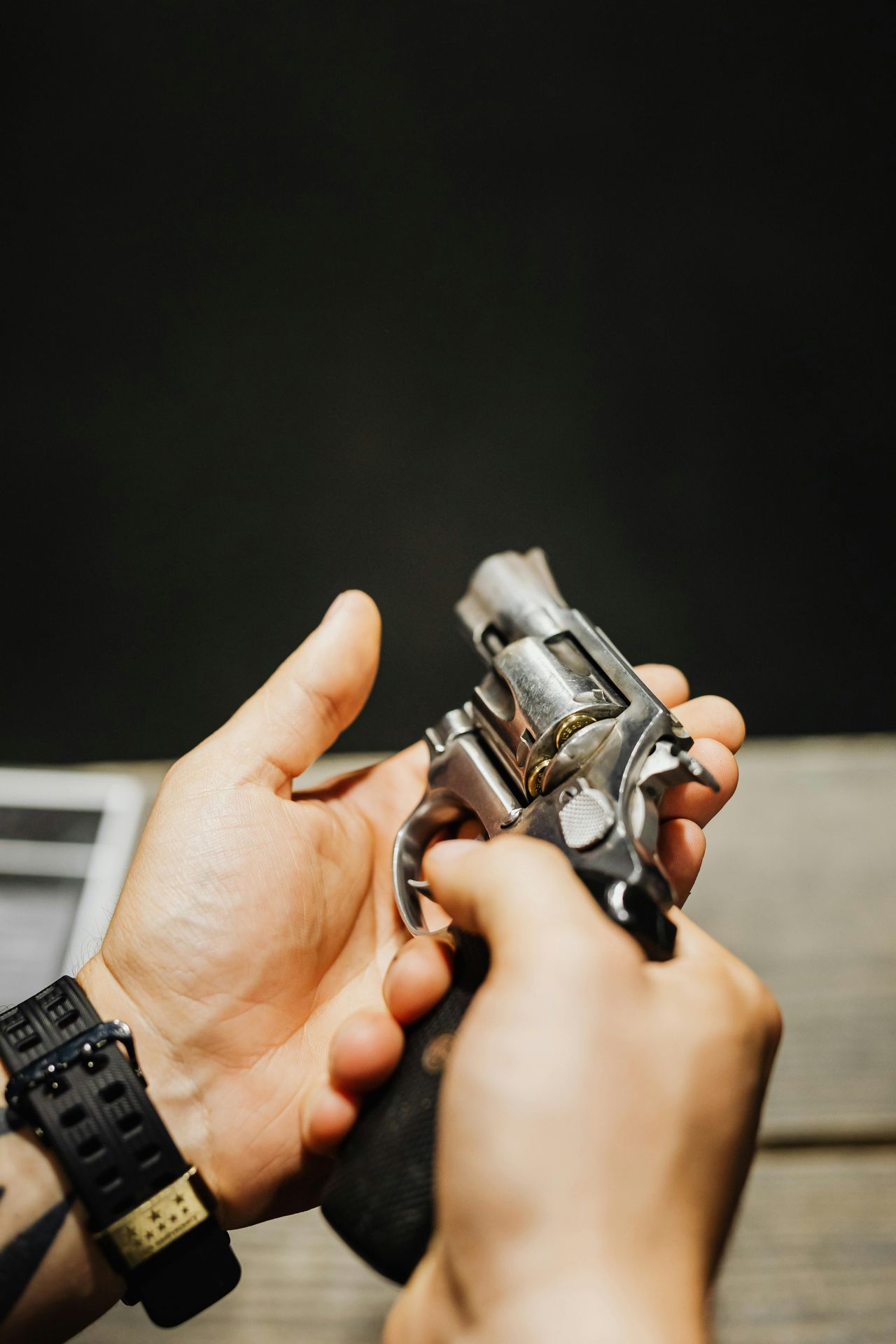
The funny thing about gun counters is that the most honest answers often happen after closing time. What working gunsmiths tend to own for themselves is usually simpler, tougher, and less glamorous than many buyers expect.
Why gunsmiths usually pick boring guns on purpose

A seasoned gunsmith sees handguns from the inside out, not from the ad copy forward. That changes everything. Fancy slide cuts, aggressive textures, and match slogans matter a lot less when you are the person diagnosing broken extractors, worn springs, tolerance stacking, and sloppy aftermarket work.
That is why the personal gunsmith short list often starts with pistols that have huge parts ecosystems, easy disassembly, and long records of reliability. Glock, Smith & Wesson M&P, SIG Sauer’s better sorted carry models, and sturdy double-action revolvers keep showing up for the same reason a professional mechanic may drive a plain pickup. It is easy to keep running, and it does the job every day.
The wider market points in the same direction. According to Shooting Industry’s 2024 industry report, 9mm accounted for 56.5% of all pistols produced in 2022, which tells you where practical demand has settled. ATF commerce updates also show 9mm remained the dominant pistol caliber in later production data, and California DOJ reporting lists 9mm Luger as the most commonly encountered caliber in its 2024 firearms report.
That does not mean gunsmiths all own the same handgun. It means they gravitate toward a pattern: service grade 9mm pistols, compact frames that shoot bigger than they look, and revolvers that keep working after years of neglect. The appeal is not a mystery. The appeal is low drama.
The compact 9mm that keeps winning private arguments
If there is one type of handgun gunsmiths repeatedly respect, it is the compact double-stack 9mm. Not because it is exciting, but because it sits in the sweet spot between concealment, controllability, capacity, and lifespan. For many people, that means something in the Glock 19 class.
The Glock 19 Gen5 remains the benchmark because the formula is so clean. Glock lists a 4.02-inch barrel, 15-round magazine capacity, and an unloaded weight of 23.99 ounces. More important than the numbers is what they represent: a pistol large enough to shoot well, small enough to carry, and common enough that every holster maker, parts supplier, and armorer already understands it.
Gunsmiths like that kind of standardization because it reduces friction. If a recoil spring wears out, it is easy to replace. If sights need changing, the market is flooded with options. If a customer asks for a carry pistol that can survive high round counts without turning into a hobby project, this class of handgun keeps answering the mail.
Smith & Wesson’s M&P 2.0 compact plays in the same lane for shooters who want a different grip shape and trigger feel. It has built a strong reputation among armorers for ruggedness and shootability, which is exactly the sort of thing that earns a place in a gunsmith’s safe. These are not “look at me” pistols. They are “work tomorrow” pistols.
Why so many pros still end up with a Glock 19 or M&P 2.0

There is a reason these two names come up over and over. They are not perfect, and gunsmiths know that better than anyone. But they are predictable, and predictability is a huge part of trust.
The Glock 19’s advantage is almost industrial. It is simple, consistent, and supported by an enormous service network. A gunsmith can fit sights, swap springs, diagnose stoppages, and source replacement parts with minimal guesswork. That matters more in real ownership than tiny differences in trigger weight that sound dramatic on a sales floor.
The M&P 2.0 wins people over in a different way. Many shooters find the grip angle and ergonomics more natural, especially if they never bonded with Glock’s feel. Smith & Wesson spec sheets for current M&P 9 M2.0 compact variants show the format remains squarely in that practical carry category, reinforcing why it stays relevant in armorer circles.
If you talk to experienced pistol people long enough, the pattern becomes obvious. The gun they recommend publicly may depend on inventory, pricing, or customer taste. The gun they keep privately is often the one with the least ego attached to it, because they know confidence comes from repeatable performance, not romance.
The micro compact is actually trusted after enough testing
The other handgun class that keeps showing up is the modern micro compact 9mm, especially for daily concealed carry. This is where the SIG Sauer P365 changed the market. It proved that a truly small pistol did not have to feel underfed or outdated.
SIG’s published P365 family dimensions helped redefine what “carry gun” could mean, and the XL-sized versions became especially influential because they split the difference between shootability and concealment. Even USPSA’s Production list reflects how established the P365 modular line has become in the broader shooting ecosystem. That kind of acceptance matters to gunsmiths, who tend to distrust novelty until it survives contact with real volume.
That said, gunsmiths usually do not blindly trust tiny pistols. They test them hard. A micro compact may be easier to carry, but it is also less forgiving of weak grips, poor ammunition choices, and delayed maintenance. Pros who carry them generally do so after confirming reliability with their chosen magazines and defensive load, not because a spec sheet looked clever.
That private caution is worth copying. A small gun that runs 100% for you is better than a larger “expert favorite” you leave at home. Gunsmiths know that ownership is practical before it is ideological.
The revolver, many experts keep it even if they rarely brag about it.
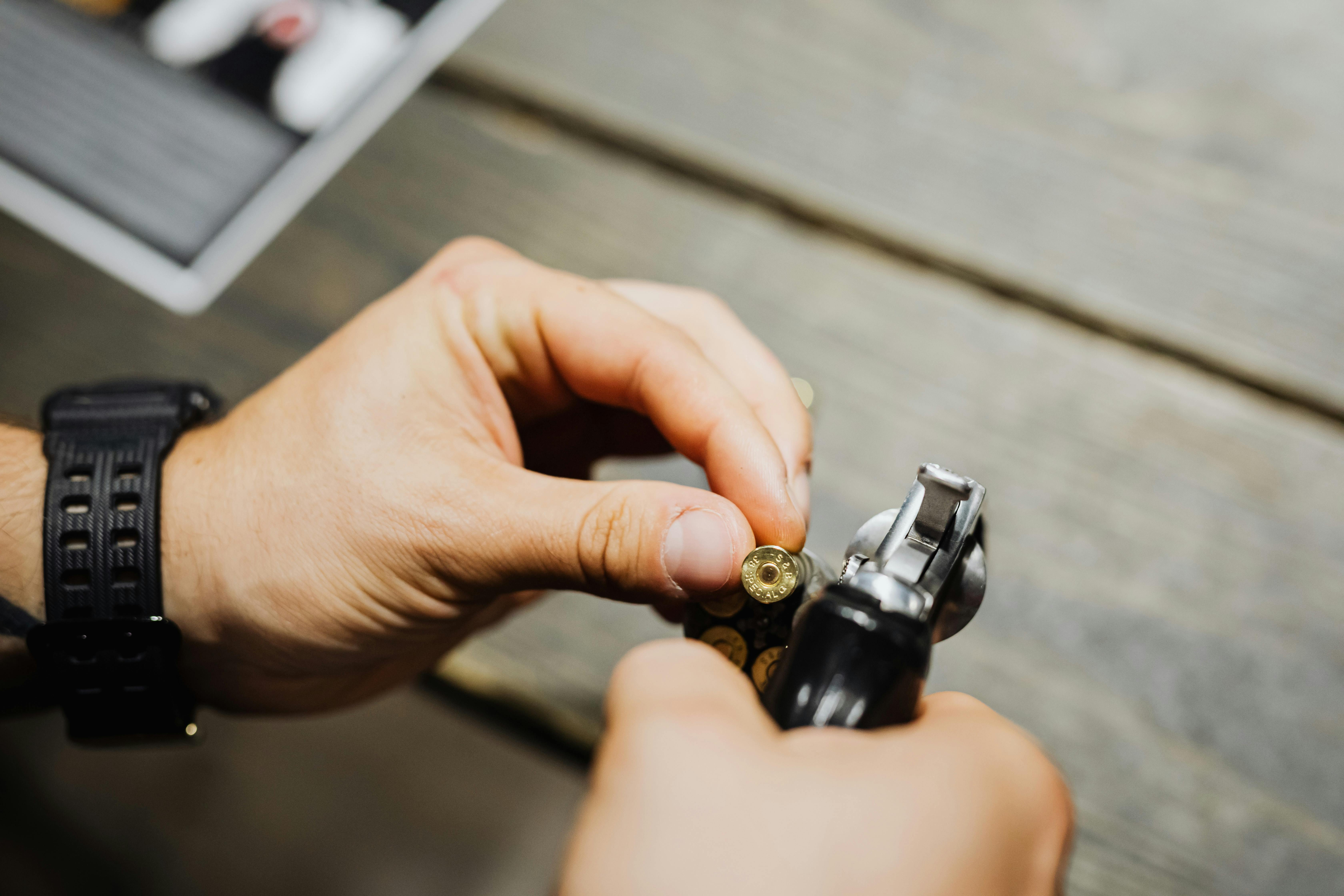
For all the dominance of polymer 9 mm, a surprising number of old school gunsmiths still keep at least one sturdy revolver. Not because they believe revolvers beat modern semiautos across the board, but because a good revolver solves a different set of problems with unusual elegance.
The Ruger SP101 is a classic example. It is an all-steel small-frame revolver, commonly configured as a 5-shot .38 Special or .357 Magnum, and it has a decades-long reputation for durability. Rugged lockwork, manageable size, and tolerance for long storage make it the sort of gun a professional may stash, carry occasionally, or hand to a less experienced shooter who values mechanical clarity.
Gunsmiths also appreciate revolvers because they reveal shooter habits without much disguise. Trigger control problems show immediately. Maintenance neglect is easier to spot. And unlike many semiauto malfunctions caused by bad magazines or ammunition quirks, revolver issues tend to be more diagnostic and mechanical, which appeals to people who think in systems.
The catch is that revolvers demand honest expectations. Capacity is lower, reloads are slower, and magnum recoil in a compact frame is no joke. But as a personal ownership choice, an SP101 class revolver still makes sense for someone who values strength, simplicity, and long-term mechanical confidence.
Caliber, recoil, and the reason 9mm dominates personal ownership

A big part of this conversation comes down to caliber realism. Gunsmiths are around enough shooters to know that paper arguments about “stopping power” often collapse under actual range performance. Hits matter, and recoil affects hits.
That is one reason 9mm has become the practical default. Modern defensive ammunition is designed to perform within well-established law enforcement testing standards, and manufacturers like Hornady explicitly market duty loads around FBI barrier protocols. The result is a cartridge that offers manageable recoil, broad ammunition availability, and useful capacity in compact pistols.
A gunsmith may own .45 ACP, .357 Magnum, or even 10mm for specific roles, but those are usually specialty answers. They kick more, cost more to train with, or require larger guns to really shine. For the average owner, the best handgun is the one that allows fast, accurate follow-up shots and enough repetition in practice to build genuine skill.
That same logic explains why target shooting with handguns remains so popular. NSSF survey data showed handgun target shooting led adult recreational participation categories in its 2022 reporting. People shoot what they can afford to practice with, and gunsmiths know practice is what turns equipment into competence.
What this really says about expertise and buying your own handgun
The quiet truth is that gunsmiths usually own handguns that minimize variables. They do not want a carry gun that needs constant tuning, a defensive pistol with scarce magazines, or a range toy that becomes temperamental after one part swap too many.
That is why personal ownership so often clusters around proven compact 9mms, vetted micro compacts, and a few tank-like revolvers. A Glock 19, an M&P 2.0 compact, a well-tested P365 variant, or a Ruger SP101 may not sound dramatic. But drama is exactly what professionals try to avoid in machines that may need to work under stress.
So no, there is no secret vault of magical counter-guy handguns. There is just a pattern. The people who fix guns for a living tend to buy tools with long service histories, common parts, sensible calibers, and reputations built on repetition rather than hype.
That may be the least glamorous answer in the handgun world. It is also probably the most useful one for anyone trying to buy smarter the first time.