Some store layouts tell you everything before a word is spoken. In a gun pawn shop, the owner’s position in the back is often one of those silent messages.
The back of the shop is about survival, not mystery
To an outsider, it can look theatrical when the owner of a gun pawn shop seems to operate from behind reinforced counters, office glass, or a workroom near the rear. In practice, that position is rarely about ego or secrecy. It is about maintaining control over the most sensitive part of a risky retail environment. Firearms, cash, and distressed sellers create a combination that demands caution every hour of the day.
Unlike many small retailers, pawn operators regularly meet people who need money fast. Some are honest customers with a family bill due tomorrow. Others bring confusing stories, questionable identification, or property that may attract legal trouble. Keeping the owner slightly removed from the front line gives the business a buffer, allowing staff to filter situations before they escalate into confrontation or panic.
Security consultants often note that criminals look for easy patterns and exposed decision-makers. If the owner is visibly accessible at all times, that person becomes the obvious pressure point during a robbery, attempted fraud, or targeted intimidation. Staying deeper in the store reduces that vulnerability. In a business handling firearms, reducing vulnerability is not paranoia; it is basic operating discipline.
Firearms change the risk profile of a normal pawn business

A regular pawn shop already manages stolen goods concerns, valuation disputes, and cash-handling risks. Add firearms to that equation, and the stakes rise immediately. Every gun must be treated as a controlled, traceable item with legal significance, not just as merchandise sitting on a shelf. That changes how owners think about movement, storage, and personal exposure.
In many stores, the owner remains in the back because that is where the serious compliance work happens. Serial numbers may need verification. Acquisition records must be accurate. Customer paperwork has to be reviewed carefully, and any transfer mistake can create consequences that outlast a single sale by years. The owner often places themselves where records, safes, and restricted inventory can be monitored at once.
There is also a practical safety issue. A firearm transaction can become tense more quickly than other retail interactions, especially if a buyer is denied, a seller is challenged on value, or a person appears impaired or unstable. An owner positioned farther back can observe behavior before stepping in. That extra distance functions like time, and in a gun business, a few extra seconds of judgment can matter a great deal.
The owner is often the most valuable asset in the building
When people say an owner is “precious,” it can sound sarcastic, but there is a blunt business truth behind it. In a small gun pawn shop, the owner is often the chief appraiser, compliance officer, negotiator, security planner, and relationship manager all at once. If that person is injured, threatened, or legally compromised, the business may not simply struggle; it may stop functioning.
Many independent pawn stores depend on knowledge that is not fully written down. The owner may know which local collections are legitimate, which repeat sellers are trustworthy, and which older revolvers or hunting rifles carry hidden collector value. That judgment is built through years, sometimes decades, of pattern recognition. It is difficult to replace quickly, especially in a niche where mistakes can cost thousands of dollars or trigger regulatory scrutiny.
There is also the reality of insurance and liability. Carriers and risk managers tend to favor procedures that reduce the chance of direct owner confrontation, especially in stores with firearms and large cash swings. The owner’s physical safety is not only a human concern but a continuity issue. Protecting that person protects payroll, licensing, vendor relationships, and the store’s long-term reputation in the community.
Store design quietly reinforces control and observation
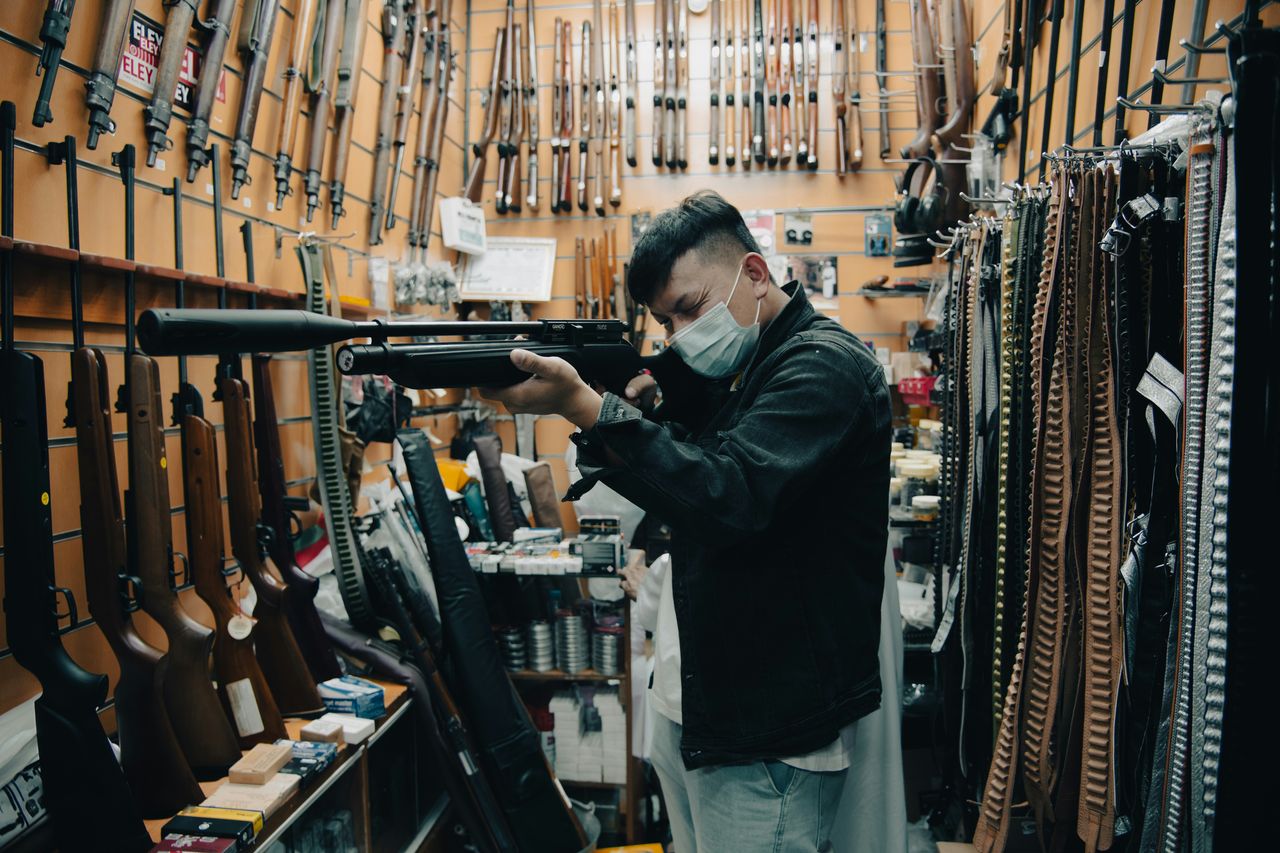
Walk into many gun-oriented pawn shops and you will notice that the space itself encourages layers. The front may feature showcases and basic customer service. The middle often becomes controlled access space. The back usually holds safes, paperwork, receiving areas, surveillance equipment, and the decision-maker. That arrangement is not accidental; it reflects how risk is managed through architecture.
From the back, an owner can often see more than customers realize. Camera feeds, mirrored sightlines, buzz-controlled doors, and employee communication systems turn the rear of the store into a command post. This allows the owner to monitor whether a negotiation is becoming heated, whether a firearm is being handled safely, or whether a person is paying unusual attention to locks, exits, or staffing gaps.
Real-world robbery prevention guidance supports this layered setup. Security professionals frequently recommend limiting direct access to managers, separating high-value inventory from entry points, and creating delay between demand and compliance. A rear position supports all three. It can also discourage impulsive crime, because offenders prefer quick control, and a shop designed around distance, barriers, and observation is much harder to dominate.
Experience teaches owners that visibility can become a weakness

Many owners do not start out in the back. Some learn their lesson after years of standing at the counter, absorbing every complaint, argument, and threat personally. Over time, they discover that being the most visible person in a firearm-centered pawn business can invite manipulation. Customers seeking exceptions, angry sellers disputing prices, and suspicious buyers denied transactions often direct their frustration toward whoever appears to hold final authority.
Veteran operators often describe a shift from accessibility to controlled access. Front staff can answer routine questions, gather identification, and test the tone of an encounter. The owner then enters only when needed, with more information and more leverage. That approach protects both the owner and the customer experience, because it reduces emotional improvisation in moments where calm procedure matters more than personality.
This is especially important when the shop serves a broad mix of customers, from hunters and collectors to people pawning inherited firearms under financial pressure. Those interactions can carry grief, pride, fear, and urgency all at once. The owner’s distance helps preserve professionalism. It keeps difficult transactions from becoming overly personal and allows decisions to be framed as policy, law, and valuation standards rather than impulse.
Privacy and discretion matter more than customers may realize
Gun pawn shops deal in items that are financially valuable, politically sensitive, and emotionally charged. A person selling a firearm may be liquidating an estate, covering rent, or dealing with a divorce. A person buying one may be making a lawful, carefully considered purchase but still prefer discretion. The owner staying in the back can help maintain that privacy by keeping the public-facing area less chaotic and less revealing.
Discretion also protects the business from being too easy to read. If everyone can instantly identify who approves every high-value loan, who opens the safes, and who handles rare inventory, then criminals can map the operation quickly. Keeping the owner less visible disrupts that mapping. In security terms, unpredictability is often a useful layer, especially when the inventory includes firearms, jewelry, watches, and large amounts of cash.
There is a cultural piece to this as well. In many long-running pawn businesses, especially family-run shops, the owner sees themselves less as a salesman on display and more as a final authority behind the curtain. That may feel old-school, but it serves a purpose. It separates routine retail from consequential decisions, reminding staff and customers alike that some transactions require a higher level of review and care.
What looks like distance is often responsible leadership

It is easy to misread a back-room owner as aloof, suspicious, or self-important. Sometimes personality plays a role, of course, because every shop has its own culture. But in the gun pawn business, distance often reflects responsibility more than vanity. The owner is managing legal compliance, employee safety, inventory exposure, and customer risk in an environment where one bad decision can have lasting consequences.
That is why the phrase “because they are precious” lands closer to the truth than it first appears. Precious does not mean delicate. It means essential, high-risk, and costly to lose. In a small specialized shop, the owner’s experience, licensing awareness, and judgment are often more valuable than any single firearm in the display case.
So when the owner stays in the back, it is usually not a performance. It is a strategy shaped by crime prevention, business continuity, and hard-earned experience. In a place where merchandise can be dangerous, paperwork can be unforgiving, and customers can arrive under real pressure, the smartest person in the building is often the one least eager to stand in the spotlight.