The fight over so-called ghost guns just took another sharp turn. And this ruling could reshape how far the federal government can go in regulating homemade firearms and build kits.
What The Texas Ruling Actually Did
A federal judge in Texas blocked the Biden administration’s 2022 “frame or receiver” rule, which was designed to bring more unfinished gun parts and easy-to-assemble kits under federal firearms law. Chief U.S. District Judge Reed O’Connor of the Northern District of Texas ruled for Defense Distributed and other challengers, finding the rule unconstitutional on both Second Amendment and Fifth Amendment grounds, according to Reuters.
That matters because the ATF rule did far more than tweak paperwork. It expanded how regulators define a firearm frame or receiver, and it also swept in some weapon parts kits that could be readily converted into working guns. The practical effect was to require serialization, background-check compliance in many commercial sales, and tighter recordkeeping by federally licensed dealers and gunsmiths.
O’Connor’s opinion said the rule went too far by burdening people who want to make firearms for personal use. In his view, the regulation deprived would-be home builders of due process and interfered with what he described as a constitutional right to acquire the components needed to make lawful firearms.
The decision landed after years of litigation over whether the ATF was simply interpreting old law for modern products or effectively writing new law on its own. That distinction is at the heart of nearly every major challenge to federal gun regulation right now.
Why The Biden Administration Issued The Rule
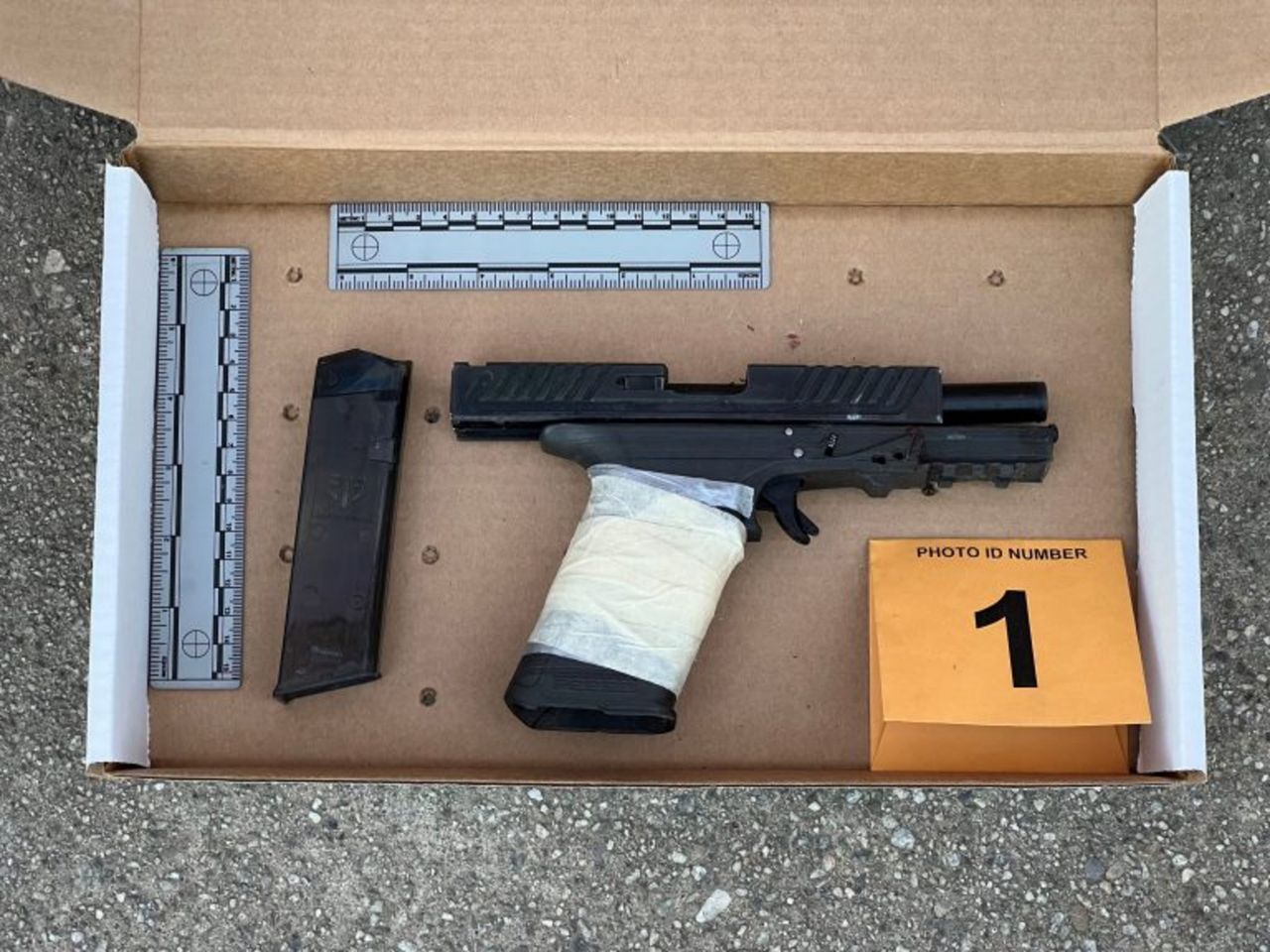
The rule was part of a broader Biden administration crackdown on untraceable homemade firearms, commonly called ghost guns. These weapons often lack serial numbers, which makes them harder for law enforcement to trace after crimes. The Justice Department said the rule was meant to modernize decades-old federal definitions so they could cover kits and partially complete components being sold in a far more developed consumer market.
According to the Justice Department, the rule took effect in August 2022 and clarified which part of a weapon must carry a serial number, including in some easy-to-build kits. It also required licensed dealers and gunsmiths to serialize certain privately made firearms when they took them into inventory. Federal officials argued that those steps were necessary because unmarked firearms were showing up more often at crime scenes.
The government leaned heavily on ATF data to justify the move. Justice Department materials said ATF received roughly 45,240 reports of suspected privately made firearms recovered by law enforcement between January 2016 and December 2021, including hundreds linked to homicide or attempted homicide investigations.
Supporters of the rule argued it did not ban homemade guns outright. Instead, they said it imposed the same basic tracing and recordkeeping logic long applied to commercially manufactured firearms, while closing what regulators viewed as an obvious loophole in the Gun Control Act.
The Supreme Court Already Weighed In
What makes this new ruling especially striking is that the U.S. Supreme Court had already upheld the ATF rule in March 2025 in Bondi v. VanDerStok. In that decision, the Court rejected a broad facial attack on the regulation and concluded that the rule was not inconsistent with the Gun Control Act on its face. That was widely seen as a major victory for the federal government.
The Supreme Court’s reasoning was narrower than many headlines suggested at the time. The justices did not hold that every possible application of the rule was valid, and they did not resolve every constitutional theory that later challengers might raise. Instead, the Court focused on whether the rule could lawfully apply in at least some circumstances, particularly to kits that were effectively near-complete firearms.
That opening appears to have given challengers another path. After the Supreme Court ruling, gun-rights plaintiffs returned to lower court and argued that even if the rule survived a facial statutory challenge, it still failed under the Constitution. Reuters reported that O’Connor accepted that invitation and ruled against the government on constitutional grounds the high court had not squarely decided.
In plain English, the Supreme Court said the rule could exist. The Texas court has now said this version of the rule still cannot be enforced as written, at least under the constitutional analysis adopted in that case.
The Second Amendment Argument Behind The Decision
The most consequential part of O’Connor’s opinion may be the idea that the Second Amendment protects not just possession of finished firearms, but also access to the means of making them. That is a serious expansion of the argument long advanced by parts-kit sellers, home gunsmiths, and groups aligned with the broader do-it-yourself gun culture.
That world includes hobbyists milling unfinished receivers, builders assembling pistols or rifles from parts, and increasingly, users interested in 3D-printed components. For years, advocates have framed home building as part of a deeply rooted American tradition. In that telling, making your own firearm for lawful personal use is not a loophole at all. It is the original baseline.
Gun-rights lawyers have also leaned on the Supreme Court’s modern Second Amendment framework, especially after the 2022 Bruen decision. Under that approach, courts look closely at text, history, and tradition when judging firearms regulations. O’Connor’s ruling appears to fit that model by treating self-manufacture as conduct covered by the amendment’s protections.
Critics, of course, see that reasoning as dangerously broad. If the right to keep and bear arms includes a protected right to acquire unfinished components and conversion-ready kits with minimal oversight, then regulators may have a much harder time policing products specifically designed to skirt conventional firearm sales rules.
The Fifth Amendment And Due Process Piece

The Fifth Amendment portion of the ruling is easy to overlook, but it may prove just as important. O’Connor said the ATF’s rule failed to provide sufficient clarity, depriving people of due process by leaving too much uncertainty around what products qualify as regulated frames, receivers, or firearm kits.
That concern has followed the rule from day one. Critics argued the government used terms like “readily” and “partially complete” in ways that gave regulators broad discretion while leaving manufacturers, dealers, and consumers guessing where the line really was. In the firearms business, that kind of uncertainty carries real consequences because mistakes can trigger criminal exposure, license trouble, product seizures, and civil litigation.
The ATF insisted the rule gave more specific guidance than the old framework and included examples and diagrams to explain coverage. The agency also said the market had evolved beyond the law’s original assumptions, forcing regulators to address kits and components that functioned like firearms in all but the last few steps of assembly.
Still, vagueness arguments can resonate when constitutional rights and criminal enforcement overlap. A court does not have to agree with every gun-rights claim to conclude that a rule with fuzzy edges poses a due process problem when ordinary people are expected to know exactly what conduct crosses the line.
What Happens Next For Ghost Gun Regulation

This is almost certainly not the last word. Because the ruling came from a federal district court, the case is likely headed back into the appellate system, where the Fifth Circuit will again become a central battleground. Given the stakes, another trip to the Supreme Court would not be surprising.
The legal picture is already messy. On one hand, the Supreme Court has said the ATF’s 2022 rule can survive a facial statutory challenge. On the other, a Texas judge has now said the same rule violates constitutional protections in the way it operates against these plaintiffs. That creates a tense and unstable split between broad regulatory authority and constitutional limits on enforcement.
For manufacturers, dealers, hobbyists, and law enforcement, the immediate effect is more uncertainty. Businesses that sell frames, receivers, jigs, or build kits now have to watch not just federal text, but also injunctions, appeals, and venue-specific rulings. Consumers face the same confusion, especially in a market where products can move quickly from legal gray area to active litigation target.
The larger fight is no longer just about ghost guns as a political buzzword. It is about whether federal agencies can adapt old gun laws to new technology, and whether courts will treat homemade firearms as a constitutional frontier rather than a regulatory loophole.
Why This Case Matters Beyond One Rule
This case matters because it sits at the intersection of three major American arguments at once: gun rights, administrative power, and emerging manufacturing technology. Homemade firearms are not new, but the rise of online parts sales, precision tools, and 3D-printing culture has changed the scale and speed of private gun making in a way lawmakers in 1968 never anticipated.
That puts pressure on everyone in the system. Regulators say they are trying to stop weapons that are easy to obtain and hard to trace. Gun-rights advocates say Washington is using vague rulemaking to criminalize lawful conduct that has long existed outside the commercial gun-counter model. Courts are being asked to decide not only what the law says, but who gets to update it for a changing world.
According to Reuters, O’Connor’s ruling gives the gun-rights movement a fresh win even after the Supreme Court upheld the rule in a different posture last year. That alone makes the decision more than a one-day headline. It shows how legal defeats can become new openings when challengers shift from statutory arguments to constitutional ones.
For the general public, the takeaway is simple: the battle over ghost guns is no longer just about parts kits. It is now a test case for how America handles firearms innovation, agency authority, and constitutional rights in the same courtroom.