Henri Pieper’s Belgian work deserves more attention whenever the history of gas-seal revolvers comes up. The better-known Nagant Model 1895 became famous through Russian military service, but Pieper was exploring gas-sealing technology earlier. The Pieper M1893 represents an important stage in that development, combining a moving cylinder, specially shaped ammunition, and an unusual revolving-carbine format. Historical sources place Pieper’s gas-seal development around 1890, while the M1893 design dates to 1893, and production followed later.
1. Pieper Had the Earlier Idea

The key date is 1893, when Henri Pieper’s Belgian design was already developing a practical gas-seal revolver concept. Pieper had patented gas-sealing ideas earlier, including a French patent in 1890, while the better-known Nagant Model 1895 came later. That makes the Pieper story important: Nagant did not originate the basic principle. The M1893 belongs to a line of Pieper experiments that sought to close the normal cylinder-to-barrel gap, an engineering problem that had challenged revolver makers for decades. Its significance is easiest to see in that wider context.
2. The M1893 Was Built for Mexico
The Pieper M1893 was closely tied to Mexico and the government of Porfirio Díaz. Contemporary references describe a Mexican contract of about 5,000 arms, giving the Belgian design a real military and police connection rather than leaving it as a workshop curiosity. Production took place at Pieper’s Liège works. This international connection also shows why the revolver deserves attention: Belgian engineering, Mexican service requirements, and an unusual gas-seal mechanism came together in one firearm during the 1890s. It was an ambitious solution for its period.
3. The Cylinder Moved Forward

The defining trick was movement at the cylinder and barrel junction. Instead of accepting the ordinary revolver gap, Pieper’s system brought the cylinder forward toward the rear of the barrel during firing. A specially shaped cartridge case helped complete the seal. This reduced the path through which propellant gases could escape. The principle sounds simple, but making a rotating cylinder move, lock, and align reliably added mechanical complexity. Pieper was therefore solving a real ballistic problem while creating a demanding mechanical one. That distinction matters when comparing the two designs.
4. The Cartridge Was Part of the Seal
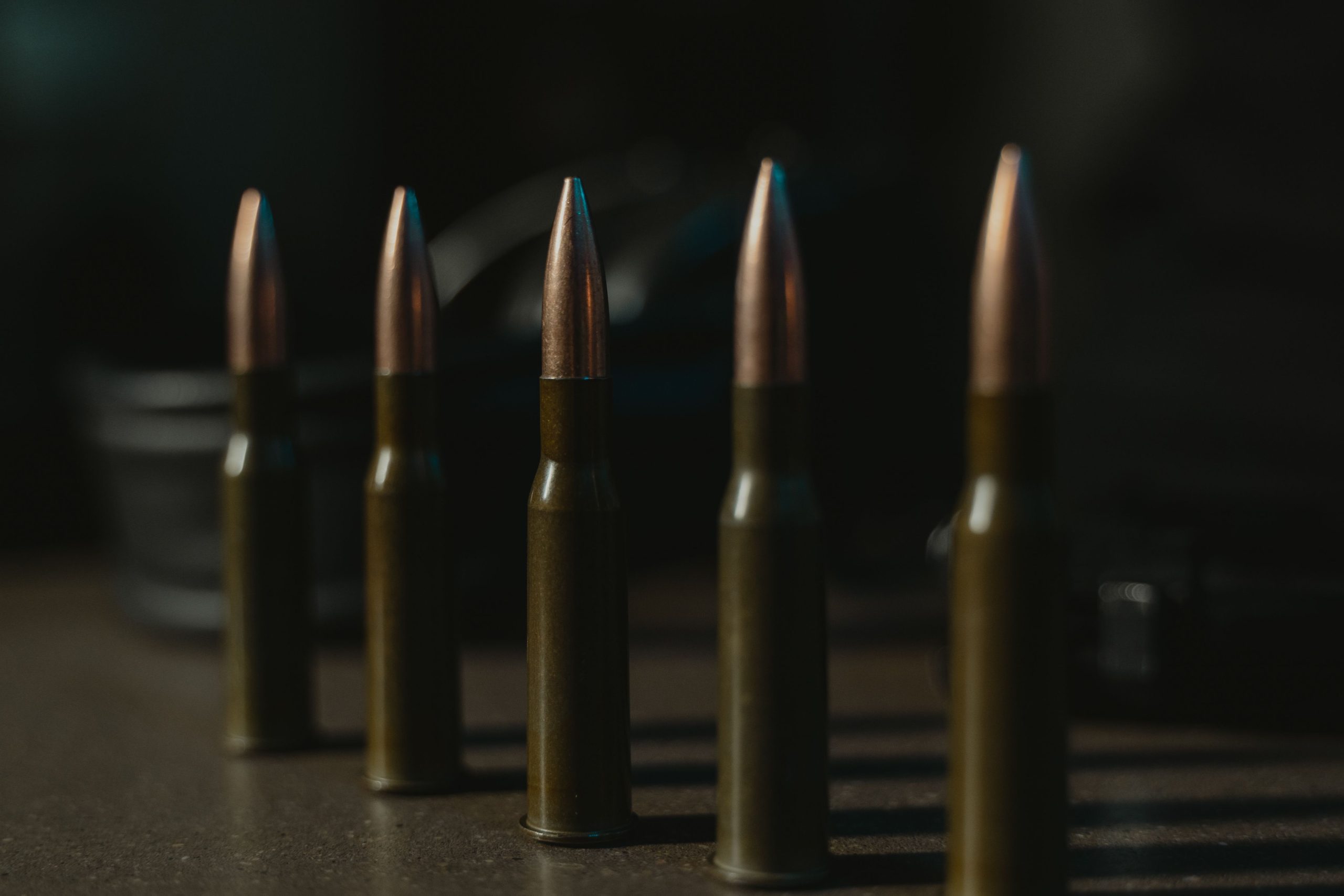
Pieper’s gas-seal concept depended on ammunition as well as machinery. The production M1893 revolving carbine used the 8mm Pieper Carbine cartridge, whose bullet was deeply enclosed by the case. When the cylinder moved forward, the extended case mouth could cooperate with the barrel entrance to close the junction. That is a major historical link with the later Nagant system. The cartridge was not merely a container for propellant; its unusual geometry became an active component of the sealing arrangement itself. This detail makes the weapon especially interesting today.
5. The M1893 Was More Than a Handgun

One reason the Pieper M1893 is easily misunderstood is its unusual configuration. The documented M1893 revolving carbine used a 9-round cylinder and a wooden stock and fore-end, turning the gas-seal idea into a shoulder-fired weapon. Production is generally placed around 1896 to 1897, after the 1893 design date. Its unusual form reflected an era when revolving carbines were still being explored for military and police use, even as repeating rifles were rapidly becoming more practical. That combination was unusual for the 1890s.
6. It Offered Both Firing Modes

The M1893 revolving carbine used a double-action system while also allowing the hammer to be cocked manually for single-action fire. That gave the user two distinct trigger arrangements: one emphasized a faster firing sequence, while the other allowed a more deliberate shot. The design also used a 9-round cylinder, an interesting capacity for its period. These features show that Pieper was not simply testing a gas seal; he was combining it with a practical repeating arm intended for real service conditions. It was an ambitious package for a relatively specialized arm.
7. Pieper’s Work Predated Nagant’s Fame
The historical irony is that Nagant became synonymous with gas-seal revolvers because Russia adopted the Model 1895 in large numbers. Pieper’s earlier work received nothing like that level of military recognition. Sources place Pieper’s gas-seal development around 1890, years before the Russian Nagant reached its famous service status. So saying Pieper “beat Nagant” is reasonable when referring to the priority of the concept, but it should not imply that the M1893 was simply an earlier copy of the Russian revolver. That distinction is important when assigning historical credit.
8. The Design Had a Serious Trade-Off
Closing the cylinder gap solved one problem but created another: complexity. A conventional revolver can tolerate a relatively straightforward cylinder rotation, whereas a gas-seal design must coordinate rotation with forward movement and precise barrel alignment. Pieper’s approach therefore demanded more from the mechanism. The reward was better containment of propellant gases, but the price was additional parts, movement, and manufacturing difficulty. That trade-off helps explain why conventional revolvers remained dominant despite the cleverness of the idea. That compromise shaped the design’s later reputation.
9. Its Sights Show Ambition
The documented M1893 revolving carbine was equipped with an adjustable rear sight, with period descriptions giving a scale extending as far as 900 meters. That number should not be mistaken for a realistic hunting or combat distance. It reflects the optimistic sighting conventions of the era rather than guaranteed accuracy at extreme range. Still, the feature reveals how Pieper positioned the arm: this was not merely a short-range pocket revolver. It was conceived as a shoulder-fired repeating weapon with ambitions beyond ordinary handgun use. Even so, the feature remains revealing.