Some rifles fade into collector niches. Russian and Soviet-pattern rifles never seem to stay there for long.
They keep coming back because they offer something Americans still value: durability, history, simple mechanics, and a style that feels purpose-built rather than polished.
SKS
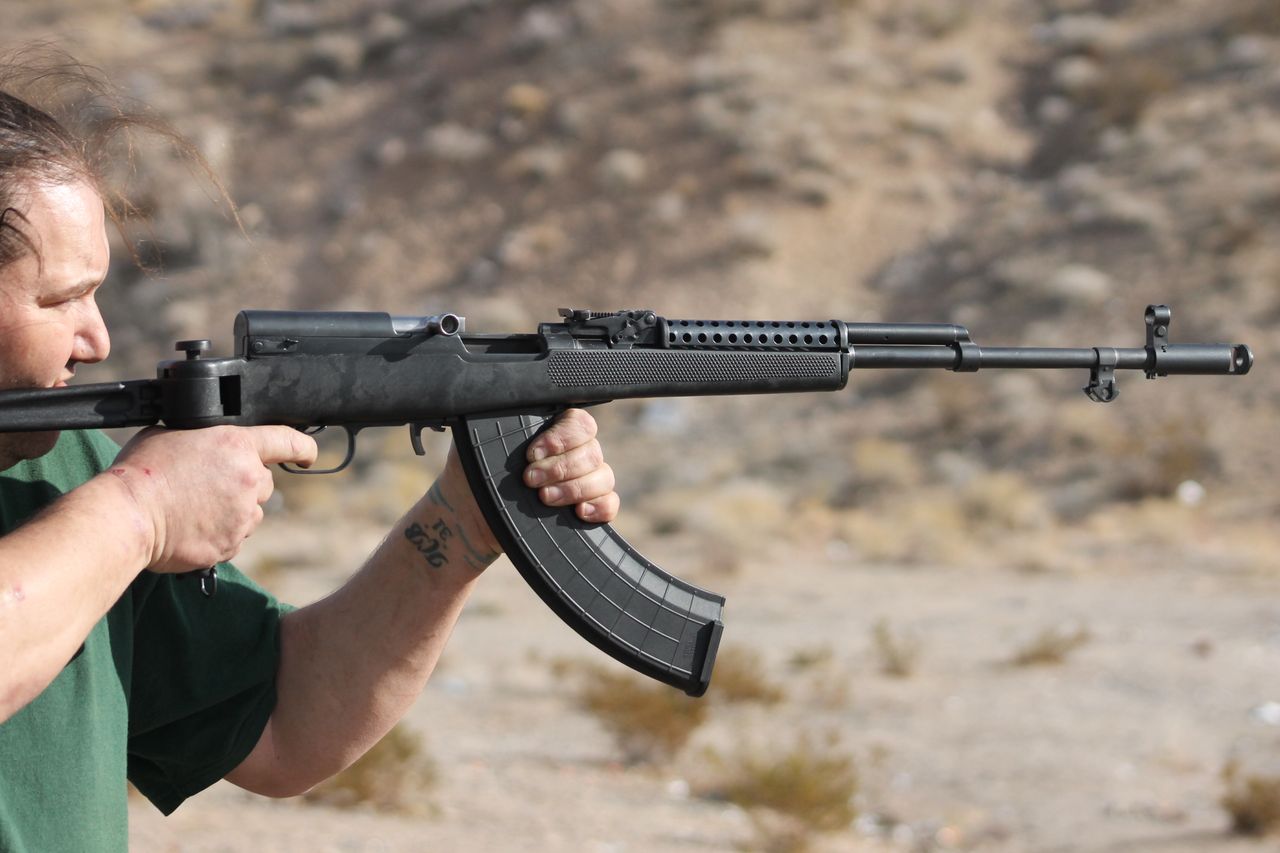
The SKS is one of the easiest rifles to understand once you handle one. Designed by Sergei Simonov and adopted in the closing phase of World War II, it was built around the 7.62×39 cartridge that would soon define an entire family of Soviet small arms. In Soviet service, it was quickly overshadowed by the AK, but that only helped its second life, because surplus examples eventually became affordable, sturdy entry points for American shooters.
What keeps the SKS in circulation is balance. It is softer shooting than many new owners expect, its longer sight radius helps compared with many compact carbines, and the fixed magazine gives it a distinct personality in a detachable-magazine world. Plenty of hunters and ranch shooters also like that it carries more like a classic carbine than a modern tactical rifle.
The rifle’s popularity in the United States was also boosted by huge waves of imports from multiple countries, especially Chinese and Yugoslav-pattern guns. That variety matters. Some buyers want a clean shooter, others want trench art, worn bluing, and a story stamped into the stock.
Most important, the SKS still delivers the thing Americans respect most in old surplus guns: honest function. It is not the flashiest choice, but it has a reputation for working with minimal drama, and that kind of reputation keeps any rifle relevant for decades.
AKM and Classic Stamped AK Variants
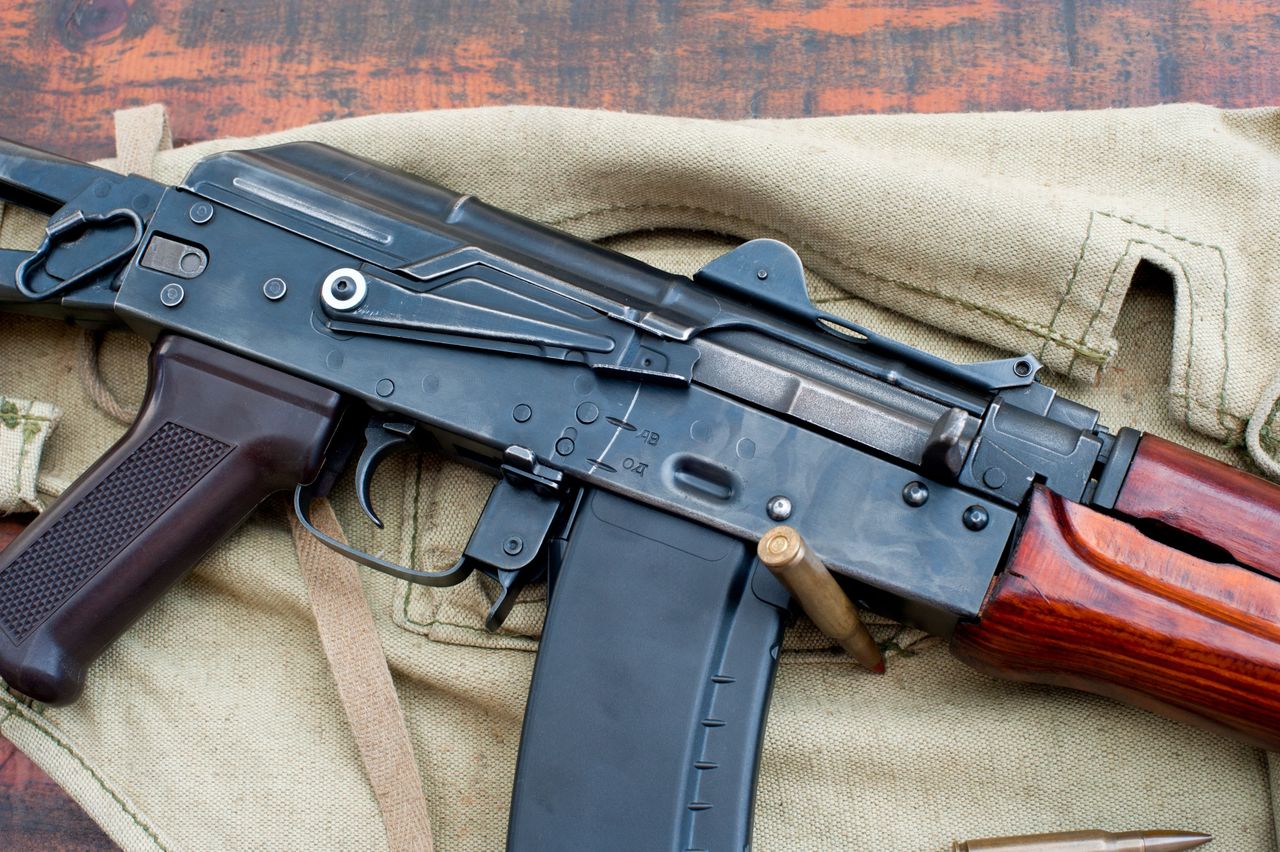
If there is one Soviet-pattern rifle that never leaves the American imagination, it is the AKM. The original AK-47 became a legend, but the stamped-receiver AKM is the pattern that really spread across the world and defined what most shooters picture when they say “AK.” Its reputation was built on cheap production, battlefield reliability, and a manual of arms simple enough to make sense even to first-time owners.
Americans keep returning to AKM-style rifles because they occupy a sweet spot between practical shooter and historical icon. The 7.62×39 chambering is still widely recognized for close- to mid-range utility, and the platform has a recoil impulse many shooters find more of a shove than a snap. For range use, property defense, and plain mechanical enjoyment, that counts for a lot.
Another reason is that the AKM pattern offers endless variation without losing its core identity. Wood furniture, side rails, underfolders, fixed stocks, laminate handguards, slant brakes, and modernized railed setups all orbit the same basic formula. That lets collectors chase authenticity while casual owners build something more personal.
There is also a cultural piece that should not be ignored. The AKM has become one of those rare rifles that means something even to people who do not own one. Movies, war coverage, and decades of global imagery turned it into a symbol, and symbols sell rifles almost as effectively as performance does.
WASR-10
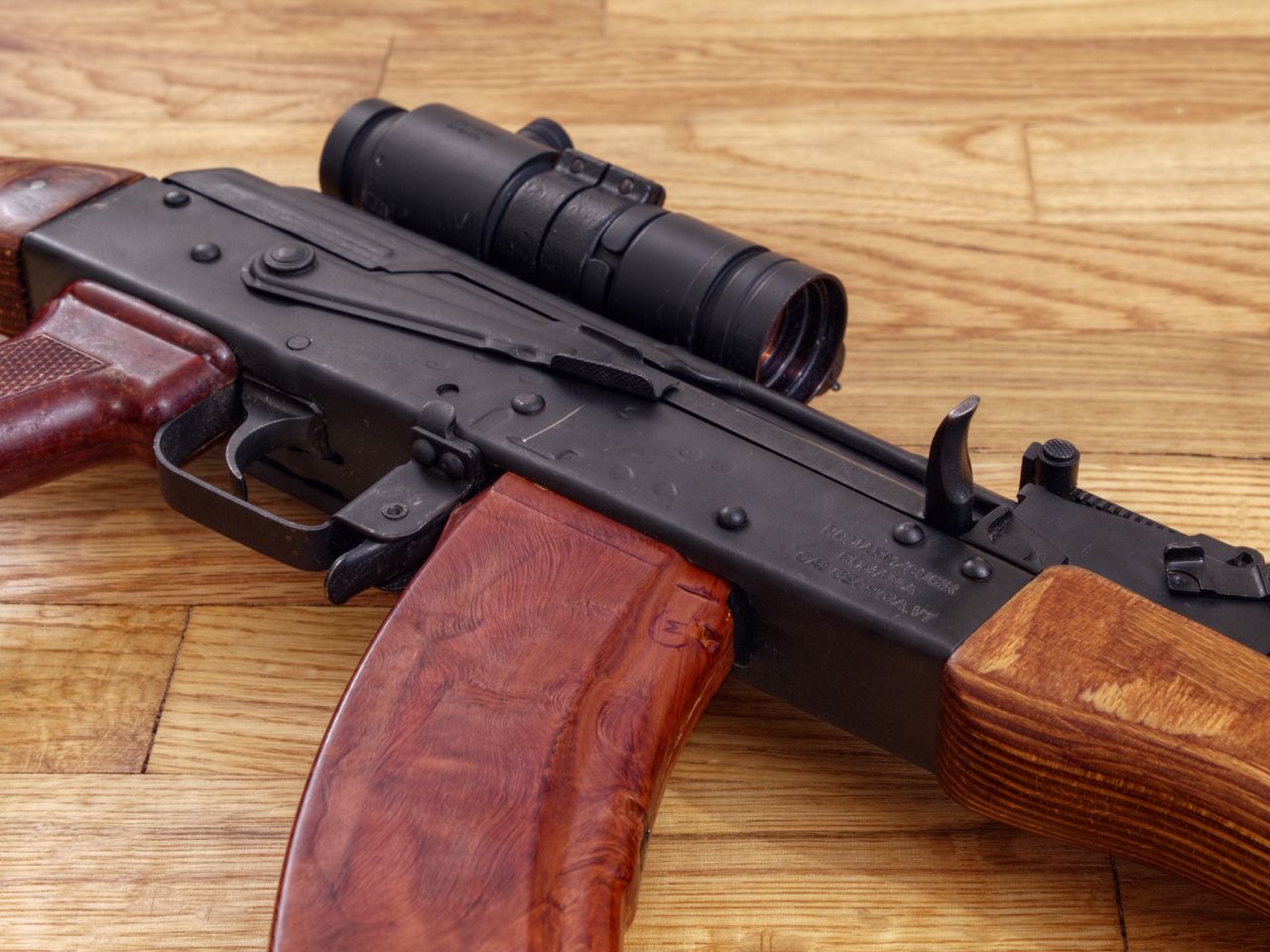
The WASR-10 may not be the prettiest rifle in the rack, but that has never stopped it from becoming one of America’s most persistent AK buys. Century Arms describes the Romanian-made WASR as its most popular imported AK, and the current catalog still presents it as a core offering with a stamped receiver, chrome-lined hammer-forged barrel, side rail, and standard AK magazine compatibility. That formula hits the market exactly where many buyers live: functional, proven, and not overly precious.
For years, the WASR built its name as the rifle people bought when they wanted a real imported AK without entering boutique territory. Some examples from earlier eras had rougher finish work or canted parts, and that rough reputation oddly became part of its identity. A lot of owners came to see the WASR as a blunt instrument, not a safe queen, and that image has stuck.
That matters in the U.S. market because many shooters want an AK they can actually use hard. They want steel-case range sessions, truck-gun practicality, and something they do not feel guilty scratching up. The WASR answers that better than many rifles that look more refined on day one.
In a market crowded with American builds, parts-kit projects, and premium imports, the WASR remains the baseline reference point. When a rifle becomes the standard people compare everything else to, it stops being just a product and starts becoming a category of its own.
Zastava ZPAP M70

The Zastava ZPAP M70 sits slightly outside strict Soviet spec, but Americans absolutely treat it as part of the same conversation. Built on the long-running Yugoslav and Serbian M70 lineage, it carries the AK spirit while adding its own distinct character. Zastava’s U.S. manual lists the 7.62×39 chambering, 16 3/4-inch barrel, 36 1/2-inch overall length, and 8-pound weight, all of which point to a rifle with a little more heft and presence than some lighter AKM-pattern guns.
That added heft is part of the appeal. Shooters often describe the M70 family as feeling substantial, almost overbuilt, and that perception has helped the ZPAP earn a loyal following. It is the rifle many buyers choose when they want an imported gun that feels like it was built with service life as a primary concern rather than minimum weight.
Furniture options also broaden its pull. Walnut, maple-toned wood, dark polymer, optics rails, and accessory-ready handguards allow the rifle to move between collector charm and modern utility without losing its identity. That flexibility matters for a buyer base split between traditionalists and tinkerers.
The ZPAP’s rise also reflects a bigger American trend: buyers increasingly want imports with factory pedigree. A rifle with a clear lineage and a recognizable Balkan factory name has an edge, and the M70 family has earned that edge the old-fashioned way, through repetition and trust.
Arsenal SAM7
The Arsenal SAM7 is what happens when the AK platform moves upmarket without abandoning its roots. Arsenal says its SAM7 receivers are milled from hot-die hammer-forged blanks in Bulgaria, then machined over hours into a finished receiver. That extra manufacturing effort is exactly why the rifle keeps coming back into serious American conversations: it offers AK familiarity with a more premium build philosophy.
For many buyers, the SAM7 answers a very specific question. What if you want an AK not as a budget workhorse, but as a long-term flagship rifle? The milled receiver brings different balance, a denser feel, and a sense of refinement that appeals to shooters who have already owned simpler stamped guns and want to climb the ladder without leaving the pattern behind.
It also benefits from timing. As imports have tightened, prices have shifted, and top-tier examples have become more desirable, rifles like the SAM7 have gained status. Scarcity and quality tend to reinforce each other in the gun world, especially when the platform already carries legendary cachet.
That is why the SAM7 keeps resurfacing despite its cost. It is not the rifle people buy because it is cheap. It is the rifle they buy because they have learned the platform, know what corners look like, and want one that feels like very few corners were cut.
Saiga Sporter Conversions
Few rifles tell the American AK story better than the Saiga. Built in Russia by the same industrial lineage tied to original Kalashnikov production, Saiga rifles arrived in sporter configuration to meet import rules, then became the basis for endless conversion projects. Before imports were cut off, demand was strong enough that Russian officials publicly talked about increasing Saiga exports to the U.S., a sign of just how hungry the market had become.
That hunger came from authenticity. Even in a neutered sporting layout, buyers knew they were getting a rifle with direct Russian pedigree, and that mattered. Once converted back toward a more traditional AK configuration, a Saiga offered something many enthusiasts saw as the closest practical route to owning a real Russian-pattern gun without entering rare-collector territory.
The 2014 sanctions era changed everything. Federal regulations and sanctions pressure effectively froze that supply line, and once the stream stopped, the rifles already in American hands became more desirable. Scarcity gave them a second identity as semi-collectibles.
Today, Saigas still come up because they represent a moment many shooters feel is gone. They are not just rifles. They are reminders of a time when Russian-made civilian imports were obtainable, moddable, and central to the AK enthusiast world in the United States.
RPK-Pattern Rifles Like the AES-10B

RPK-pattern rifles scratch an itch that standard AK carbines do not quite reach. They are heavier, longer, and less handy, but that is exactly the point. The civilian semi-auto versions sold in the U.S. borrow from the Soviet squad automatic concept, giving buyers a rifle with a reinforced presence, bipod-ready look, and the unmistakable silhouette of a support weapon scaled back for lawful civilian ownership.
Century’s current catalog still positions the Romanian AES-10B as a notable offering, and company materials have described it as modeled after the Romanian version of the RPK. That matters because Americans tend to prefer military-pattern rifles with a traceable lineage. An RPK-style gun is not just another AK with a long barrel. It carries a specific battlefield role and a distinct visual identity.
On the range, these rifles offer a different kind of fun. The extra weight often smooths the shooting experience, and the longer sighting plane can make them feel steadier from prone or bench positions. They are not especially convenient, but convenience is not why people buy them.
People buy them because they are dramatic in the best possible gun-counter sense. They look serious, feel serious, and deliver a niche experience that is still affordable enough to tempt collectors who already own more conventional AKs.
Dragunov and SVD-Style Rifles
There are rifles people admire, and then there are rifles people mythologize. The Dragunov falls squarely in the second group. Designed by Yevgeny Dragunov and accepted into Soviet service in 1963, the SVD became one of the most recognizable designated marksman rifles on earth. In American eyes, it occupies a fascinating middle ground between battle rifle, sniper icon, and Cold War trophy.
Part of the attraction is simple visual charisma. The skeletonized stock, long receiver, distinctive magazine, and slim barrel profile make it instantly recognizable from across a room. But visual appeal alone would not sustain demand for decades. What keeps Americans interested is that the SVD was purpose-built for a real tactical role rather than adapted into one later.
Civilian access has always been the challenge. True Russian SVD rifles have been scarce, expensive, or effectively out of reach for many buyers, which is why Tiger or TigR variants, imports from other countries, and SVD-inspired alternatives keep generating attention. People are often chasing the shape and the lineage as much as the exact issue configuration.
That enduring interest says something important about the U.S. collector mindset. Not every desirable rifle is bought to be practical. Some are bought because they represent a whole era of military design, and the Dragunov represents that as powerfully as almost anything made behind the Iron Curtain.
American Rifles Built Around Soviet Cartridges and Ideas
One of the clearest signs of Soviet-pattern staying power is that American companies keep building around the concept even when the rifle itself is not an import. Ruger’s Mini Thirty is a perfect example. Ruger records show the Mini Thirty line dates to 1986, and the company has long marketed it as a U.S.-made semiauto that lets shooters use 7.62×39 in a familiar ranch-rifle format. That is a direct response to enduring American demand for the cartridge and what it offers.
More recent designs show the same pattern from another angle. The CZ 600 Trail in 7.62×39 gives buyers a compact bolt-action platform with modern controls, a 16-inch barrel, 10-round capacity, and compatibility with Bren 2 magazines in that chambering. It is not Soviet in origin, but it proves the old cartridge and its practical appeal continue to inspire new rifle development.
This is the broader truth: Americans do not just keep coming back to Russian and Soviet-pattern rifles themselves. They keep coming back to the underlying logic. Intermediate cartridges, simple actions, rugged field use, and compact power still resonate.
When a design philosophy outlives its political era and starts shaping rifles built far outside its homeland, that is more than nostalgia. That is influence, and Soviet small-arms influence remains deeply embedded in the American rifle market.