Some firearms were engineered for greatness, but others stumbled into history through luck, timing, and unintended consequences. A rushed wartime project, a civilian favorite, or a weapon embraced by the wrong or right crowd can turn an ordinary design into a legend. These nine guns became famous not because their makers perfectly predicted the future, but because history had other ideas.
Colt Single Action Army

The Colt Single Action Army was built as a practical service revolver, not as a myth-making machine. When it appeared in 1873, it was simply a rugged sidearm for soldiers, lawmen, and civilians heading into a fast-changing American West.
Its accidental rise came later, when dime novels, Hollywood westerns, and television turned it into the revolver. Plenty of frontier handguns existed, but this one got cast as the symbol of an entire era.
That image stuck so hard that the gun outgrew its original military purpose. Today, it feels less like a tool and more like a shorthand for the Wild West itself.
Luger P08

The Luger P08 was innovative and undeniably elegant, but its legendary reputation wasn’t just about engineering. It became famous because its silhouette was so distinctive that even people who know little about firearms can often recognize it instantly.
Originally adopted as a military pistol, the Luger gained extra power as a visual symbol in two world wars. Soldiers brought stories home, collectors prized captured examples, and filmmakers used them whenever they needed a quick cue for a European officer.
In other words, the Luger didn’t become immortal strictly because it was the best pistol of its age. It became immortal because history, design, and imagery fused at exactly the right moment.
Thompson Submachine Gun

The Thompson was originally marketed with serious military intentions, but its path to fame veered hard into unexpected territory. Early on, it struggled to find a stable official role, which left room for civilian sales and a much stranger public life.
Then Prohibition happened. Gangsters, law enforcement, and headline writers made the Thompson famous in a way its creators never could have scripted. The “Tommy Gun” became a media character as much as a weapon.
Later, wartime service gave it legitimacy, but the legend had already formed. Its drum magazines, hard-edged profile, and roaring reputation turned a niche design into one of the most recognizable guns ever made.
M1 Garand

The M1 Garand was meant to modernize the U.S. infantry rifle, and by that measure it absolutely succeeded. What no one could fully predict was how completely it would become wrapped up in the American memory of World War II.
Its semi-automatic fire gave soldiers a real advantage, but legends are built on more than performance charts. Veterans’ stories, battlefield victories, and that unforgettable metallic en bloc clipping all helped create an emotional connection.
The Garand didn’t set out to become a cultural heirloom. It became one because it arrived at the exact intersection of industrial power, military success, and national identity.
AK-47
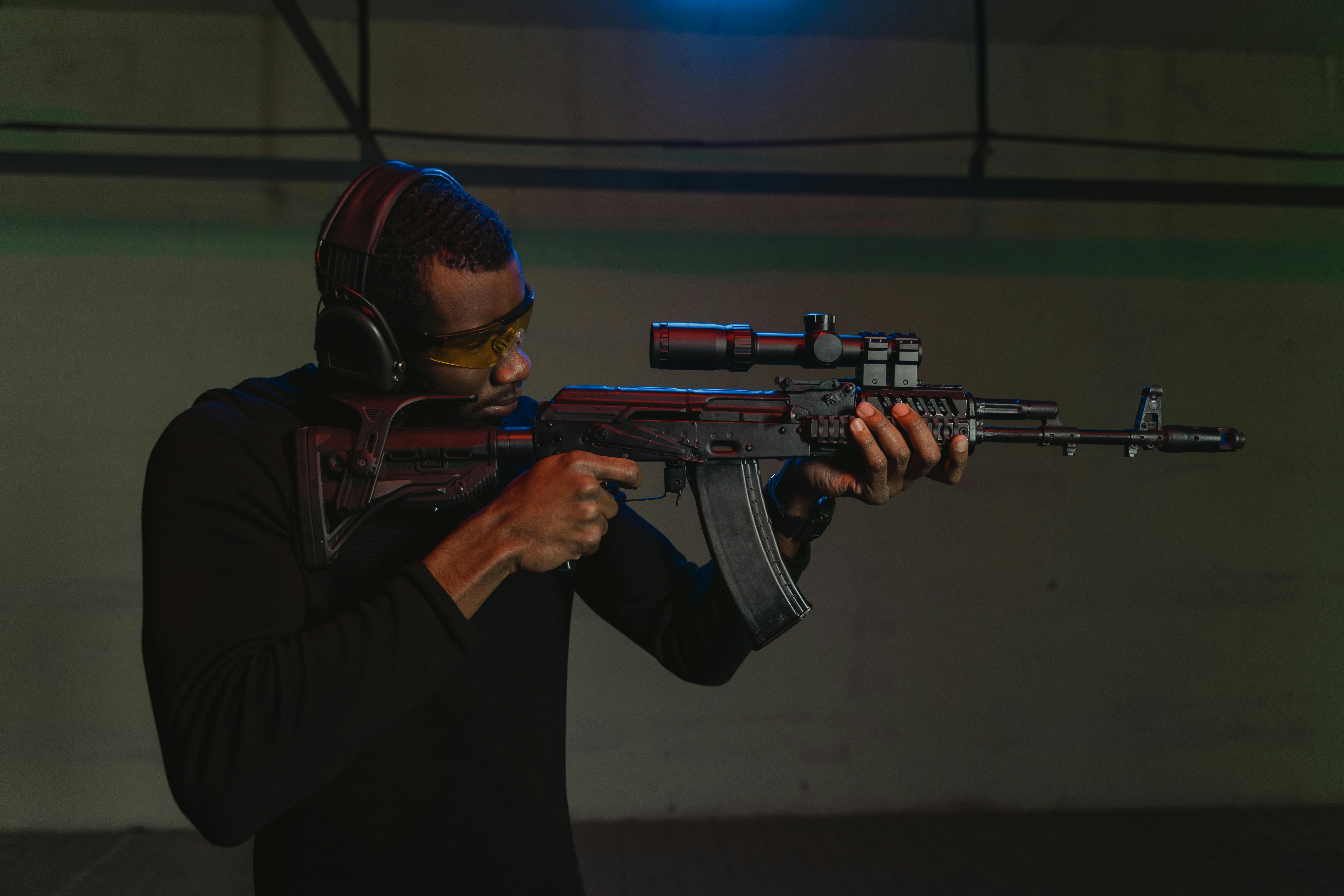
The AK-47 is often treated like a weapon that was destined to conquer the world, but its legendary status was also a product of politics, manufacturing, and sheer global spread. A durable rifle is one thing; a durable rifle produced everywhere is something else entirely.
Cold War alliances, licensed copies, unlicensed copies, and simple battlefield practicality pushed it onto nearly every continent. Before long, it was more than a Soviet rifle. It was a symbol of revolution, insurgency, and survival.
That symbolic life was not a neat design brief. It happened because a straightforward, forgiving rifle met a century full of conflict and mass production.
AR-15

The AR-15 began as a lightweight, modern rifle concept that seemed almost too unconventional for its time. Its aluminum and synthetic construction looked futuristic, and early military adoption was anything but smooth.
Yet its accidental path to fame came through flexibility. Civilian shooters embraced the platform, manufacturers expanded it endlessly, and the rifle became less a single product than a whole ecosystem of parts, calibers, and uses.
That adaptability turned it into a household term, for better and for worse. It became legendary not because one version dominated everything, but because the design proved unusually capable of becoming whatever the era demanded.
Winchester Model 1894

The Winchester Model 1894 was introduced as a practical lever-action rifle for a market that still valued speed, portability, and familiar handling. It was a commercial product first, not a planned national icon.
Its legend grew because it matched a changing America so well. Hunters liked it, ranchers trusted it, and generations of owners passed it down until the rifle became woven into family stories as much as shooting culture.
Hollywood helped, of course, but the Model 1894’s fame feels unusually organic. It became iconic by being present in ordinary life long enough that people stopped seeing it as merely a rifle and started seeing it as tradition.
Mosin-Nagant

The Mosin-Nagant was never glamorous. It was long, often rough around the edges, and built for endurance more than romance. That is exactly why its later legendary status feels so accidental and so fascinating.
Produced in enormous numbers and used across wars, revolutions, and frozen battlefields, it survived by sheer stubbornness. Decades later, inexpensive surplus rifles introduced it to a new wave of collectors and shooters who appreciated its history as much as its simplicity.
The Mosin became a cult classic almost by attrition. It earned fame because it kept showing up, decade after decade, carrying the weight of an astonishing amount of history for a very plain-looking rifle.
Remington 870

The Remington 870 was designed to be a dependable pump-action shotgun for ordinary buyers, and that modest mission is part of what made its legend possible. It wasn’t pitched as exotic or revolutionary. It was built to work, and keep working.
Then it spread everywhere. Hunters carried it into the field, police departments adopted it, homeowners trusted it, and generations learned to shoot with one. That kind of broad, everyday presence creates a quieter sort of fame.
The 870 became legendary almost by repetition. It entered so many corners of American life that it stopped being just a shotgun and became the pump shotgun many people picture first.
Glock 17
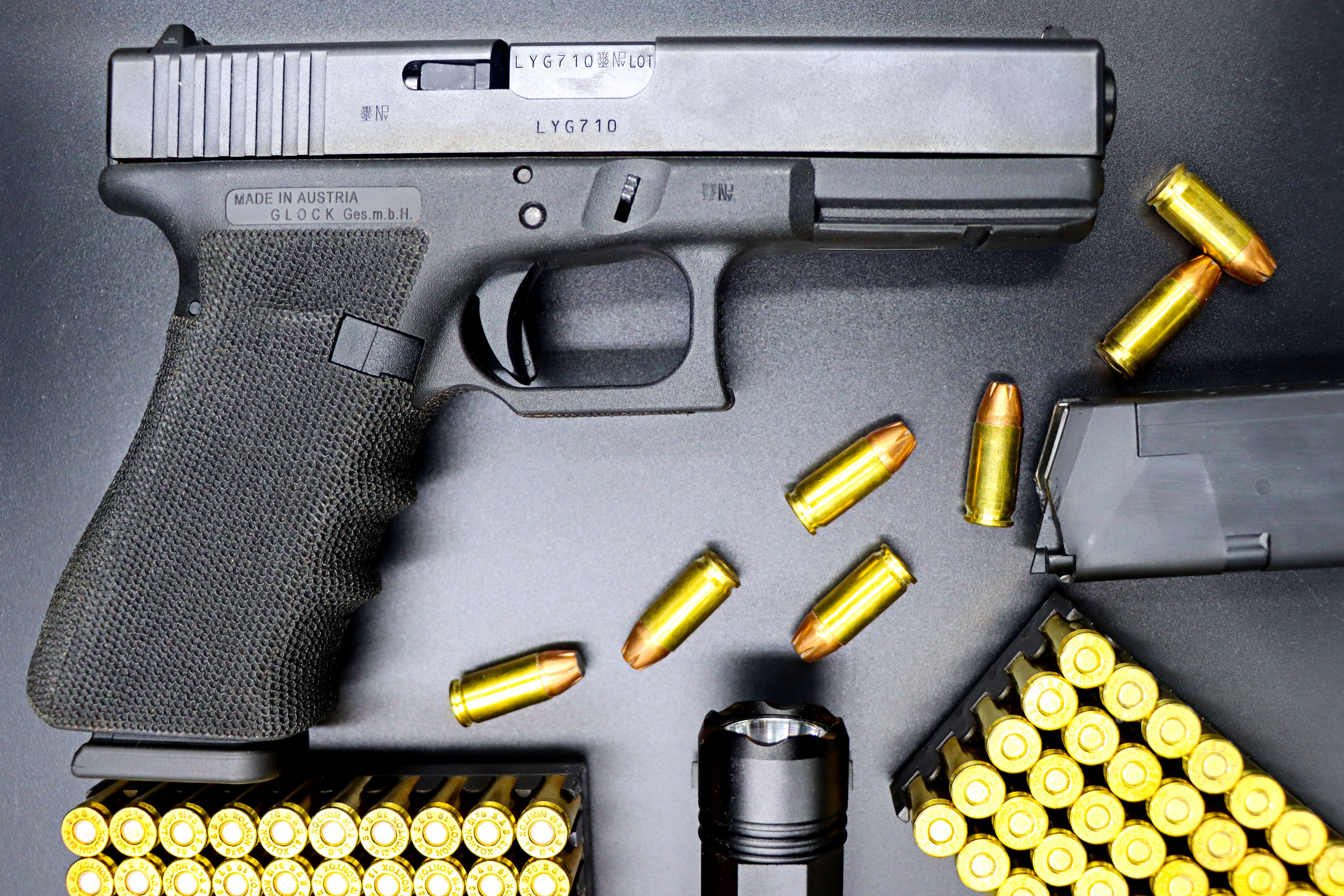
When the Glock 17 arrived, plenty of traditionalists were skeptical. A polymer-framed pistol from a company better known for military equipment sounded, to many ears, like a strange experiment rather than the future of handguns.
Its rise to legendary status came from proving those doubts wrong in public view. Reliability, simplicity, and high capacity won over police agencies, civilian shooters, and eventually pop culture, which embraced the pistol’s stark, modern look.
The accident was not that Glock made a competent gun. The accident was how thoroughly it changed expectations. What once seemed unusual quickly became the template that countless later pistols would follow.