Most campers pack a tarp for the obvious reasons, then leave a lot of its potential on the table. With a little creativity, that basic sheet can become one of the hardest-working pieces of gear at your campsite. These smart ideas go beyond covering firewood and can help you stay organized, comfortable, and ready for surprise weather.
Make a Dry Mud-Free Entryway

A tarp can do more than sit under a tent. Spread one just outside your tent door to create a clean landing zone for shoes, packs, and damp socks before they track a mess indoors.
On rainy weekends, this simple trick feels surprisingly luxurious. It gives everyone a place to pause, wipe off dirt, and keep the sleeping area from turning into a gritty, wet disaster.
If you fold the edges slightly or weigh down the corners, it stays put better and looks tidier too. It is one of those small campsite upgrades that pays off every single time someone steps in and out.
Create a Quick Privacy Screen

At a crowded campground, privacy can feel like a luxury. A tarp hung between trees or tied to poles can become a simple screen for changing clothes, blocking a direct view into your site, or carving out a more relaxed cooking area.
It is especially useful for family camping, beach camping, or festivals where campsites sit close together. Suddenly, your space feels more defined without requiring expensive specialty gear.
Choose a darker tarp if you want better coverage, and angle it with the wind so it does not flap all afternoon. The result is basic, but it can make a busy campground feel much more comfortable.
Turn It Into a Rain Catching Station

If you are camping somewhere that allows water collection, a tarp can help you gather rainwater for dishwashing, rinsing muddy gear, or other non-drinking tasks. By pitching it at an angle, you can direct runoff into a bucket or storage container.
This is not a replacement for packed drinking water, but it can be a smart backup when the weather turns wet and the campsite gets messy. It also gives you a little more flexibility during extended trips.
The key is keeping the tarp clean before the rain starts and using the collected water appropriately. Done right, it is a resourceful trick that makes a storm slightly more useful.
Build a Windbreak for Cooking

Cooking outdoors gets a lot harder when gusts keep stealing your heat. A tarp can be positioned as a windbreak near your camp kitchen, helping your stove burn more steadily and making meal prep far less frustrating.
This works best when the tarp is set a safe distance from open flames and anchored securely. Think of it as shelter for the cooking zone, not something draped too close to the action.
Once the wind is blocked, everything feels easier. Water boils faster, lightweight gear behaves better, and the whole camp kitchen becomes a more pleasant place to gather while dinner comes together.
Use It as a Gear Sorting Surface

A tarp spread flat on the ground makes an instant staging area for gear. Instead of dropping tools, cooking supplies, and clothing directly onto dirt or pine needles, you get a clear surface where everything is easier to find.
This is especially handy when packing up at dawn or organizing camp after a long drive. Items stay cleaner, smaller pieces do not disappear as easily, and you spend less time hunting for essentials.
It also helps when repacking wet gear separately from dry items. In a busy campsite, having one dedicated place to sort and stack your equipment can make the whole trip feel more efficient and far less chaotic.
Rig a Shade Canopy Over the Hangout Area

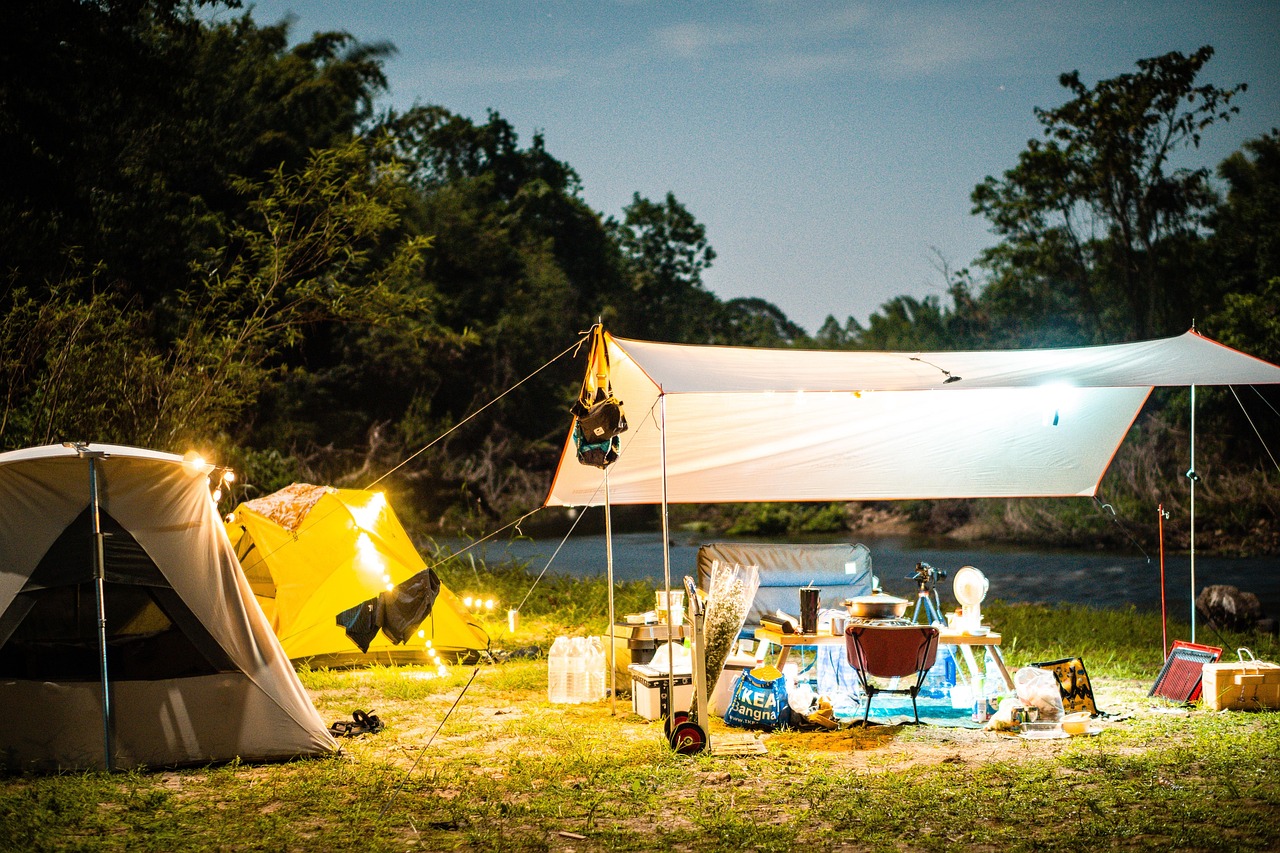
Most campers think about rain first, but a tarp can be just as valuable on hot, clear days. Hung over a picnic table, camp chairs, or hammock zone, it creates a patch of shade that makes the site more usable for hours.
This can be a game changer at exposed campgrounds, lakeshores, and desert sites where trees are limited. Suddenly there is a cool place to read, snack, or simply escape the midday glare.
Pitch it high enough for airflow and angle one side lower if the sun is moving across camp. With a few lines and good placement, a humble tarp can become the social center of the entire campsite.
Protect Firewood and Keep Kindling Dry

A lot of campers toss a tarp over firewood and call it done, but there is a smarter way to use it. Instead of wrapping the pile tightly, create a loose top cover with open sides so air can circulate while rain stays off.
That setup helps wood dry out rather than trapping moisture underneath. It is a small distinction, but one that matters when you are trying to get a reliable campfire going after wet weather.
You can also dedicate one corner to tinder, cardboard, or store-bought fire starters that need extra protection. When evening rolls in, having dry kindling ready can make the difference between an easy fire and a smoky struggle.