
A rifle’s stock is more than a place to rest the shooter’s cheek. Its shape, material, adjustment system, and folding mechanism influence comfort, handling, portability, and how the rifle fits different users. Traditional wooden stocks emphasize familiar lines, while modern designs incorporate adjustable length, folding hinges, and specialized chassis systems. Some rifles even use layouts that eliminate the conventional stock entirely. These 10 examples highlight genuinely different approaches to rifle-stock design, from classic sporting configurations to compact and unconventional engineering.
1. Winchester Model 70: Traditional Sporting Stock

The Winchester Model 70 represents the classic sporting-rifle stock, with a full-length butt, sloping comb, and shaped fore-end that flow into a familiar wooden profile. Many versions have been offered in walnut, while current configurations and dimensions vary by model. This design does not fold or telescope; its fixed length gives the shooter a consistent shoulder position and keeps the outline uncluttered. The Model 70’s long history, dating to 1936, makes it a useful example of how traditional stock geometry remains relevant in modern hunting rifles.
2. Ruger 10/22: Lightweight Synthetic Stock
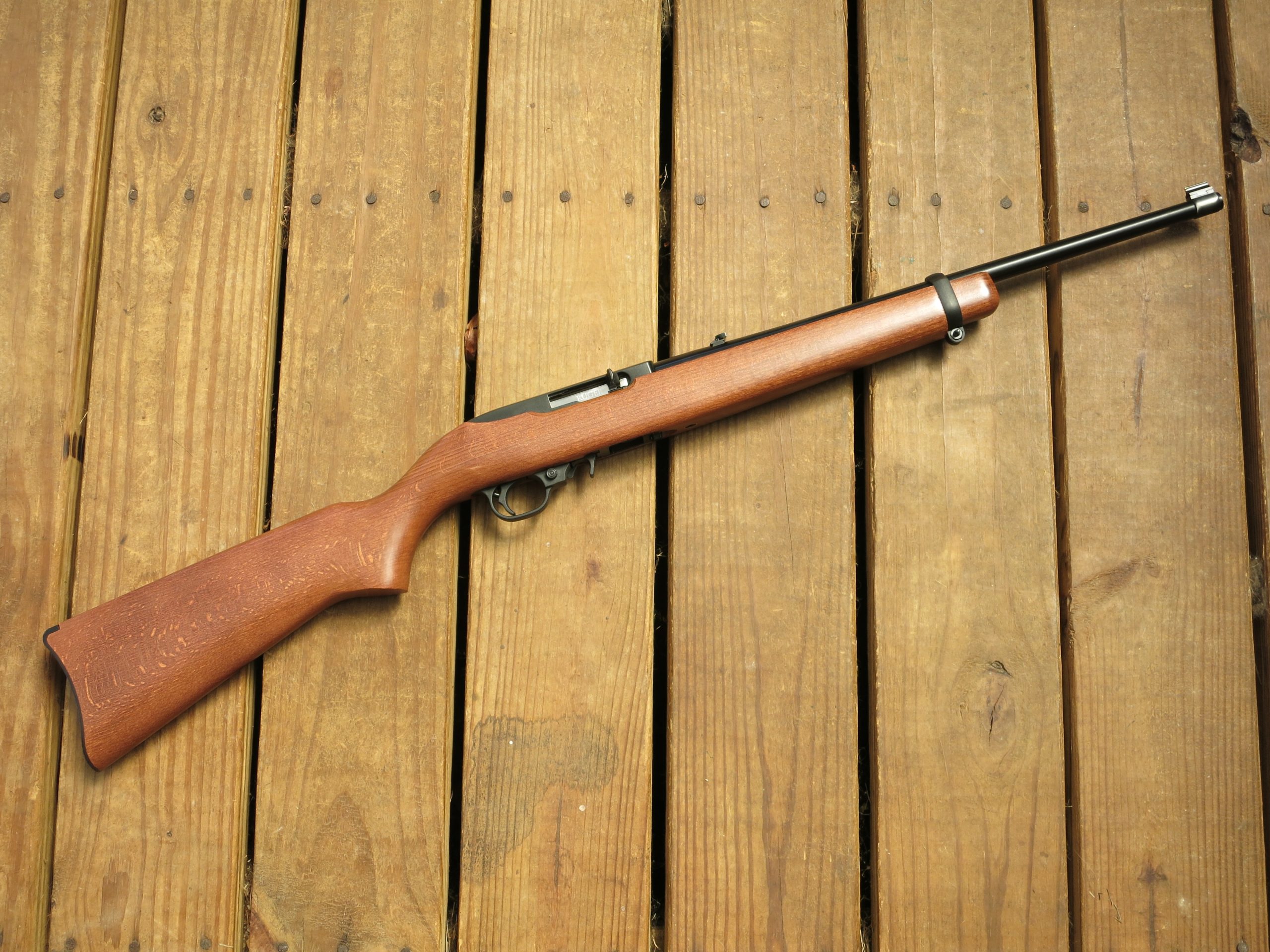
The Ruger 10/22 shows how a simple synthetic stock can make a rifle practical without relying on a traditional hardwood finish. Its familiar sporting shape includes a shoulder butt and a fore-end that supports the barrel, with dimensions depending on the specific variant. The standard rifle uses .22 LR ammunition and a 10-round rotary magazine, details that helped make it a widely recognized rimfire platform. Polymer construction resists ordinary moisture better than untreated wood, while the stock’s uncomplicated shape keeps the design distinct from folding or precision-chassis systems.
3. AR-15 Carbine: Telescoping Stock
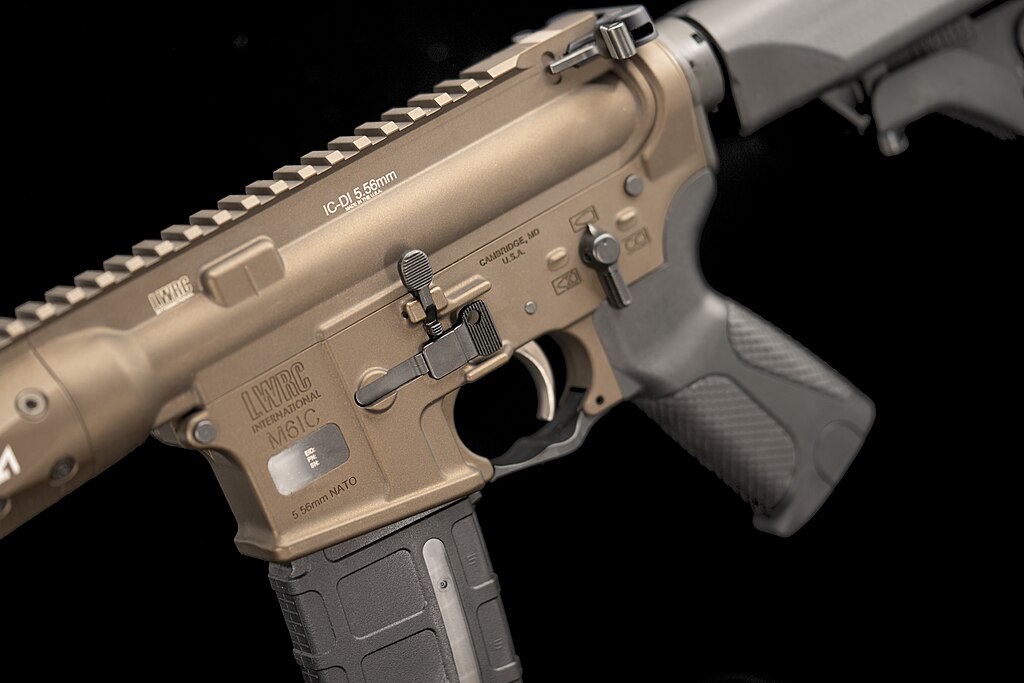
A typical AR-15 carbine demonstrates the telescoping stock, which slides along a receiver extension and locks at several length settings. The user can change the length of pull without replacing the entire stock, making the layout adaptable to different body sizes or clothing layers. A common six-position pattern is widely recognized, although exact adjustment ranges depend on the stock and buffer system. Unlike a folding design, the stock remains aligned with the rifle when shortened. This configuration is associated with many 5.56×45 mm NATO or .223 Remington sporting rifles, but specifications vary by model.
4. AKMS: Under-Folding Stock

The AKMS illustrates an under-folding metal stock, whose arms pivot beneath the receiver rather than extending sideways. When unfolded, the stock provides a shoulder support; when folded, it reduces the rifle’s storage length. The AKMS is a variant of the 7.62×39 mm AKM family and was designed around a folding arrangement rather than a conventional fixed wooden buttstock. Its narrow metal structure looks very different from a broad sporting stock or a modern adjustable polymer unit. The hinge and locking parts are central to the design, so it is not simply a fixed stock cut down in size.
5. FN SCAR 17S: Folding and Telescoping Stock

The FN SCAR 17S combines two ideas in one stock: it folds to the side and also adjusts in length. That combination distinguishes it from a stock that only telescopes or only pivots. The rifle is chambered in 7.62×51 mm NATO, and its stock incorporates a cheek support suited to an optics-oriented setup. Folding can reduce the package for transport, while length adjustment changes the shoulder fit. Exact dimensions and features vary by version, so the model is best understood as an example of a multi-function stock rather than a single universal specification.
6. Ruger Precision Rifle: Adjustable Chassis Stock

The Ruger Precision Rifle uses a chassis-style layout rather than the familiar one-piece sporting stock. Its rear section is adjustable for length of pull and cheek height, allowing the shooter to tailor the fit around an optic and a supported shooting position. Offered in chamberings such as 6.5 Creedmoor and .308 Winchester, its specifications vary by generation. The rigid chassis and separate buttstock give the rifle a more engineered appearance than traditional walnut designs. It represents a precision-focused approach where repeatable fit, stability, and modularity matter more than a classic hunting profile.
7. Steyr AUG: Integrated Bullpup Stock

The Steyr AUG demonstrates a bullpup layout, in which the action and magazine sit behind the trigger inside an extended stock body. Rather than attaching a conventional buttstock behind the receiver, the rifle’s polymer housing forms much of its exterior structure. The original AUG entered service in 1977 and is commonly associated with the 5.56×45 mm NATO cartridge. Its compact layout distinguishes it from conventional rifles with similar barrel lengths. This is a fundamentally different stock concept because the stock surrounds the action instead of merely supporting the shooter’s shoulder, creating a distinctive overall silhouette.
8. Dragunov SVD: Skeletonized Thumbhole Stock

The Dragunov SVD is known for its distinctive skeletonized stock, often described as a thumbhole-style design because the hand passes through an opening in the rear section. The cutout reduces material while creating a recognizable profile, and the stock is commonly paired with a separate cheek support. The original SVD is chambered for 7.62×54 mmR and entered Soviet service in 1963. Stock materials and details differ among variants. Its shape stands apart from traditional stocks and adjustable chassis systems, showing how a cutout can become a defining visual and ergonomic feature.
9. KelTec SU-16C: Folding Stock

The KelTec SU-16C is an example of a rifle with a folding stock intended to make it more compact for storage and transport. Its stock pivots at the rear, unlike a telescoping stock that shortens by sliding along a tube. The SU-16 family is chambered in .223 Remington/5.56×45 mm, and the C variant is notable for retaining a folding-stock arrangement that can be fired with the stock folded, according to published descriptions. The broader SU-16 line includes other configurations, so the model suffix matters. Its polymer construction separates it from heavier metal folding designs.
10. M1 Garand: Full-Length Wooden Stock

The M1 Garand represents a military rifle built around a full-length wooden stock, with the wood extending around much of the action and forming the fore-end. Adopted by the U.S. Army in 1936, it fires .30-06 Springfield ammunition from an eight-round en-bloc clip. Its stock is fixed rather than folding or telescoping, and its broad, continuous shape reflects an era when wood was a principal structural material. The Garand’s profile differs from a modern polymer shell or exposed chassis, making it a useful example of how stock design reflects manufacturing methods and service requirements as much as appearance.