When war creates an urgent demand for weapons, governments sometimes look far beyond established gun makers. During World War II, American manufacturers of sewing machines, office machines, automotive parts, jukeboxes, and railway equipment were redirected into arms production. Their factories already had valuable skills in machining, stamping, inspection, and mass production. The results ranged from highly refined pistols to extremely simple emergency weapons, proving that an experienced industrial company could learn a completely different trade surprisingly fast.
1. Singer M1911A1
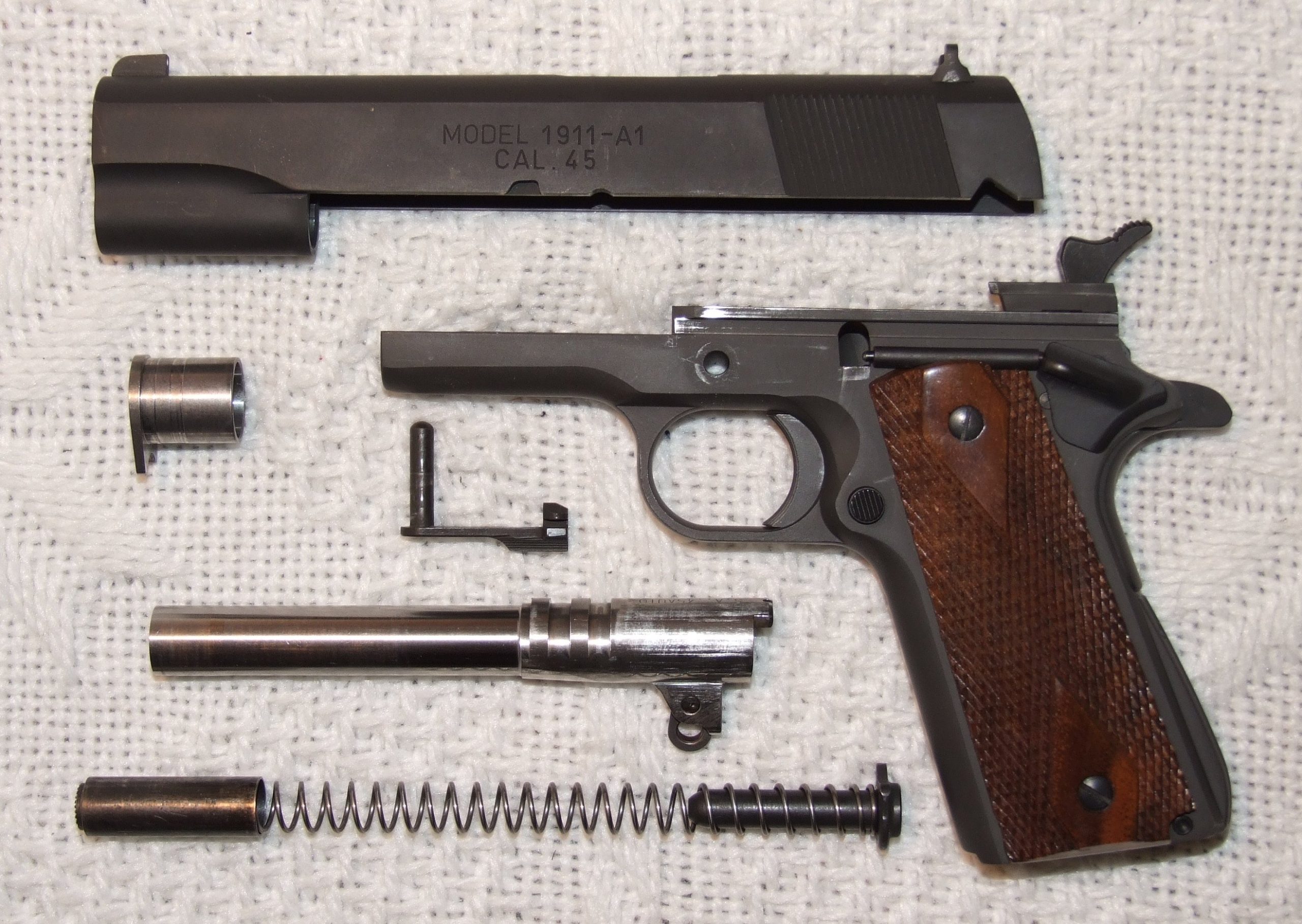
Singer Manufacturing was famous for sewing machines, not firearms, when the U.S. Army tested its wartime production potential. In 1940, Singer received an educational order for 500 M1911A1 pistols. The .45 ACP pistol carried serial numbers S800001 through S800500, and all 500 were delivered by December 1941. Singer did not enter large-scale pistol production because its precision machinery was needed for other military work. That tiny run made the Singer 1911A1 one of the most distinctive contractor-made pistols of World War II. The pistols were delivered to Springfield Armory.
2. Guide Lamp FP-45 Liberator
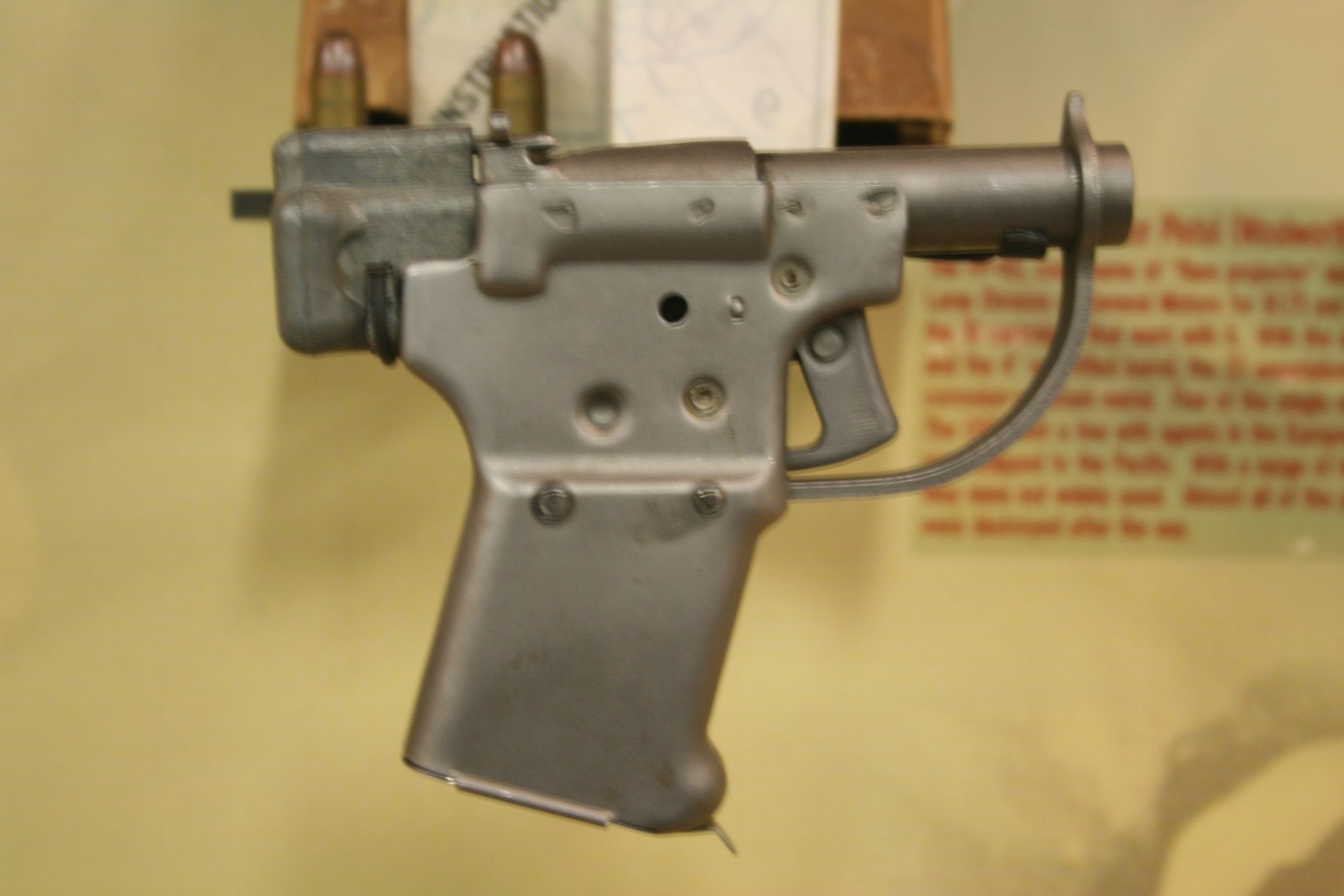
Guide Lamp, a General Motors division known for stamped automotive parts, was pulled into an unusual wartime project: the FP-45 Liberator. The crude .45 ACP single-shot pistol was intended for clandestine distribution to resistance forces. In 1942, Guide Lamp received a contract for 1,000,000 pistols and completed the order in just over 10 weeks. Production involved roughly 300 workers operating around the clock. Its simple construction was the point, making the Liberator a striking example of how automotive manufacturing methods could be redirected toward emergency weapons production.
3. Inland M1 Carbine
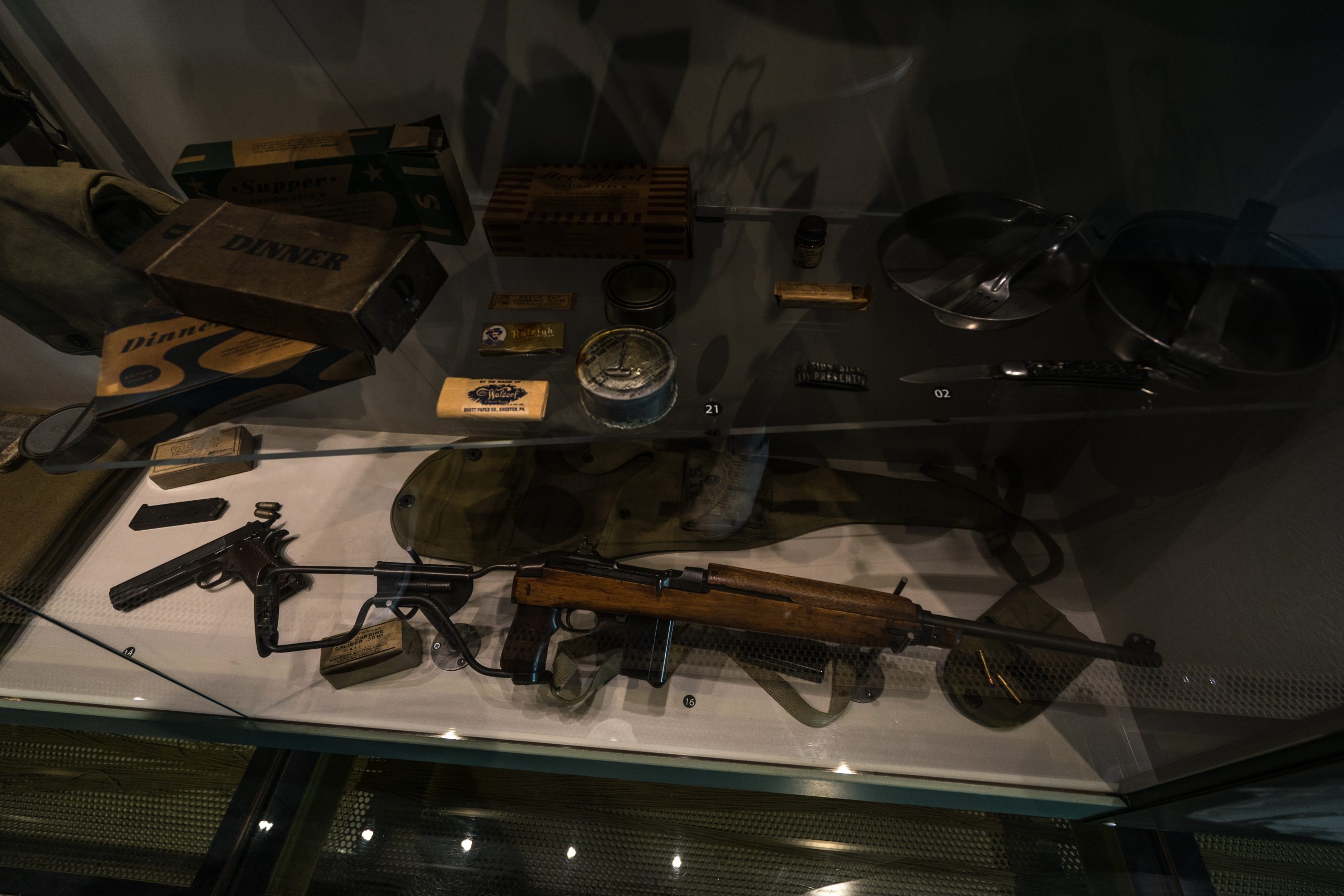
Inland Manufacturing was a General Motors division whose normal expertise centered on automotive components, yet it became the largest M1 Carbine producer of World War II. The company delivered about 2,632,097 carbines, roughly 43 percent of total wartime production. Production began in 1942 after Inland and Winchester were selected to build the new .30 Carbine. Inland also produced the M1A1 airborne model and M2 selective-fire version. Its success showed how a large industrial supplier could adapt tooling, engineering staff, and factory organization to mass-produce a military arm.
4. Saginaw Steering Gear M1 Carbine
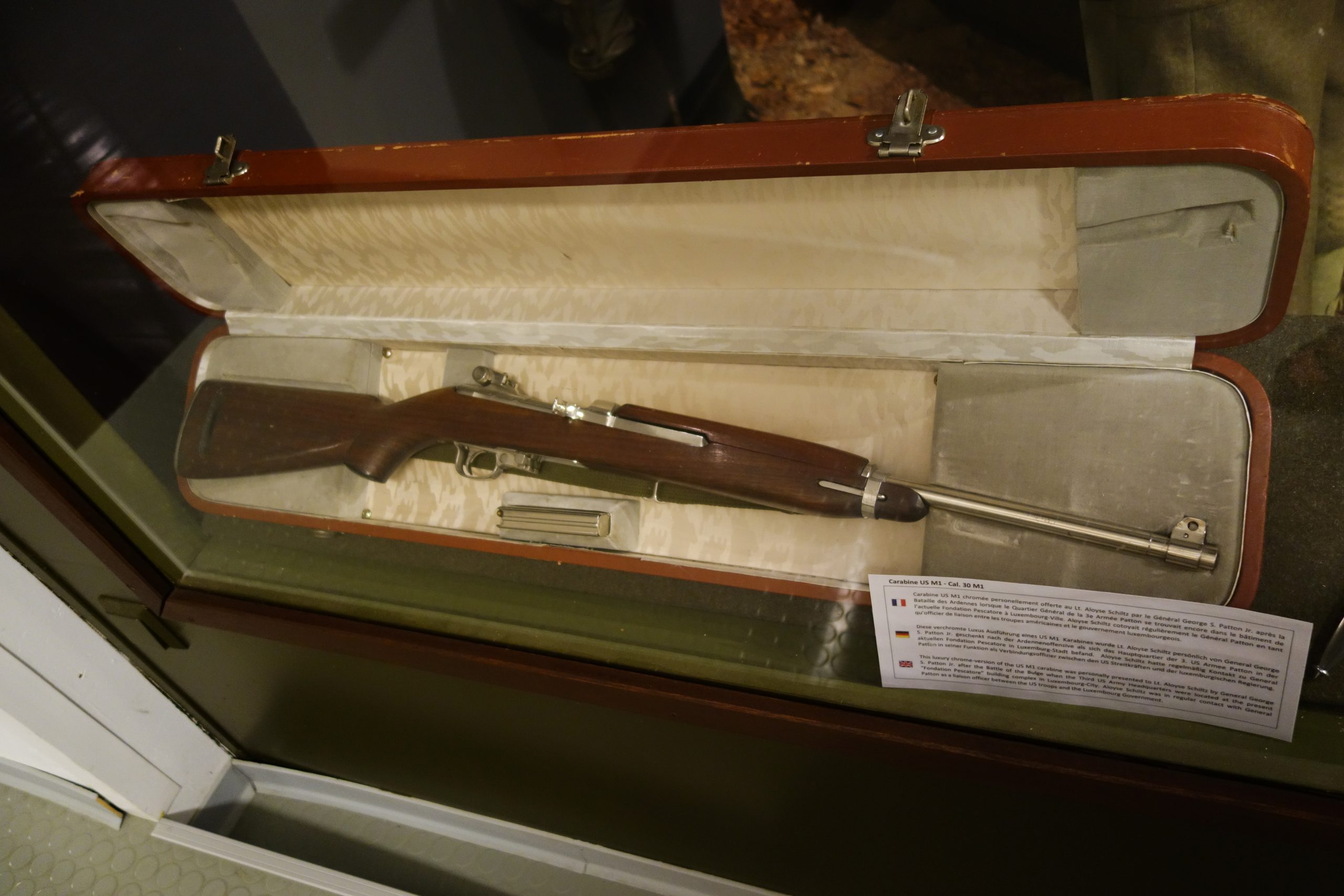
Saginaw Steering Gear built steering components for automobiles before World War II, but its manufacturing skills were redirected toward the M1 Carbine. In 1943, the General Motors division took on production after another contractor struggled to meet requirements. Saginaw eventually made about 517,212 carbines across its Michigan operations, including work at a Grand Rapids plant. Saginaw also coordinated a network of subcontractors supplying receivers, barrels, stocks, and parts. Its record shows how automotive precision work could be redirected toward a completely different product.
5. IBM M1 Carbine
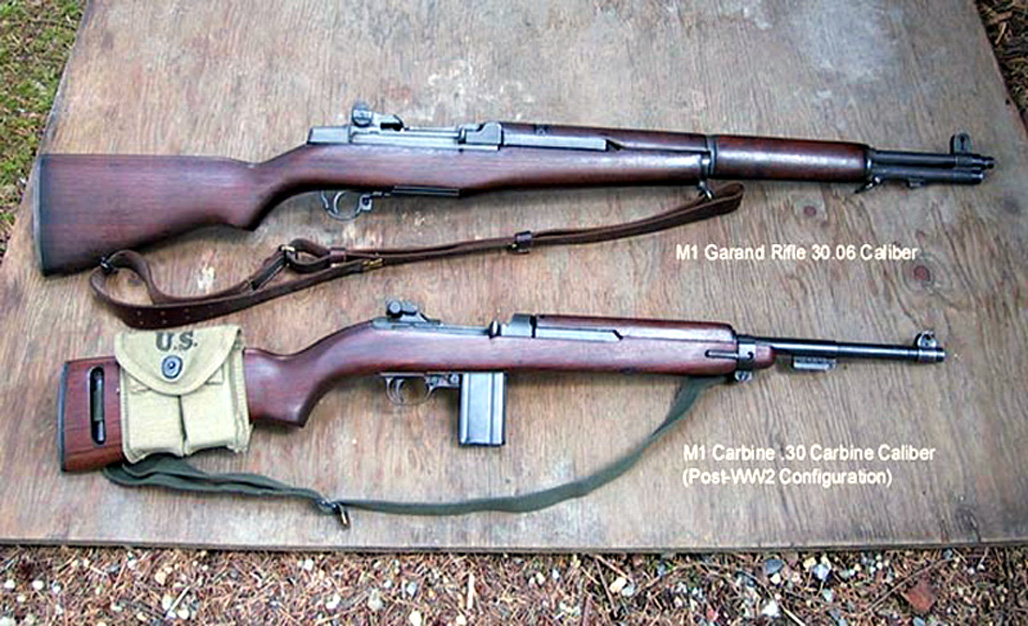
International Business Machines was associated with typewriters, tabulating equipment, and office technology, not firearms. During World War II, however, IBM became an M1 Carbine contractor and produced about 346,500 examples. IBM applied precision manufacturing and inspection to the .30 Carbine program, within a wider wartime supplier network. IBM-marked carbines are identified by receiver markings bearing the company name. The project remains an unusual chapter in IBM history because a company known for office machines became a military arms contractor. The production run lasted only during the wartime program.
6. Underwood M1 Carbine
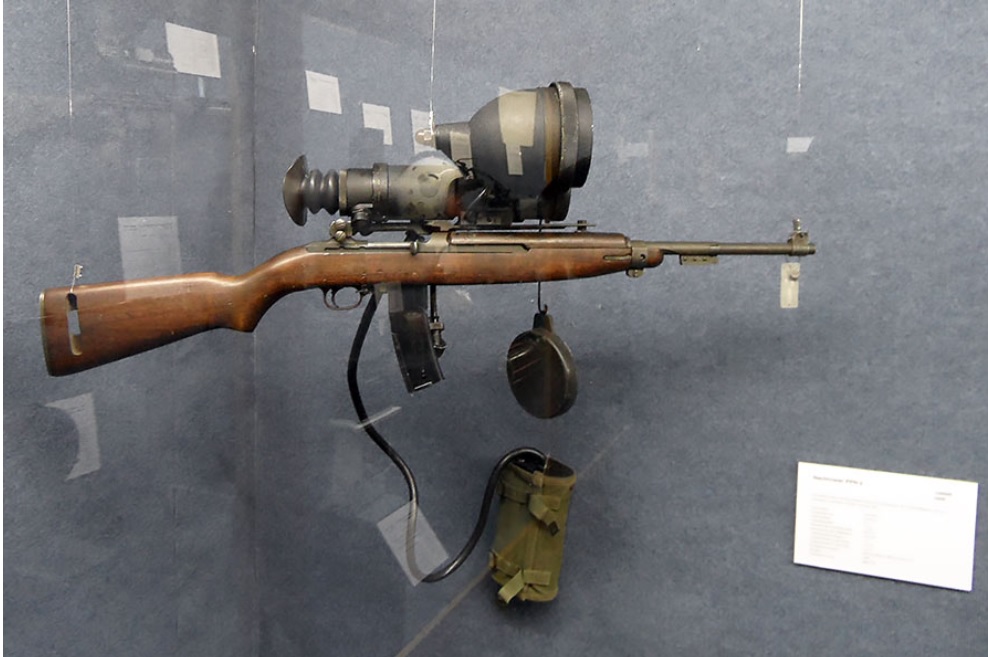
Underwood-Elliott-Fisher was a major maker of typewriters and business machines before it entered wartime arms production. During World War II, the company manufactured about 545,616 M1 Carbines between 1942 and 1944. Underwood also produced barrels for other carbine contractors, making its contribution broader than the receiver markings suggest. The company had to adapt its industrial capacity to a military design that demanded interchangeable parts and consistent inspection. Its M1 Carbines now stand as a reminder of how civilian machinery companies became part of America’s wartime firearms industry.
7. National Postal Meter M1 Carbine
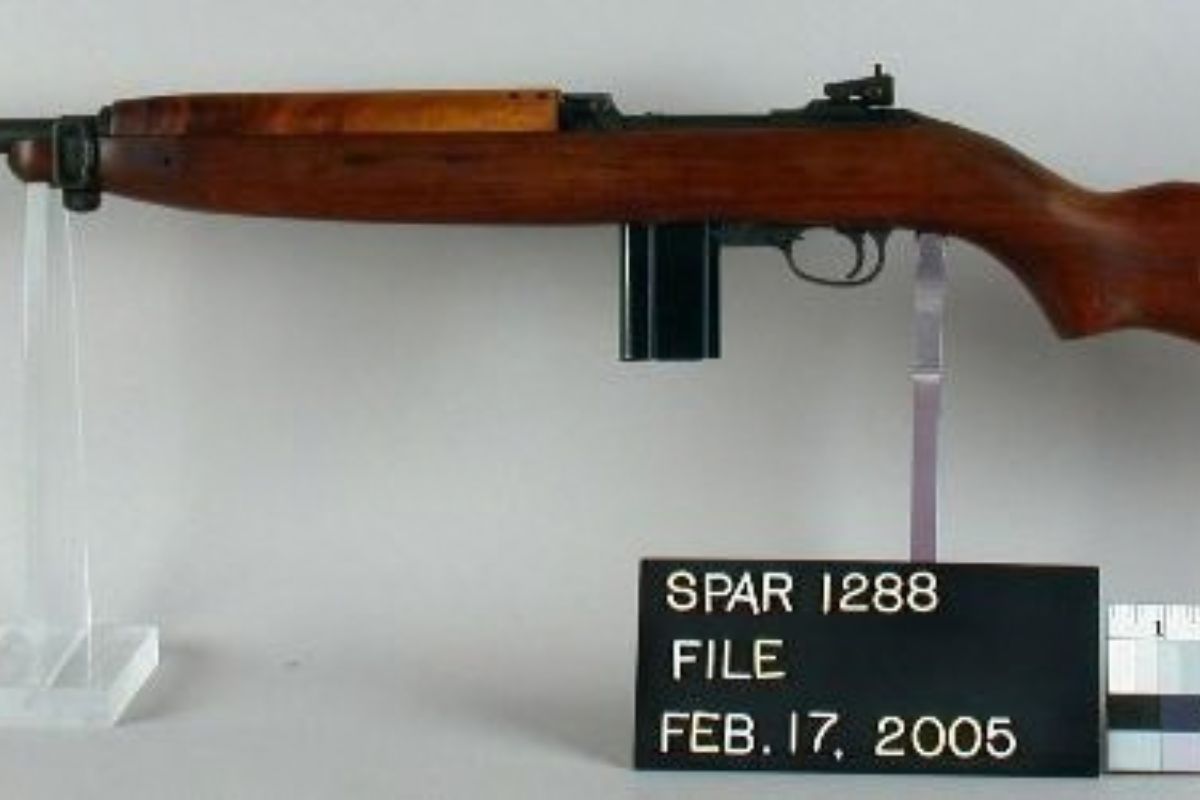
National Postal Meter made postage meters and office equipment before the U.S. government brought it into the M1 Carbine program. Between 1943 and 1944, the Rochester, New York company produced about 413,017 carbines. Much of the work depended on a network of outside suppliers, a common feature of the wartime program. The resulting .30 Carbine was mechanically the same basic service weapon made by other contractors, but its receiver markings identify the unusual maker. After the war, National Postal Meter returned to its civilian business rather than becoming a permanent firearms manufacturer.
8. Rock-Ola M1 Carbine

Rock-Ola Manufacturing was famous for jukeboxes and coin-operated equipment, making its entry into firearms production one of World War II’s more surprising industrial detours. The company built about 228,500 M1 Carbines, 3.7 percent of total production. Its factory had the machining and production capability needed to participate in the program, even though firearms were far removed from its normal products. Rock-Ola also supplied barrels to other contractors. Today, its carbines are readily recognizable because the name on the receiver connects an entertainment brand with a military rifle.
9. Standard Products M1 Carbine
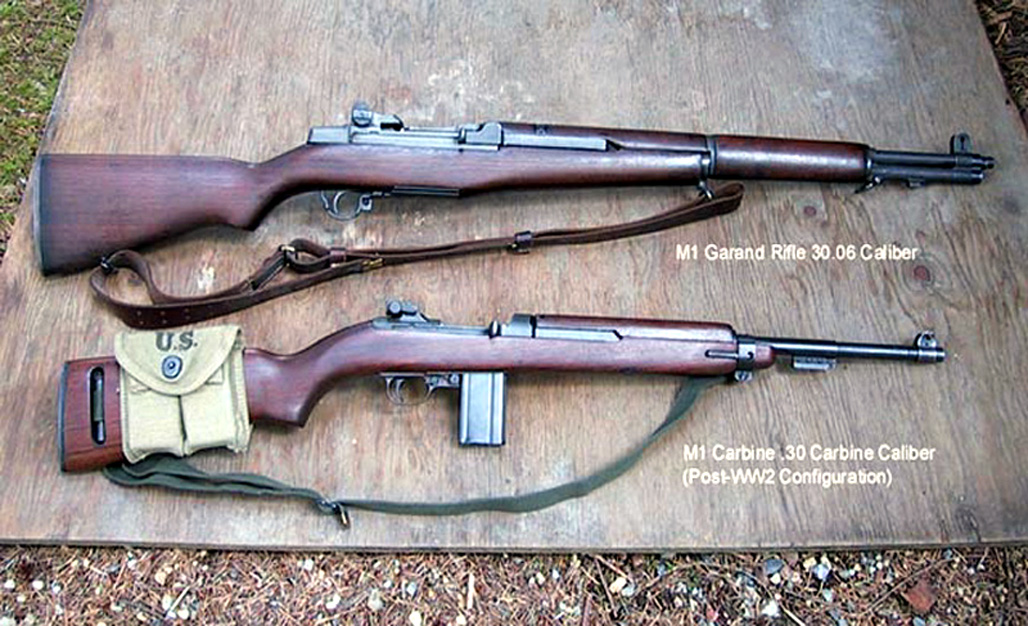
Standard Products Company was an automotive parts manufacturer before it joined the wartime M1 Carbine program. Its vehicle-component work gave it experience with metalworking, production control, and repeatable machining. The company made about 247,100 M1 Carbines, placing it among the smaller primary contractors. Its receiver markings are uncommon today because the company made far fewer carbines than the largest contractors. The program also shows how wartime demand could turn a civilian parts maker into a short-lived arms producer without creating a permanent firearms business.
10. Union Switch & Signal M1911A1
Union Switch & Signal was a railway signaling company, not a conventional arms maker, before World War II. In 1943, it produced 55,000 M1911A1 pistols for the U.S. military. The company was selected because its precision metalworking and electrical manufacturing capabilities could be adapted to the pistol program. Its contract was relatively small compared with Remington Rand and Colt, but the guns became known for careful workmanship. The unusual receiver markings also make the Union Switch & Signal M1911A1 easy for collectors to identify today.