The .45 ACP was born from frustration, not nostalgia. It came out of a moment when the U.S. military decided its handgun cartridge simply was not ending fights fast enough.
A sidearm problem became impossible to ignore
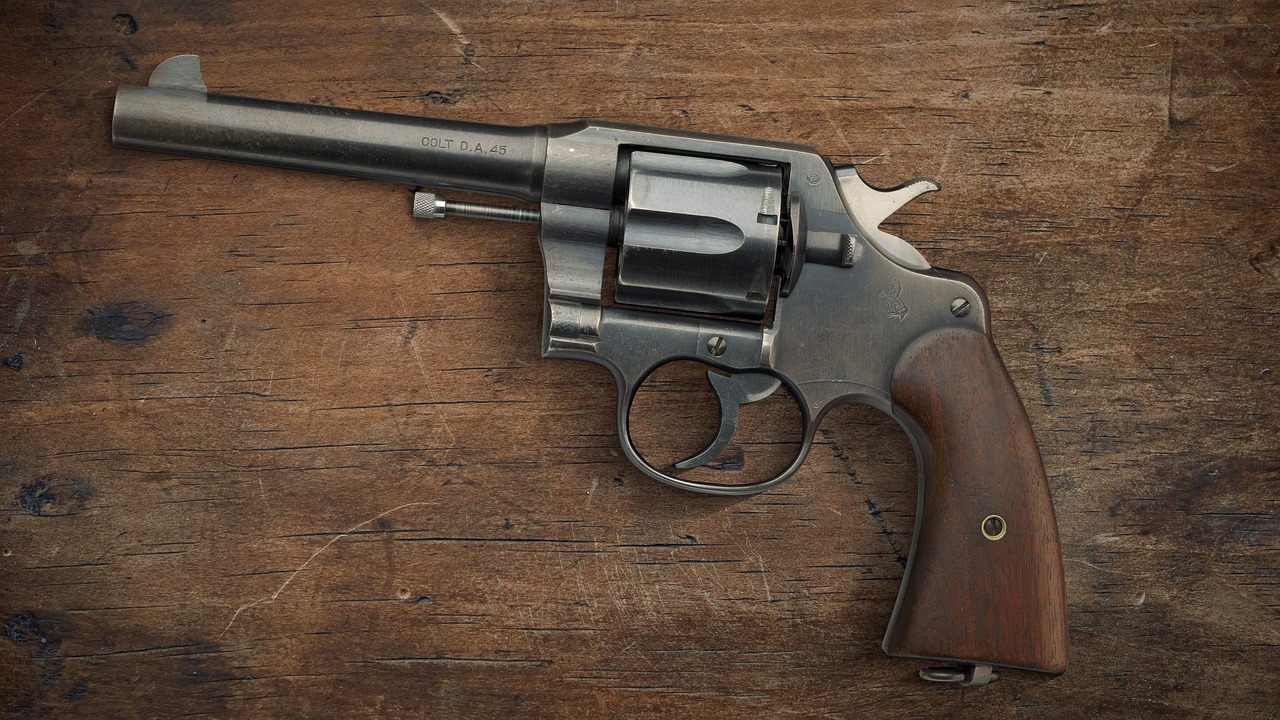
By the late 1800s and early 1900s, the U.S. military had moved away from older .45-caliber revolvers and toward lighter .38-caliber handguns. On paper, that looked modern and efficient. In practice, it created a problem that would become famous, especially during the fighting in the Philippines.
According to the U.S. Army Center of Military History, soldiers learned there that .38 ammunition was not always up to the task of stopping an attacking opponent in his tracks. That assessment became central to later handgun development, because a sidearm exists for emergencies at bad-breath distance, not for slow, theoretical effectiveness. When a handgun is needed, it usually needs to work immediately.
That gap between theory and combat reality mattered. The military was not asking for a target pistol or a pleasant range gun. It wanted a sidearm that could end a close-range assault quickly, even when the enemy was highly motivated, moving fast, and hard to deter with a marginal pistol round.
The Philippines changed the Army’s thinking
The Philippine-American War and the Moro campaigns are where the .38 Long Colt earned its bad reputation. In close fighting, reports circulated that determined attackers sometimes kept coming after being hit, which shattered confidence in the small-bore revolver. Later Army historical material and military writing repeatedly point back to those campaigns as the turning point.
This part of the story is often exaggerated into legend, but the core fact is solid: the Army concluded it needed more bullet weight and more authority at handgun distances. In emergency use, that meant a larger-diameter projectile and a cartridge with a stronger reputation for immediate effect. The old .45 Colt revolvers, though outdated in other ways, still had supporters because they hit harder.
That experience did not prove that handgun cartridges create magic knockdown power, because they do not. What it did prove was that the Army trusted a heavier .45-caliber bullet more than the .38 Long Colt when lives depended on rapid incapacitation. That shift in confidence is the real origin story of the .45 ACP.
The search for a better service cartridge

Once the Army accepted that the .38 was lacking, it did not jump blindly into a replacement. It tested ideas, reviewed combat experience, and moved toward a .45-caliber requirement for a new sidearm. The push was not just for a bigger bullet, but for a more effective handgun system overall.
The famous Thompson-LaGarde testing period is often cited in this discussion because it reinforced the Army’s belief that larger-caliber pistol rounds were preferable for military use. However imperfect those early tests seem by modern standards, they influenced ordnance thinking at the time. Bigger, heavier bullets were seen as more dependable fight-stoppers than lighter ones.
At the same time, firearms technology was changing quickly. Revolvers were no longer the only serious option for military pistols. Self-loading handguns offered faster reloads, greater ammunition capacity, and quicker follow-up shots, which meant the Army had an opportunity to pair a larger cartridge with a more modern platform rather than simply returning to an old revolver design.
John Browning and Colt built the answer
This is where John Moses Browning enters the story in a big way. Browning and Colt were already developing self-loading pistols in the early 1900s, and they began refining a large-bore cartridge to meet Army expectations. According to American Rifleman, an early .41-caliber concept was in development around 1904 before Browning and Colt continued evolving the design toward the .45.
The resulting cartridge became what we know as the .45 ACP, with ACP meaning Automatic Colt Pistol. It was designed to bring .45-caliber performance into a reliable semi-automatic handgun, combining the bigger bullet the Army wanted with the faster handling of an autoloader. That pairing was the key innovation, not caliber alone.
Browning’s pistol design and the cartridge matured together. That matters because great service handguns are systems, not isolated parts. Feed geometry, recoil operation, magazine design, bullet shape, and pressure all have to work together. The .45 ACP succeeded because it was not just powerful enough for the Army’s needs; it also ran in a handgun platform that proved rugged and dependable.
What the original .45 ACP load actually looked like
People often talk about the .45 ACP as if it has always meant one exact loading, but even the early service round evolved. During the trial period, ammunition makers were loading a 200-grain full metal jacket bullet at roughly 900 f.p.s., according to American Rifleman. That load passed testing, but it was later changed.
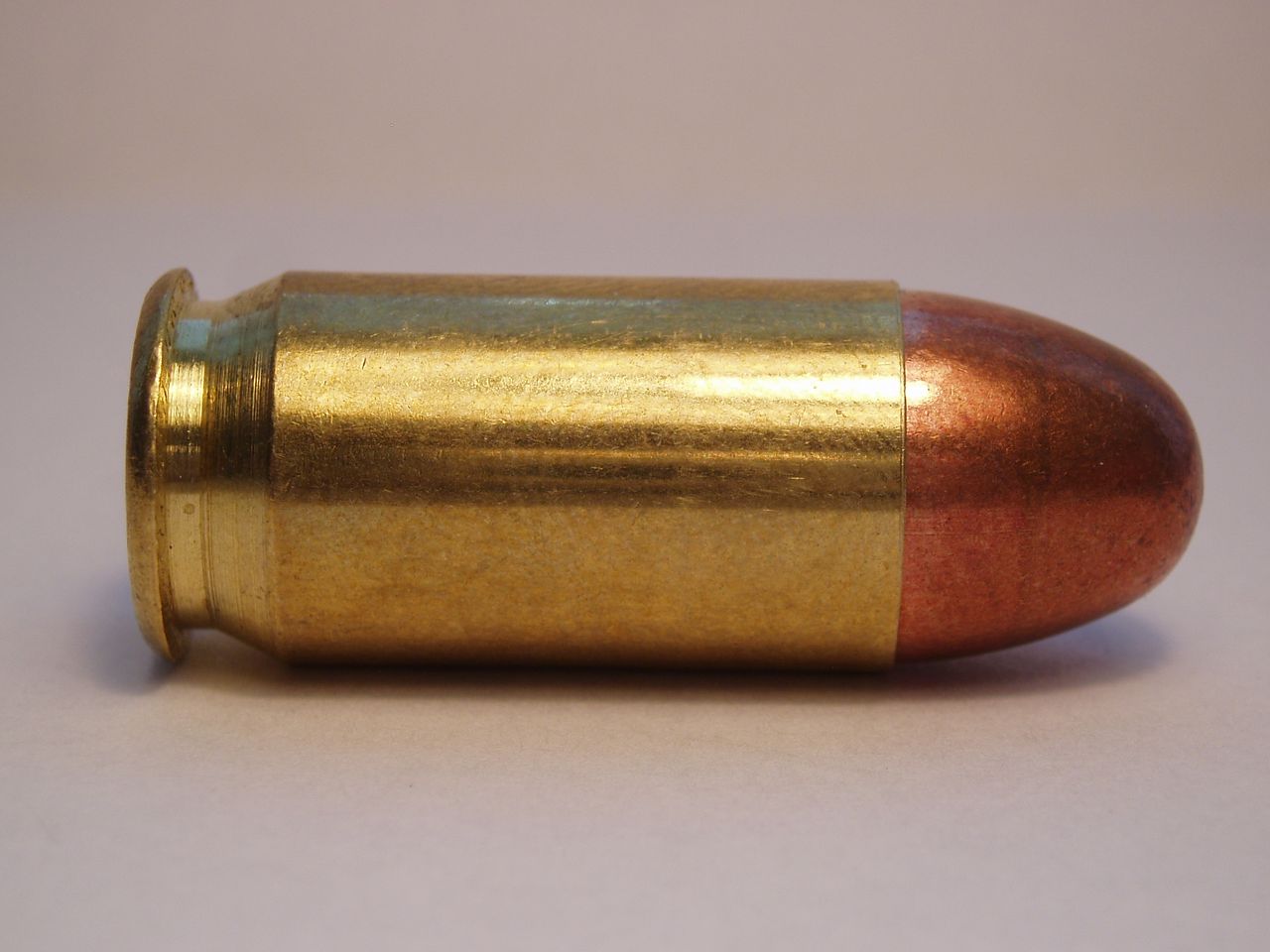
The standard military loading most people recognize became a 230-grain full metal jacket bullet at about 850 f.p.s. American Rifleman notes that the Army formally adopted the Colt Model 1911 pistol and the Cal. 45 Automatic Pistol Ball Cartridge, Model of 1911, on March 29, 1911. Early service ammunition from Frankford Arsenal appeared shortly after that adoption.
That combination of moderate velocity and heavy bullet defined the cartridge’s identity. It was not a screamer, and it was never meant to be. The original .45 ACP delivered a broad, heavy projectile at manageable speed, producing a controllable recoil impulse and solid short-range performance from a duty pistol carried by ordinary soldiers, not handgun specialists.
Why the Army embraced the 1911 and its cartridge
The .45 ACP would never have become iconic if the pistol around it had failed. Instead, the Colt Model 1911 proved to be one of the great military sidearms of the 20th century. Army historical material credits the M1911 with reliability and stopping power, and the pistol remained the standard U.S. military sidearm for decades, with the Smithsonian noting official service from 1911 until 1986.
That long service life says a lot. Militaries do not keep weapons around for sentimental reasons alone. They keep them because the system works across mud, dust, poor maintenance, and uneven training. In World War I trench conditions and later conflicts, the big Browning pistol built trust among troops who needed a secondary weapon that would function when everything was going wrong.
The handgun also fit the practical doctrine of the era. Officers, machine-gun crews, mounted troops, and specialists needed a compact arm with immediate punch. The .45 ACP filled that role well enough that it became more than a cartridge. It became a benchmark for what an American fighting pistol was supposed to be.
The real lesson behind the .45 ACP story
The creation of the .45 ACP is sometimes reduced to macho mythology, but the real lesson is more interesting. It was developed because battlefield experience exposed the limits of an existing handgun round, and the Army reacted by demanding a more effective cartridge and a better delivery system. In other words, the .45 ACP was a practical fix to a practical problem.
It is also a reminder that service cartridges are products of their time. The military of 1900 was dealing with close-range assaults, limited handgun technology, and a very different understanding of wound ballistics than we have today. Even so, its core requirement was timeless: when a sidearm is drawn in combat, it needs to have a credible terminal effect and dependable function.
That is why the original .45 ACP still matters in gun history. It was not created because the Army wanted something fashionable or oversized. It was created because the military decided its current handgun was not stopping threats well enough, and John Browning’s .45-caliber autoloading system gave it the answer it had been looking for.