Some pistols fade into history. The Beretta 92 refuses to do that.
The market changed, but the Beretta 92 never really left

The center of gravity in the handgun world has clearly shifted toward striker-fired pistols. Police agencies, military buyers, and civilian carriers have favored designs that are lighter, simpler, and easier to train at scale. The U.S. Army’s move from the Beretta M9 to the SIG M17 and M18 reflected that change, with officials emphasizing modularity and a more consistent trigger press from shot to shot.
That logic is easy to understand. A striker-fired pistol usually gives the same trigger pull every time, often comes in a lighter polymer frame, and tends to offer simpler controls. For large organizations, those traits matter because they reduce training friction and simplify procurement. In the commercial market, the same formula helped Glock, the Smith & Wesson M&P line, and the SIG P320 family dominate shelf space.
And yet the Beretta 92 stayed alive because it never depended on being the trend. It built its reputation on long service life, broad military exposure, and a shooting experience that many enthusiasts still find unusually refined. Beretta has also kept updating the platform instead of freezing it in the 1980s. Models like the M9A4, 92X variants, 92Xi, and the 2024 92GTS show a company that knows the old design still has believers.
A lot of the appeal comes down to how it shoots
People who defend the Beretta 92 usually start with feel, not theory. The pistol’s all-metal construction, full-size proportions, and 4.9-inch class barrel on classic models give it a calm, planted character under recoil. The weight that makes it less ideal for all-day carry is also part of what makes it pleasant on the range.
The design’s long sight radius and stable lockup have also helped the pistol maintain a reputation for accuracy. That matters more than many buyers admit. Plenty of modern striker-fired pistols are accurate, but the Beretta often feels easier to shoot well in deliberate fire, especially once the shooter transitions from the first double-action pull to the lighter single-action follow-up shots.
Then there is the recoil impulse. Because of the pistol’s locking block system and overall mass, many shooters describe the gun as shooting flatter or softer than they expect from a full-size 9 mm. That impression is one reason the platform still gets respect in training circles and competition-adjacent communities. The Beretta 92 is not beloved because it is fashionable. It is beloved because, in practiced hands, it can be remarkably satisfying.
The old-school DA/SA system still has serious fans

One major reason the Beretta 92 still has defenders is the trigger system itself. In a market that now treats double-action/single-action as a relic, some experienced shooters still see it as a feature, not a compromise. They like the heavier first pull for deliberate control and the lighter subsequent pulls for speed and precision.
That preference is not universal, and it is not beginner friendly in the way a consistent striker trigger can be. The Army itself pointed to trigger consistency as one advantage of the newer M17 and M18 over the M9. That is a real point, especially when training large groups with mixed skill levels. Simplicity wins many institutional arguments for a reason.
Still, the counterargument has not gone away. Beretta 92 fans often view the DA/SA system as giving them options rather than burdens. They appreciate a hammer-fired gun that allows visual and tactile confirmation of status, and they like the confidence that comes with a deliberate first press. Beretta has even responded to long-running ergonomic complaints with newer configurations, including the 92GTS, which introduced a frame-mounted Type G decocker arrangement in 2024 for shooters who prefer controls away from the slide.
Reliability, durability, and service history still matter

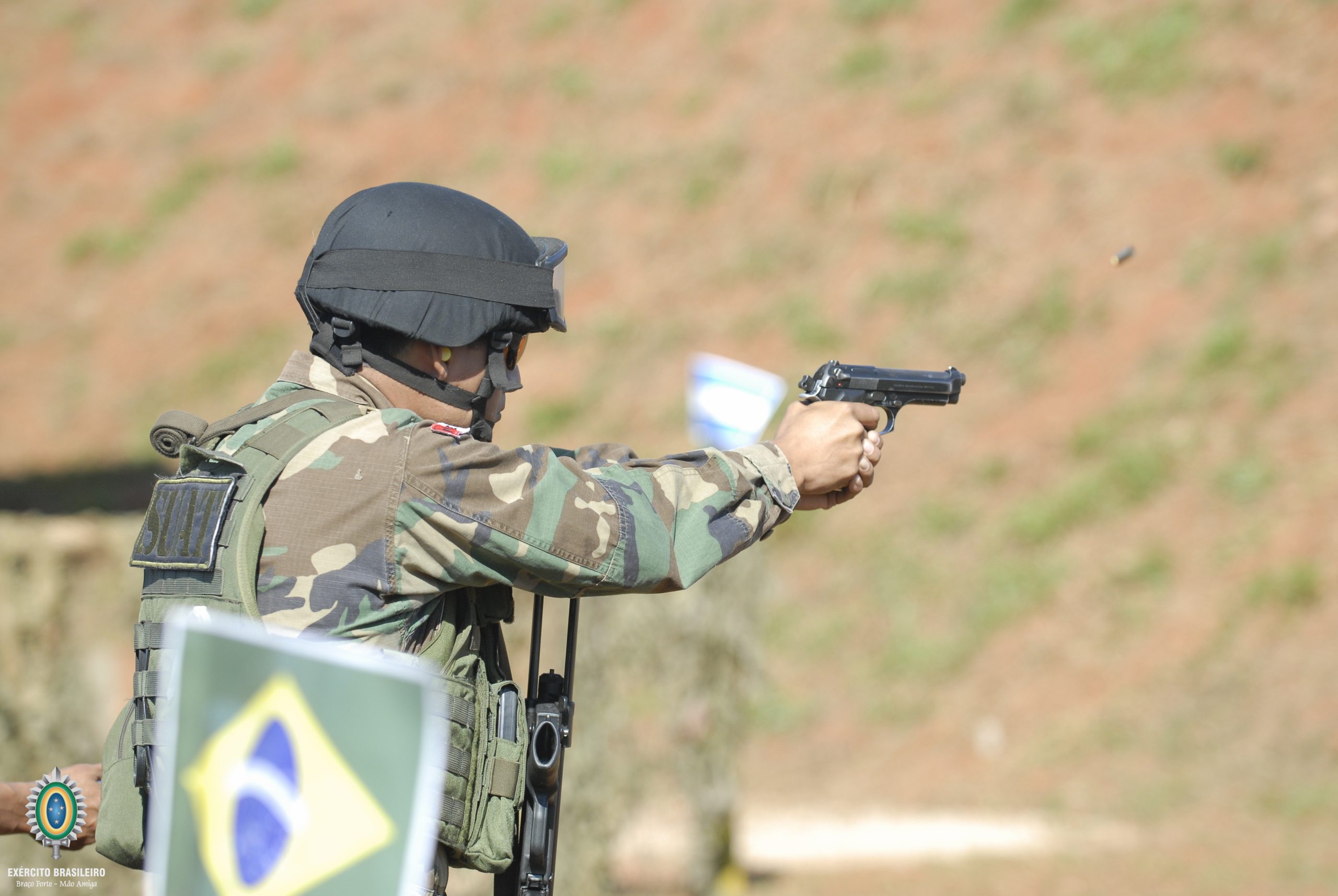
The Beretta 92 also benefits from one of the strongest reputational assets in the gun world: it has been used hard, for a long time, by serious institutions. The U.S. military adopted the M9 in 1985, and the platform remained America’s standard service sidearm for decades before the Modular Handgun System era began. That kind of tenure leaves a mark on public perception, even after the official replacement arrives.
Service history alone does not prove a design is still optimal, but it does prove that the gun was not a fad. Beretta’s open-slide layout has long been praised for generous ejection and straightforward malfunction clearance. Supporters also point to the pistol’s proven reliability across a huge installed base, from military issue guns to commercial 92FS pistols that have seen decades of civilian use.
Of course, realists know the design is not flawless. The pistol is large, the slide profile gives less gripping surface than many modern guns, and older debates over locking block longevity never fully disappeared. But mature platforms often survive because their strengths are well understood and their weak points are manageable. The Beretta 92 has reached that stage. Its defenders know exactly what it is, and that confidence counts for a lot.
Modern updates kept the platform from becoming a museum piece

If Beretta had left the 92 untouched, it would probably be little more than a nostalgia gun by now. Instead, the company kept pushing the line into modern niches. The M9A4 added an optics-ready slide, a threaded barrel, a beveled magazine well, and the Vertec-style grip that many shooters find easier to manage than the older, fuller profile.
The 92X line also helped reposition the pistol for shooters who wanted improved ergonomics and competition-friendly tuning. The 92X Performance went further by leaning into the platform’s strengths as a heavy, controllable, steel-framed handgun suited to target work and action shooting. That move mattered because it reminded the market that the Beretta 92 is not limited to military nostalgia or movie recognition.
Then came the 92Xi and 92GTS, both signs that Beretta understood the demand for alternate control layouts. For years, critics complained about the slide-mounted safety and decocker arrangement on classic variants. The newer GTS answered that complaint with a frame-mounted decocker system and revised internal geometry. In other words, Beretta did not just defend the platform in theory. It adapted it to modern tastes while keeping its identity intact.
Enthusiasts defend it because character still counts
Not every purchase is made by a procurement office, and not every good pistol has to be optimized around standardization. A major reason the Beretta 92 keeps its defenders is that it has character. In a marketplace full of highly competent polymer striker guns that can feel interchangeable, the Beretta offers a different kind of appeal.
It looks distinctive, for one thing. The open slide, long lines, exposed barrel section, and aluminum frame make it instantly recognizable. But the attraction goes beyond appearance. The gun has a rhythm to it, from the first double-action pull to the crisp single-action follow-up, that many shooters find more engaging than the uniform press of a striker-fired pistol.
That emotional component should not be dismissed as mere nostalgia. Skilled shooters often become loyal to guns that reward technique and feel alive in the hand. The popularity of custom and tuned Beretta 92 variants, especially from names like Langdon Tactical, shows there is still a market for premium versions of the platform. People are not spending that money out of obligation. They are doing it because the pistol still speaks to them.
The Beretta 92 survives by being excellent at its own thing
The Beretta 92 is not winning because it beat striker-fired pistols at their own game. It survives because it never needed to. It is bigger, heavier, and more mechanically involved than the average polymer duty gun, and for many buyers those are decisive drawbacks. If your priority is minimum weight, maximum simplicity, and broad accessory commonality, the market has already answered.
But that does not settle the matter for everyone. Plenty of shooters still prefer an all-metal gun with a hammer, a long service record, excellent on-range manners, and a trigger system that rewards discipline. For them, the Beretta 92 feels less like an outdated answer and more like an alternative philosophy that remains completely valid.
That is why it still has defenders. They are not arguing that the entire market should go backward. They are arguing that progress is not always the same as replacement. The striker-fired pistol may be the mainstream choice now, but the Beretta 92 remains one of the clearest examples of a classic design that still earns loyalty the hard way, by continuing to perform.