Falconry looks romantic from a distance. Up close, it is equal parts apprenticeship, animal care, hunting skill, and regulation.
Falconry is tiny, but it lives under big wildlife law

Falconry in the United States is practiced by a very small community, which is part of the reason the current frustration feels so intense. The North American Falconers Association says it has about 2,000 members, and broader estimates commonly place the total number of active U.S. falconers only in the low thousands. That means a centuries old field sport is being governed through systems designed for protected wildlife, interstate transport, public accountability, and agency oversight at scale.
That legal context matters. Native raptors are protected under the Migratory Bird Treaty Act, and the U.S. Fish and Wildlife Service says migratory bird permits exist to promote long term conservation and to monitor how human activities affect bird populations. In other words, falconry is not regulated like owning a retriever or keeping backyard chickens. It is regulated like an activity involving wildlife that belongs, in a real sense, to the public trust.
The federal baseline still shapes nearly everything. Even though federal falconry permitting largely shifted to state administration years ago, the Fish and Wildlife Service continues to set minimum standards and maintain the broader permit framework around migratory birds. States can meet or exceed those standards, which means falconers often face a layered system where the federal floor becomes a state ceiling, then grows into additional forms, inspections, and local conditions.
That is the first source of tension. To regulators, falconry is an exception carved out of wildlife protection law. To falconers, it is a legal tradition with a strong conservation ethic that now feels treated with increasing suspicion.
Agencies are tightening rules because every mistake carries outsized consequences
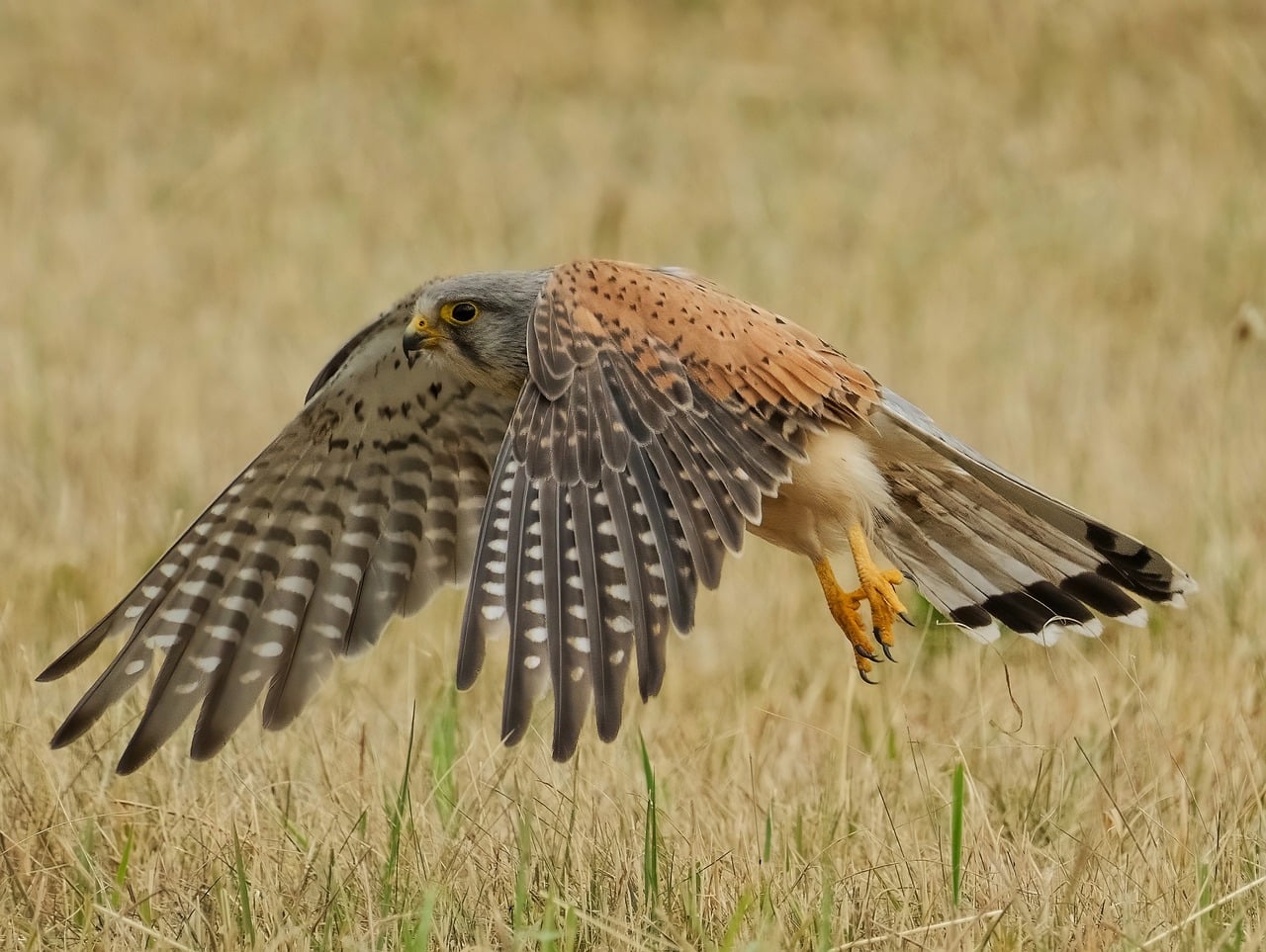
From the regulator’s perspective, the incentive to tighten rules is obvious. Raptors are charismatic, legally protected, and highly visible. If an eagle is disturbed, a hawk is trapped unlawfully, a captive bird is transferred without proper paperwork, or a facility fails a welfare inspection, the fallout is not just local embarrassment. It can become a political problem, an enforcement problem, and a conservation problem all at once.
Recent federal activity shows how active this administrative environment has become. The Fish and Wildlife Service published a final rule effective December 31, 2024 covering regulatory authorizations for migratory birds and eagles, and its current permitting handbook and memorandum series continue to refine how permits are interpreted and implemented. Even when a change does not target falconry directly, falconers feel the ripple effects because they work with the same protected bird framework.
States are moving too. California, for example, adopted falconry regulation changes in 2025 that became effective January 1, 2026, while also maintaining fees, inspection procedures, and nonresident capture permit structures that can be expensive and administratively heavy. For a regulator, those updates can look like housekeeping. For a falconer, they can feel like another layer added to a hobby that already demands unusual time, money, and compliance discipline.
The result is a familiar modern pattern. Rules tighten not necessarily because falconers are causing widespread harm, but because agencies are under pressure to standardize, document, defend, and future proof every corner of wildlife management.
The paperwork burden hits harder when the community is built on mentorship

Falconry is not a casual weekend pastime you pick up with an online order and a few videos. The American system still depends on apprenticeship, sponsor relationships, facility checks, hunting knowledge, and hands on bird care. That structure is one reason falconry has remained relatively stable and serious. It is also why bureaucracy lands so heavily on the people involved.
When agencies add forms, reporting rules, banding requirements, inspection steps, or transfer documentation, those tasks rarely fall on institutions with compliance departments. They fall on individuals. A sponsor helping an apprentice, a master falconer maintaining multiple birds, or a traveling falconer moving across state lines is doing the paperwork personally, often while also managing mews hygiene, conditioning, telemetry, veterinary issues, and hunting access.
Even technical fixes can become symbols of a larger problem. The Fish and Wildlife Service’s permit memorandum series includes guidance on matters as specific as temporary zip tie bands or seamless bands for captive bred raptors. Those details are understandable in a system built on traceability and enforcement. But to many falconers, each administrative tweak is one more sign that practical field knowledge is being crowded by compliance logic.
That frustration is not really anti regulation. Most experienced falconers accept regulation as the price of practicing legally with protected birds. What frustrates them is when the system starts to reward paperwork fluency more than demonstrated horsemanship, field craft, and raptor husbandry.
Conservation is the reason for regulation, but not always the whole story

There is a common assumption that tighter rules must mean the sport itself has become more damaging. That is not necessarily true. Falconers often point out that legal falconry has long presented itself as a conservation minded tradition, and federal materials still describe falconry related education and school permits as beneficial to the migratory bird resource. Many falconers also support careful harvest limits, banding, and traceability because those measures help distinguish lawful practice from poaching.
The complication is that conservation policy now operates in a much broader atmosphere of scrutiny. Wildlife agencies are dealing with habitat loss, public pressure over animal welfare, social media exposure, invasive species, litigation risk, and declining trust in institutions. In that climate, regulators often prefer rules that are easier to audit and defend, even if the underlying falconry community has not changed much.
That helps explain why some rule tightening feels indirect. Falconers are not just responding to falconry specific concerns. They are also living inside wider policy trends around protected species management, enforcement transparency, and standardized permitting. A niche sport becomes collateral in a larger governance style.
So yes, conservation is real and necessary here. But the falconers’ complaint is that conservation has become intertwined with bureaucratic caution, and bureaucratic caution almost always expands faster than a small community can comfortably absorb.
The money and time costs are where passion meets burnout
People outside the community often underestimate the economic side of falconry. Even before new regulatory friction, the sport already demanded equipment, telemetry, food, travel, veterinary care, housing, and countless unpaid hours in the field. Add permit fees, inspections, hunting licenses, and state specific requirements, and the barrier to entry rises quickly.
California offers a concrete example of how visible these costs can become. Its posted fee schedule includes a nonresident raptor capture permit priced at $446.75 in 2025 and $457.75 in 2026, plus application fees and inspection related requirements. Not every falconer pays that particular fee, of course, but the numbers illustrate a broader truth: this is a legally intensive pursuit where costs accumulate in plain sight.
For newcomers, the burden can be discouraging. An apprentice already needs to find a qualified sponsor, pass an exam, build or access an approved facility, and commit to daily care that does not pause for holidays or bad weather. If the administrative side also feels unpredictable or increasingly strict, some promising entrants simply never start.
That matters because tiny communities are fragile. A sport with a few thousand practitioners does not need mass attrition to feel weaker. It only needs fewer mentors, fewer apprentices, and more people deciding the emotional reward no longer offsets the procedural drag.
Public image, online visibility, and enforcement anxieties are changing the climate

Falconry used to be easier for the broader public to ignore. Now almost every unusual human activity can be clipped, posted, debated, and condemned online by people who know nothing about its legal framework. A raptor on a fist in a parking lot can trigger fascination, but it can also trigger assumptions about cruelty, illegality, or elitism. Agencies know that, and agencies regulate with public optics in mind.
That shift makes enforcement culture more conservative. If officials believe any misstep could turn into a reputational fight, they tend to write rules and guidance that reduce discretion. Standardization becomes a shield. More explicit facility standards, more documentation, more precise transfer rules, and more formal categories all make administrative sense when every decision might later be questioned.
Falconers, though, often experience that caution as a presumption that they are one mistake away from collective punishment. Because the community is so small, one headline can feel existential. Because the birds are protected, every controversy carries moral weight. Because agencies answer to the public, not just permit holders, falconers know they have limited leverage.
That is why the frustration can sound sharper than the numbers suggest. This is not just annoyance over forms. It is the feeling of being culturally outnumbered in a system where almost no one writes policy from lived experience with a hunting hawk.
What happens next depends on trust more than on ideology
The future of falconry regulation will probably not be decided by a dramatic national showdown. It will be shaped by quieter questions: whether agencies consult practitioners early, whether rules are written with field realities in mind, whether states resist adding unnecessary layers, and whether falconers continue proving that a highly regulated tradition can still serve conservation rather than undermine it.
There are reasons for cautious optimism. The federal system still treats falconry as a legitimate, regulated use of migratory birds, not as an outlaw remnant. State programs continue to issue licenses, maintain inspection systems, and recognize the apprenticeship ladder that has long defined the sport. That suggests the core legal structure remains durable, even as details get tighter.
But durability is not the same as health. A tradition can survive on paper while becoming harder to enter, harder to sustain, and less socially legible to outsiders. If rulemaking keeps drifting toward administrative maximalism, the casualty may not be falconry’s legality. It may be the living culture that made legality worth defending in the first place.
In the end, the frustration inside this small community is understandable. Falconers know why regulation exists. What they want is a system that remembers the difference between protecting wildlife and regulating a lawful tradition until only the most stubborn people are left.