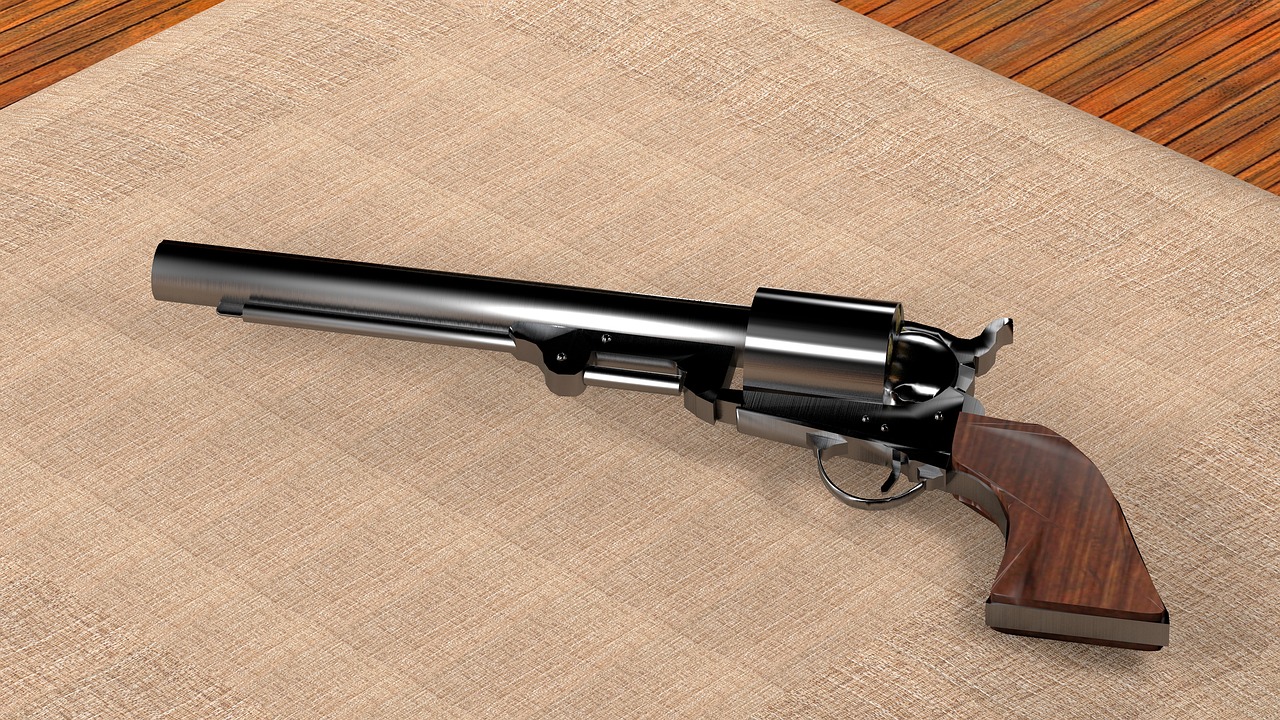
Big handguns usually come with big stories. Few have a story bigger than the Colt Walker, a revolver so massive that it became a legend almost the moment it appeared.
Why the Colt Walker Had to Be Enormous
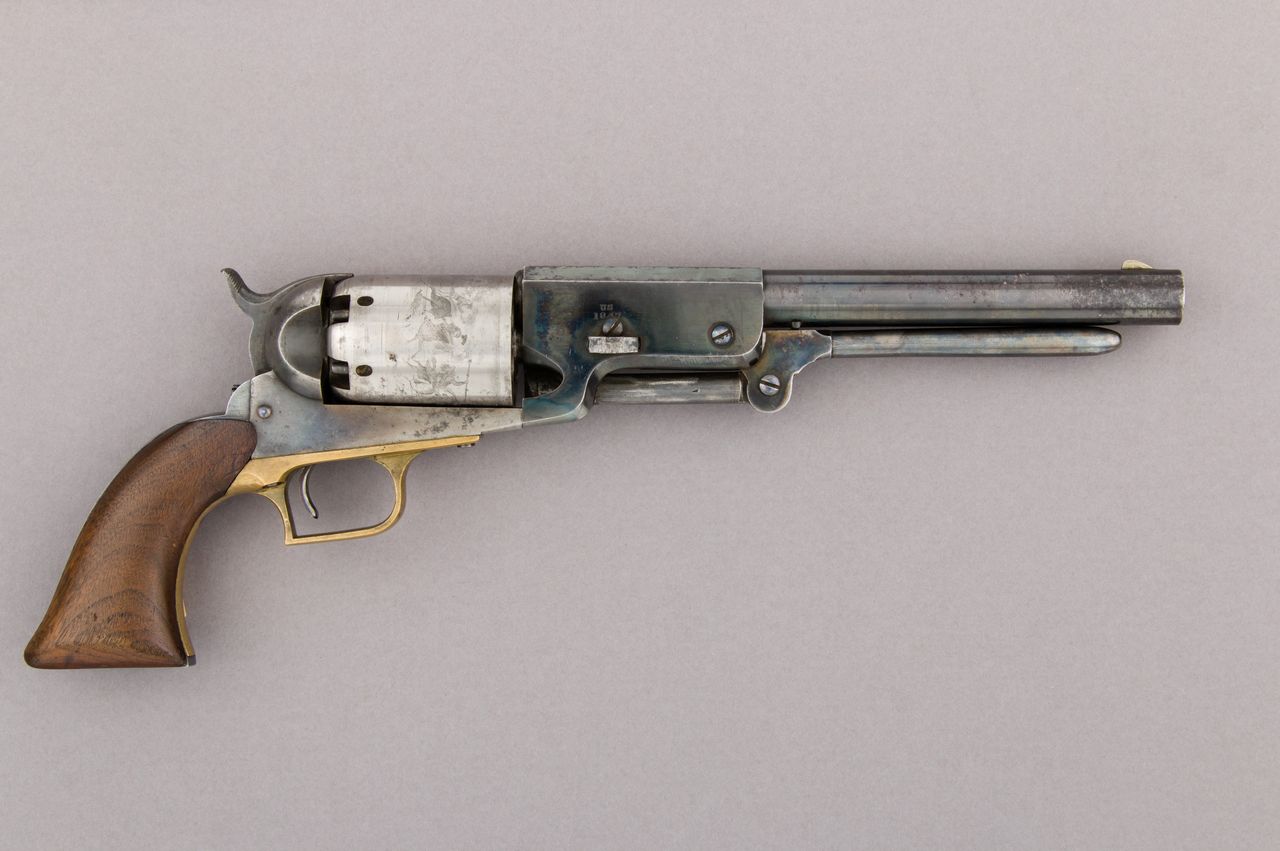
The Colt Walker was born out of a very specific problem on a very unforgiving frontier. In the mid 1840s, mounted fighters in Texas and on the Mexican border needed a sidearm that hit harder than the smaller revolving pistols already in circulation. The men pushing for that power were Texas Rangers and U.S. mounted troops who had learned the hard way that close fights on horseback did not leave much room for weak equipment.
Captain Samuel Hamilton Walker, a former Texas Ranger serving with U.S. forces during the Mexican-American War, became the key figure in turning that battlefield need into a firearm. According to Colt’s own historical timeline, Walker worked with Samuel Colt on a new, more powerful revolver in 1846, and the result was the Walker model that appeared in 1847. The Metropolitan Museum of Art also notes that the revolver was named for Walker, who helped define the improvements the gun needed.
That explains the size. This was not meant to be a slim belt pistol for easy daily wear in town. It was meant to be a fight stopper carried by mounted men, often in saddle holsters, where bulk mattered less than raw performance. In that role, bigger really was better.
Built Like a Hand Cannon
Even today, the Colt Walker sounds oversized on paper. It was a 6 shot, single action, .44 caliber black powder revolver with a 9 inch barrel and a weight of roughly 4 1/2 pounds unloaded. Colt’s cap and ball revolver material describes it as a massive .44 caliber sidearm, and museum and collector sources consistently place it among the largest production revolvers of the black powder era.
Its cylinder was the heart of the beast. One reason the Walker became famous was its unusually large powder capacity. Rock Island Auction has noted that the original design could take charges up to 60 grains of black powder, a huge amount for a handgun of the time. That kind of load gave the revolver a level of energy that made contemporaries take it seriously.
All of that bulk translated into a firearm with a startling physical presence. The long barrel, oversized cylinder, and broad grip made it look more like a compact carbine without a stock than a conventional sidearm. For modern readers, the easiest way to picture it is as a revolver built around cavalry requirements first and personal carry comfort second.
How the Texas Rangers Shaped the Design
The Texas Ranger connection is not just a colorful footnote. It is central to the Walker story. Samuel Hamilton Walker had firsthand experience fighting on horseback, and he knew what earlier handguns lacked. He wanted a revolver that could deliver decisive power and still offer the repeating fire advantage that made Colt’s revolving design so attractive in the first place.
Walker reportedly sent detailed recommendations about sights and other features, and the surviving historical record shows that he was deeply involved in shaping what the finished gun became. This was a practical collaboration between a firearms inventor and a combat veteran, not a marketing exercise. The revolver reflected Ranger style realities, fast movement, close engagements, and the constant need for enough power to matter immediately.
That is why the Colt Walker occupies such a unique place in firearms history. It was not simply a Colt design sold to the frontier. It was, in a very real sense, a frontier driven redesign of the revolver itself. The needs of Texas fighting men pushed the gun toward larger caliber, heavier construction, and maximum powder capacity, which is exactly why it ended up so huge.
What Made It So Effective in the Field
For its intended users, the Walker’s appeal was simple. It offered six shots of heavy .44 caliber firepower before reloading, and in the 1840s, that was an extraordinary advantage. A mounted man carrying a pair of Walkers had access to a level of repeated fire that could radically change the balance in a fast-moving fight.
The power was real, not an exaggerated legend. Collector and firearms sources have estimated that full-strength loads could exceed 500 foot-pounds of muzzle energy in some tests, putting the Walker in unusually serious territory for a black powder revolver. That is one reason later writers have sometimes called it an early magnum in spirit, even if that term belongs to a later age.
Its weight also helped absorb recoil. A revolver this large was never going to feel light or graceful, but mass works in your favor when heavy charges are involved. Shooters then and now have found that while the Walker recoils with authority, its sheer heft makes it more manageable than its specifications might suggest. In other words, it hit hard because it was big, and it stayed shootable because it was big.
The Problems That Came With All That Power
The Walker’s legend is not just about power. It is also about compromise. A revolver this large was awkward by normal handgun standards, and even in its own day it was often carried in saddle holsters rather than on the body. That says a lot about the practical limits of the design.
More importantly, the Walker had mechanical issues. Historical accounts and later technical discussions repeatedly point to occasional cylinder failures, especially when guns were overloaded or used with problematic projectiles. There was also a well known issue with the loading lever dropping under recoil, which could tie up the gun at exactly the wrong moment. These were not minor annoyances. They were serious field problems.
Those weaknesses directly influenced what came next. The later Colt Dragoon models were developed in part to correct the Walker’s shortcomings by trimming weight, shortening the cylinder to reduce overloading risk, and improving the loading lever arrangement. So while the Walker was massively influential, it was also a first draft of frontier heavy revolver design, brilliant in concept and imperfect in execution.
Why the Colt Walker Still Fascinates Collectors
Part of the Walker’s appeal is visual. It looks outrageous, even to people who know old firearms well. Put one next to later belt revolvers and the difference is obvious immediately. It has the proportions of a gun designed by men who kept asking for more power until practicality finally began to protest.
But the deeper fascination comes from what it represents in Colt history. According to Rock Island Auction and Colt’s own company history, the Walker helped revive Samuel Colt’s fortunes and reestablish his reputation after earlier business troubles. In that sense, it was not just a famous revolver. It was a rescue mission for one of America’s most important gunmakers.
Collectors value originals accordingly. Surviving Colt Walkers are rare, and top examples command astonishing prices. Rock Island Auction famously sold an especially important cased example for around $1.84 million, a figure that helped cement the Walker’s reputation as one of the most coveted black powder handguns ever made. When a gun combines frontier history, technical ambition, and rarity, the market notices.
The Real Legacy of the Giant Ranger Revolver
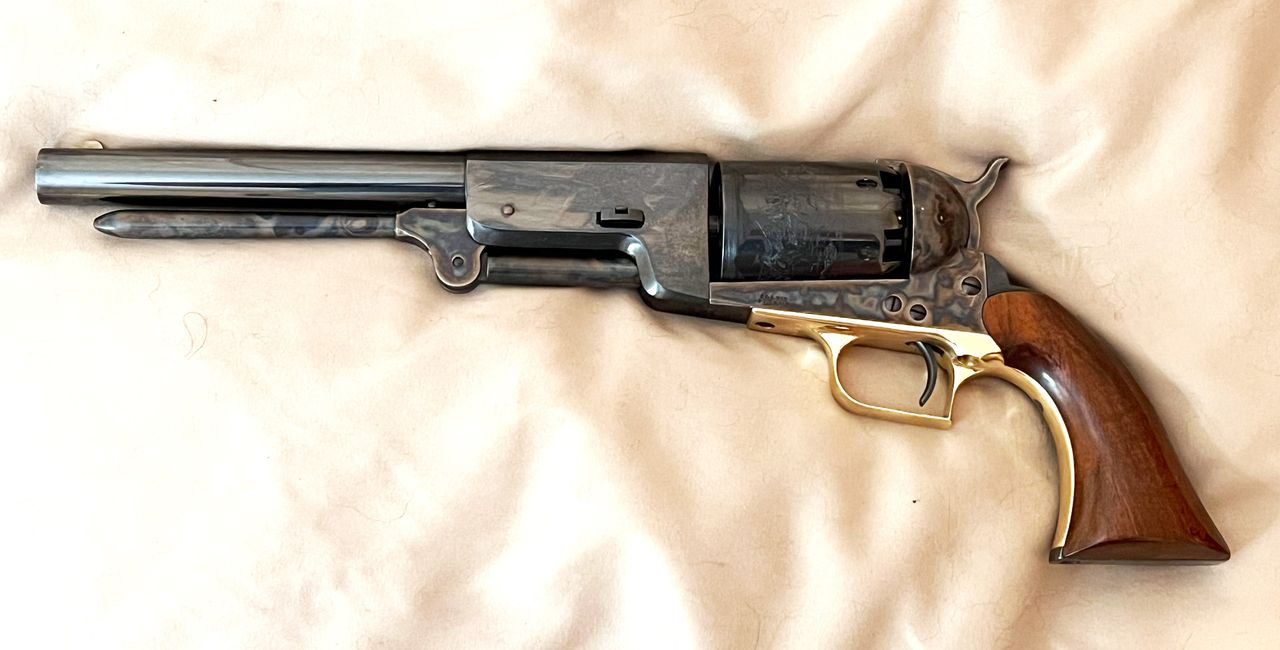
The Colt Walker matters because it showed what a revolver could become when design priorities were driven by combat instead of convenience. It sacrificed portability for power in a way few handguns ever have. That made it awkward, heavy, and flawed, but it also made it unforgettable.
Its influence reached beyond its short production life. The gun pointed the way toward the Dragoon series and helped prove that repeating handguns could serve serious military roles on the American frontier. It also locked the image of the oversized horse soldier’s revolver into the mythology of Texas, the Rangers, and the early West.
So yes, this revolver was huge, and yes, it really was built for men shaped by Texas fighting conditions. The Colt Walker was not oversized by accident. It was oversized because its users demanded a sidearm with cavalry reach, repeating fire, and enough brute force to end a fight fast. That is what makes it more than a curiosity. It makes it a statement in steel.