Most shooters notice the flashy guns first. The ones that quietly stay in holsters for years usually earn respect the hard way.
Why “boring” handguns get ignored
In gun culture, attention usually goes to full-size duty pistols, competition-ready triggers, and the latest optics-ready models. Compact revolvers, slim single-stacks, and small defensive autos often get labeled as compromises before anyone really studies what they do well. They are harder to shoot fast, less impressive at the range, and rarely the centerpiece of online discussion.
That bias is understandable because many shooters first judge a handgun by fun factor. A heavy steel pistol with a smooth trigger and mild recoil quickly inspires confidence. A tiny carry gun does the opposite. It snaps, shifts in the hand, and demands deliberate practice, so people assume it is inferior rather than specialized.
Yet defensive handguns live by a different standard than range toys. The gun that is comfortable enough to carry every single day has an advantage over the one that stays in the safe because it prints under a T-shirt or drags down a waistband. Instructors have repeated that lesson for decades, and real-world incidents keep proving it.
According to FBI and law enforcement training data discussed widely in defensive shooting circles, many armed encounters happen suddenly, at short distances, and under extreme stress. In those moments, concealability, simplicity, and immediate accessibility often outrank magazine capacity and match-grade accuracy. That is exactly where many skipped handguns quietly excel.
The small revolver nobody wanted to practice with

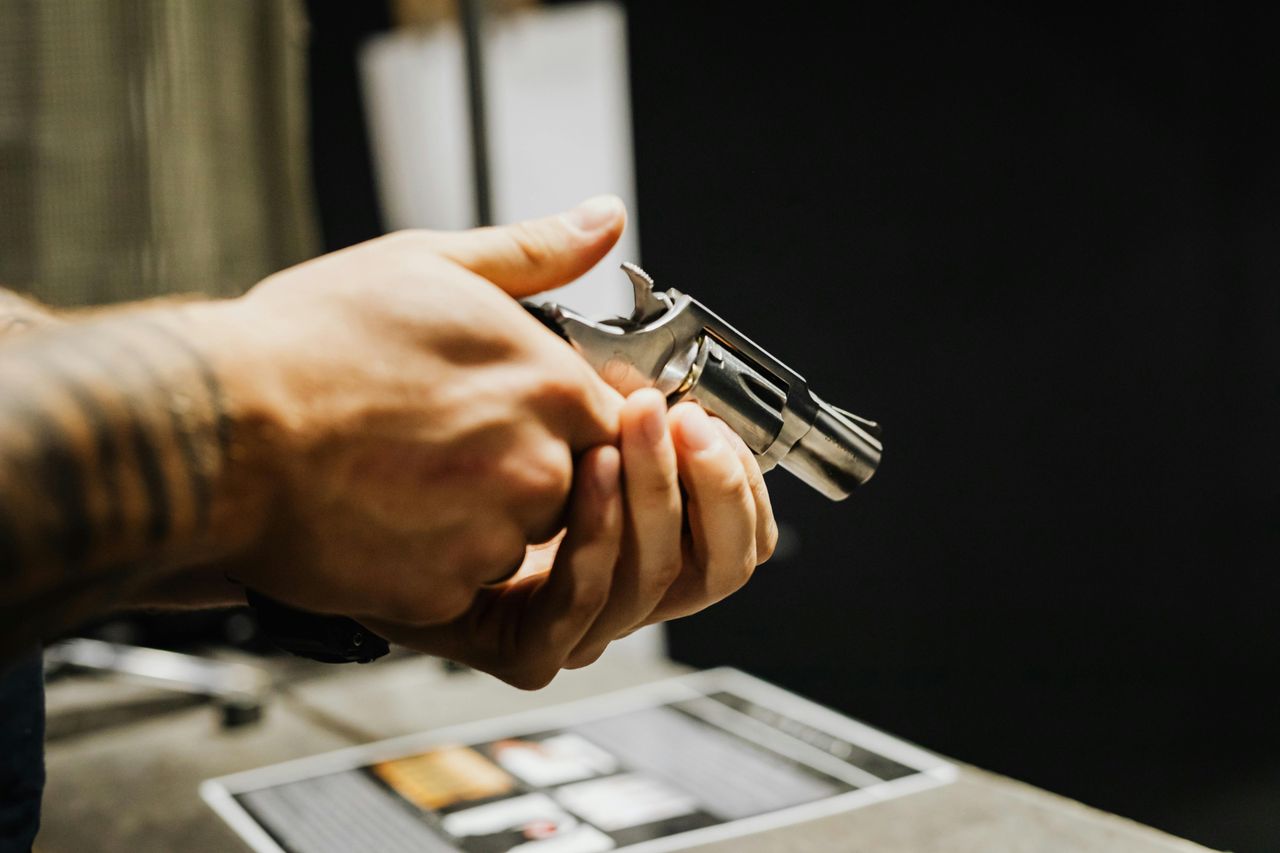
Few handguns fit this story better than the lightweight snub-nose revolver. Newer shooters often dismiss models like the Smith & Wesson J-frame or Ruger LCR after one box of ammunition. The complaints are familiar: heavy trigger, stout recoil, tiny sights, and only five rounds. On a square range, they can feel unforgiving compared with compact semiautos.
But the snub revolver survives because its strengths are unusual and deeply practical. It can sit loaded for years with little concern about magazine springs, ammunition geometry, or slide cycling. It can fire from inside a coat pocket in extreme close contact, and it remains one of the most dependable options for people with limited hand strength or those who struggle to rack a slide consistently.
Self-defense instructors frequently point out another reality: the revolver’s manual of arms is brutally simple under stress. Draw, press the trigger, and keep pressing if necessary. There is no external safety on many models, no slide to push out of battery in a close clinch, and no concern about limp-wrist malfunctions.
Real cases have reinforced that reputation. Civilian defenders, off-duty officers, and elderly carriers have all relied on small revolvers in sudden robberies, home invasions, and parking-lot assaults where there was no time for a perfect stance. The snub remains hard to master, but easy to trust, which is why it keeps saving lives long after trend cycles move on.
The slim single-stack looked outdated.
Before high-capacity micro-compacts exploded in popularity, slim single-stack pistols were often treated like transitional tools. Guns such as the Glock 43, Smith & Wesson M&P Shield, and Walther PPS were praised for concealment but criticized for limited capacity. Many shooters saw them as undergunned once double-stack subcompacts began offering 10, 12, or even more rounds in similar footprints.
That criticism missed how often these pistols solved the real problem, which is getting armed comfortably and consistently. Their flatter profile made them easier to hide under light clothing, especially for smaller-framed carriers or people dressing in office attire. A gun that disappears cleanly in an inside-the-waistband holster gets carried during errands, late shifts, and routine moments when danger actually appears.
The M&P Shield is a perfect example of a handgun that people underestimated. It was never glamorous, yet it built a remarkable reputation for reliability, manageable controls, and everyday practicality. Trainers have long noted that many ordinary permit holders shot it well enough, carried it often, and maintained it properly because it never became a burden.
There are countless defensive stories involving slim single-stacks precisely because they were present. In convenience store confrontations, attempted carjackings, and attacks during dog walks or commutes, those pistols were the gun on the body rather than the better gun left at home. That distinction sounds small until it becomes life-defining.
Pocket pistols and the gun that was actually there

Pocket pistols occupy one of the least respected corners of the handgun world. Tiny .380 ACP models such as the Ruger LCP, KelTec P-3AT, and similar designs were often mocked as “get off me” guns with unpleasant recoil, crude sights, and minimal capacity. Enthusiasts did not love shooting them, and many experts warned, correctly, that they demand realistic expectations and disciplined practice.
Still, these little pistols changed armed self-defense for many people. They fit in environments where even a slim 9mm felt too large: gym shorts, summer clothing, non-permissive office wear, quick trips to the mailbox, and the kind of ordinary routines where people convince themselves they will be fine without a gun. A pocket pistol reduced the excuses.
Ballistics experts have debated .380 ACP for years, but modern defensive loads have improved the conversation. While nobody seriously confuses a pocket .380 with a duty handgun, ammunition testing from respected outlets and law enforcement-adjacent trainers has shown that carefully chosen loads can deliver viable close-range performance. In a sudden assault, modest power in a usable gun beats ideal power in the drawer.
Accounts from civilian defenders repeatedly show the same pattern. The pocket pistol was not selected because it was best on paper. It was selected because it could be carried discreetly, drawn quickly, and used immediately when an aggressive stranger closed the distance fast. That practical availability is exactly why these supposedly second-rate guns remain relevant.
Surplus and budget pistols that earned trust late
Another group of shooters often skipped includes older surplus handguns and budget-priced defensive pistols. These guns lacked prestige and some deserved skepticism, but others quietly built records of serviceability. The used Smith & Wesson third-generation autos, police trade-in SIG Sauers, CZ-82s, and later affordable pistols from Taurus or Canik often entered the market with one thing going for them: people could actually afford them.
That matters more than enthusiasts sometimes admit. A defensive firearm is not just a purchase; it is a complete system involving holsters, training, ammunition, and time. For a working parent, retiree, or first-time gun owner on a strict budget, a reliable used handgun may be the only realistic path to daily carry. Dismissing it outright can sound tone-deaf to the realities of ordinary life.
Police trade-ins are especially telling. A holster-worn pistol may look tired, but many have comparatively low round counts and strong mechanical life left in them. Instructors and gunsmiths have long noted that duty-grade designs from SIG, Glock, Beretta, and Smith & Wesson often outlast cosmetic appeal by a huge margin, making them excellent “boring” lifesavers.
There are many stories of old-duty pistols and plain-looking budget guns stopping threats in homes, shops, and parking lots. They were not collector pieces or social media darlings. They were simply functional sidearms that worked when called upon, which is a far more important credential than style.
What real emergencies reveal about handgun design
When people revisit defensive shootings, one lesson appears over and over: violent encounters rarely look like neatly timed drills. They are abrupt, chaotic, and often measured in seconds. Fine motor skills deteriorate, vision narrows, and people default to what they have practiced most. Under that pressure, design choices once considered boring suddenly become crucial.
A revolver’s long trigger pull can reduce accidental discharges during high-stress handling. A slim pistol’s reduced bulk can make the draw faster from concealment. A pocket gun’s tiny footprint can mean the difference between being armed and being disarmed by inconvenience. None of these features impresses much at the gun counter, but all of them can matter desperately in a crisis.
Experts in defensive training often emphasize that reliability is not just mechanical. It includes whether the owner will carry the gun, shoot it enough to stay competent, and maintain it properly. An “ideal” handgun that intimidates its owner or stays locked away because it is uncomfortable has failed in practical terms, even if it excels on paper.
This is why so many once-overlooked handguns receive respect only after a real incident. A saved life has a way of cutting through trend arguments instantly. Suddenly, the snub revolver, the old single-stack, or the little pocket auto no longer looks underpowered or outdated. It looks like the tool is ready.
The lesson shooters keep relearning.
The biggest takeaway is not that every overlooked handgun is secretly excellent. Some compromises are real, and no experienced shooter should pretend a 5-shot snub or a tiny .380 is easy to use well. The lesson is that context matters more than fashion. The best handgun for a person is the one that fits their life, skill level, and willingness to carry consistently.
That is why seasoned instructors often ask practical questions before recommending a gun. Will you carry this in the July heat? Can you conceal it at work? Can you manipulate it with confidence using your actual hand strength? Will you train with it enough to place accurate shots at realistic distances? Those answers matter more than brand prestige.
The handguns people skipped were often designed around those realities instead of around bragging rights. They traded elegance for concealment, capacity for portability, or shootability for simplicity. Then, in the worst few seconds of someone’s life, those tradeoffs made perfect sense.
So the next time a handgun seems too plain, too old, too small, or too unfashionable, it may be worth a second look. History keeps showing that the least celebrated pistol in the display case can become the one that changes everything.