Some brands feel established. Beretta feels ancient in the best possible way.
That is not marketing fluff, either. It is the rare gun company whose origin story reaches all the way back to the Renaissance and still matters to buyers standing at an American gun counter today.
A gun brand with roots older than America itself

When Americans talk about trusted gun brands, Beretta usually enters the conversation quickly. That trust often comes from practical things: reliable shotguns, proven pistols, long military service, and a reputation for fit and finish that feels a step above the purely utilitarian. What many buyers do not realize is that the company behind that name is not just old. It is staggeringly old.
Beretta traces its documented history to October 3, 1526, when Bartolomeo Beretta of Gardone Val Trompia sold 185 harquebus barrels to the Arsenal of Venice. The surviving record of that payment, 296 ducats, is the kind of detail historians love because it turns legend into paperwork. According to Beretta’s own corporate history, that transaction is the oldest written proof of the company’s activity.
That matters because plenty of brands claim heritage, while few can point to a dated document from the 16th century and then show continuous family control into the present. Beretta says the business has been led by the same family for 15 generations. In an industrial world full of mergers, private equity, and nameplate nostalgia, that continuity is almost impossible to overstate.
The family business that never really stopped being a family business
The phrase family business can sound small, local, and fragile. Beretta is the opposite. It is still family-guided, but it operates at a scale that makes it one of the most unusual industrial dynasties anywhere in the world. The company itself describes Beretta Holding as the steward of the world’s oldest industrial dynasty, and that claim is central to how the group presents its identity.
That continuity helped Beretta do something many old manufacturers never manage: preserve a craft reputation while expanding into modern global industry. Through wars, political changes in Italy, and the rise of mass production, the Beretta family kept adapting rather than freezing the company in amber. The business did not survive because it stayed quaint. It survived because each generation adjusted the model.
The modern corporate structure is broader than many American consumers realize. Fabbrica d’Armi Pietro Beretta sits inside Beretta Holding, a Luxembourg-based group formed in 1994 to coordinate strategy and growth. Over time, that umbrella has come to include a portfolio of well-known outdoor and firearms names, showing that the family did not just preserve a legacy brand. It built a diversified international group around it.
How an Italian workshop became a staple in American gun culture

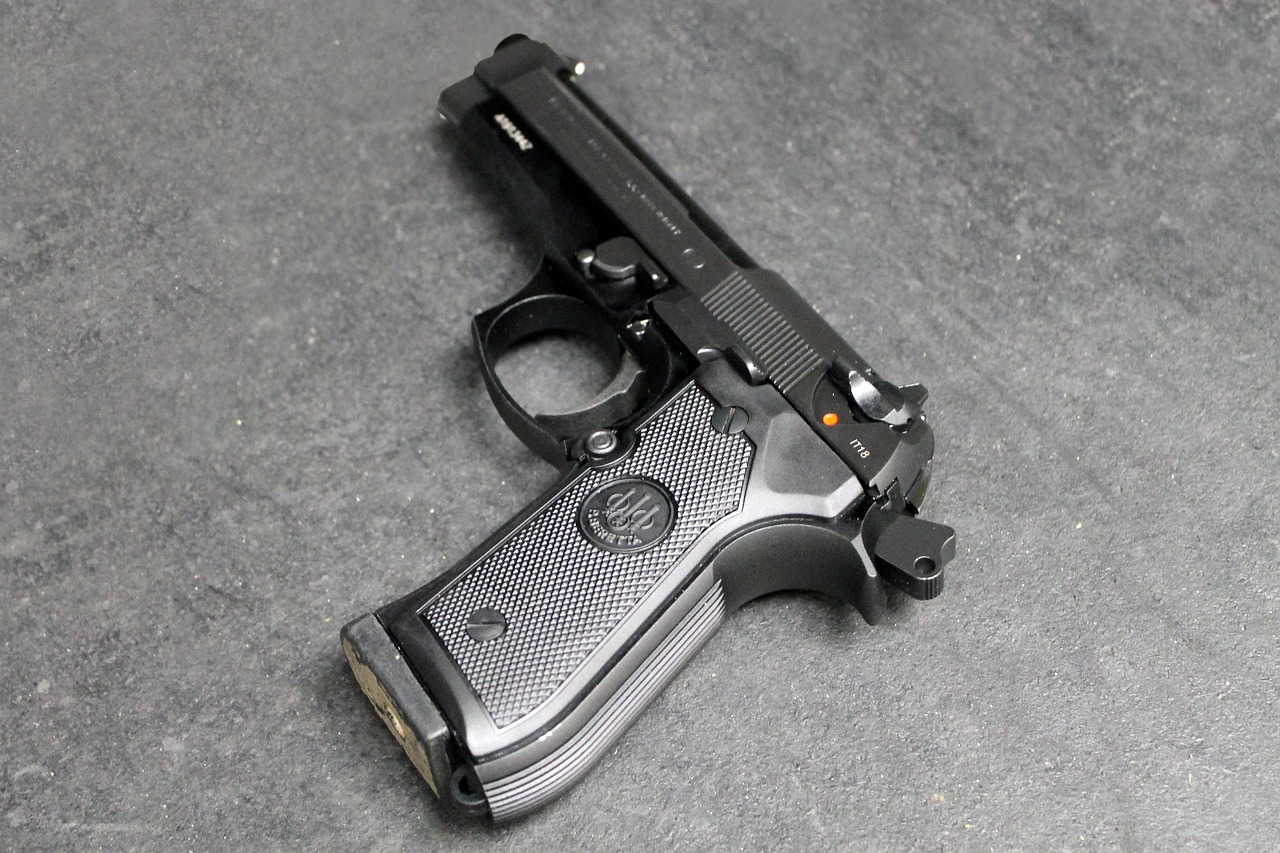
In the United States, Beretta’s reputation was built less on romantic history than on performance. American hunters know the brand through over-under shotguns, semi-auto field guns, and premium sporting models. Competitive shooters know it through pistols with refined ergonomics and a long reputation for dependable cycling. Law enforcement and military users know it from one of the most visible handgun contracts in modern American history.
That contract was the adoption of the Beretta 92FS platform by the U.S. military, where it served as the basis for the M9. For millions of Americans, that association turned Beretta from a respected imported brand into a household name. It was no longer just an Italian gunmaker with a long story. It became the sidearm brand many veterans carried, trained with, and remembered.
Brand trust in firearms is rarely built by advertising alone. It is built by repetition, durability, and word of mouth over decades. Beretta benefited from all three. Once a brand proves itself in the field, on the range, and in institutional service, buyers start to treat its name as shorthand for low drama and known quality. That kind of trust is earned slowly, which may be why Beretta wears it so naturally.
Tradition only works if the product still performs.
A 500-year history means very little if the current gun on the rack does not run. Beretta seems to understand that better than most legacy manufacturers. Its official materials emphasize modern assembly lines, advanced quality control, computerized design, and a deep research and development pipeline, not just artisanal nostalgia. The message is clear: heritage may open the conversation, but engineering closes the sale.
The company says it has filed around 1,400 patents over its history, with more than 220 patents and active extensions still in play. Those numbers tell a larger story about why Beretta remained relevant. It did not survive by endlessly remaking its past. It survived by turning gunsmithing into repeatable industrial excellence without losing the feel of a premium product.
That balance is especially important in firearms, where buyers want opposite things at once. They want romance and reliability, old-world craftsmanship and modern metallurgy, family tradition and tight tolerances. Beretta occupies that intersection unusually well. Even people who have never studied the company’s history can sense that its products come from a culture that takes mechanical refinement seriously, and that perception is a major part of the brand’s staying power.
The scale behind the name is bigger than most buyers think.
One reason Beretta feels quietly powerful is that much of the American public knows the brand without fully seeing the larger machine behind it. Beretta Holding extends well beyond the flagship Beretta line and includes brands such as Benelli, Franchi, Sako, Tikka, Burris, Steiner, Stoeger, Uberti, and Holland & Holland, among others. That gives the family business reach across shotguns, rifles, optics, accessories, and different price tiers.
In 2022, the group expanded further by acquiring Ruag Ammotec, a major European ammunition business whose brands include Norma, RWS, and Geco. Beretta has said the enlarged group now surpasses €1.5 billion in turnover and employs more than 6,000 people. Those are not the figures of a heritage boutique. They are the figures of a major multinational outdoor and defense-adjacent enterprise.
Yet the company still benefits from appearing understated. Beretta does not always generate the loud cultural buzz of newer tactical brands, but that can be a strength. In guns, quiet competence often travels farther than hype. A buyer may not know every brand inside the holding company, but the family’s long habit of building durable, credible products across categories reinforces the reputation of the Beretta name itself.
Why longevity matters so much in the firearms business

Firearms are not like phones or fashion. Buyers often expect a gun to last decades, maybe generations, and to keep functioning with a minimum of surprises. In that environment, longevity becomes a kind of evidence. If a company has been making barrels, actions, and finished guns for centuries, people naturally assume it has learned some hard lessons about metallurgy, tolerances, and quality control along the way.
That assumption is not always perfect, but in Beretta’s case it is backed by a remarkably consistent story. Beretta’s own history points to uninterrupted family production from the 1500s to today, beginning in Gardone Val Trompia, an area long associated with gunmaking. Over time, the company moved from barrel making into complete firearms, then into industrial-scale global production, while still presenting itself as a custodian of regional craft.
For American consumers, that background creates a special kind of confidence. A Beretta may be purchased for bird season, home defense, competition, or simple range pleasure, but the underlying appeal is similar: this is a brand that has already lived through every market cycle imaginable. If it is still here after nearly five centuries, many buyers figure it probably knows what it is doing.
The quiet power of a brand that does not need to shout
There is something almost countercultural about Beretta’s place in the modern gun world. At a time when brands often chase attention with aggressive launches, influencer campaigns, and culture-war theatrics, Beretta can lean on something much rarer: deep institutional memory. It does not need to invent seriousness. Its age, family continuity, and product record already do that work.
That does not mean the company is stuck in the past. Recent Beretta materials talk openly about future-facing investments, innovation hubs, modern manufacturing, and sustainability initiatives. The point is not that Beretta rejects change. It is that change happens inside a framework that feels stable, inherited, and carefully protected rather than constantly reinvented.
In the end, that is what makes the story so compelling. One of America’s most trusted gun brands is powered by a family business that began before the United States existed, before modern industry existed, and before most familiar institutions were even imagined. Beretta is not trusted because it is old alone. It is trusted because it turned age into competence, and competence into a legacy that still feels relevant now.