Some rifles are rare. Others are so elusive that even seasoned collectors know them mostly through auction catalogs, museum displays, and old factory records.
The rifles in this tier are not simply expensive objects. They are artifacts shaped by war contracts, failed trials, tiny production runs, vanished provenance, and the unforgiving mathematics of survival.
Why certain rifles become nearly unattainable
At the highest end of firearms collecting, rarity is only the starting point. A rifle becomes genuinely elusive when low production numbers combine with historical importance, documented originality, and a chain of ownership strong enough to withstand expert scrutiny. Many old arms are scarce, but scarcity alone does not create obsessive demand. What is a story that connects the piece to a pivotal military transition, an experimental design leap, or a short-lived factory program that was abandoned before full distribution.
Condition is another brutal filter. A rifle may have begun life in limited numbers, but decades of hard service, arsenal rebuilding, sporterizing, neglect, or parts swapping can reduce the pool of truly collectible survivors to a handful. Advanced collectors often distinguish between “existing” and “correct,” and that difference is enormous in value terms. An experimental military arm with refinished metal, replaced wood, or mismatched serials may still be fascinating, but it no longer occupies the same category as a fully original example with period finish and traceable markings.
Documentation matters just as much as metal and wood. According to major auction houses and leading specialist appraisers, provenance can transform a rare rifle from a curiosity into a landmark specimen. Factory letters, military trial records, period photographs, and long-established collection histories are often what separate a six-figure arm from one that merely looks uncommon. In a market crowded with reproductions, restorations, and wishful identifications, paperwork becomes part of the object.
Then there is the issue of institutional gravity. The rarest rifles are frequently absorbed by museums, military collections, and a few top-tier private collectors who buy to hold, not flip. Once one of these pieces disappears into a curated collection, it may not reappear publicly for decades. That makes the market feel even tighter than raw production totals suggest, which is why so many collectors spend years chasing examples they may never have a chance to purchase.
The Winchester prototypes and one-off variants that haunt advanced collections
If there is one name that repeatedly appears in elite American firearms collecting, it is Winchester. The company’s standard production rifles are already a field of deep scholarship, but the pieces that truly haunt collectors are the prototypes, presentation guns, and ultra-low-production transitional variants that rarely surface. These are the rifles that reveal the company’s design process in motion, showing details later altered, abandoned, or refined for commercial release.
One major category includes experimental lever actions and bolt actions tied to pre-production evaluation. A prototype may differ in receiver contour, safety placement, magazine design, or stock geometry, and those differences can make it uniquely important. In some cases, fewer than 5 examples of a configuration were made, and not all survived. Because Winchester maintained extensive records in some eras but less complete records in others, experts often have to combine ledger research, factory style analysis, and serial sequencing to establish whether an unusual rifle is a true prototype or simply an altered later gun.
Presentation-grade Winchesters occupy another near-mythic tier. These rifles may have been built for world fairs, senior executives, foreign dignitaries, or major retailers. They often feature special engraving, exhibition wood, gold inlay, and factory-documented special order features that would be astonishing even on more common models. Yet for the top collector, decoration alone is not enough; the piece must still be original, correctly configured, and supported by a traceable history. A refinished deluxe rifle, however beautiful, cannot compete with an untouched, documented special-order specimen.
Case studies from major sales show the gap clearly. Standard high-condition Winchesters can command strong prices, but singular examples have reached multiples of that when factory provenance aligns with exceptional rarity. The challenge is that many such rifles are already known to the collecting community by reputation. They are discussed in reference books, illustrated in old catalogs, and remembered from historic auctions, but are rarely available. In practical terms, collectors are often not chasing an object category so much as a very short list of serial-numbered survivors.
Military trial rifles that vanished into history
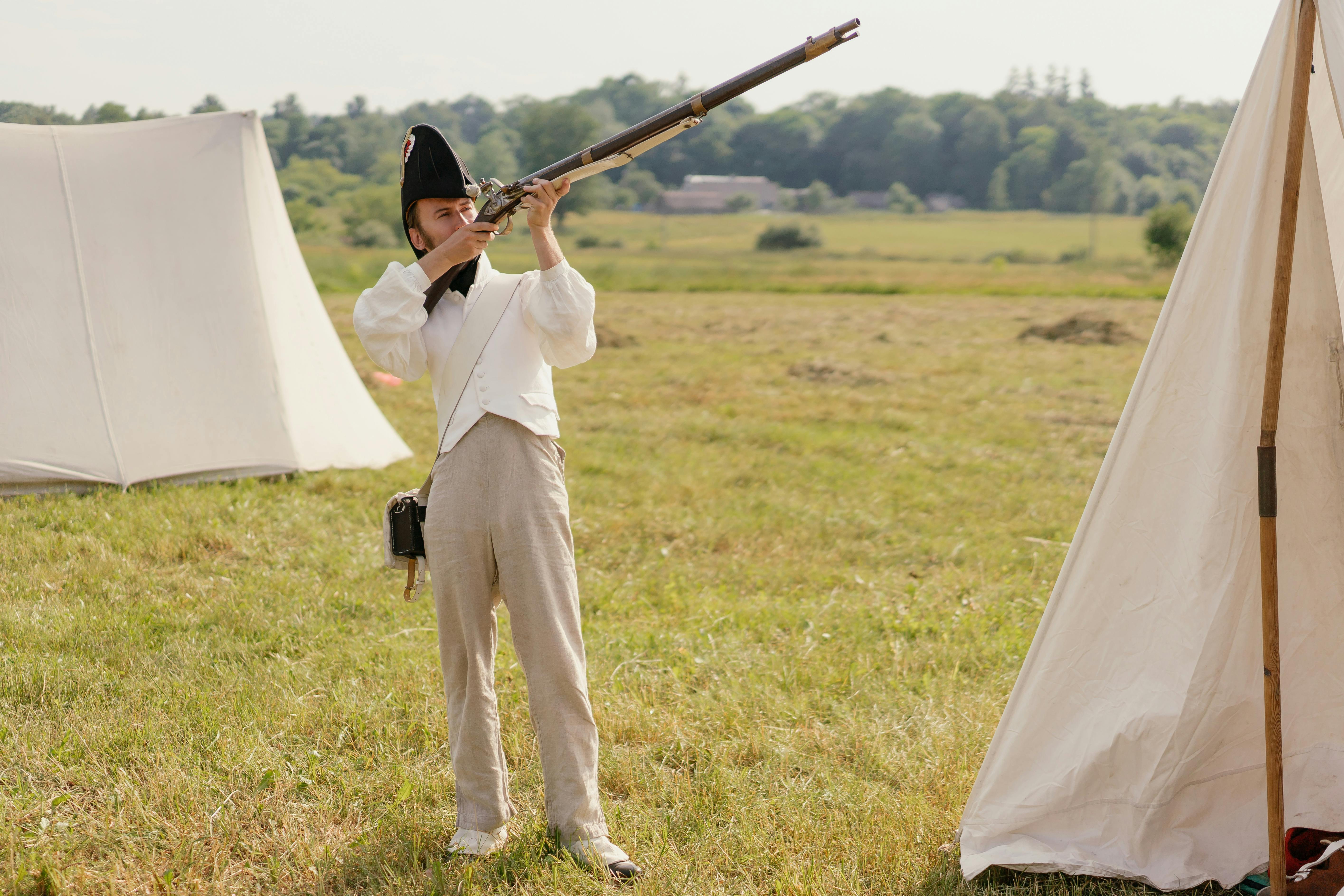
Some of the most coveted rifles in the world were never standard issue at all. They were trial pieces, evaluation models, or procurement contenders that lost out to another design, making them historically vital but numerically tiny. Because armies tested these arms hard and often discarded them once decisions were made, survival rates are notoriously poor. The result is a class of rifles that advanced collectors discuss with reverence because so few examples escaped destruction.
British and American trial rifles are especially fertile ground for this kind of rarity. The Pattern 1913 Enfield, for example, is known among military arms collectors as an important precursor to later service rifles, but fully correct early examples are far scarcer than most people realize. The same is true for U.S. rifle trials pieces connected to the long search for a self-loading service arm before the M1 Garand was standardized. Designs from Pedersen, Bang, and other contenders are famous in firearms history, yet original surviving rifles are often counted in very small numbers and are frequently held by institutions.
German trial and transitional rifles form another difficult area. Experimental Mauser variants, colonial contract rifles, and pre-adoption small-ring or intermediate-pattern arms can be extraordinarily elusive, especially when matching numbers and original finish remain intact. Turbulent political history only compounded scarcity. Wars, occupation, postwar rebuilding, and civilian conversion programs erased countless details and, in many cases, the rifles themselves. What remains is a fragmented legacy where even top specialists may wait years to inspect a truly untouched specimen.
Collectors pursue these rifles because they represent turning points, not merely hardware. A military trial rifle captures a moment when doctrine, industry, and engineering had not yet settled into final form. It shows what an army considered possible before choosing a standard weapon. That sense of historical suspense gives such pieces unusual power. They are often less visually familiar than famous service rifles, but among experts, they can be far more desirable because they illuminate roads not taken.
Legendary production rifles so scarcethat they function like museum pieces.

A few rifles were technically regular production models, yet surviving examples are so rare and so prized that they no longer trade like ordinary collectibles. They function more like portable museum objects. This usually happens when production was limited by war, bankruptcy, contract collapse, or abrupt technological change, leaving only a tiny number of authentic examples in collector-grade condition.
The Johnson Model of 1941 light machine gun and rifle family illustrates how quickly legend can form around low-volume wartime production, though the rifle itself remains the greater collector magnet. While more obtainable than true prototypes, original military Johnson rifles with correct components and documented service history occupy a very narrow market. Similar status surrounds elite variants of the FG 42, the German paratrooper rifle whose production numbers were low to begin with and whose surviving originals are now among the most scrutinized and expensive WWII long arms in the world. Reproductions and restored examples have only madethe original documented rifles more coveted.
Another famous category is the first-generation semiautomatic military rifle produced in small numbers before broader adoption patterns emerged. Early and correct Soviet SVT-38 rifles, for instance, are dramatically harder to acquire than the later SVT-40. Their front-line losses were severe, and many that survived were modified, rebuilt, or cannibalized. Japanese collector circles tell similar stories about certain Arisaka sniper and trials-related configurations, where authenticity depends on fine details in machining, markings, and optics that are easy to fake and difficult to verify.
What separates these rifles from merely “rare old guns” is market behavior. When one appears at a premier auction or through a major specialist dealer, advanced collectors respond immediately because the opportunity may not recur for years. Prices are driven not only by rarity but by replacement anxiety. If a collector passes on a correct FG 42, an original Johnson sniper variant, or a documented early-contract rarity, there may be no second chance in the near future. That is why ownership remains concentrated in a tiny circle despite broad fascination.
The hidden barriers that keep ownership limited to a tiny few
The obvious barrier is money, but price alone does not explain why almost no one actually owns these rifles. High-level firearms collecting is also constrained by expertise, legal complexity, and trust. A buyer may have the funds for a six-figure piece and still hesitate if authenticity questions remain unresolved. In this segment of the market, a single replaced screw, incorrect stock cartouche, or polished receiver can reduce confidence dramatically, and confidence is often what the buyer is really purchasing.
Legal rules add another layer, especially for automatic or select-fire variants, restricted imports, and arms with international provenance issues. Depending on jurisdiction, transfer requirements can be lengthy, expensive, and highly technical. Some rifles that are collectible in one country are effectively inaccessible in another. This fractures the market and often traps important examples within specific legal regimes, limiting public sales and making already rare pieces even harder to obtain.
Knowledge is perhaps the greatest hidden gatekeeper. The top collectors usually specialize deeply, building libraries, consulting historians, and comparing minute production changes across years or contracts. They know which proofs should align, which machining marks indicate originality, and which legends have been repeated so often that they are accepted without evidence. Newer buyers entering the field often discover that the rarest rifles are not purchased on enthusiasm alone. They are acquired through long relationships with dealers, auction specialists, estate attorneys, and other collectors who control information long before a listing becomes public.
That is why these rifles remain more talked about than owned. They sit at the far edge of collecting, where history, scholarship, money, and access all intersect. For the general public, they are fascinating relics. For experienced collectors, they are benchmarks that define the seriousness of a collection. And for the handful of people who finally acquire one, ownership is rarely about possession alone. It is about the temporary stewardship of an object so scarce that the next confirmed sighting may happen years from now, in another sale room, under another generation of experts.