Few gunmakers leave a fingerprint on an entire industry. Daniel Myron Lefever did exactly that.
The man behind the breakthrough

Daniel Myron Lefever, widely known as Uncle Dan, stands near the center of the American double gun story. He was born in 1835 and built his reputation in upstate New York at a time when breech-loading sporting arms were advancing fast. By the late 19th century, American makers were competing to build guns that were safer, quicker, and more refined than the exposed hammer doubles that hunters had relied on for decades.
Lefever is commonly credited with creating the first successful American hammerless shotgun design. Period references and later gun histories point to his concealed hammer work in the late 1870s, with key patents arriving in 1878 and 1880. That timing matters, because it placed him at the front edge of a major transition in sporting arms, just as breechloaders were becoming mature, practical field guns.
This was not a one-patent wonder. Lefever kept refining the action, the cocking system, the lockwork, and the fit between barrels and frame. His 1878 patent dealt with improvements in breech-loading firearms, and later patents showed his continued attention to internal hammer operation, cocking levers, and stronger mechanical relationships inside the gun.
What made Lefever special was not just what he invented. It was that he understood how invention had to survive real use. A shotgun could not merely look elegant on paper. It had to open cleanly, lock tightly, fire reliably, and stand up to muddy duck blinds, cold pheasant fields, and a lifetime of shells.
Why hammerless really mattered

To a modern shooter, hammerless sounds almost ordinary. In Lefever’s day, it was a serious leap. Traditional doubles carried exposed external hammers that had to be thumb-cocked or carefully managed. They worked, but they added steps, slowed the shooter, and created opportunities for snagging, fumbling, or mishandling under pressure.
A hammerless shotgun tucked the firing mechanism inside the action. That made the gun smoother on the draw and faster into action. It also improved weather resistance because delicate working parts were less exposed to brush, rain, and grit. The practical effect was simple: the gun became easier to carry, faster to mount, and more confidence-inspiring when birds got up without warning.
American Rifleman has noted that the hammerless double was effectively perfected in the decade after breechloading shotguns themselves were sorted out. Lefever’s work sits directly in that transition. He helped move the sporting shotgun away from visibly mechanical Victorian hardware and toward the cleaner, integrated form that shooters now think of as classic.
There was also a safety argument. Internal systems reduced the chance of a hammer snagging or being struck from outside. Early makers still had to prove that concealed mechanisms could be trusted, but once sportsmen saw a well-built hammerless gun operate, the appeal was obvious. The new style looked modern, and more importantly, it behaved in a modern way.
How Lefever’s design changed the gun itself

Lefever’s shotguns were not important only because the hammers disappeared from view. The real achievement was how he reorganized the whole action around that idea. His patents show careful thinking about cocking as the gun opened, about how moving parts interacted, and about how to maintain strength where barrels met breech.
That last point was crucial. A break-action shotgun lives or dies by lockup. If the barrels and action do not mate consistently, the gun shoots loose, wears badly, and loses the solid feeling that quality buyers demand. Lefever’s early patent language emphasized a more permanent and secure connection between barrels and breechpiece, showing that he understood elegance meant nothing without durability.
He also earned a reputation for ingenious details. Collectors and historians often point to Lefever’s ball-and-socket jointing system and his approach to automatic cocking and internal lockwork as examples of American mechanical creativity at its peak. His guns were sophisticated without being merely fussy, which is a harder balance than it sounds.
That combination influenced other makers, even when they did not copy him part for part. Once Lefever showed that an American hammerless double could be strong, graceful, and commercially viable, the market changed. Customers began expecting cleaner lines and faster handling. Competitors had to respond with better internal actions of their own.
From Syracuse workshop to national reputation
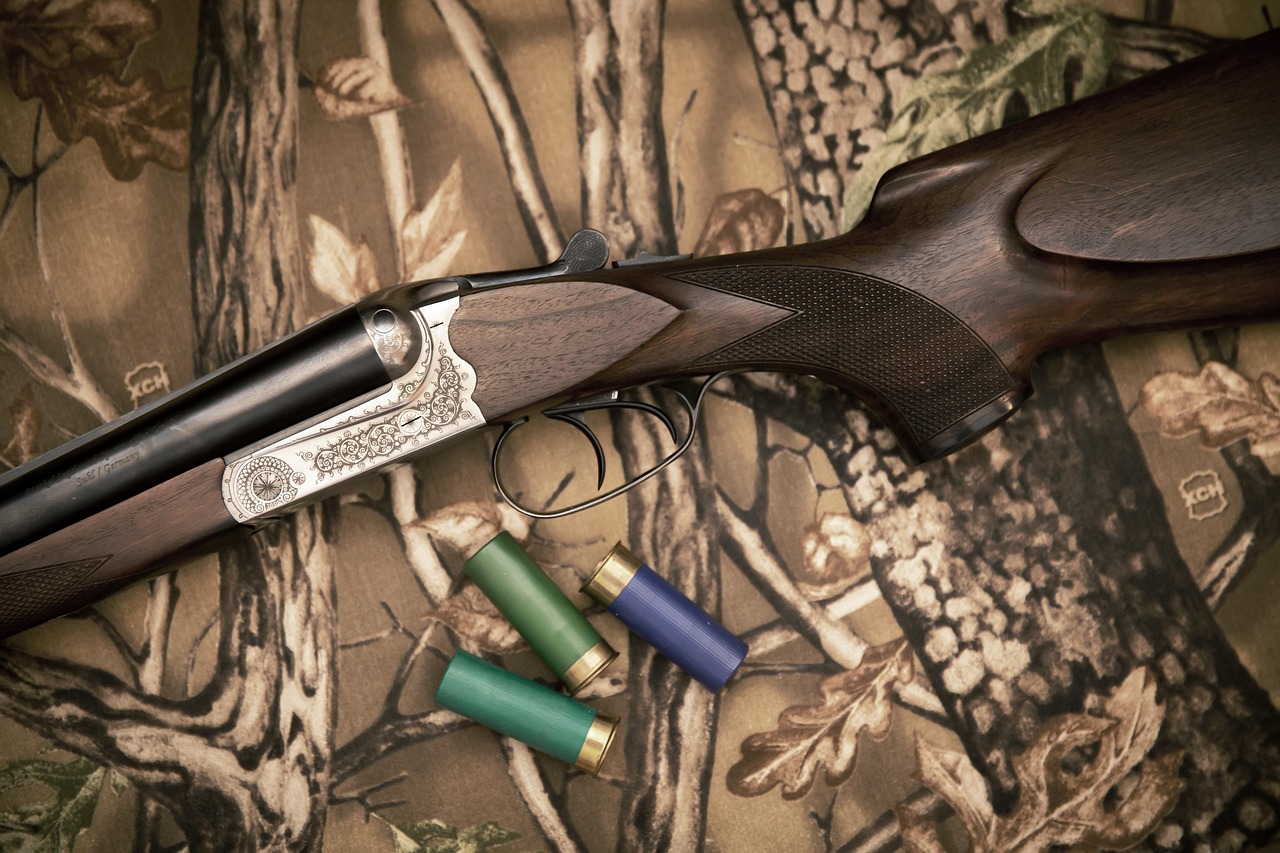
Lefever’s name became strongly identified with Syracuse, New York, one of the important centers of American gunmaking in that era. The Lefever Arms Company was established in the 1880s, and the firm built a range of graded side-by-side shotguns that earned admiration for both finish and engineering. Surviving museum examples show how broad the company’s reach became, from workmanlike field guns to more refined sporting pieces.
The grading system helped define the brand’s place in the market. A buyer could enter at one level and move upward into better wood, finer engraving, and more polish without leaving the Lefever name. The NRA National Firearms Museum notes, for example, that the G Grade was introduced in 1892 and remained in production until the company was sold to Ithaca in 1915, a useful marker for how long the line endured.
That staying power says something important. The hammerless concept was not a novelty that burned bright and faded. It became the backbone of a respected manufacturing business. Lefever’s ideas translated into cataloged products, dealer relationships, and steady demand from hunters and target shooters who wanted more than an ornament.
By then, the American sporting gun buyer had changed as well. He was no longer simply buying a tool that went bang. He was buying speed, refinement, prestige, and the promise that modern engineering could improve his shooting life. Lefever understood that better than most of his contemporaries.
The business twists that shaped the legacy
Like many brilliant inventors, Lefever did not enjoy a perfectly straight business path. He worked through multiple ventures, partnerships, and reorganizations as the American gun trade consolidated and competition intensified. The late 19th and early 20th centuries were brutal years for small and midsize arms makers, especially those building mechanically ambitious guns that were expensive to produce well.
Even so, the Lefever name remained powerful enough that it outlived the original company’s independence. Records from Ithaca and the Cody Firearms Records Office indicate that Ithaca acquired Lefever around 1915 to 1916 and continued producing guns under the Lefever name into the following decades. That kind of afterlife only happens when a brand has real recognition in the market.
The transition did blur the story for modern collectors. An original Syracuse-made Lefever sidelock style double is not the same thing, historically or mechanically, as a later Ithaca-era Lefever marked gun. Yet both exist because the original reputation was so valuable that another major American maker wanted to keep using it.
In a broader sense, that sale marks the moment when invention became an institution. Lefever, the individual genius,s gave way to Lefever, the enduring trade name. The remarkable part is that the invention at the center of it all, the hammerless double, had already changed the expectations of the American shotgun world.
Why collectors and shooters still care
Collectors care about Lefever for the same reason car enthusiasts care about breakthrough engineering from a golden age. These guns represent a moment when American makers were solving hard mechanical problems with originality and style. They are artifacts from a period when the side-by-side shotgun was both a practical hunting arm and a showcase for industrial craftsmanship.
Shooters care because many Lefevres still feel alive in their hands. Well-balanced vintage doubles often communicate quality immediately, even before a shell is chambered. The clean lines that the hammerless action made possible still look right today, and the best examples reveal how advanced Lefever’s instincts were about handling and user experience.
There is also a collector’s puzzle built into the marque. Grades, serial ranges, patent dates, Syracuse production, and later Ithaca-built guns give the brand depth and complexity. Ithaca’s serial number resources and collector chronologies have helped enthusiasts sort out those distinctions, which only adds to the fascination.
Of course, vintage shotguns demand care. Condition, originality, chamber dimensions, barrel integrity, and ammunition suitability all matter. But that caution is part of the appeal. Owning a Lefever is not just owning an old shotgun. It is a chapter from the period when American gunmaking learned how modern elegance should work.
The bigger mark Lefever left on American gunmaking
Lefever’s biggest contribution was not one model or one patent date. It was proving that American gunmakers could build a hammerless shotgun that was mechanically credible, commercially successful, and desirable enough to change buyer expectations across the industry. That is a deeper accomplishment than simple invention.
Once that standard was established, the exposed hammer double began to look older almost overnight. The market increasingly favored internal mechanisms, quicker handling, and a cleaner profile. Other makers refined their own systems, but Lefever had already helped redefine what counted as progress in a sporting shotgun.
His influence also lives in a familiar truth about firearms history. The designs that matter most are not always the loudest or the most militarily famous. Sometimes the real revolution is a better hinge, a smarter cocking system, or a safer way to carry a gun through cattails until the birds rise. Lefever excelled in exactly that kind of revolution.
That is why his story still matters. Daniel Myron Lefever did not just hide the hammers. He helped usher American gunmaking into a more modern age, where sophistication was built inside the action and where the best engineering made itself felt every time the gun came to the shoulder.