Military history is full of weapons written off by experts, only to return when conditions changed and reliability suddenly mattered more than fashion. These guns weren’t always glamorous, and many looked hopelessly behind the times. But in wars, uprisings, and desperate defensive stands, old designs often proved they still had a job to do.
Mosin-Nagant
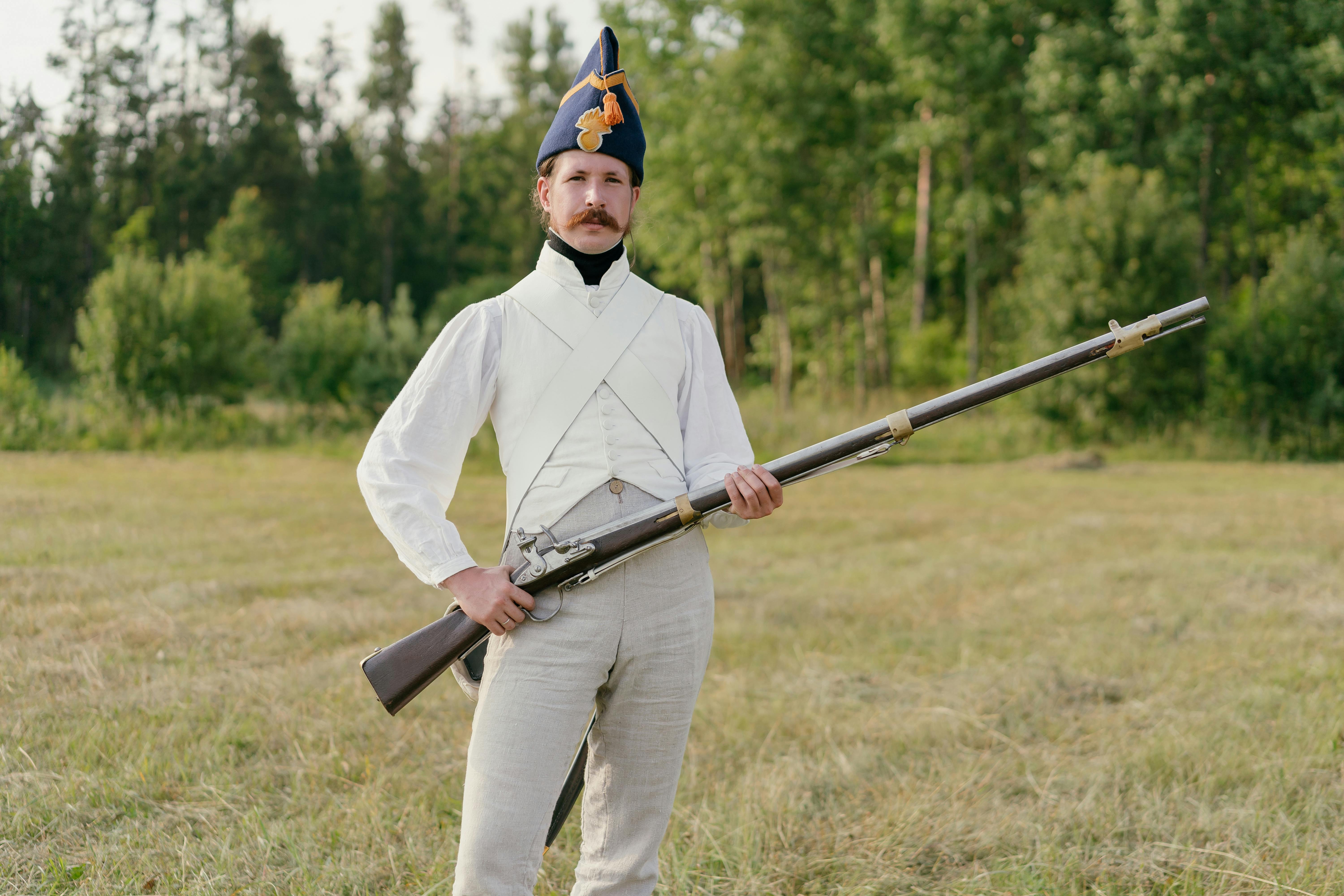
By the mid-20th century, the Mosin-Nagant looked like a relic from another era. It was long, heavy, and built around a bolt-action system that seemed badly outclassed by modern self-loading rifles and submachine guns.
Then harsh reality gave it a second life. On the Eastern Front and in later conflicts, its rugged construction, simple mechanics, and powerful cartridge made it dependable in mud, snow, and neglect. That mattered enormously when armies needed millions of serviceable weapons.
It also found a lasting role as a sniper platform. What critics saw as outdated, soldiers often saw as tough, accurate, and always ready to fire.
M1911 Pistol

For decades, the M1911 was called too heavy, too old, and too limited by its 7-round magazine. As double-stack 9mm pistols became the new standard, John Browning’s century-old sidearm started to look like a museum piece in a duty holster.
Yet when reliability and stopping power were prized, the old pistol kept earning respect. Elite units, military users, and countless civilian defenders continued to trust it because it pointed naturally and hit hard.
In close-range, high-stress moments, familiarity can matter as much as innovation. The M1911 survived because its design still delivered where it counted most.
Lee-Enfield

The Lee-Enfield was often dismissed as yesterday’s rifle once semi-automatic designs began taking over. It belonged to an older school of warfare, one built around trained riflemen, disciplined fire, and a full-length wooden service rifle.
But obsolete is a slippery word. In British and Commonwealth service, and later in postwar emergencies and local conflicts, the Lee-Enfield proved startlingly useful thanks to its smooth bolt, 10-round magazine, and battlefield accuracy.
That combination gave skilled shooters speed that surprised opponents. In moments when logistics were stretched and modern arms were scarce, the old rifle remained far more relevant than its critics expected.
M2 Browning

The M2 Browning has been declared too old for so long that its continued service almost feels like a standing argument with military fashion. Designed during the First World War era, it should have been replaced many times over by something sleeker and more modern.
Instead, it kept proving why it endured. Mounted on vehicles, fortifications, aircraft, and naval platforms, the .50-caliber machine gun brought reach, punch, and mechanical reliability that newer systems struggled to surpass.
When troops needed a weapon that could stop light vehicles, suppress enemy positions, or dominate open ground, the M2 still answered with brutal efficiency. Age never made it irrelevant.
M1 Garand

After the Second World War, the M1 Garand quickly began to look like a transitional weapon. Detachable-magazine battle rifles and newer service arms made its en bloc clip system seem dated, and its hefty profile didn’t help its modern image.
Still, the Garand remained highly respected wherever it stayed in service. In Korea and beyond, it offered excellent reliability, serious power, and a rate of accurate fire that bolt-action rifles could not match.
That mattered in rough terrain and cold conditions where simple, rugged equipment inspired confidence. It may have been overtaken on paper, but in combat it was still very much alive.
PPSh-41

The PPSh-41 looked like a throwback once more compact and refined submachine guns entered service. Its drum magazine was bulky, its appearance was crude, and its stamped-and-wood construction gave it little of the polished aura associated with newer weapons.
But battle rarely rewards elegance. In brutal close-quarters fighting, especially urban combat, the PPSh-41’s high rate of fire and forgiving simplicity made it terrifyingly effective. It was easy to produce, easy to use, and hard to stop.
That made it invaluable when armies needed volume and durability more than sophistication. A weapon mocked as rough and outdated became exactly right for the war it had to fight.
Winchester Model 1897 Trench Gun

Pump shotguns were not always treated as serious military arms. Compared with rifles and machine guns, the Winchester 1897 trench gun could seem specialized, old-fashioned, and even unsophisticated in a world increasingly defined by industrial firepower.
Then trench warfare and close assaults changed the conversation. At short range, the weapon’s devastating buckshot loads and rapid pump action made it uniquely effective in dugouts, narrow passages, and sudden encounters.
Its reputation spread quickly because it answered a very specific battlefield problem better than many newer designs. Sometimes a supposedly obsolete gun matters most when the fight gets close, chaotic, and brutally personal.
Maxim Gun

The Maxim gun was once the very symbol of industrial-age warfare, but technological progress eventually pushed it into the obsolete category. Water cooling, heavy mounts, and cumbersome handling made it seem unsuited for faster, more mobile modern battlefields.
And yet, in static defenses and desperate wars, those same characteristics could become strengths. The Maxim’s sustained-fire capability and reliability under punishing use made it a formidable tool when positions had to be held at all costs.
In places where movement was limited and logistics were strained, old heavy machine guns still shaped outcomes. Obsolete on paper did not mean harmless in reality.
Karabiner 98k
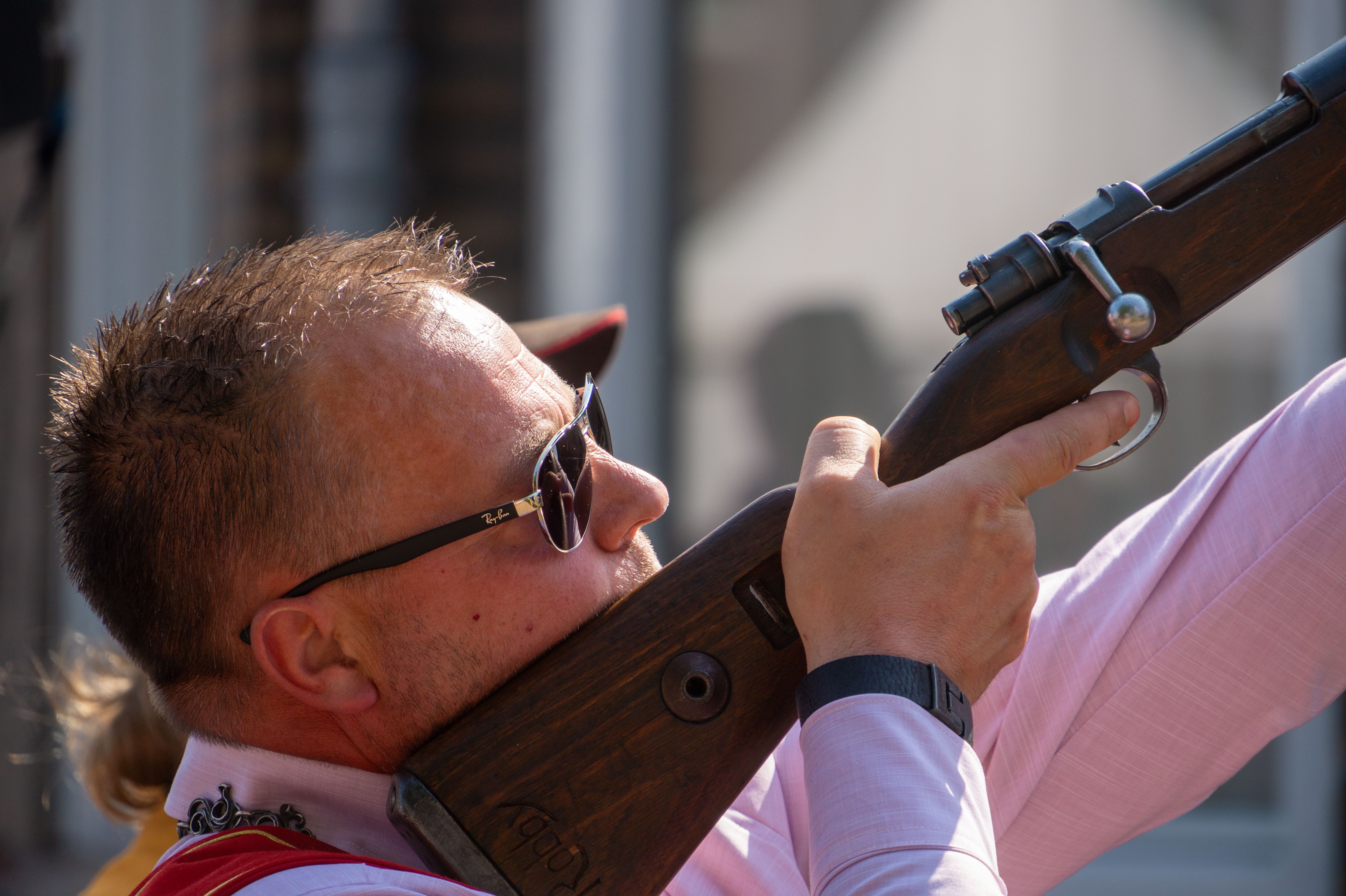
The Karabiner 98k entered a war increasingly dominated by automatic weapons, armored vehicles, and rapidly changing tactics. Critics then and now point to its bolt-action operation as evidence that it was already behind the curve by the time total war fully arrived.
But a rifle’s usefulness is not measured by action type alone. The 98k was durable, accurate, and effective at range, qualities that mattered for infantry, marksmen, and any force short on more advanced arms.
It also lived on far beyond its original era. In postwar fighting around the world, it kept resurfacing because dependable rifles never really go out of demand.
Sten Gun

The Sten gun was never admired for beauty or refinement. It looked cheap because it was cheap, and many saw it as an emergency expedient that would vanish the moment better-engineered submachine guns became available.
That judgment missed the point. In occupied Europe, resistance warfare, and fast-moving wartime production, the Sten’s crude simplicity became a strategic advantage. It could be made quickly, distributed widely, and kept in action with minimal resources.
When elegant solutions were impossible, the Sten mattered enormously. A gun many treated as a stopgap helped arm people who otherwise might have had nothing at all.